




 | ||||||
| ||||||
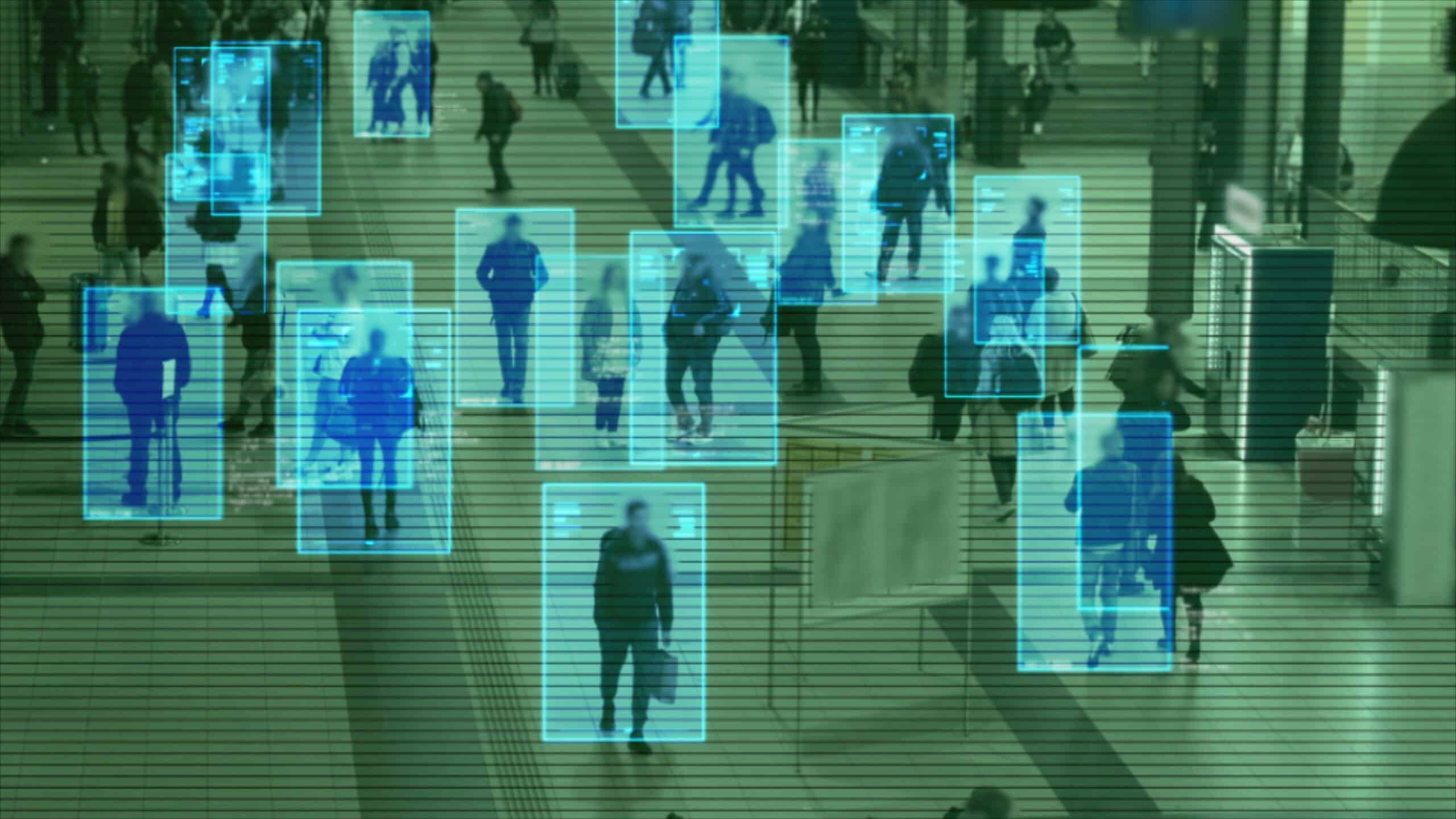
Dear FO° Reader, In another tumultuous week full of heated rivalries, international battles and other events that are not the end of the Olympics, we decided to focus this week’s editorial on a subject much smaller, but no less important. We touch on important questions about surveillance and privacy in an increasingly digitized world — and also on new methods of finding lost dogs. Our story begins on February 8, at the Super Bowl, the national championship for American football. This is one of the most-viewed sporting events in the country, and as such, competition among TV advertisements is fierce. Many companies try to dazzle and impress viewers with high-budget, funny and otherwise memorable commercials, something the American public has come to expect and even enjoy.
via shutterstock It has gotten to the point where you can find many commercials on YouTube with hundreds of thousands of views just a few hours after the game. One such commercial, and the subject of our newsletter this week, comes from a company called Ring, who make home security systems. Their most famous product is a doorbell that moonlights as a security camera. In their commercial, Ring introduced a new feature to their doorbell camera that the company says can help people find lost pets.
Search Party from Ring | Be A Hero In Your Neighborhood But instead of a positive response, or even indifference, the vast majority of the reactions were negative. Viewers called the feature an invasion of privacy, and more hyperbolically, Orwellian surveillance. Lawsuits were threatened, and lawmakers piled on. There are reports of thousands of people cancelling their service with Ring. The outcry was loud enough that Ring cancelled its partnership with Flock, a company that provides ALPRs, or automatic license plate readers. Ring’s partnership with Flock would have allowed the company to tap into the video databases of Ring cameras. But as always, we at the Fair Observer strive to go deeper than just the surface of the issue. Was it just a commercial that made people so unnerved? Who is Ring, and how did their advertisement backfire so spectacularly? And are they the only company doing things like this? Source: Why Ring’s feel-good Super Bowl ad freaked people out | Salon The Nationwide Revolt Against Flock Safety Cameras | The New Republic Ring: tech start-up, Amazon subsidiary and lawsuit magnet Ring began as a tech start-up in 2013, quickly gaining steam and investors before being bought by Amazon in 2018. The company continued to expand, but also continued to grow in controversy. Some incidents include Ring partnering with local police forces to promote their products while having customers sign deals that effectively allowed the police to access those camera feeds whenever they wanted to, facial recognition features that would store photos of anyone who comes in front of a camera and a $5.8 million lawsuit for allowing employees to access customers’ video data. Sources: Amazon Ring: Police tie-up criticised by anti-surveillance campaigners | BBC Amazon must pay over $30 million over claims it invaded privacy with Ring and Alexa | NPR In this sense, Ring’s latest controversy is not new. It fits the pattern of the company’s past behavior, and the only difference is the size of the stage it is standing on this time. Furthermore, other competitors, such as Google Nest, have faced similar concerns over privacy in the past. Furthermore, many major cities already have highly surveilled streets. The US capital of Washington, DC has more cameras than any other city in the world, with more than 30,000 cameras throughout the city. New York City has also had a long history with surveillance and the law’s use and abuse of these technologies. Of course, much of the surveillance in major US cities is an aftereffect of the 9/11 attacks. And of course, the same concerns over the potential for abuse and actual abuse have come up whether the people in control of the cameras were public or private actors. And while this conflict has been bubbling up in America for many years now, that is not to say it is a uniquely American problem. Sources: The Cities With the Most Government Controlled CCTV Cameras | NeoMam Surveillance around the world: For your safety Across the world, in democracies and dictatorships alike, the streets of cities and towns are becoming more and more heavily surveilled as camera technology and data storage advance year after year. China has been aggressively expanding its surveillance networks across many cities. One estimate puts London at over 900,000 CCTVs, or one camera for every ten people. Delhi boasts a reported 1,826 cameras per square mile in a city of 573 square miles. Sources: Mass surveillance in China | Wikipedia How Many CCTV Cameras in London? UK CCTV Numbers | Clarion UK Delhi has the most CCTVs in the world | AAP And while many of these systems are government projects, aimed at promoting civil safety in one form or another, it is clear by Ring’s example that private companies are more than willing to cooperate with governments to extend these security nets past public spaces and into private homes, sometimes without people’s permission. Differentiating public and private security Surveillance is no longer confined to government agencies or intelligence services. It now lives on front porches, inside doorbells and in cloud servers of private corporations. The controversy surrounding Ring’s recent commercial did not emerge in a vacuum. It reflects a broader shift in how security is funded, managed and normalized. What was once the domain of the state has increasingly become the domain of private enterprise, raising difficult questions about authority and accountability regarding the infrastructure of observation. The recent debate also raises questions about funding. Public security actors — including federal agents, police officers and detectives — are funded by taxpayers and operate under statutory and constitutional constraints. Private security, by contrast, is contracted and financed by individual clients, whether businesses or private citizens. As a result, private firms are primarily accountable to those who hire them rather than to the public at large. Training standards also differ: Public law enforcement typically undergoes extensive state-mandated academy preparation, while requirements in the private sector vary by jurisdiction. Most importantly, private security personnel generally lack the full arrest powers granted to public law enforcement officers. Sources: Data capture, security and abuse Once surveillance infrastructure extends beyond traditional public law enforcement into corporate hands, the question of misuse becomes more complex. Modern data ecosystems rely heavily on public-private partnerships that blend government objectives with private technical capacity. For example, US agencies such as the Cybersecurity and Infrastructure Security Agency (CISA) emphasize collaboration and information sharing with private companies to protect critical infrastructure from cyber threats. These partnerships aim to fuse threat data across sectors to improve resilience and coordinated responses to attacks that neither the government nor companies could handle alone. However, cooperation also means blurring lines of accountability. Private firms gather and monetize vast amounts of consumer data from online behavior to location and communication metadata, often without comprehensive federal privacy protections. A Government Accountability Office report found that businesses regularly collect, use and sell personal information, yet consumers generally cannot prevent collection, verify accuracy or fully understand how data is used or shared. Without a unified US privacy law governing these practices, this creates gaps in oversight that neither company policies nor current agency rules fully bridge. The tension between collective security aims and fragmented accountability results in quite a big problem. In order to prevent misuse, security actors operat through a patchwork of contracts, voluntary disclosures and limited oversight rather than a single unified safeguard. Without holistic governance, bad actors, including state agencies that leverage corporate data without adequate privacy oversight, companies that exploit gaps for commercial or political gain, and external hackers that target centralized repositories, find opportunities in this hybrid system. The lack of comprehensive legal norms governing private data collection thus amplifies rather than mitigates the risk of abuse when public and private systems intersect. Sources: Partnerships and Collaboration — Cybersecurity & Infrastructure Security Agency Consumer Data: Increasing Use Poses Risks to Privacy — US Government Accountability Office High-stake collaboration: The private sector’s influence on great power competition — Deloitte Public outrage over surveillance becoming the norm. Surveillance is already part of everyday life. Cameras monitor public streets, smartphones track location data and companies collect information through apps and websites. Yet the reaction to the Ring commercial shows that people still feel uneasy when surveillance becomes highly visible and personal. Part of the anger comes down to proximity. It is one thing to know that governments or corporations collect data in the background. It is another to see a camera mounted at eye level on a neighbor’s door, recording the sidewalk and everyone who passes by. That shift makes surveillance feel immediate rather than abstract. Trust also plays a major role. Public debates over protest monitoring and digital data collection have heightened concerns that surveillance tools can be used to discourage dissent or unfairly target certain communities. Reporting during periods of civil unrest has shown that many people worry that expanded monitoring can weaken free expression and civil liberties. At the same time, surveys consistently find that Americans value privacy and want control over who can access their personal information. In short, the backlash was not simply about one advertisement. It reflected a broader discomfort with how normal surveillance has become and how little control individuals feel they have over it. Even in a world where cameras and data collection are common, people still resist the idea that constant observation should be accepted without question. Sources: Americans’ Attitudes About Privacy, Security and Surveillance — Pew Research Center Debate on surveillance and privacy heats up as U.S. protests rage — Reuters How Companies and Governments Do (and Don’t) Protect Your Data — Council on Foreign Relations The Dangers of Surveillance in the Age of Populism — Newsweek Liam Roman, Casey Herrmann Assistant Editor Related Reading
| ||||||
We are an independent nonprofit organization. We do not have a paywall or ads. We believe news
must
be free for everyone from Detroit to Dakar. Yet servers, images, newsletters, web developers and
editors cost money.
So, please become a recurring donor to keep Fair Observer free, fair and independent. 
| ||||||
| ||||||
| About Publish with FO° FAQ Privacy Policy Terms of Use Contact |





Support Fair Observer
We rely on your support for our independence, diversity and quality.
For more than 10 years, Fair Observer has been free, fair and independent. No billionaire owns us, no advertisers control us. We are a reader-supported nonprofit. Unlike many other publications, we keep our content free for readers regardless of where they live or whether they can afford to pay. We have no paywalls and no ads.
In the post-truth era of fake news, echo chambers and filter bubbles, we publish a plurality of perspectives from around the world. Anyone can publish with us, but everyone goes through a rigorous editorial process. So, you get fact-checked, well-reasoned content instead of noise.
We publish 3,000+ voices from 90+ countries. We also conduct education and training programs
on subjects ranging from digital media and journalism to writing and critical thinking. This
doesn’t come cheap. Servers, editors, trainers and web developers cost
money.
Please consider supporting us on a regular basis as a recurring donor or a
sustaining member.
Will you support FO’s journalism?
We rely on your support for our independence, diversity and quality.





Comment