


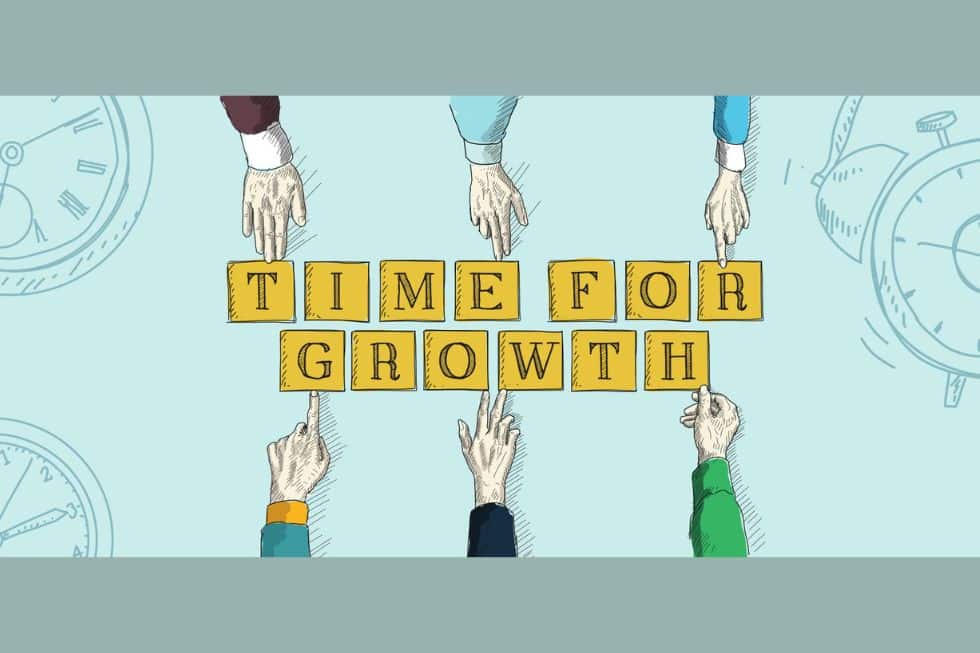




Educational systems often resemble investors who scan a crowded market and place their capital on the stocks that rise first. Some talents surge early, compounding rapidly and rewarding timely investment. Others, however, are like undervalued assets — quiet at first, gaining strength only when the surrounding conditions shift. A system that judges too quickly risks mistaking early momentum for permanent worth.
Ability does not grow in isolation. It is more like a seed responding to soil, climate and season than a fixed label attached at birth. Social norms, technological change and economic demand act as shifting weather patterns, altering which traits flourish and which remain dormant. When certain abilities appear to “bloom late,” it is often not because they were absent, but because the ecosystem had not yet provided the light in which they could be seen. A serious economic understanding of gifted education (specialized teaching for students who are intellectually talented) must therefore hold two ideas at once: Some forms of talent require early cultivation to reach their full height, while others reveal their value only when the landscape evolves.
The true challenge is not choosing between planting early or waiting for later growth. It is designing an educational ecosystem rich enough to sustain both the fast-sprouting and the slow-maturing, ensuring that no season of development is mistaken for the whole story of potential.
Karnes and institutional flexibility
The life and work of Professor Emeritus Frances A. Karnes offer a practical illustration of what it means to design institutions that recognize both early potential and evolving talent. Through the establishment of the Frances A. Karnes Center for Gifted Studies at the University of Southern Mississippi, Karnes did not merely advocate for gifted children — she helped build a statewide infrastructure that treated talent development as a public responsibility rather than a private accident.
Her role in shaping Mississippi’s Gifted Education Act is especially instructive. By mandating identification in grades two–six, requiring service hours, ensuring teacher licensure and funding instructional positions, the legislation institutionalized early investment in mathematically and intellectually precocious students. In economic terms, this reduced the probability of underinvestment in highly cumulative domains. It recognized that in fields such as mathematics and physics, delay can permanently narrow opportunity.
Yet Karnes’s philosophy was never confined to early selection alone. She rejected the myth that gifted students “get it on their own,” but she also rejected rigid notions of ability tied to age, seat time or arbitrary promotion standards. Her emphasis on appropriate instructional level rather than chronological age reflects precisely the flexibility required in a portfolio model of talent development. Institutional structure, in her view, should adapt to the learner, not the reverse.
Moreover, her commitment to teacher training reveals another dimension often missing in theoretical debates: Talent development depends on intermediary human capital. Identification without educator expertise yields little return. By building educator development programs and research-based practices, Karnes strengthened the complementary investments necessary for sustained growth — precisely the dynamic complementarities emphasized in human capital theory.
In this sense, Karnes’s legacy exemplifies the integration of the two principles outlined above. Early identification was not an end in itself, but part of a broader institutional ecosystem designed to keep opportunity open, raise the returns to later development and prevent systemic misallocation of ability. Her work demonstrates that the question is not whether societies should invest early, but whether they are willing to build adaptive systems capable of recognizing that ability — like the economy itself — evolves over time.
Karnes’s institutional philosophy illustrates a broader economic insight: Ability is not a fixed signal revealed once, but a trajectory shaped by investment, timing and opportunity. Theoretical work in human capital economics helps formalize this intuition.
The role of changing societal demand
One reason ability may appear to “bloom late” is that society’s demand for particular skills changes.
Economic history provides many examples. Entire categories of talent — software engineering, data science, digital design, AI research — were either nonexistent or peripheral only a few decades ago. Individuals whose comparative advantage lay in these areas could not demonstrate their potential early because the relevant domains did not yet exist at scale.
Endogenous growth theory helps explain this phenomenon. In former Chief Economist of the World Bank Paul Romer’s framework, the value of ideas depends on their applicability within the production structure of the economy.
As technology evolves, so too does the shadow price of different abilities. Talent that once appeared marginal can become central. From this perspective, late-blooming ability is not an anomaly; it is a predictable outcome of structural change.
In mathematics, physics and certain areas of engineering, early exposure and sustained challenge are often critical. These domains are highly cumulative; later learning depends heavily on mastery of earlier concepts. Lubinski and Benbow’s longitudinal work on mathematically precocious youth demonstrates that early mathematical ability predicts later contributions to science, technology, engineering and mathematics (STEM) fields, including patents and publications
In such fields, failure to challenge early can permanently foreclose later opportunities. Here, early gifted education plays a uniquely powerful role.
By contrast, fields such as entrepreneurship, leadership, policy design and even some scientific domains rely heavily on integrative thinking, judgment and contextual reasoning — capacities that often mature later. American psychologist and distinguished Professor Emeritus Dean Simonton’s work on creativity shows that peak creative output varies widely across disciplines and individuals, with many innovators producing their most influential work well into midlife. Similarly, research on entrepreneurship suggests that successful founders are often older, benefiting from accumulated experience, networks and domain knowledge rather than early technical brilliance alone
These findings underscore a central point: Early gifted education is essential in some domains.
AI, late bloomers and the expansion — and stratification — of opportunity
In the age of AI, where algorithms increasingly generate optimal solutions at remarkable speed, the meaning of “Gifted Talent” is quietly shifting. In the past, exceptional memory, calculation skills or technical precision were seen as rare forms of intelligence. Today, however, these capabilities can often be replicated — or even surpassed — by machines. What remains uniquely human is not merely the ability to solve problems, but the ability to ask original questions, sense hidden patterns and imagine possibilities beyond existing data. Gifted individuals may therefore matter not because they outperform AI in efficiency, but because they introduce perspectives that algorithms cannot easily anticipate.
Technological progress has always reshaped how society values human abilities. The typewriter, for example, allowed anyone to produce neat and legible text regardless of handwriting skill. In a similar way, AI now “standardizes” analytical tasks, making high-level outputs accessible to a broader population. As technical barriers fall, the traits that stand out most are intuition, creativity and the courage to challenge established assumptions. Gifted Talent, in this sense, is less about superior processing power and more about cognitive flexibility — the capacity to connect distant ideas and redefine the problem itself.
Rather than competing with AI, gifted individuals may play a complementary role. As machines handle optimization and pattern recognition, human value shifts toward ethical judgment, interdisciplinary thinking and visionary insight. The question is not whether gifted students are necessary, but how their abilities evolve in a world shaped by intelligent tools.
In an era of algorithmic precision, Gifted Talent may represent the expanding frontier of human originality — the space where imagination, ambiguity and intuition continue to guide innovation beyond what optimization alone can achieve.
Premature closure or portfolio development
Educational systems are most effective when they function not as sorting machines, but as environments for sustained cultivation. Different forms of talent grow at different speeds. Some abilities develop rapidly and benefit from immediate acceleration. Others deepen gradually, gaining clarity and strength as experience, maturity and context evolve. The objective is not to identify once and finalize, but to design conditions under which talent can continue to expand.
Early identification can be valuable, particularly in cumulative fields where foundational skills compound over time. But the true strength of a gifted system lies in its capacity to support growth beyond initial signals. Talent is not a single moment of recognition; it is a trajectory. Systems that allow individuals to re-engage, redirect and accelerate at multiple stages create more opportunities for high-level development.
In periods of rapid technological and economic change, flexibility becomes an asset. The domains that will define the next generation of innovation may not yet be fully visible. Educational structures that remain open to evolving strengths increase the likelihood that emerging forms of excellence will be recognized and cultivated. Rather than narrowing pathways early, forward-looking institutions build layered opportunities that enable talent to compound over time.
A developmental portfolio approach, therefore, strengthens gifted education. Intensive early challenge in highly cumulative disciplines remains essential. At the same time, broad intellectual enrichment expands exposure, adaptive pathways enable renewed acceleration and lifelong learning systems allow new expertise to crystallize. Such an approach does not merely avoid lost potential — it actively maximizes the probability that exceptional ability, whenever it becomes visible, can grow into sustained contribution.
Structural constraints
An example of the ways that current educational systems limit opportunities for gifted students comes in the format of the assignment of Carnegie units for credits toward high school graduation. Because this system is primarily based on spending a specified amount of time in a particular course, most high school experiences are detrimental to advanced students, who must either languish in a course for much longer than they need to.
On the other hand, if they are allowed to move more quickly, the accelerated courses they take receive fewer Carnegie units, meaning that the students must complete twice as many courses to obtain the same number of hours toward their graduation. Without proper training in working with gifted students and recognizing their needs, educators cannot appreciate the extent of the devaluation gifted students experience at the hands of educators.
Case illustration
One example of these concepts that comes from the Karnes Center focuses on a young man who attended the Summer Program for Academically Talented Youth (AT Program) in the early 2000s. The AT Program, as it was then known, was a forerunner of dual-credit programs currently prevalent in most high schools today and provided an intensive academic immersion experience over the course of three weeks. One of the most popular courses was advanced mathematics. On the first day of the course, students were tested to see which mathematics skills had already been mastered and which skills they were ready to learn.
At that time, the young man in question tested in a way that indicated his readiness to begin Algebra I. Most students who took the course finished one high school math credit during the three-week period. This young man, however, when given the opportunity to explore mathematical concepts at his own pace, flew through not only Algebra I, but also Algebra II and Geometry in the three-week time frame. When his transcripts were presented to his high school, they were reluctant to acknowledge the credits he had earned. The path toward graduation at his school required that students take one math course in each of the four years of high school, and because they did not have an appropriate number of even more advanced courses for him to take during his junior and senior years in high school, they wanted to force him to stay in the lower-level courses that he had already mastered.
Misalignment across educational levels
This is not uncommon and is not limited to high schools. Even students who attend accelerated high schools must advocate for their placement in higher-level college courses as freshmen, rather than, say, taking an introductory course in biology for nonmajors when they have already taken courses such as Human Infectious Diseases or Microbiology at their advanced high school. It is extremely important to advocate for appropriate alignment agreements between secondary and tertiary schooling entities if gifted students are to be appropriately recognized without penalty for transferring more than the appropriate number of credits into the university program.
[Kaitlyn Diana edited this piece.]
The views expressed in this article are the author’s own and do not necessarily reflect Fair Observer’s editorial policy.
Who’s Learning? The Asymmetry of Human–AI Collaboration
AI’s capacity for dialogue positions it as a potentially powerful tool for collaborative learning. Humans can learn from AI, but...

FO° Talks: AI, Education and “How to Raise Successful People”
In this episode of FO° Talks, Heather (Heldman) Neeman interviews Esther Wojcicki about her TRICK method (Trust, Respect, Independence, Collaboration...
Outside the Box: AI’s Impact on Society and (Potentially) Education
In “Outside the Box,” I interrogate ChatGPT to better understand how AI “reasons.” It’s like a conversation with an intelligent...

Personal Growth Over Productivity: AI Makes Current Education Obsolete
With AI and automation outpacing humans in many career fields, people may no longer need to work to survive. Universal...

Support Fair Observer
We rely on your support for our independence, diversity and quality.
For more than 10 years, Fair Observer has been free, fair and independent. No billionaire owns us, no advertisers control us. We are a reader-supported nonprofit. Unlike many other publications, we keep our content free for readers regardless of where they live or whether they can afford to pay. We have no paywalls and no ads.
In the post-truth era of fake news, echo chambers and filter bubbles, we publish a plurality of perspectives from around the world. Anyone can publish with us, but everyone goes through a rigorous editorial process. So, you get fact-checked, well-reasoned content instead of noise.
We publish 3,000+ voices from 90+ countries. We also conduct education and training programs
on subjects ranging from digital media and journalism to writing and critical thinking. This
doesn’t come cheap. Servers, editors, trainers and web developers cost
money.
Please consider supporting us on a regular basis as a recurring donor or a
sustaining member.
Will you support FO’s journalism?
We rely on your support for our independence, diversity and quality.





Comment