





I have seen Paraguay play at the Estadio Defensores del Chaco in Asunción. It is not the biggest stadium in South America. It is not the most glamorous. But on match night, it feels like a country speaking in one voice.
That is what makes football different in Latin America and the Caribbean. It is never just sport. It is politics without speeches. It is diplomacy without communiqués. It is national identity under floodlights.
I have also stood in national stadiums in Guyana, Barbados, Guatemala, Nicaragua and Bolivia. None of those countries will be in the 2026 World Cup. Their absence is part of the story, too. Football reflects talent, of course. But it also reflects institutions, investment, migration, coaching, federation competence and the state’s ability to organize ambition over time.
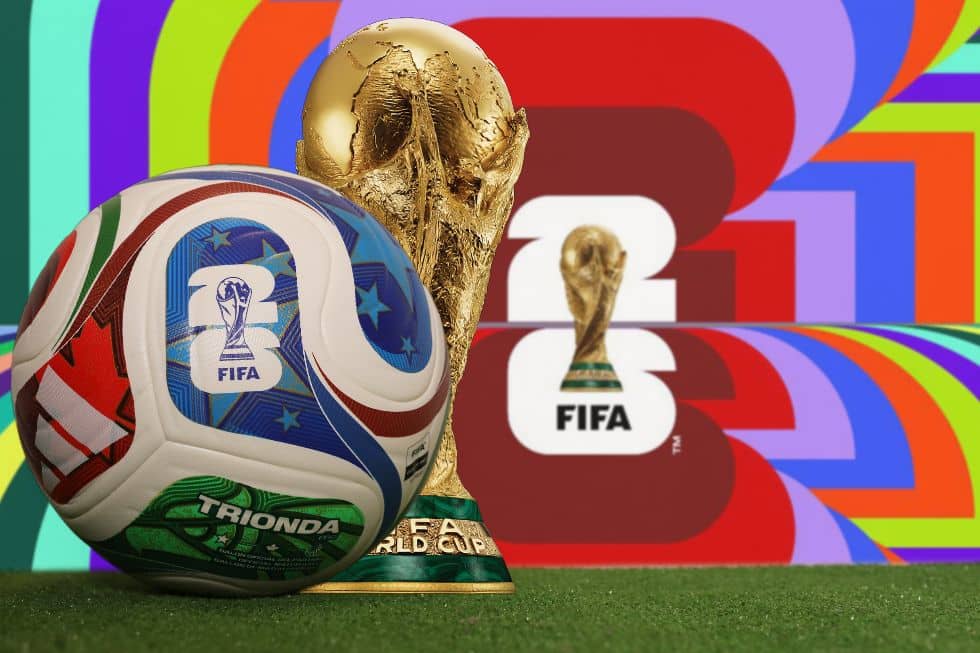
The 2026 World Cup will make that especially clear. For the first time, the tournament will bring 48 teams together across Canada, Mexico and the US. FIFA describes it as the largest edition of the tournament, with 104 matches across 16 host cities. Mexico will open the tournament against South Africa at Mexico City Stadium on June 11.
That geography matters. This will be a North American World Cup. But Latin America may give it much of its emotion. Argentina arrives as the defending champion. Brazil arrives with its mystique intact, but its certainty diminished. Colombia, Uruguay and Ecuador look strong enough to punish anyone. Mexico carries the burden of hosting. Paraguay returns with its familiar mix of discipline and defiance. Panama, Haiti and Curaçao bring stories that reach far beyond the pitch.
Latin America’s contenders
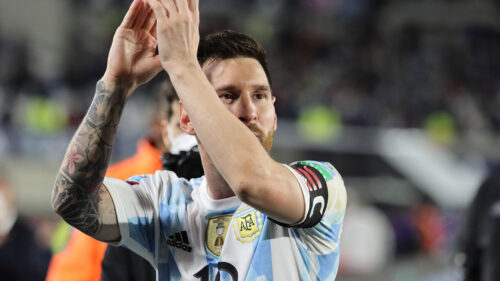
The region’s strongest team remains Argentina. This is not only because footballer Lionel Messi lifted the trophy in Qatar in 2022, but also because Argentina has sustained excellence after that victory. In South American qualifying, Argentina finished first, ahead of Ecuador, Colombia, Uruguay, Brazil and Paraguay.
That matters in a World Cup. Talent wins moments; identity wins tournaments. Argentina has both. It has experience, confidence, a clear tactical personality and the aura that comes with having survived the pressure of a World Cup final. The question is not whether Argentina can win again. It is whether a team built around one of football’s most consequential generations can manage one more act.
Brazil is different. It may still have the highest ceiling in the region. But it enters the tournament with more uncertainty than mythology usually allows. Brazil finished only fifth in South American qualifying, behind Argentina, Ecuador, Colombia and Uruguay. That does not make Brazil weak. It makes Brazil interesting.
Brazil’s story is now about repair. Italian football manager Carlo Ancelotti gives the team authority, calm and European managerial prestige. But the Neymar question captures the larger tension. Neymar da Silva Santos Júnior remains Brazil’s all-time leading scorer, but injuries and form have made his selection a national debate. Ancelotti told Reuters that any decision on Neymar would be based on fitness and team needs, not sentiment.
That is Brazil’s dilemma in miniature. The country has endless football memories. It also needs a modern team. The old romance says Brazil must entertain. The modern game says Brazil must press, run, track back and suffer. Ancelotti’s challenge is not simply to select players. It is to decide what Brazil means now.
Colombia may be the best dark horse from the region. It finished third in South American qualifying, ahead of Uruguay and Brazil. Colombia has enough attacking quality to frighten elite teams, but its deeper advantage may be psychological. The national team has often served as a rare point of unity in a country marked by political division, regional inequality and long memories of conflict.
A good Colombian run would not erase those tensions. Football never does. But it can briefly gather a fragmented country around a common story. That is one reason Colombia matters in this tournament. It is not just trying to advance. It is trying to show that its modern image is bigger than its old stereotypes.
Uruguay brings another kind of political lesson. It is small, but it thinks big. Few countries have done more with less in world football. Uruguay’s football identity is built on toughness, tactical maturity and collective pride. In a 48-team tournament, where the expanded field may create more uneven group matches, Uruguay’s value will rise as the tournament gets harder. It is built for knockout football.
Ecuador may be the most underappreciated on the South American side. Its qualifying campaign was remarkable for one reason above all: consistency. Ecuador finished second in the South American Football Confederation (CONMEBOL) qualifying, behind only Argentina. That reflects organization, athleticism, discipline and a generation that no longer sees qualification as the ceiling.
Ecuador also represents a broader trend. South American football is no longer only Argentina, Brazil and Uruguay. The middle of the continent’s football table has grown stronger. Colombia, Ecuador and Paraguay can now make life miserable for anyone. That says something about talent development, coaching, migration and the global football market. European clubs scout South America earlier and more aggressively than ever. Young players leave home sooner. National teams then become reunion sites for globalized talent.
Mexico faces a different burden. It is not the strongest Latin American team. But it may be the most exposed. As a host, Mexico opens the tournament in Mexico City against South Africa. That is manageable. It is also dangerous. Host nations are expected to advance. Mexico’s fans will demand more than competence.
For Mexico, the World Cup is about national image. It is a chance to showcase culture, infrastructure, pride and regional leadership. But it also arrives at a moment when migration, security and relations with the US continue to shape how Mexico is discussed abroad. A strong Mexican performance would not solve those issues. But it would project confidence. A poor one would deepen frustration with a football system that has often promised more than it delivered.
Then there is Paraguay. It may not be a favorite. But it belongs in this story. Paraguay qualified from South America’s unforgiving competition and landed in Group D with the US, Türkiye and Australia. Its opener against the US will immediately place it in front of a host-nation audience.
Paraguay’s football personality has long matched its national self-image: resilient, physical, proud and difficult to break. It does not usually seduce neutrals; it frustrates them. That is part of the point. Paraguay has rarely had the global soft power of Brazil, Argentina or Mexico. But on a football field, it can force larger countries to negotiate with it on equal terms.
The Defensores del Chaco is not merely a venue. Its name invokes the Chaco War, the conflict against Bolivia that helped shape modern Paraguayan nationalism. Football in Paraguay carries that memory of endurance. When Paraguay plays, it often plays as if survival itself were a style.
Paraguay also has something almost no other team in the tournament has: an indigenous language that functions as both national identity and, at times, tactical advantage. Paraguayan players have long used Guaraní on the field, including in ways opponents do not easily understand. During the 2010 World Cup, The National reported that Paraguay’s players used Guaraní on the pitch, which could help disguise communication during play. That detail matters because Guaraní is not folklore in Paraguay. It is a living national language. Paraguay’s 1992 Constitution recognized both Spanish and Guaraní as official languages. Guaraní remains central to Paraguayan identity and daily life.
In most of Latin America, indigenous languages were pushed to the margins by colonial rule, class hierarchy and urban modernization. Paraguay is different. Guaraní is not a museum piece; it is spoken in homes, markets, politics, music and football. On a World Cup field, it becomes something even rarer: a national code, spoken in public, hidden in plain sight.
The most powerful stories, however, may come from the Caribbean.
The Caribbean’s remarkable World Cup stories
Haiti’s qualification is extraordinary. Reuters reported that Haiti had to play its home fixtures in Curaçao due to instability and violence in Haiti. Haiti’s coach, Sébastien Migné, had not been able to visit the country because of safety concerns. Yet the country still topped its qualifying group and reached the World Cup.
That is state fragility in football form. Haiti will not arrive with the resources of Argentina or Brazil; it will arrive as a national team representing a country whose citizens have endured violence, hunger, displacement and institutional collapse. In that context, qualification is more than sporting success. It is a form of visibility. It tells the world that Haiti is not only a crisis; it is also a people, a flag, a song and a team.
Curaçao offers a different but equally compelling story. In that same article, Reuters reported that Curaçao became the smallest country ever to qualify for a World Cup, surpassing Iceland’s previous record. It also noted that Curaçao’s squad was composed entirely of Dutch-born players with Antillean roots.
That is the modern Caribbean in one team sheet. Curaçao’s success is about diaspora, colonial history, dual identity and football’s ability to turn dispersed communities into a national project. It raises a question that runs through the entire region: What does national representation mean when so many citizens, descendants and cultural communities live elsewhere?
Panama, too, deserves attention. It qualified by beating El Salvador three to zero and topping its group. It now faces a difficult task in Group L with England, Croatia and Ghana. That is a brutal draw. But Panama’s presence confirms the rise of Central American football beyond the old assumption that the region’s World Cup hopes begin and end with Mexico, Costa Rica or the US’ Confederation of North, Central America and Caribbean Association Football (CONCACAF) rivals.
More than a tournament
The expanded World Cup has been criticized for diluting quality. There is some truth in that. More teams will mean more mismatches, but it also means more stories. For Latin America and the Caribbean, expansion has opened space for nations whose football identities were real long before they became visible to global audiences.
That visibility matters. International sport gives states a stage they do not otherwise possess. A country ignored in diplomatic forums can become unavoidable for 90 minutes; a fragile state can show resilience; a small island can become the world’s underdog; a country known abroad for crisis can remind the world that its people are more than their suffering.
That is why the 2026 World Cup will matter for the Americas. Argentina and Brazil will chase the trophy. Colombia, Uruguay and Ecuador will look to disrupt the hierarchy. Mexico will try to meet the moment at home. Paraguay will bring defiance, and perhaps a few instructions in Guaraní that its opponents will not understand. Haiti, Curaçao and Panama will carry the pride of places too often underestimated.
The World Cup will not fix Latin America’s problems. It will not end violence, rebuild institutions, resolve migration or cure polarization. But it will reveal something important. Across the region, football remains one of the few public languages that still binds people together.
On match night, a country can still speak in one voice. In 2026, the world will be listening.
[Kaitlyn Diana edited this piece.]
The views expressed in this article are the author’s own and do not necessarily reflect Fair Observer’s editorial policy.
Will Trump Turn the World Cup into a MAGA Triumph?
The FIFA World Cup kicks off on June 11, and America is hosting several matches. But does US President Donald...
Bad Bunny’s Record-Breaking Popularity Proves That Latinos are Paving the Way in the Americas
Puerto Rican performer Bad Bunny’s 2026 Super Bowl Halftime Show marked a historic moment as the first to be performed...
Is Football a Force for Good or Evil?
We have just barely recovered from the morality stress-test of Qatar and another global carnival of physical exertion is already...

Football and Politics: An Old Love Affair
The inaugural World Cup got off to an inauspicious start. The competition was cold-shouldered by the European powers. They objected...
Street Grit and Messi Magic Lead Argentina to Glory
Politics, dictatorship and football have been closely intertwined in Argentina’s troubled history. In 1978, the country’s murderous military dictatorship hosted...
Support Fair Observer
We rely on your support for our independence, diversity and quality.
For more than 10 years, Fair Observer has been free, fair and independent. No billionaire owns us, no advertisers control us. We are a reader-supported nonprofit. Unlike many other publications, we keep our content free for readers regardless of where they live or whether they can afford to pay. We have no paywalls and no ads.
In the post-truth era of fake news, echo chambers and filter bubbles, we publish a plurality of perspectives from around the world. Anyone can publish with us, but everyone goes through a rigorous editorial process. So, you get fact-checked, well-reasoned content instead of noise.
We publish 3,000+ voices from 90+ countries. We also conduct education and training programs
on subjects ranging from digital media and journalism to writing and critical thinking. This
doesn’t come cheap. Servers, editors, trainers and web developers cost
money.
Please consider supporting us on a regular basis as a recurring donor or a
sustaining member.
Will you support FO’s journalism?
We rely on your support for our independence, diversity and quality.





Comment