


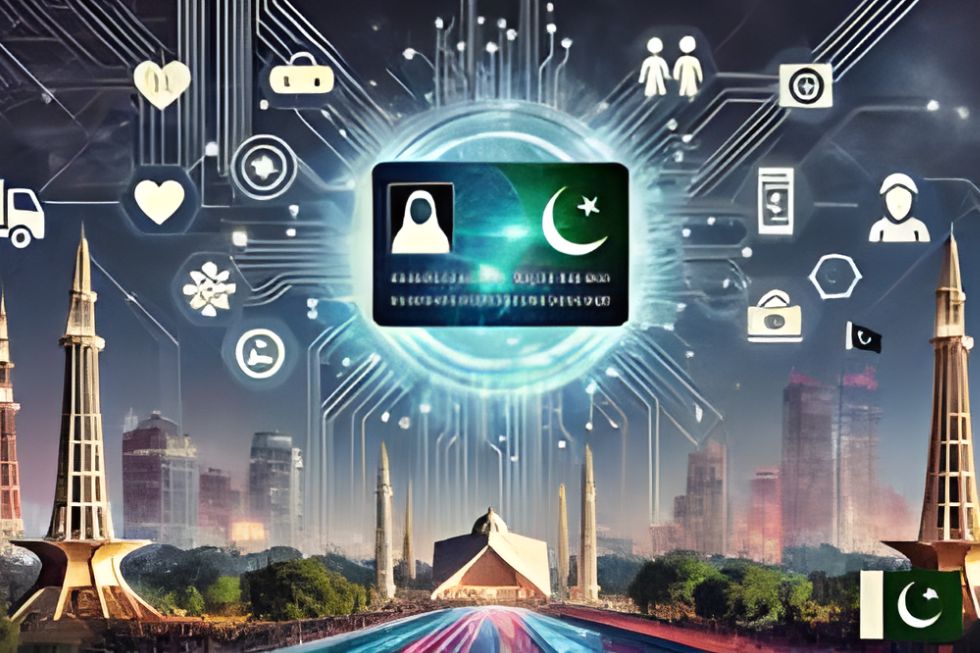


Pakistan is charting an ambitious course toward a citizen-centric, digitally empowered nation under the Digital Nation Pakistan Act 2025 and the National Digital Commission. At the heart of this transformation lies the newly established Pakistan Digital Authority (PDA), mandated to design, implement and oversee a coherent digital governance framework across the public sector.
With a population of more than 240 million people, over half being under the age of 30, digital transformation has shifted from being a policy choice to a strategic necessity. Pakistan’s leadership, under pressure from financial constraints, bureaucratic inefficiencies and global technological shifts, is optimistic that digital public infrastructure will not only reinforce the state’s authority but also create economic opportunities and restore public trust in government.
From paper files to platforms
The implications of Pakistan’s digital measures are significant. The federal e-Office system was fully adopted in 38 out of 39 divisions, reducing the average file-processing time from 25 days to four days and saving the government approximately 9.5 billion Rupees. Moreover, the introduction of performance dashboards has enabled senior leadership to monitor workflows in real-time and ensure accountability.
Citizen-focused platforms are also expanding rapidly. The PAK App now serves 1.37 million users, processes more than 1.3 million applications and collects 22.86 billion Rupees in taxes. This has thereby facilitated the movement of skilled workers across provinces. In the healthcare sector, the One Patient One ID program has significantly improved efficiency. It has processed 813,000 registrations and 1.5 million lab tests, which has cut waiting times by three to four hours. Furthermore, the program has increased the daily outpatient capacity at major hospitals, such as the Pakistan Institute of Medical Science (PIMS), to 7,500 patients.
Inclusive digital services and provincial innovation
Alongside the steady expansion of digital access across underserved regions, a range of targeted initiatives under the Benazir Income Support Program (BISP) are playing a transformative role in deepening social and financial inclusion. Programs such as Smart Villages, Asaan Khidmat Centers, Business Facilitation Centers and Women’s Digital Wallets collectively work to bridge structural gaps that have historically limited marginalized communities, particularly women, from fully participating in economic and civic life.
Smart Villages integrate connectivity, digital services and community-based infrastructure to ensure that rural populations can access education, healthcare information, government services and financial platforms without the barriers of distance or cost. Complementing this, Asaan Khidmat Centers provide streamlined, citizen-focused service delivery by consolidating multiple administrative and welfare services into accessible local hubs, thereby reducing bureaucratic friction and improving transparency.
Business Facilitation Centers further contribute to inclusion by supporting micro-entrepreneurs and small enterprises with registration assistance, regulatory guidance and access to financing opportunities. These services are especially critical for individuals in the informal economy who lack the resources or knowledge to formalize and scale their businesses.
Perhaps most impactful are Women’s Digital Wallets, which enable direct, secure and transparent transfer of financial assistance to female beneficiaries. By giving women personal control over funds and access to digital financial tools, the initiative strengthens financial autonomy, encourages savings behavior and enhances women’s participation in household and community decision-making.
Together, these interconnected efforts demonstrate a comprehensive approach to inclusive development. This not only expands digital infrastructure but also ensures that vulnerable populations can meaningfully benefit from it through improved service access, economic empowerment and greater social equity
The establishment of the Punjab Enforcement Regulatory Authority as a gender-sensitive digital governance model has shifted women’s roles in decision-making and enforcement, while simultaneously highlighting that digital reform can go hand in hand with social inclusion.
Strengthening digital sovereignty
Over the past few years, Pakistan has been building its digital infrastructure and deploying no less than 140 applications, launching 126 portals and automating 31 ministries. Telecom development is remarkable, with 200 million subscribers, 60% of the population using mobile broadband and 31 million locally-produced handsets. The installation of three submarine cables (Africa-1, 2Africa and SEA-ME-WE 6) helps to increase the capacity of the internet while enhancing the country’s control over digital connectivity. The government is also implementing regulatory changes that will soon enable 5G technology, Mobile Virtual Network Operators (MVNOs) and infrastructure sharing, all of which are expected to transform the internet access landscape in the coming decade.
Innovation, skills and the digital economy
The dream for Pakistan keeps on changing along the lines of technology and innovation. Through the National AI Policy 2025 and the National Semiconductor Program, 7,200 people have been trained in chip design. Plus, more than 300 startups have received support and the Pakistan Startup Fund helps international accelerators. Furthermore, SkillTech and DigiSkills have given 920,000 learners certifications from Google, Huawei, Microsoft and AI companies.
Pakistan has achieved $3.8 billion in IT exports, participated in 14 global exhibitions and attracted foreign direct investment worth Rs 700 million as its achievements. Furthermore, the representation of women has been increasing, with women accounting for 25-38% of the trainees and 84 women-led startups achieving success. Collectively, these initiatives point to a developing and digitally empowered ecosystem that not only promotes economic growth but also facilitates social inclusion.
The Ministry of IT & Telecom credits the Prime Minister’s leadership, the Field Marshal’s support and the regulatory and operational teams’ unyielding efforts as the primary factors behind turning the vision into reality. Pakistan has a straightforward plan: establish enabling environments, implement procedures, set guardrails and provide training when necessary. The year 2025 was a phase of laying the groundwork. 2026 is expected to be a year of large-scale, robust and leading initiatives. Pakistan is poised to be a technology powerhouse, not just embracing the digital era but driving the next three decades of technological advancement. This positioning is expected to generate significant wealth, enhance inclusivity and boost the country’s international competitiveness.
Artificial intelligence: Promise and risk
AI is rapidly emerging as one of the most influential technologies of the 21st century, offering significant potential to improve efficiency, governance, education and economic opportunity. In Pakistan, this promise is already being explored in some institutional arenas. For example, courts and several provincial governments are beginning to experiment with AI tools to improve administrative efficiency, such as case management and document review, helping reduce bureaucratic delays and improve service delivery.
Alongside government adoption, regulators are actively considering how to govern AI in complex sectors like finance. The State Bank of Pakistan (SBP) and related bodies are engaged in drafting frameworks and guidelines that could govern how AI and algorithmic systems are used in the banking sector, with an emphasis on issues such as data security, fairness and transparency, aligning with broader digital policy priorities found in Pakistan’s national AI strategy discussions.
In the education sector, AI-driven technologies are reshaping traditional practices. Smart learning platforms, virtual tutors and automated assessment tools have begun to offer more personalized learning pathways for students and reduce routine administrative burdens for teachers. Studies show educators experiencing efficiency gains and improved engagement when using AI for lesson planning and content generation, though these benefits are highly uneven across contexts.
However, these technological advances are not evenly distributed. Persistent challenges such as inadequate digital infrastructure, limited internet access, uneven device availability and low levels of digital literacy continue to hinder equitable AI adoption across Pakistan’s education system and beyond. Research on digital inclusion highlights how rural and marginalized communities, in particular, remain disproportionately excluded from the advantages of AI, compounding existing inequalities rather than closing them.
Moreover, without robust governance, AI systems can pose real risks, from reinforcing biases or misinterpretations to exposing sensitive data if privacy safeguards are absent. Ethical considerations around algorithmic fairness and transparency are increasingly part of policy debates, especially as stakeholders call for frameworks that protect both citizens and institutions as AI becomes more widespread.
The Pakistan Digital Authority: A central role
The PDA is positioned as the principal institutional mechanism for translating the country’s digital vision into coordinated national action. Tasked with implementing the National Digital Master Plan, built upon the pillars of digital economy, digital society and digital governance, the Authority is responsible for aligning federal and provincial initiatives, formulating a National Data Strategy and establishing standards for cloud infrastructure and data interoperability. Through these functions, the PDA seeks to transform fragmented digital efforts into a unified and strategically directed national framework.
When effectively implemented, the PDA can integrate Pakistan’s diverse digital initiatives into a cohesive, future-ready system capable of delivering measurable social and economic benefits. Coordinated governance structures, interoperable data systems and standardized infrastructure can significantly enhance administrative efficiency, enable evidence-based policymaking and expand access to public services across regions.
The Authority’s long-term effectiveness, however, will depend on governance capacity, institutional coordination and sustained political commitment. Transparent regulatory mechanisms, clear implementation roadmaps and measurable performance benchmarks are essential to ensure that digital strategies translate into tangible outcomes. Strengthened collaboration among federal institutions, provincial governments and private-sector stakeholders can further reduce duplication, optimize resource allocation and accelerate nationwide digital progress.
Equally significant is the PDA’s potential role in fostering citizen trust and inclusive participation. Prioritizing data protection, accessibility and user-centered service design can ensure that digital transformation improves everyday governance, economic opportunity and social welfare. Investments in digital skills development, infrastructure expansion in underserved areas and support for innovation ecosystems will be necessary to broaden participation in Pakistan’s evolving digital landscape.
Over time, a fully functional PDA could serve as the institutional backbone of a modern digital state, supporting sustainable growth, administrative modernization and improved quality of life. Its success will ultimately be measured by how effectively digital transformation contributes to inclusive development, regional competitiveness and tangible improvements in citizens’ lived experiences.
The real test ahead
The success of Pakistan’s digital future will not be based on the number of apps launched or platforms used, but by the tangible impact of technology on public trust, opportunities and citizen rights. A digital Pakistan must be inclusive, encompassing all urban and rural populations, as well as both the connected and the isolated.
Pakistan is moving beyond AI in courts and fintech (financial technology) innovation; it is also leveraging satellite programs and inclusive digital services. Cutting-edge technology will play a crucial role in the success of these initiatives, provided it is supported by transparency, ethical safeguards and inclusivity. The PDA now faces the central challenge-its decisions will determine whether Pakistan’s digital revolution becomes a model of effective governance or a cautionary example.
[Patrick Bodovitz edited this piece]
The views expressed in this article are the author’s own and do not necessarily reflect Fair Observer’s editorial policy.
Pakistani Women’s Progress, Barriers and Path to Parity
Pakistani women have made meaningful progress across public and professional spheres, challenging the long-standing assumptions about their roles and capabilities....

Digital democracy in Indonesia: an Asian Giant in Constant Transformation
In a world afflicted by dramatic ills that include a climate crisis, a pandemic that refuses to go away and...


Support Fair Observer
We rely on your support for our independence, diversity and quality.
For more than 10 years, Fair Observer has been free, fair and independent. No billionaire owns us, no advertisers control us. We are a reader-supported nonprofit. Unlike many other publications, we keep our content free for readers regardless of where they live or whether they can afford to pay. We have no paywalls and no ads.
In the post-truth era of fake news, echo chambers and filter bubbles, we publish a plurality of perspectives from around the world. Anyone can publish with us, but everyone goes through a rigorous editorial process. So, you get fact-checked, well-reasoned content instead of noise.
We publish 3,000+ voices from 90+ countries. We also conduct education and training programs
on subjects ranging from digital media and journalism to writing and critical thinking. This
doesn’t come cheap. Servers, editors, trainers and web developers cost
money.
Please consider supporting us on a regular basis as a recurring donor or a
sustaining member.
Will you support FO’s journalism?
We rely on your support for our independence, diversity and quality.
AI Helps Us Decode Elite Evasion at Davos
Canadian Prime Minister Mark Carney shocked Davos by calling the global order “partially false” and demanding “honesty about the world...

The Propaganda Test: What AI Reveals About Democratic Discourse (Part 1)
We’ve never been closer to nuclear midnight. Can we trust the rhetoric of our political leaders, who seek to guide...

Aadhaar: A Better Digital Identity and the Peril of Cybercrime
India’s Aadhaar digital identity program has had explosive growth over the past 15 years, growing from a single identity card...






Comment