


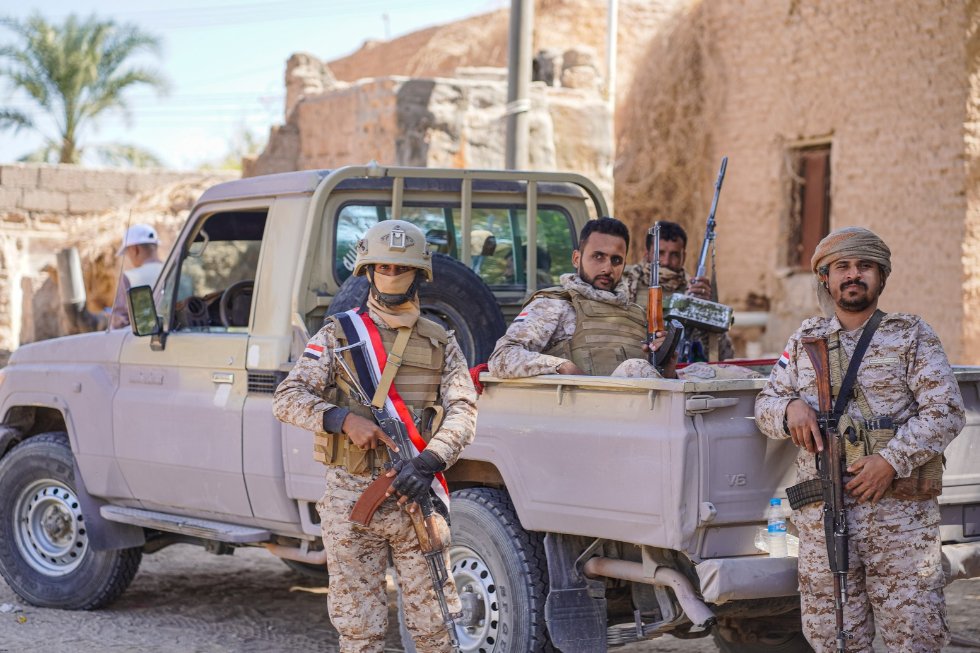



The confrontation between Saudi Arabia and the United Arab Emirates (UAE) over southern Yemen has exposed a fundamental contradiction at the heart of international efforts to resolve the Yemeni conflict: The regional powers that have exercised considerable influence over Yemen’s political and military trajectory have never shared a common vision of the country’s future.
For years, Riyadh and Abu Dhabi operated within the framework of the Saudi-led coalition, formally supporting Yemen’s internationally recognized government against the Houthi movement (Ansar Allah). Beneath this apparent cooperation, however, lay substantial differences over the composition of Yemen’s future political order, the distribution of authority in the south, the role of Islamist political movements, and the strategic importance of the country’s ports, islands and maritime corridors.
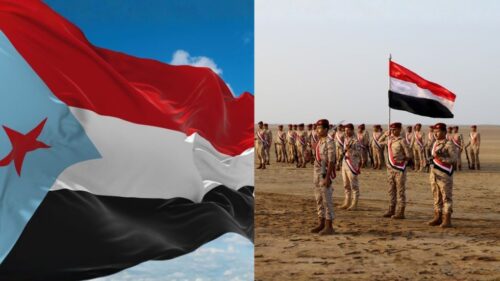
These differences became increasingly difficult to contain in December 2025 and January 2026, when the UAE-supported Southern Transitional Council (STC) expanded its territorial control across parts of southern and eastern Yemen before Saudi-supported forces reversed its advances. The subsequent Saudi-backed campaign significantly weakened the STC’s military and territorial position. Yet the political consequences of this confrontation extend well beyond the immediate redistribution of military power.
The STC’s disputed dissolution and political survival
A particularly significant development occurred on January 9, when members of an STC delegation participating in Saudi-sponsored discussions in Riyadh announced the dissolution of the organization’s political and administrative structures. STC officials immediately contested the announcement, questioning the delegation’s authority to make such a decision and alleging it was reached under pressure. Reuters documented the emerging divisions within the movement. United Press International also reported the objections raised by STC figures.
Contemporaneous reporting by South24 provides further insight into the circumstances surrounding the announcement. It documents competing accounts emerging from Riyadh and southern Yemen, including objections from STC officials who rejected the delegation’s authority to dissolve the organization. Subsequent statements attributed to senior STC figures, including Rajeh Bakreet, further reinforced allegations that the delegation had been compelled to accept the dissolution announcement. These allegations are politically significant because they raise questions about the legitimacy of the process through which the organization’s dissolution was announced.
The distinction between an organization’s formal dissolution and its continuing political existence is critical. The Saudi-sponsored process may have dismantled much of the STC’s previous institutional structure and reversed its territorial advances, but it did not eliminate the political networks or southern constituencies associated with its project. The movement subsequently re-emerged under the name Transitional Council of South Arabia, continuing its political activities and mobilization across southern Yemen. The UK House of Commons Library documents this development and the persistence of protests associated with the movement.
The events therefore raise a broader question about the limits of externally engineered political restructuring. Can a political movement be removed from the institutional landscape without addressing the grievances and political aspirations that contributed to its emergence? Yemen’s recent experience suggests that organizational dismantlement, even when supported by considerable military and diplomatic pressure, cannot substitute for a negotiated settlement of the underlying political questions.
The Saudi–Emirati confrontation has consequently exposed not simply a disagreement between two regional powers, but a deeper crisis of political legitimacy within Yemen’s internationally recognized governing structures. It demonstrates why political arrangements designed primarily to accommodate external interests and manage competing elites are unlikely to deliver sustainable peace.
A crisis of legitimacy in Yemen’s leadership
One of the most consequential outcomes of the Saudi–Emirati disagreement has been the further weakening of the political legitimacy of Yemen’s internationally recognized governing camp. Removing the STC from the Presidential Leadership Council (PLC) has created an institutional contradiction that international policymakers cannot afford to overlook. A presidential council established in 2022 to accommodate competing political and military forces now risks presenting itself as a representative national leadership while excluding the most influential political movements in southern Yemen.
Without the STC, the PLC is less representative of Yemen’s political landscape, particularly in the south. Its claim to speak on behalf of the internationally recognized government camp, let alone the country as a whole, becomes increasingly difficult to sustain when a major southern political movement and its constituencies are excluded from its governing structure. The recent protests in South Yemen called by the STC indicate the influence the STC continues to enjoy there.
This does not mean that the STC should be regarded as the exclusive representative of southern Yemen. Its leadership, political objectives, territorial ambitions and relationship with Abu Dhabi have all generated significant disagreement. Nevertheless, these controversies do not negate the movement’s political significance or justify treating its constituency as irrelevant to future negotiations.
The establishment of the PLC in April 2022 was intended partly to broaden political representation and consolidate the anti-Houthi camp. The transfer of presidential powers from Abdrabbuh Mansur Hadi to an eight-member council was presented as an opportunity to overcome the fragmentation that had paralyzed the internationally recognized government. In principle, the arrangement offered a framework for accommodating competing political and military actors within a collective leadership structure.
In practice, however, the PLC institutionalized existing divisions without resolving the fundamental disagreements among its members. Its composition brought together figures with different political backgrounds, regional constituencies, military resources and relationships with external sponsors. Some were associated with Saudi-supported networks, while others maintained political and military relationships with the UAE. Their participation in a collective governing structure did not establish a shared understanding of Yemen’s future political order.
The STC’s original inclusion did not resolve the disagreement over southern independence. Its subsequent removal cannot resolve that disagreement through exclusion. The deeper issue is one of political legitimacy. International recognition, external financial assistance and agreements among influential political and military figures may provide diplomatic standing and administrative continuity. They cannot, however, automatically generate public confidence or establish effective governmental authority.
A government unable to provide security, pay public-sector salaries, maintain essential services or exercise meaningful control over its institutions will struggle to establish credibility among the population it claims to represent. Equally, a leadership council that excludes significant political constituencies cannot credibly present itself as the institutional embodiment of national consensus.
The PLC may therefore have become more manageable for its principal external sponsor after the STC weakened, but institutional manageability should not be confused with political representativeness. This distinction lies at the center of Yemen’s continuing legitimacy crisis.
The unresolved southern question
The Saudi–Emirati disagreement has also exposed the limitations of an approach to Yemen that treats territorial control as a substitute for political consent. The southern question is rooted in historical grievances that predate the current conflict. The unification of North and South Yemen in 1990 did not eliminate the political, economic and institutional differences between the two former states. The 1994 civil war, subsequent centralization of authority, and persistent grievances concerning political representation, land, employment and resource distribution contributed to a lasting sense of marginalization among significant sections of the southern population.
These grievances provided an important political foundation for the emergence of the Southern Movement and, subsequently, the STC in 2017. The STC’s territorial expansion in December 2025, followed by its reversal in January 2026, illustrated the limitations of attempting to settle these differences through military consolidation. The subsequent Saudi-backed dismantling of its institutional position and the disputed announcement of its dissolution should not be interpreted as resolving the political questions that gave rise to the movement.
The continued operation of STC-aligned political networks and the movement’s subsequent re-emergence demonstrate an important distinction: Dismantling an organization’s formal structures does not necessarily eliminate its political relevance.
Territorial control, moreover, does not automatically establish political legitimacy. A movement may exercise authority over territory through military strength, external assistance or administrative control without possessing an uncontested mandate from the population living there. Conversely, the military defeat or political exclusion of that movement does not automatically confer legitimacy on its successors.
This distinction has important implications for international diplomacy. The southern question cannot be reduced to determining whether the STC retains its previous institutional position or whether its leadership continues to exercise territorial authority. The central issue is how to accommodate the political aspirations and grievances of southern Yemenis within a negotiated national framework. Any settlement that confuses the political fate of a particular organization with the broader aspirations of the population it claims to represent will remain incomplete.
The growing threat to Bab al-Mandeb
Recent military developments appear to confirm the warnings I have repeatedly made about Houthi expansion towards Bab al-Mandeb and the growing threat of infiltration into the southern governorates. The withdrawal of Saudi-backed government forces from strategic positions around Bab al-Mandeb, reportedly to reinforce the defense of Aden, the temporary capital, is a deeply concerning development.
I have consistently warned that weakening the STC and undermining the unity and effectiveness of southern forces would create a dangerous security vacuum that the Houthis would exploit. Today, that danger is becoming increasingly evident. The consequences extend far beyond southern Yemen, threatening regional stability and international maritime security.
The time has come for Saudi Arabia and the international community to reassess their approach to southern Yemen. Restoring effective security coordination with southern forces, including those associated with the STC, should be considered alongside efforts to establish a more inclusive political settlement. The security of southern Yemen cannot be separated from the security of Bab al-Mandeb, just as lasting stability cannot be achieved by excluding significant southern political and military constituencies from the country’s future.
The limits of Saudi–Houthi negotiations
The problem is compounded by the tendency of regional and international policymakers to frame the Yemeni conflict primarily through Saudi security interests and the wider confrontation between Iran and its regional rivals. The Houthi movement is undoubtedly a central military and political actor. Its control over Sana’a and much of Yemen’s most densely populated northern territory gives it substantial leverage over any future political settlement. Its relationship with Iran is also an important dimension of the regional security environment. Iranian military and political support has contributed to the movement’s capabilities, although the Houthis retain their own domestic political interests, organizational structures and decision-making priorities.
The April 2022 UN-mediated truce reduced hostilities and created an opportunity for negotiations. Saudi Arabia subsequently pursued diplomatic engagement with the Houthis, seeking to reduce cross-border threats and establish arrangements that could facilitate its disengagement from the war. However, reducing direct Saudi–Houthi confrontation did not produce a comprehensive Yemeni political settlement.
This distinction between a bilateral security understanding and a national peace agreement is essential. Saudi Arabia may negotiate arrangements concerning its borders, attacks on its territory and cross-border security. Even if successful, such arrangements would not automatically resolve the political status of Sana’a, the future of state institutions, the distribution of economic resources, or the relationship between northern and southern Yemen.
A settlement negotiated principally around Saudi security interests could therefore reduce one dimension of the conflict while leaving the wider Yemeni political crisis unresolved. The Houthis must participate in comprehensive negotiations, but their inclusion should not be interpreted as endorsing their existing system of governance or accepting indefinite unilateral control over state institutions. The same principle must apply to every other political and military actor.
A sustainable settlement requires a political framework in which authority derives from negotiated constitutional arrangements, accountable institutions and an agreed distribution of power, rather than the military dominance of individual factions.
Why previous peace initiatives have failed
Yemen’s contemporary political history illustrates the recurring limitations of international initiatives that prioritize elite accommodation without resolving the structural causes of conflict. The 2011 Gulf Cooperation Council initiative facilitated the departure of former president Ali Abdullah Saleh and established a transitional framework under which Abdrabbuh Mansur Hadi assumed the presidency. The subsequent National Dialogue Conference sought to address federalism, political representation, regional autonomy and constitutional reform.
However, the transition failed to establish an agreed distribution of political authority and economic resources. Disagreements over federal boundaries, representation and the future structure of the state contributed to the breakdown of the transitional process. The Houthis, with much Iranian support, and their seizure of Sana’a in 2014 and the subsequent military intervention in 2015 transformed the political crisis into a prolonged war.
Subsequent initiatives, including the Stockholm Agreement of 2018, the Riyadh Agreement of 2019 and the establishment of the PLC in 2022, attempted to manage different dimensions of the conflict. These arrangements achieved varying degrees of diplomatic and political progress, but none established a comprehensive framework capable of reconciling Yemen’s competing national and regional political projects.
A recurring weakness has been the assumption that bringing influential political and military actors into a negotiated institutional arrangement will necessarily produce a coherent political system. Yemen’s experience demonstrates otherwise.
Elite agreements may temporarily redistribute political positions, accommodate competing interests and reduce immediate tensions. However, unless they address the underlying causes of conflict, the institutions they create remain vulnerable to the political calculations of their constituent factions.
The failures of externally engineered governance
The problem becomes particularly pronounced when external sponsors attempt to construct political coalitions around their own strategic priorities. Domestic actors may acquire institutional positions, military resources and financial support without developing a corresponding commitment to collective governance. The resulting political system may appear unified diplomatically while remaining fragmented operationally.
This is precisely the danger confronting Yemen following the Saudi–Emirati rift. The temptation will be to interpret the events of early 2026 as an opportunity to reconstruct the internationally recognized government camp around a narrower group of political actors, strengthen the PLC and present the resulting arrangement as a more coherent negotiating partner. Yet coherence among a smaller group of elites is not equivalent to national representativeness. A PLC that excludes the STC while failing to accommodate other southern constituencies risks deepening the political fragmentation that the council was originally established to overcome. International recognition cannot compensate for the absence of meaningful political inclusion.
The central problem is therefore not simply the composition of the PLC, but the political assumptions underpinning its establishment and subsequent operation. Institutional arrangements cannot produce sustainable national unity when their constituent actors remain divided over the nature of the state, the distribution of authority and the legitimacy of competing political projects.
Economic fragmentation and political instability
Yemen’s economic collapse cannot be separated from its political and institutional fragmentation. More than a decade of conflict has weakened public institutions, fragmented monetary and fiscal authority, disrupted commercial activity and undermined the capacity of successive governments to provide essential services. The division of economic institutions between competing authorities has created additional obstacles to national recovery.
Disputes over oil and gas revenues, public-sector salaries, banking regulation, customs revenues and access to ports have become inseparable from the wider political conflict. For ordinary Yemenis, these disagreements are not abstract questions of institutional design. They determine whether salaries are paid, electricity is available, food can be purchased and essential public services remain accessible.
Economic fragmentation also creates incentives for political and military actors to preserve their existing revenue streams and territorial influence. Control over economic resources can sustain parallel administrative structures and reinforce the political autonomy of competing authorities.
Economic reconstruction must therefore be treated as an essential component of political reconciliation, not an issue that can simply be postponed until after a comprehensive peace agreement. A credible settlement should include an agreed framework for managing national revenues, particularly oil and gas income; mechanisms for the regular payment of public-sector salaries across different areas of the country; the restoration of central banking coordination and financial stability; transparent arrangements for managing ports, customs revenues and public resources; and international support for reconstruction, infrastructure development and essential public services.
These measures will not resolve Yemen’s political conflict on their own. Nevertheless, they can reduce the economic incentives sustaining institutional fragmentation and help establish the practical foundations of public confidence in a future national government. Political legitimacy cannot be constructed exclusively through constitutional agreements or international diplomatic recognition. It must also be demonstrated through public institutions’ capacity to deliver security, economic stability and basic services.
Rethinking Saudi and Emirati influence
The Saudi–Emirati rift offers an opportunity to reconsider the assumptions underpinning regional engagement in Yemen. The immediate priority should be to prevent further escalation between competing Yemeni factions and ensure that disagreements between regional powers do not trigger another cycle of military confrontation. However, diplomatic reconciliation between Riyadh and Abu Dhabi should not become the principal objective of the Yemeni peace process.
Restoring Saudi–Emirati coordination may be important for regional stability, but Yemen requires a political settlement that extends beyond the strategic interests of its external sponsors. Saudi Arabia and the UAE have legitimate security and economic interests in Yemen. Nevertheless, pursuing these interests through competing networks of armed partners has contributed to the fragmentation of political authority and weakened the prospects for developing coherent national institutions.
Both countries should reconsider their relationships with Yemeni political and military factions. A more sustainable regional approach would require greater respect for Yemeni political processes, a reduction in independent military patronage and support for accountable national institutions. Iran, equally, has a responsibility to avoid actions that deepen Yemen’s military confrontation or undermine prospects for a negotiated settlement.
The broader objective should be to move away from a regional approach in which influence is exercised primarily through competing local partners towards one that supports a negotiated Yemeni political order. External actors can facilitate negotiations, provide financial assistance and contribute to security arrangements. They cannot determine the country’s political future without meaningful participation and consent from Yemenis themselves.
Building an inclusive Yemeni peace process
A sustainable peace process must begin with recognition that no single political or military organization can legitimately claim to represent the entire country. The PLC must either be broadened into a genuinely inclusive political framework or its composition must be reconsidered through a process that addresses the constituencies currently excluded.
The STC’s participation in future negotiations should not be conditional upon accepting its previous territorial project. Equally, its inclusion should not imply that it enjoys an exclusive mandate to represent southern Yemen. This distinction is essential. Excluding the STC from the PLC may satisfy immediate political and military calculations, but it does not remove the need to negotiate with the political constituency associated with the movement.
A settlement that attempts to bypass this reality risks producing an institutional arrangement that enjoys international recognition but remains contested domestically. The question is not whether the STC should retain its previous position of power. Rather, it is whether any national leadership can credibly claim to represent Yemen while excluding a major political movement that continues to organize and mobilize supporters across southern Yemen.
The same principle applies to the Houthis and other political and military actors. Comprehensive negotiations must involve the principal parties to the conflict while also providing meaningful opportunities for civil society organizations, women’s groups, youth representatives, local authorities and independent political voices to participate. Inclusion should not be reduced to inviting representatives to attend meetings or allocating political positions among established elites. It must involve genuine participation in determining the constitutional, political, security and economic arrangements that will govern the country.
The United Nations also has an important role to play. Its engagement should move beyond managing the immediate consequences of the conflict towards facilitating a comprehensive political framework addressing the future structure of the state, security-sector arrangements, political representation, transitional governance, economic recovery and the implementation of agreed constitutional provisions.
International actors can provide diplomatic support, economic assistance and monitoring mechanisms; they cannot manufacture the political consent necessary for a sustainable settlement. A negotiated framework must ultimately establish institutions that are accountable to Yemenis rather than dependent on the competing strategic calculations of external sponsors.
Beyond external influence toward lasting peace
The Saudi–Emirati confrontation has exposed more than a disagreement between two regional powers. It has revealed the structural limitations of an approach to Yemen that has repeatedly prioritized managing political elites, distributing military influence and constructing externally supported governing arrangements.
The removal of the STC from the PLC raises fundamental questions about the representativeness of the internationally recognized leadership and the extent to which southern Yemenis are meaningfully represented in national decision-making. It would be a serious mistake to interpret the movement’s disputed dissolution announcement or its subsequent loss of territorial control as evidence that the southern question has been resolved.
Yemen’s conflict is a crisis concerning the nature of the state itself: who has the authority to govern, how that authority is legitimized, how national resources are distributed and how the country’s different political and regional constituencies can coexist within an agreed constitutional framework. For more than a decade, international diplomacy has repeatedly attempted to manage these contradictions through transitional arrangements and elite bargains. The PLC’s experience illustrates the limits of this approach when institutional structures are established without resolving underlying disagreements among their constituent actors.
Another externally engineered redistribution of political positions is unlikely to overcome these problems. The challenge is to move beyond a peace process defined primarily by the strategic calculations of Riyadh, Abu Dhabi and Tehran toward one grounded in Yemeni political ownership, institutional reconstruction and meaningful national representation. This requires recognizing that the southern question cannot be dismissed, that the Houthis cannot be excluded from comprehensive negotiations, that international recognition alone does not guarantee governmental legitimacy and that economic reconstruction must form an integral part of political reconciliation.
The international community must also resist the temptation to equate diplomatic agreements with sustainable peace. An agreement that merely redistributes political authority among established elites may temporarily reduce tensions, but it will remain vulnerable if it fails to establish legitimate institutions and address the grievances sustaining the conflict. Yemen does not need another political arrangement designed primarily to accommodate the interests of external sponsors. It needs a negotiated political order capable of commanding domestic legitimacy, protecting the country’s diverse constituencies and restoring the basic functions of the state.
Ultimately, the Saudi–Emirati rift has demonstrated that external powers can influence Yemen’s political trajectory, alter its military balance and shape the composition of its governing institutions. What they cannot do is manufacture national reconciliation.
A PLC that excludes a major southern political constituency cannot claim to represent the full spectrum of Yemen’s political interests simply by retaining international recognition. Nor can the Saudi-sponsored dismantling of the STC’s institutional position substitute for addressing the southern question. The movement’s continued political activity demonstrates that organizational dissolution, particularly when contested by the organization’s own leadership, is not equivalent to political disappearance.
Until Yemen’s political process moves beyond externally engineered elite arrangements towards genuine national representation, political engineering will continue to produce temporary governing structures rather than lasting peace.
[Kaitlyn Diana edited this piece.]
The views expressed in this article are the author’s own and do not necessarily reflect Fair Observer’s editorial policy.
Saudi Arabia’s Strategic Dilemma in Yemen
Saudi Arabia’s military intervention in Yemen, particularly its recent push against the Southern Transitional Council in Hadramaut, highlights a persistent...
FO Talks: Is the Gulf Splitting? Saudi Arabia–UAE Power Struggle Intensifies
In this episode of FO Talks, Rohan Khattar Singh and Fernando Carvajal discuss the emerging rivalry between Saudi Arabia and...
South Yemen at a Crossroads: Saudi Arabia’s Risky Political Gamble
Saudi Arabia’s growing dominance in southern Yemen follows the United Arab Emirates’ withdrawal, sidelining the influential Southern Transitional Council (STC)...

South Yemen’s Near Moment of Independence: Hadramaut, Regional Anxiety and the Saudi Reset
South Yemen is edging closer to independence amid rapid advances by the Southern Transitional Council and a constitutional declaration, challenging...
Houthi Ambitions and the Southern State: A Regional Flashpoint
The Southern Transitional Council has expanded its reach in southern Yemen and shifted the balance of power in the war....
Support Fair Observer
We rely on your support for our independence, diversity and quality.
For more than 10 years, Fair Observer has been free, fair and independent. No billionaire owns us, no advertisers control us. We are a reader-supported nonprofit. Unlike many other publications, we keep our content free for readers regardless of where they live or whether they can afford to pay. We have no paywalls and no ads.
In the post-truth era of fake news, echo chambers and filter bubbles, we publish a plurality of perspectives from around the world. Anyone can publish with us, but everyone goes through a rigorous editorial process. So, you get fact-checked, well-reasoned content instead of noise.
We publish 3,000+ voices from 90+ countries. We also conduct education and training programs
on subjects ranging from digital media and journalism to writing and critical thinking. This
doesn’t come cheap. Servers, editors, trainers and web developers cost
money.
Please consider supporting us on a regular basis as a recurring donor or a
sustaining member.
Will you support FO’s journalism?
We rely on your support for our independence, diversity and quality.




Comment