


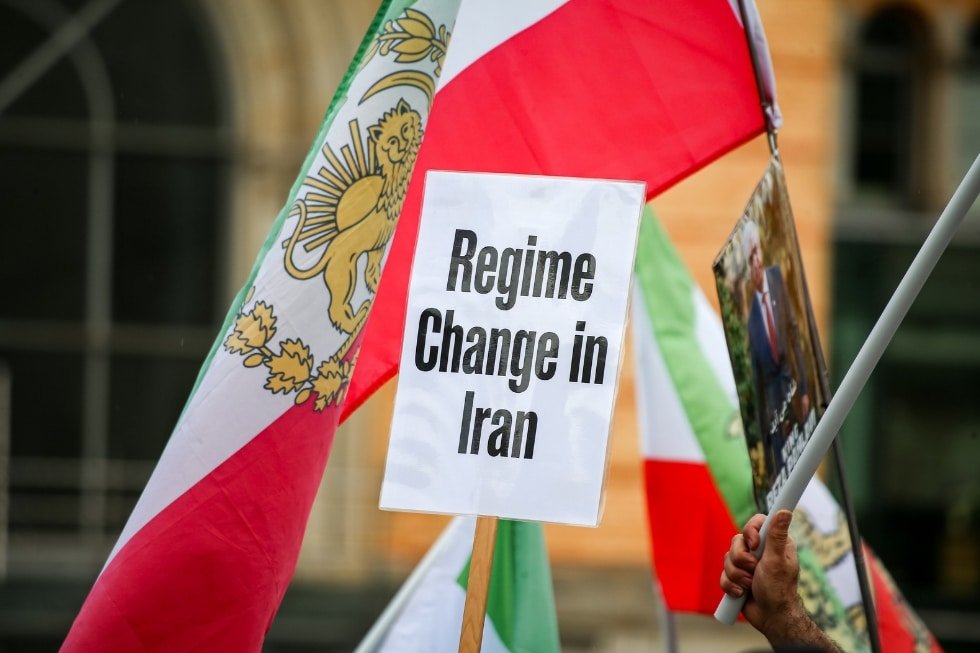


Increasingly, destabilization, if not regime change, has emerged as the subtext of the Middle East’s multiple conflicts. The notion that civil wars, ethnic insurgencies, sectarianism and social unrest can, at least, weaken hostile adversaries, if not produce more friendly regimes, complicates prospects for negotiated solutions and, in some cases, thwarts diplomacy, heightens the risk of prolonged wars and turns disputes into existential conflicts.
Middle Eastern governments and external powers, like the United States, did not only recently discover destabilization and regime change as a possible strategy. It’s that notions of destabilization and regime change have moved center stage.
Destabilization as a tool of regional power
The United States and Israel have for decades gone hot and cold on support for Iranian minority militants, first and foremost the Kurds and the Baloch, in an effort to destabilize and/or dismember the Islamic Republic as a nation-state. Similarly, the US wars in Afghanistan and Iraq sought regime change.
In that vein, a UK-educated Iranian official argued a decade ago, when challenged by Iran scholar Karim Sadjadpour, that funding of groups like Hamas, Palestinian Jihad and Lebanese Shiite militia Hezbollah served Iran’s interests better than spending the money on training Palestinians and Lebanese to become doctors, lawyers and engineers.
“What good would that have done for us? Do you think if we sent them abroad to become doctors, lawyers, and professors, they would return to southern Lebanon and Gaza to fight Israel?” the official asked. “The official understood that his government’s agenda for the region depended on chaos, misery, and the absence of social mobility,” Mr. Sadjadpour concluded.
The official’s response was rooted in the existential anti-Semitic fear of the Islamic Republic’s founder, Ayatollah Ruhollah Khomeini, that “cunning” and “satanic” Jews, who strive to dominate the world, could “one day achieve their goal, and that the apathy shown by some of us may allow a Jew to rule over us one day.”
Citing Prophet Muhammad’s “elimination” of a “troublesome” Jewish tribe in Medina in a 1970 treatise on Islamic rule, Mr. Khomeini sought comfort in the belief that “Islam has rooted out numerous groups that were a source of ‘corruption and harm to human society.’”
The emerging military doctrine and regional repercussions
A survey of the Middle East’s foremost conflicts illustrates how notions of destabilization and regime change are becoming a cornerstone of strategic thinking in the region. Israel’s unofficial military doctrine, implemented since Hamas’ October 7, 2023, attack on the Jewish state, may be the most brazen and troubling expression of that trend, even if it reflects long-standing thinking of segments of the country’s security establishment and political elite.
Reserve Major General Tamir Hayman, the executive director of the Institute for National Security Studies (INSS), one of Israel’s foremost think tanks and a former head of Israeli military intelligence, laid out the concept earlier this week.
Mr. Hayman’s articulation of the concept described the Palestinian issue as an “Arab ploy to destroy Israel,” asserted that war, settlements, occupation and pre-emptive strikes are essential for national security, portrayed peace as “unattainable,” advocated the destabilization of Arab states, which he labeled “collections of tribes and ethnic groups,” and postulated that Israel’s Jewish identity takes precedence over democracy.
Egyptian President Abdul Fattah al-Sisi, seemingly in response to Mr. Hayman’s remarks, warned a military conference to be vigilant against attempts to manipulate Egyptians’ thinking, distort public awareness, and inflame public opinion to undermine stability. “Protect your country against this conspiracy … I am not saying protect the president,” Mr. Al-Sisi said.
The Houthis look beyond Yemen
Similarly, Yemen’s Ansarullah or Houthi rebels sparked in July the breakdown of a four-year ceasefire in the Saudi-Yemeni war in the belief that the kingdom and its crown prince, Mohammed bin Salman, had been substantially weakened by the US war against Iran.
This week, Houthi spokesman Mohammed al-Bukhaiti suggested that Houthi objectives in the war with Saudi Arabia were about more than forcing the kingdom to lift its blockade of Houthi-controlled ports and airports, securing a greater share of Yemen’s oil revenues, recognizing the group as a key player in post-war Yemen, and funding its rule in the north of the country.
With the passing of 90-year-old ailing King Salman only a matter of time and the hope that his succession by Mr. Bin Salman could be challenged by critics who blame him for miring the kingdom in Yemen’s quagmire and jeopardizing the diversification of Saudi Arabia’s economy and positioning as a regional hegemon, Mr. Al-Bukhaiti said the Houthis would back a popular revolt or an internal change of leadership in the kingdom. Mr. Al-Bukhaiti told an Iranian news agency:
Either a popular movement must take shape across this land, or the Saudi opposition…must step in, or the ruling family in Saudi Arabia must act to depose Bin Salman and bring to power another prince from the House of Saud, … We are…prepared to cooperate with the ruling family should they move to depose Bin Salman.
Meanwhile, stated Saudi objectives in Yemen echo Israel’s assertions regarding Hamas. Both the kingdom and Israel postulate that they cannot tolerate the presence of a group on their borders that can attack or blackmail them at any given moment. Well-connected Saudi journalist Abdul Rahman Al-Rashed argued that the problem with negotiating with the Houthis is that “the group is fundamentally at odds with the very idea of the state, and its conduct has revealed its determination to preserve the authority of the ‘organization.’”
Nonetheless, the kingdom has been careful not to emulate Israel’s devastating destruction of Gaza that has cost the lives of tens of thousands of innocent civilians. “Saudi Arabia cannot indefinitely tolerate a strategic military threat on its southern frontier,” said Nawaf Obaid, a former Saudi government advisor.
Regime change and the fragmentation of the Middle East
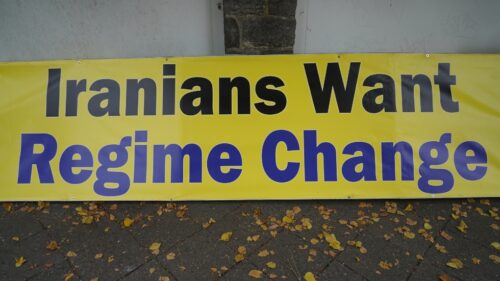
For its part, Israel has long called for the toppling of the Iranian government. Israel’s Mossad foreign intelligence service assured mass anti-government protesters in January that “We are with you, remotely and verbally. We are also with you on the ground.”
US President Donald Trump has expressed hope on various occasions that his military and economic strangulation campaign would incentivize Iranians to take the streets. In January, six weeks before the United States and Israel launched the Iran war, Mr. Trump told the protesters that “help is on its way.” Mr. Trump asserted months later that Iranian Kurdish groups had kept US-supplied firearms and ammunition that were meant to be delivered to the protesters. The Kurds denied the allegation.
By the same token, Iran and Israel have sought to prevent the emergence of a strong state in Lebanon, Syria and Iraq. Iran has done so by supporting Hezbollah and pro-Iranian militias in Iraq. Israel has weakened the Lebanese and Syrian governments with its occupation of Lebanese and Syrian territory, attacks on Syrian military facilities designed to prevent the creation of a strong Syrian armed force, and support for minorities in Syria, like the Druze.
“Foreign-led regime change in the broader Middle East has, time and again, produced poor outcomes,” said former US Assistant Secretary of State Jonathan M. Winer, suggesting that “it may be easier to bomb a country into regime change than it is to create stability afterward.”
[The Turbulent World first published this piece.]
[Kaitlyn Diana edited this piece.]
The views expressed in this article are the author’s own and do not necessarily reflect Fair Observer’s editorial policy.
Entrenched US and Iranian Strategies Make Renewed War Inevitable
US President Donald Trump predictably rejected Iran’s conditional proposal to reopen the Strait of Hormuz, but the move clearly signaled...
Bab al-Mandeb: The Battle That Could Redefine Yemen’s Political Future
The Houthi offensive along Yemen’s Red Sea coast and the subsequent Saudi-backed counteroffensive have exposed a widening gap between Yemen’s...
US vs. Iran: Battle of Wills in the Gulf
The Iran War has inflicted severe economic pain on Iran and political strain on the United States after six months....
Regime Change: What We Don’t Understand About Both Words
US President Donald Trump has thus far demonstrated a major lack of understanding of Iran’s regime. It’s not a small...
Support Fair Observer
We rely on your support for our independence, diversity and quality.
For more than 10 years, Fair Observer has been free, fair and independent. No billionaire owns us, no advertisers control us. We are a reader-supported nonprofit. Unlike many other publications, we keep our content free for readers regardless of where they live or whether they can afford to pay. We have no paywalls and no ads.
In the post-truth era of fake news, echo chambers and filter bubbles, we publish a plurality of perspectives from around the world. Anyone can publish with us, but everyone goes through a rigorous editorial process. So, you get fact-checked, well-reasoned content instead of noise.
We publish 3,000+ voices from 90+ countries. We also conduct education and training programs
on subjects ranging from digital media and journalism to writing and critical thinking. This
doesn’t come cheap. Servers, editors, trainers and web developers cost
money.
Please consider supporting us on a regular basis as a recurring donor or a
sustaining member.
Will you support FO’s journalism?
We rely on your support for our independence, diversity and quality.





Comment