


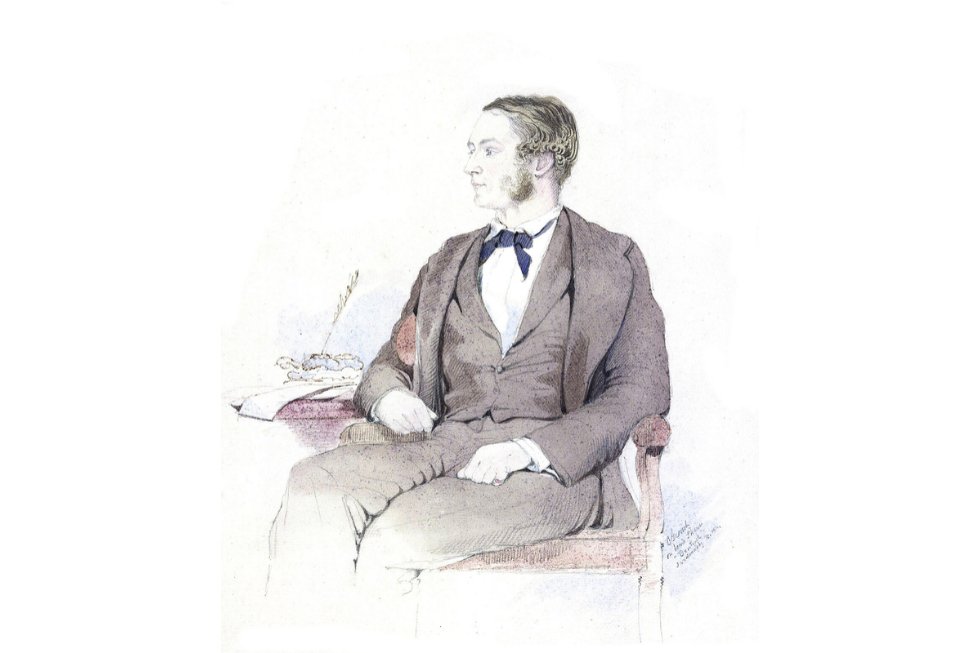



Arthur Phayre was the Commissioner of Pegu in British Burma from 1852 and the First Commissioner of the whole of southern and British Burma from 1862 until 1867. Today, he is regarded as an important administrator in the history of Myanmar (modern Burma), though not without controversy in historical analyses of colonial rule. He is remembered as a firm, just and competent administrator; an intellectual who produced a comprehensive History of Burma; and a respected naturalist and numismatist whose work inspired the creation of the first museum in Rangoon.
Arthur is my great-great-grandfather’s brother — hence my interest. The Phayres can trace their lineage back to the 1200s and include a Seneschal (or King’s administrator) of Gascony and Aquitaine in France between 1298 and 1309, a regicide tasked with executing King Charles I in 1649, and many distinguished soldiers, clergymen and civil servants.
Legacy
Sir Arthur Phayre’s legacy is complex. He was a leading representative of British colonial rule at a time when Burma was progressively incorporated into the British Empire. Modern historians have questioned many aspects of that process and its long-term consequences.
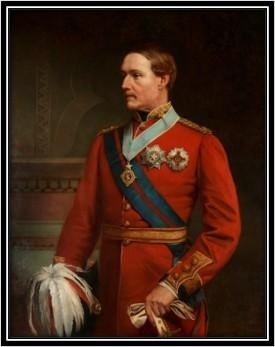
At the same time, contemporaries and later scholars recognized Phayre as an unusually knowledgeable authority on Burma. His mastery of the Burmese language, his collection of manuscripts, his historical writings and his diplomatic engagement with King Mindon distinguished him from many colonial administrators of his generation. Mindon was Burma’s penultimate monarch, reigning from 1853 to 1878. King Mindon and Sir Arthur enjoyed mutual respect, which allowed both to develop and implement their ideas. Arthur’s achievements were substantial. He helped establish the administration of British Burma, became its first Chief Commissioner, produced the first major English history of the country, and preserved important elements of Burmese historical and literary heritage.
For these reasons, Sir Arthur Purves Phayre remains one of the most significant figures in 19th-century Burmese history.
Soldier and administrator
Arthur Purves Phayre was born in 1812 and joined the Bengal Army in 1828 at age 16. He arrived in Burma in the mid-1830s and was posted initially to Tenasserim before transferring to Arakan. Arthur was tough, indifferent to the cold or heat, full of life and intelligence, and a delightful companion who thoroughly enjoyed a good argument. Fond of sport, he was apparently a very poor shot. He was described by a contemporary as “tall, gaunt and sinewy with a gentle kindly face, sincere and reliable.” His initial services in Burma in the 1830s, including the suppression of “dacoity” or banditry and robbery by violent gangs, made a very favorable impression on his superior officers. It was during this period that he began to study the Burmese language, including the Burma Mon script (Burmese: မွန်မြန်မာအက္ခရာ).
His immersion in all aspects of Burmese culture, language, religion and geography enabled Arthur to communicate effectively and earn the respect of all levels of their society. He was so proficient in the language and culture that he even knew the nuances and distinctions in nomenclature for different castes of the Buddhist religion, to the extent that he could make a Burmese crowd laugh by pointing out that he knew more than some of their elders.
Arthur proved himself in battle as a soldier during the second Anglo-Burmese War in 1852. As a Major, he was appointed Political Agent to the expedition — essentially the link between the military force and local governance. He was present at the storming of Rangoon (12–14 April 1852) when British and Indian troops captured the city after heavy fighting at the Great Dagon Pagoda (later known as the Shwedagon). After Prome fell, the British proclaimed the annexation of Pegu Province (Lower Burma), and Arthur was appointed its first Commissioner (civil governor). At this time, King Mindon Min overthrew his half-brother and had to quickly consolidate his power.
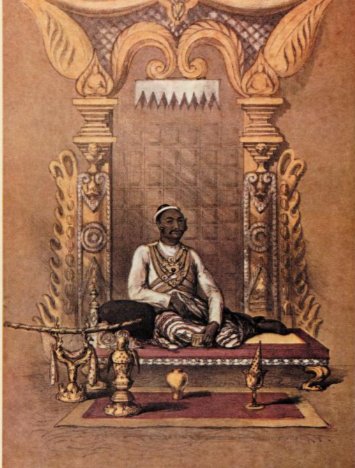
Though not a popular move, Mindon agreed to a ceasefire with the British, and then consolidated his position by defeating an attack from Siam. Thus Burma was effectively divided into two: the upper half ruled by Mindon, and the lower provinces by Arthur Phayre as the Commissioner appointed from India. Arthur’s relations with King Mindon Min were a key to his success. On one occasion, the two exchanged gifts. Arthur presented a “Sing Bird Box” and a diamond ring for the Queen’s mother. The King presented Arthur with a large “curious” ring, half blue and half white sapphire, which is still in the family’s possession and worn by my wife on special occasions.
There is a rumor that relations were so good that the King encouraged Arthur to marry one of his daughters (he apparently had 53 daughters). Indeed, there are Burmans who carry the name Phayre, and claim to be descended from Sir Arthur. My first cousin and I are in regular contact with one of those Burmans who has a family tree showing the descendance! Some of the Burman Phayres have done very well. One married an Italian Viscount, and another became an opera singer in Australia! One of the roads in Mandalay city, designed by King Mindon, was named Phayre Road; later, in Rangoon, one of the main highways was named Phayre Street, now Pansadon Street.
Arthur quickly established a reputation as an effective officer. As Commissioner of Pegu, Arthur was responsible for transforming the recently conquered territory into a functioning province of British India. His responsibilities included establishing revenue systems, courts, policing arrangements and local administration. He worked to restore order after the disruption caused by war and to develop stable government institutions.
The success of British administration in Lower Burma owed much to his work during this period. Pegu rapidly became one of Burma’s most economically important regions, particularly through the expansion of rice cultivation and trade through Rangoon. At the same time, Arthur continued to study Burmese society and history. His growing expertise made him one of the British Government’s principal authorities on Burma. His success brought him to the attention of senior officials and contributed to his subsequent promotion.
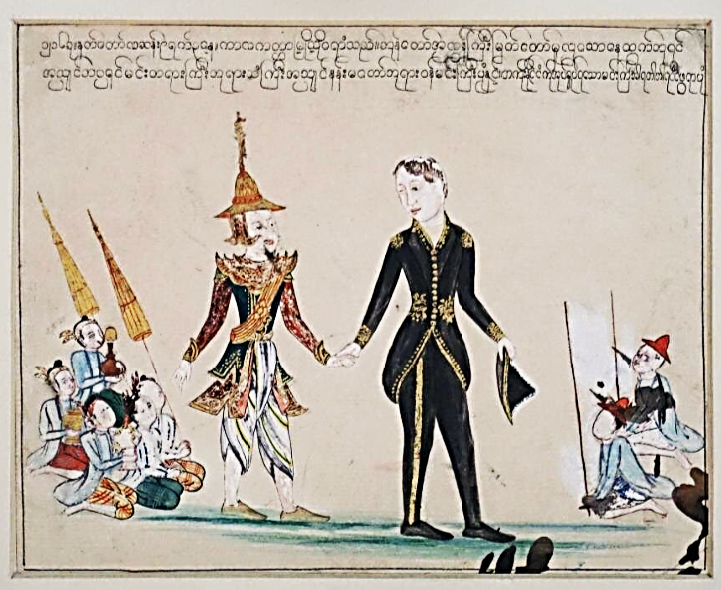
In 1854, Arthur acted as interpreter for a Burmese goodwill mission to Lord Dalhousie, the powerful Governor General of India in Calcutta, to reinforce relations and ask that the Pegu Province be returned permanently to the control of King Mindon. Lord Dalhousie refused, and in 1855 Arthur led a return mission to Amarapura, then Mindon’s capital. The purpose was Dalhousie’s attempt to obtain a treaty formally recognizing Pegu as permanently part of British Burma. Though the King denied it, these exchanges helped prevent further conflict and fostered a climate of cautious cooperation. One striking visual record of the rapport between the King’s Court and Sir Arthur is an 1854 painting showing a Burmese ambassador holding hands with Major Phayre — a gesture of trust and equality, especially rare in colonial imagery.
King Mindon was convinced the British would remain in Burma, and in 1857 he decided to found a new royal capital in Mandalay, at the foot of Mandalay Hill a few miles north of his old capital. This was a statement that Upper Burma would remain sovereign, Buddhist and cosmically ordained. King Mindon was convinced that to survive, he needed to modernize the monarchy, but he also had to maintain peaceful relations and, for the time being, recognize the boundaries between the Kingdom of Burma and British Burma.
In 1862, the provinces of Arakan, Tenasserim and Pegu were united to form British Burma. Arthur was promoted and appointed the first Chief Commissioner, becoming the territory’s senior British official. He held the position until 1867. This was arguably the most important period of his administrative career, as he oversaw the integration of the provinces into a single administration and established many of the structures that would govern British Burma for decades.
During this time, Arthur dismantled the hereditary tax system and replaced it with a British system, he set up police forces — though these were often staffed by Indians — and his judicial reforms introduced a British-style court system. He oversaw infrastructure projects like roads, ports and urban planning in Rangoon, where he introduced a grid system. He expanded the use of Indian clerks, though he sidelined the Burmese elites, causing resentment, and these initiatives nowadays are seen as controversial.
During Arthur’s tenure, Rangoon continued to develop as the country’s principal port and became one of Southeast Asia’s most important cities. In 1862, with Phayre’s guidance and diplomacy, Burma and India concluded a commercial treaty. This agreement promoted trade and provided a framework for continued diplomatic relations. In effect, Arthur extended and consolidated British control across Lower Burma.
Arthur continued to study Burmese society and history, and his growing expertise made him one of the British Government’s principal authorities on Burma. Arthur also attempted to improve education through existing Buddhist monastic schools, and though these efforts achieved only limited success, they reflected his belief that reform should work with established Burmese institutions rather than simply replace them. Contemporary assessments of his administration were generally favorable.
Scholar and historian
Phayre’s significance extends beyond his administrative career. Throughout his service, he collected Burmese manuscripts, studied inscriptions and assembled materials relating to the history of Burma. The British Museum later acquired his manuscript collection, which remains an important source for scholars.
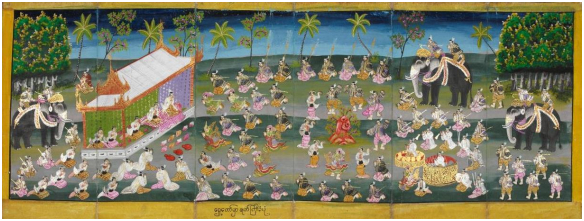
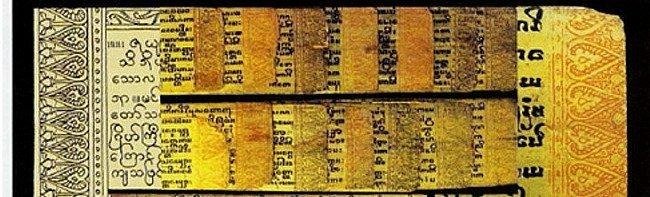
His most important scholarly achievement was publishing History of Burma in 1883. This work was the first substantial history of Burma written in English. Drawing upon Burmese chronicles as well as European sources, it covered the history of Burma, Arakan, Pegu and Tenasserim. Although later scholarship has revised some of its conclusions, it remains an important milestone in the study of Burmese history.
He also published significant studies on Burmese coinage, including Coins of Arakan, of Pegu and of Burma (1882). His work helped establish Burmese numismatics as a recognized field of study.
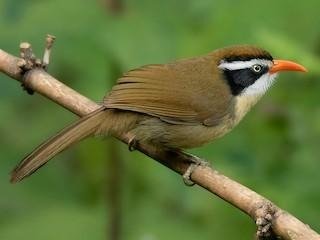
Sir Arthur Phayre maintained a long-standing interest in natural history. Although he did not publish a dedicated work on Burma’s flora and fauna, his reputation in scientific circles is reflected in the number of species named in his honor. These include Phayre’s Leaf Monkey, two different Phayre Flying Squirrels, Phayre’s Pitta, the Burmese Black Giant Tortoise (Manouria emys phayrei), a Green Pigeon, the Scimitar Babbler, a type of partridge (Perdix Phayrei) and a land snail — Aegista Phayrei!
Governor of Mauritius
After leaving Burma in 1867, Sir Arthur was awarded a Knight Commander of the Order of the Star of India (KCSI) and, upon returning to Britain, concentrated on preparing the History of Burma and corresponding with authorities on Burmese affairs. He was appointed Governor of Mauritius from 1874 to 1878. As Governor, his main achievement there was the reform and treatment of the Indian laborers, who were considered almost as slaves by the European planter class. He also improved the education system for Indian immigrants, insisting they be taught in their own language rather than solely in English. He also improved the financial administration that had become poorly managed.
At the end of Phayre’s Governorship, the Mauritians said that Arthur possessed “That power of continuous application, that ready and sound Judgment, quick embracement of facts, firmness of decision and rigid impartiality which have, and always should, distinguish statesmen and experienced and enlightened governors.”
Following retirement, he devoted much of his time to scholarship and writing and remained interested in Burmese affairs until the end of his life. He died at Bray in County Wicklow, Ireland, on December 15, 1885, ostensibly unmarried.
Phayre’s legacy today
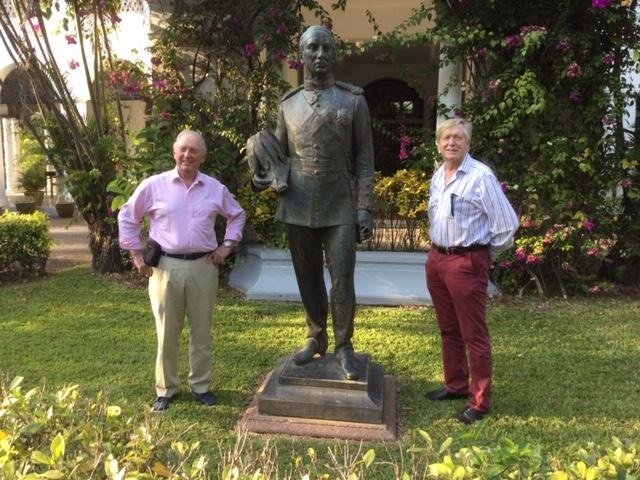
In 2019, my first cousin, Colonel Terry Knott, and I, together with several friends, visited Myanmar primarily to enjoy a holiday, but also to see firsthand the country that Sir Arthur worked so hard to improve. We toured Bagan, Mandalay, Mingun, Pindaya and Inle Lake. We were made to feel extremely welcome and, in a short time, began to get a taste of the Burmans, their heritage, their Buddhist religion and their beautiful country that has so much history.
The British Ambassador, His Excellency Dan Chugg, invited us to see a statue of Sir Arthur in pride of place at the Ambassador’s residence in Yangon. After Sir Arthur’s death, a Phayre Memorial Committee, composed of senior Anglo-Indian and Burmese figures including Lord Napier of Magdala, raised funds by public subscription for a bronze statue of Sir Arthur Phayre.
The statue was initially erected in front of the Phayre Museum. When that was taken down and replaced with a more modern structure, it was moved to the Rangoon Agri-Horticultural Society Gardens, and then to the Zoological Gardens. When the Japanese invaded Burma in the War, they threw it into the Irrawaddy. The statue was subsequently rescued in one piece after the war and placed safely with the Ambassador. It was an honor to stand beside Sir Arthur and remember him.
[Kaitlyn Diana edited this piece.]
The views expressed in this article are the author’s own and do not necessarily reflect Fair Observer’s editorial policy.
Eastminster and Vice-Regalism: How the British Empire Still Shapes Former Colonies
British imperial rule left behind more than railways and the English language. Former colonies adopted a modified Westminster model. This...
Support Fair Observer
We rely on your support for our independence, diversity and quality.
For more than 10 years, Fair Observer has been free, fair and independent. No billionaire owns us, no advertisers control us. We are a reader-supported nonprofit. Unlike many other publications, we keep our content free for readers regardless of where they live or whether they can afford to pay. We have no paywalls and no ads.
In the post-truth era of fake news, echo chambers and filter bubbles, we publish a plurality of perspectives from around the world. Anyone can publish with us, but everyone goes through a rigorous editorial process. So, you get fact-checked, well-reasoned content instead of noise.
We publish 3,000+ voices from 90+ countries. We also conduct education and training programs
on subjects ranging from digital media and journalism to writing and critical thinking. This
doesn’t come cheap. Servers, editors, trainers and web developers cost
money.
Please consider supporting us on a regular basis as a recurring donor or a
sustaining member.
Will you support FO’s journalism?
We rely on your support for our independence, diversity and quality.





Comment