


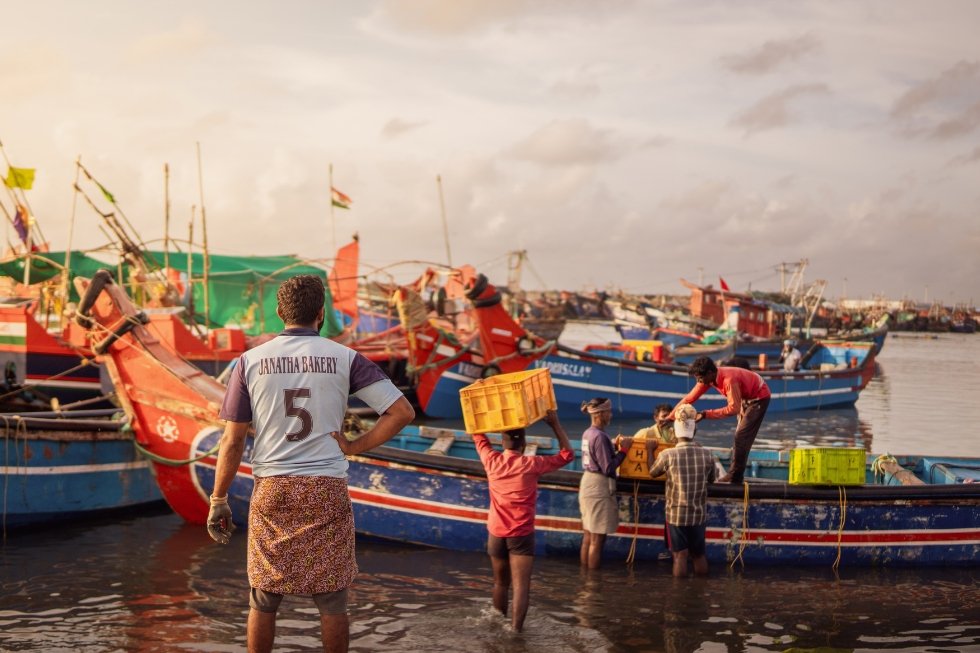



Kerala’s physical and social infrastructure is world-renowned for its equity, accessibility and effectiveness. The state has effectively eradicated extreme poverty, and a 100% literacy rate for its youth has become a foundational metric of its success. Combined with its remarkable natural beauty, these high-ranking economic and social indicators have truly earned it the title of “God’s Own Country.”
This success can be attributed to the hard work of labor migrants. However, despite their central role in creating “God’s Own Country,” these migrants are seen as nothing more than “guest workers” by the government. This title undermines all the hard work these laborers have put into Kerala, effectively “othering” them, and directly contradicts the state’s values.
Labor migration at core
Malayalis, a major ethnic group of Kerala, traveled to every corner of the world in search of better lives and are the “visible hands” behind this model. This out-migration, fueled by the Gulf Oil Boom, brought higher income and lifestyle aspirations that created demand for “additional hands” to build.
This requirement for “additional hands” was promptly and profusely supplied by the rest of the country, especially the eastern part of India that lags in terms of industrial development but is endowed with a labor surplus. Kerala stands as an exemplary case study of how out-migration fueled in-migration, to the benefit of all.
As official estimates go, there are currently 3.5 million migrant workers in Kerala. Actual figures on the ground can vary greatly, and the pie chart of this in-migration is as varied as the diversity of India. Assam and West Bengal supply 70% of the migrant workers Kerala needs.
Internal migrant workers have left an indelible mark on Kerala’s social, economic and cultural fabric. Whether building roads, highways, hospitals and schools or working in hospitality, retail and sanitation, migrant workers have become a ubiquitous and essential feature of daily life in Kerala.
Justice Devan Ramchandran of the Kerala High Court famously remarked during a hearing on the eviction of workers from agricultural wholesale markets that “Malayalis are unwilling to work due to ego; we are surviving because of migrant workers.” This “unwillingness” often reflects a higher opportunity cost for local workers, who increasingly seek better prospects on foreign shores.
“Guest” workers: the invisible hands
Despite their foundational role, these workers are officially recognized as “guest workers” (Athithi) — a term that implies temporary status, even though many have lived in Kerala for 18–20 years and have become deeply integrated into the local social, cultural and linguistic milieu. However, the various government bodies believed the term was meant to recognize their contributions and the reciprocation they deserve.
The Government also launched an online portal to register and enumerate guest workers working and residing in Kerala. Critics argue that this portal is scaring away migrant workers or forcing employers to push actual numbers employed by them under the carpet. It has led the state government to deploy police to register these migrant workers in hot pursuit. Ordinarily, migrant workers’ registration is the prerogative of the Labour Department.
Moreover, this official treatment seems condescending and transactional, psychologically thwarting migrant workers’ right to integrate and assimilate into the local social fabric and cultural milieu, resulting in what migration experts call the institutionalization of an othering process: the systematic social alienation of migrant workers. This social mindset also breeds a kind of mistrust, antipathy and simple hostility towards these “guest workers”. Recent events illustrate this.
In contrast to this official approach, people in Kerala remain more considerate, fair and open to these guest workers than people in the rest of the country. It is no wonder that even after recent West Asia wars, the liquefied petroleum gas (LPG) crisis and ongoing elections in major labor supply states such as West Bengal and Assam, these migrant workers returned en masse to their favorite destination.
Guest in one’s own country?
Moreover, the official usage of the term “guest workers” stands in stark contrast with the constitutional guarantee of “singular citizenship” that has the fundamental right to move, work and reside in any part of the country seamlessly. Many of these workers now bring their families to Kerala, drawn by the state’s high-quality, affordable educational and health facilities. The label of “guest” feels increasingly incongruous when these workers are effectively building their lives in the state.
Migrant workers often face occupational vulnerabilities precisely because of their “outsider/guest worker” status. Issues like wage theft, exclusion from social security and the denial of terminal benefits — protections that local workers often take for granted — are common realities for them. CMID reported wage theft complaints amounting to ₹70 million ($732,000) in and around Kochi alone, with only ₹2.3 million ($240,000) recovered.
The most vulnerable are those who work in the construction sector, as work chains now consist of engaging a group of workers (mostly migrants) to complete a project for a locally based company. As these migrant workers are at the lowest rung as subcontractors, they skirt labor rights and entitlements to deliver the project in a cost-effective manner and maintain a margin. What local workers take for granted — their employment rights, minimum wage, Provident Fund/Employee State Insurance Corporation (PF-ESIC) contribution, weekly off, bonus or eight hours of work — becomes a tale of an “other world” to these “guest” workers.
Cases of suffering from cardiac arrests due to working prolonged hours and without a weekly off so that they can deliver a project on time (an inquiry conducted on this issue) or getting washed away in landslides are rampant. In the end, surviving wives and children of the deceased workers kept running from one authority to another as the employer simply refused to pay compensation, terming it a “natural death”. These apprehensions drive migrant workers to insist upon daily payment of their wages from their employers.
In 2022, Vital Signs Partnership, working for migrant workers in the Gulf Cooperation Countries, reported in The Deaths of Migrant Workers in the Gulf that as many as 10,000 migrant workers from South and South-East Asia die annually in Gulf countries due to “heat stress” and are reported by Gulf Authorities as “natural death”; there was great furor over the plight of international migrant workers, but our internal migrant workers meet the same fate without any comment.
Furthermore, over many years as a registering officer under the Inter-State Migrant Worker Act, 1977, I found that employers deliberately suppress the number of inter-state migrant workers they employ to evade the security deposit, denying displacement and travel allowances by claiming workers are “long-term residents” rather than migrants. As a result, official databases do not reflect actual numbers.
This hypocrisy further complicates their status. While linguistic barriers often prevent workers from approaching labor authorities, a notable social change is the increasing “universalization” of Hindi as a lingua franca between locals and migrants.
The institutional vacuum
Because migrant workers often work in non-standard, informal jobs, they remain largely invisible to state labor inspectors. Authorities like the Employee Compensation Tribunal or the Building and Construction Workers’ Welfare Board, which largely, though indirectly, protect migrant workers’ rights and assure them justice, are also falling short.
The Employee Compensation Tribunal of the State that deals with compensation issues in fatal accidents of construction workers (mostly migrants) is either vacant or run by an additional charge, resulting in delayed or forgotten justice for grieving surviving families of the deceased workers. In the event of workplace fatalities, employers often pressure grieving families to accept small, quick settlements or to perform cremations on-site to avoid the logistical and financial burden of transporting remains back to the workers’ home states.
Similarly, the Building and Construction Workers’ Welfare Board maintains little to no record of these workers, so their status as beneficiaries cannot be ascertained. Furthermore, Kerala’s trade unions — historically the bedrock of labor rights and collective bargaining in the state — have been slow or reluctant to bring migrant workers into their fold, often prioritizing the interests of the local workforce over the broader labor community.
Devoid of institutional protection, these workers are left to fend for themselves. Sometimes the quest for labor justice and rights becomes a personal battle or an eye-for-an-eye situation, such as destroying an employer’s property to make good on unpaid wages. This lived reality runs counter to the values that define Kerala as a “model state”.
Second home
With shifting sociodemographic trends — characterized by a low fertility rate, the continued outflow of youths and a sustained tendency of older expatriates to return home — Kerala is set to depend on “guest workers” for the foreseeable future. Given the state’s relatively higher minimum wages and world-class social infrastructure, Kerala will likely continue to attract thousands of migrant workers who view the state as a “second home” given its generally peaceful and prosperous milieu. In this sense, the sociopolitical perspective that views these “wealth creators” as “guests” may do a disservice to the “Kerala Model,” which aspires to be a global touchstone for work and living.
To start, these workers may be viewed as “god’s own workers”, builders and stakeholders. Efforts are already underway to assimilate them into Keralayam’s way. These efforts must be calibrated and not contradicted by the belief that these workers are here for a short while.
Bodies like the Welfare Board, Employees’ Provident Fund Organisation, Employees State Insurance Corporation and Compensation Commissioners must work in tandem to assure them of their due labor rights. This protection should protect migrants from becoming easy prey for employers looking to exploit their vulnerabilities, as well as local workers’ rates and rights.
A common saying is athith dev bhav (Guest is God), and if Kerala is God’s Own Country, the people must strive to live up to this ideal. Kerala must become more than a good host. It must be a good Samaritan.
[Casey Herrmann edited this piece]
The views expressed in this article are the author’s own and do not necessarily reflect Fair Observer’s editorial policy.
FO Talks: Decoding Elections in India’s West Bengal, Assam, Tamil Nadu and Keralam
In this episode of FO Talks, Rohan Khattar Singh and Manu Sharma examine the 2026 Indian state election results. Looking...

Kerala’s Second Revolution: From Migration-Led Welfare to Global Competitiveness
Kerala’s welfare model, built on social development and migration-led prosperity, now stands at a pivotal transition. As migration reshapes the...
India’s South Has Wealth, but the North Has the Numbers
The Bharatiya Janata Party’s (BJP) political success in the Hindi heartland of North India and its stagnation in the southern...
Support Fair Observer
We rely on your support for our independence, diversity and quality.
For more than 10 years, Fair Observer has been free, fair and independent. No billionaire owns us, no advertisers control us. We are a reader-supported nonprofit. Unlike many other publications, we keep our content free for readers regardless of where they live or whether they can afford to pay. We have no paywalls and no ads.
In the post-truth era of fake news, echo chambers and filter bubbles, we publish a plurality of perspectives from around the world. Anyone can publish with us, but everyone goes through a rigorous editorial process. So, you get fact-checked, well-reasoned content instead of noise.
We publish 3,000+ voices from 90+ countries. We also conduct education and training programs
on subjects ranging from digital media and journalism to writing and critical thinking. This
doesn’t come cheap. Servers, editors, trainers and web developers cost
money.
Please consider supporting us on a regular basis as a recurring donor or a
sustaining member.
Will you support FO’s journalism?
We rely on your support for our independence, diversity and quality.





Comment