


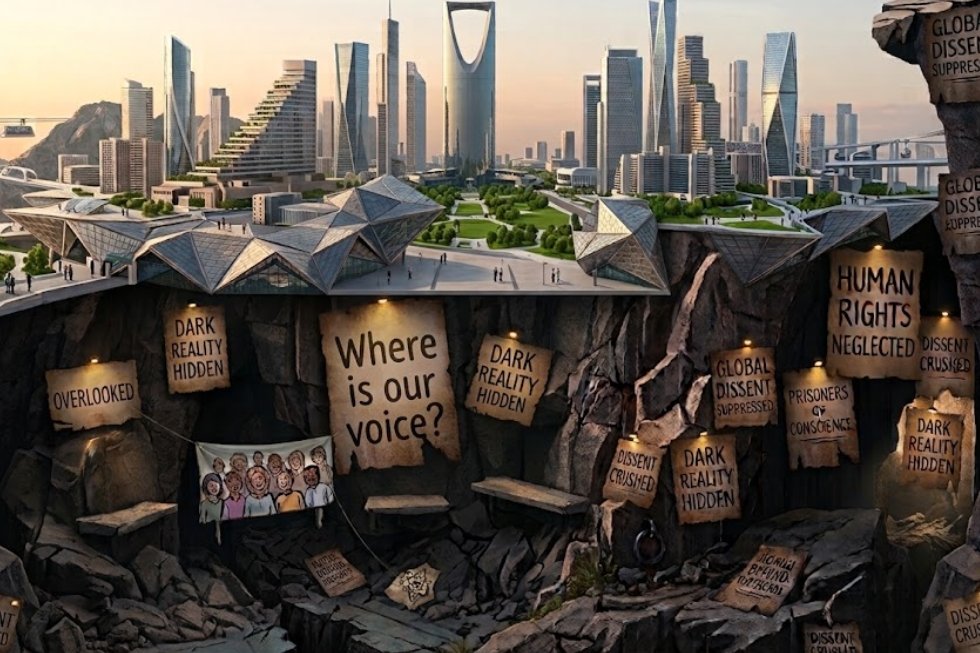


Does anyone in this world remain unaware of the true nature of the Saudi political regime? Despite the astronomical sums of money and massive propaganda campaigns launched by the authorities abroad to “whitewash” their reputation and polish their international image, the bloody human rights realities remain a black hole that swallows all those lies.
Even those who try to shield their eyes from the sun of truth — which they know in their hearts cannot be hidden by the sieve of propaganda — realize that the crimes of despots will continue to haunt them regardless of any image-polishing. They understand perfectly well that behind the glitter of mega-projects hides a dark reality.
In my homeland, Saudi Arabia, every space for freedom has been confiscated; there is no room for dissent, no space for political participation and no multi-party system. It is a zero-sum equation: anyone who raises their head to demand basic rights finds themselves facing an arsenal of repression that begins with arrest, moves through enforced disappearance and torture and may ultimately end in death behind bars.
The legacy of the father of Saudi reformers: Dr. Abdullah Al-Hamid
This is exactly what happened to the human rights icon and “Father of Reformers,” Dr. Abdullah Al-Hamid. On the sixth anniversary of his passing (April 23rd), we commemorated a man who left us in body only and honored the legacy of an extraordinary peaceful activist. It must not be forgotten that the Saudi authorities are directly responsible for his death through “deliberate medical negligence.” Dr. Al-Hamid — the academic, activist and poet — was no ordinary campaigner. He was a firm believer that “the people are the source of authority,” a principle for which he paid with his life. He will remain an icon, inspiring generations who will not allow the authorities to erase his name from the memory of history.
But the tragedy does not end with his departure; it continues in the deep pain of the living. Here, I am struck with great force by the situation of Dr. Salman Al-Odah, the prominent religious scholar and reformer who faces a slow death while in solitary confinement since September 2017. Al-Odah, who has lost half of his hearing and sight due to ill-treatment, is currently facing a death sentence. As activists, we feel an existential dread for him. How can scholars and reformers be treated with such indignity? Our defense of Al-Odah and all prisoners of conscience is not a luxury — it is an inherent defense of all our rights. Those who remain silent in the face of injustice today will be its victims tomorrow.
As the Japanese author Nobuaki Notohara wrote: “Political prisoners in Arab countries sacrificed themselves for the people, but the people sacrificed those brave individuals.” We have sacrificed them through our silence, our fear or by being deceived by the propaganda of a ruler who places his own interests above the interests of the nation. Do not wait for a personal tragedy to strike before you take action.
From the heart of the nation: my experience in resisting tyranny
I write these words based on my personal experience as an activist from within the homeland before I was forced to flee. Activism from inside was no picnic; it was a daily encounter with fear. Despite the surveillance, terror, repression and the constant fear of arrest, I never abandoned my activism or my defense of prisoners of conscience and our just causes.
I operated multiple accounts on Twitter (now X) using both pseudonyms and my real name. I wrote articles, participated in human rights campaigns, joined the National Assembly Party (NAAS) and coordinated with the opposition abroad. However, I never used random communication apps. Instead, I used encrypted apps like Signal and secure email services such as Proton Mail and Tuta to protect myself. We established secret discussion groups—myself and a group of concerned individuals who share the same cause — where we discussed political and human rights books under the guise of “culture and philosophy” to avoid the despot’s grip.
My message…
My message to my comrades inside: Struggle from within is possible, but it requires extreme caution. Use pseudonyms, dedicate mobile phones strictly to your human rights and political activities and avoid taking them out of the house. Know that those of us abroad and those of you inside complete one another.
My message to the international community: Stop supporting the machinery of repression. There is a people robbed of their will and rights in Saudi Arabia. Do not believe the promises of reform as long as the prisons are overflowing with thinkers.
Ultimately, history teaches us one truth: Despots do not serve nations; they serve their thrones.
[Andrew Litz edited this piece.]
The views expressed in this article are the author’s own and do not necessarily reflect Fair Observer’s editorial policy.
Saudi Arabia’s Strategic Dilemma in Yemen
Saudi Arabia’s military intervention in Yemen, particularly its recent push against the Southern Transitional Council in Hadramaut, highlights a persistent...
Riyadh’s Sudan Contradiction: Mediator by Day, Arms Broker by Night
Saudi Arabia’s role in Sudan’s war reveals a stark contradiction: It positions itself as a neutral mediator, while also allegedly...
College and Comedy? Free Expression and the Power of the Audience
Championing diverse opinions is essential for a healthy democracy, as silencing dissent risks violence and tyranny. Comedy and universities serve...

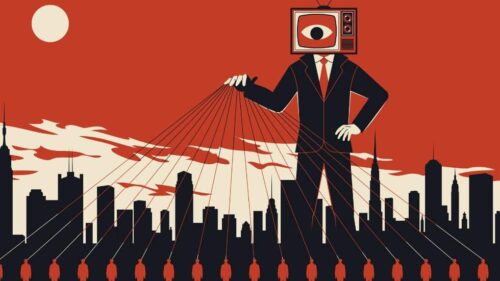
Big Brother Is Watching: How Governments Quietly Shape Cultural Soft Power
From the Paramount–Warner Bros. merger, influenced by US President Donald Trump, to Turkish soap operas shaped by President Recep Tayyip...
Support Fair Observer
We rely on your support for our independence, diversity and quality.
For more than 10 years, Fair Observer has been free, fair and independent. No billionaire owns us, no advertisers control us. We are a reader-supported nonprofit. Unlike many other publications, we keep our content free for readers regardless of where they live or whether they can afford to pay. We have no paywalls and no ads.
In the post-truth era of fake news, echo chambers and filter bubbles, we publish a plurality of perspectives from around the world. Anyone can publish with us, but everyone goes through a rigorous editorial process. So, you get fact-checked, well-reasoned content instead of noise.
We publish 3,000+ voices from 90+ countries. We also conduct education and training programs
on subjects ranging from digital media and journalism to writing and critical thinking. This
doesn’t come cheap. Servers, editors, trainers and web developers cost
money.
Please consider supporting us on a regular basis as a recurring donor or a
sustaining member.
Will you support FO’s journalism?
We rely on your support for our independence, diversity and quality.





Comment