


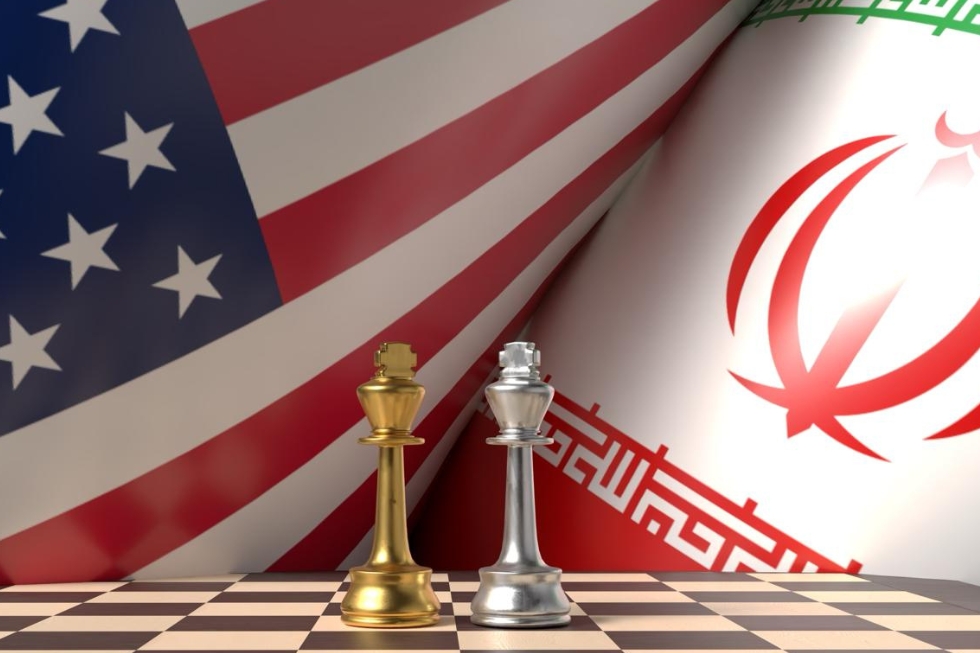



It started as an intense military battle, costing over a thousand Iranian lives and billions of dollars in damage to Iran’s economy, military and internal infrastructure, as well as to the infrastructure of the Gulf’s Arab countries. The US has lost 18 servicemen and women, with an additional 600–750 wounded and extensive damage to or destruction of its military facilities throughout the Gulf region and Jordan. But after six months, the Iran War has become a war of wills between the war’s two principal antagonists, America and Iran.
Who suffers?
For the US, the strain is largely political. The budgetary costs and a modest rise in gasoline prices are about the only economic penalties. The political cost to President Donald Trump and his party may be more severe, with polling showing his approval sliding to a mere 26%. How that will translate exactly in the November midterm election is uncertain, but many in his party are plenty worried with Republican control of both the House and Senate on the line. Americans are notorious for voting out the party that leads the country into an unpopular war. The Chicago Council on Global Affairs reports that disapproval of the war is now 70%.
With respect to Iran, however, the pain is all economic. There is no debate over the level of damage to that nation’s economy, which suffered a devastating pummeling from both American and Israeli aircraft and missile attacks. Due to infrastructure damage and the ongoing US blockade, Iranian oil exports have fallen to a trickle, 65,000 barrels per day according to one estimate. Its GDP is expected to decline by 5.5% this year, a recession for sure but still only half of what most economists would define as a depression. The US dollar is now worth two million rials, with further declines expected as the overall economy deteriorates. The International Monetary Fund (IMF) is projecting that the country’s inflation this year will exceed 70%. The nation’s Misery Index, which is inflation plus unemployment, will top 90%.
Iranian President Masoud Pezeshkian recently warned Iranians that the cumulative toll of the war, continuing US sanctions and the naval blockade are costing the nation dearly. Imports and exports have fallen by 35%, with no relief in sight. Iranians did not need to hear that to know the war’s cost to them. Food prices have skyrocketed, with meats and dairy up by 90%, putting these goods and others out of reach for most of the population. Poverty in Iran has now reached 36%.
In America’s wars in the region over the last 30 years, the American clock has always run faster than those of its adversaries; i.e., political pressure on the US for a resolution was much greater than that of its adversaries. This war may prove to be the exception, assuming Donald Trump has the patience to wait it out.
The war’s balance sheet after six months appears heavily weighted toward the US. Nevertheless, Iran’s leadership remains ever committed to achieving its war goals: imposing tolls for vessel passage through the Strait of Hormuz, payment of war reparations by the US (at least $300 billion-plus), removal of all US bases from the region, an immediate and permanent end to all military operations including in Lebanon, and an immediate end to the American blockade.
Latest US sanctions hurt but not enough
America upped the economic pain in late August with US Treasury Secretary Scott Bessent’s announcement of “Operation Economic Outcast.” He equated it to an “economic D-Day,” ignoring the fact that the historic allies’ invasion of Normandy in 1944 included dozens of America’s allies. Bessent made no mention of other nations joining the US’s stepped-up Iran sanctions. That is a major shortcoming of the plan and will make its impact much less than touted by Trump and Bessent.
Sanctions work most effectively when many nations sign on, as was the case with UN Security Council sanctions imposed on apartheid South Africa, Iraq under Saddam Hussein, and pre-Joint Comprehensive Plan of Action (JCPOA) Iran. The US administration’s additional sanctions will apply greater pressure on Iran, but the Islamic Republic has become a master at dodging them, having devised multiple evasion schemes since 1979.
Moreover, Bessent’s announcement stopped short of imposing comprehensive secondary sanctions. These are sanctions imposed on businesses, individuals and entities that do business with sanctioned countries or businesses, even if they have no ties to the US. The most effective of those would be on Chinese operators importing sanctioned Iranian oil and the third-party banks that manage their financial transactions. In fact, those businesses were responsible for purchasing 90% of Iran’s oil exports before the imposition of the US blockade. Bessent seems reluctant to upset the US-China economic détente now in place. So, without those comprehensive secondary sanctions, don’t expect the Iranians to suffer much more than they do already.
This suggests that America’s economic arsenal, while formidable, may be facing the same challenges as its military in Iran. The country’s depleted munitions stockpile has become an impediment to continued military action against Iran. In effect, the US is running out of options. Trump has chosen the only course open to him: continue with economic sanctions as they stand and with the naval blockade, which may be more damaging in the long run.
Iran believing its own rhetoric
This does not necessarily translate into victory for Iran. It still must rebuild the nation’s infrastructure and right its economy. For that, it needs a major infusion of foreign capital. Under the current sanctions, that is impossible. It will need America and other major sanctioning nations like the EU to relax these sanctions.
Except for episodic flare-ups in military tensions, pressure on global oil markets seems to be abating. With each week, more of the Gulf’s Arab oil producers are exporting more of their oil, now exceeding 40% of pre-war levels, using alternative routes, running the Iranian blockade or sailing under cover of US naval escort. Moreover, consumers and producers are adjusting to the new set of conditions. Other producers are stepping up their production, and consumers are adjusting their consumption habits and turning to alternative fuels. The longer Iran delays coming to an understanding with the US, the less effective the oil leverage it currently wields. It may already be near the point of making the Strait of Hormuz a soft cudgel at best.
Things cannot genuinely improve for Iran and its economy, and most importantly for its people, without sanctions relief and the lifting of the US blockade. That can only happen if Iran and the US return to serious negotiations. The Memorandum of Understanding agreed in June offered Iran all that and access to some of the $100 billion in frozen assets held in foreign banks. But to get that back on track, Iran will have to forgo its toll scheme for the Strait of Hormuz and accept serious negotiations on constraining its nuclear weapons program.
The Islamic Republic remains resistant to doing that. It doesn’t want to do Donald Trump any favors by caving into his demands, especially with the US midterm elections now less than two months away.
A pattern of obsession
This follows an apparent pattern of vendetta obsession on Iran’s part dating to 1953. Then Iranian Prime Minister Mohhamed Mossadegh was unable to reach a compromise with the British government over his nationalization of the Anglo-Iranian Oil Company. Repeated efforts by the US and others, including the IMF/World Bank, also came to naught. US President Harry Truman, in his outgoing brief of the incoming American president, Dwight Eisenhower, told him, “The Iranians seem more obsessed with embarrassing the British than resolving their nation’s mounting economic crisis.” Eisenhower also failed to bring the British and Iranians to the table, and the economic situation further spiraled. The Americans, prodded by Britain and fearful of a collapse of the government and political chaos in the Middle East’s most important nation at the time, opted to take matters into their own hands. They launched Operation TPAJAX to topple the Mossadegh government, replace him with a more cooperative prime minister, and reassert the Shah’s authority.
Then, amid the Islamic Revolution, Iran’s leadership seemed to lapse again into vendetta-seeking, this time against the deposed Shah and then US President Jimmy Carter. Defying the international community’s insistence to release the 52 Americans illegally held hostage and suffering international condemnation and sanctions and plummeting oil exports, the revolutionary leadership refused the hostages’ release out of apparent spite for Carter’s decision to admit the Shah into the US for medical treatment. Myriad diplomatic and back-channel efforts by the Carter administration and other nations’ envoys failed to sway the obstinate Iranian leadership. The Iranians held the hostages until after Carter had lost the 1980 presidential election and his victorious opponent, Ronald Reagan, was sworn into office.
More than two years into the bloody Iran-Iraq War (1980–1988), the UN Security Council (UNSC) proposed Resolution 540 to end the war, which Iraq accepted. Iran refused, insisting that Iraq be blamed for the invasion. The war lasted almost another six years, costing the lives of an estimated 1.2 million (and likely more) Iranians and Iraqi lives, and causing unaccounted damage to the economies of both nations. Following severe military setbacks and greater economic devastation, Iran finally accepted UNSC 598 in 1988, on largely the same terms offered in 1983.
Now it would seem, Iran’s leadership is again obsessed with appearing to compromise even in the interests of its own economy and people. It has a chip on its shoulder; its name is Donald Trump. The resentment this time stems from America’s launching the war in the first place, its killing of the previous Supreme Leader and its wiping out many of the family members of his successor. Iran’s current hardline leadership appears possessed with exacting revenge.
Trump does not leave office until January of 2029, an impossibly long time for Iran to endure its current economic plight and its people’s suffering. In the upcoming election, Trump is suggesting the election is about him, though he is not on the ballot. Voters may indeed oblige him and reject candidates of the president’s party. Would that be enough to assuage the Iranian leadership?
Donald Trump is demonstrating exceedingly rare patience, seemingly content to wait out the Iranians using sanctions and the blockade. Iran’s leaders remain intractable, unwilling to amend their “demands” on the US.
One leader’s uncharacteristic patience and the other’s apparent obsession with vindication will mean Iranians and Americans are unlikely to see an end to this conflict soon.
[Kaitlyn Diana edited this piece.]
The views expressed in this article are the author’s own and do not necessarily reflect Fair Observer’s editorial policy.
Regime Change: What We Don’t Understand About Both Words
US President Donald Trump has thus far demonstrated a major lack of understanding of Iran’s regime. It’s not a small...
Iran Trapped Between Authoritarian Rule and Foreign Bombs
External military pressure on Iran may weaken its infrastructure without creating the democratic future that foreign powers have promised Iranians....
Will the Midterm Elections Restore Normalcy?
Bipartisanship is a healthy institutional measure that strengthens democratic institutions by bringing people with differing views together to pursue common...
Support Fair Observer
We rely on your support for our independence, diversity and quality.
For more than 10 years, Fair Observer has been free, fair and independent. No billionaire owns us, no advertisers control us. We are a reader-supported nonprofit. Unlike many other publications, we keep our content free for readers regardless of where they live or whether they can afford to pay. We have no paywalls and no ads.
In the post-truth era of fake news, echo chambers and filter bubbles, we publish a plurality of perspectives from around the world. Anyone can publish with us, but everyone goes through a rigorous editorial process. So, you get fact-checked, well-reasoned content instead of noise.
We publish 3,000+ voices from 90+ countries. We also conduct education and training programs
on subjects ranging from digital media and journalism to writing and critical thinking. This
doesn’t come cheap. Servers, editors, trainers and web developers cost
money.
Please consider supporting us on a regular basis as a recurring donor or a
sustaining member.
Will you support FO’s journalism?
We rely on your support for our independence, diversity and quality.





Comment