

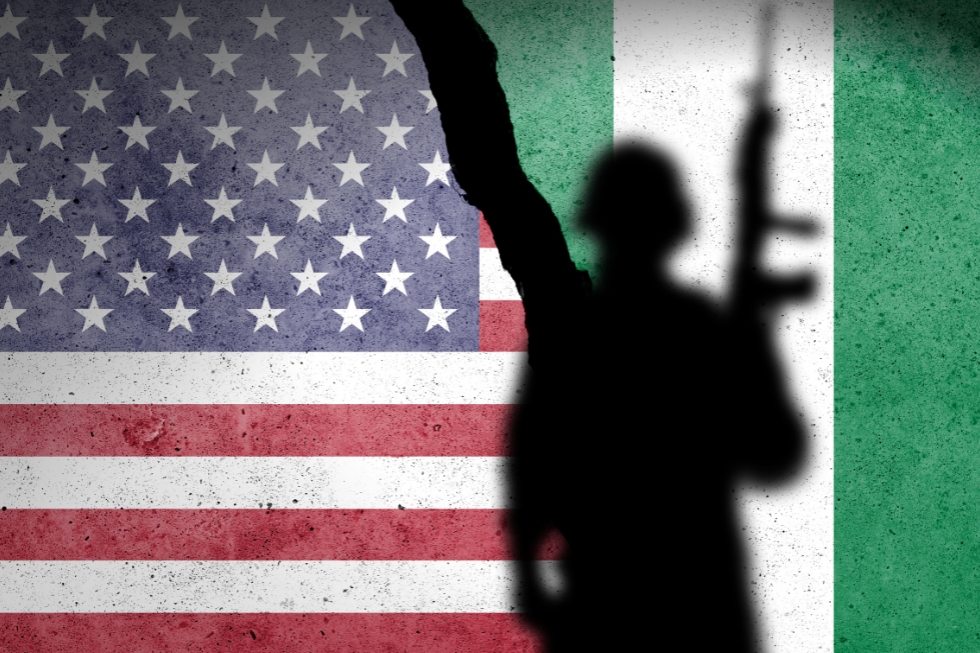



On December 25, 2025, a US Navy ship fired Tomahawk cruise missiles at Islamic State camps in Nigeria’s Sokoto State — the first confirmed use of ship-launched strikes on Nigerian soil, according to United States Africa Command (AFRICOM) and US officials. Then, in February 2026, Washington deployed roughly 200 US troops to Nigeria’s Lake Chad Basin to support a joint special-forces and intelligence-led offensive. Later, in May, this group killed several senior Islamic State West Africa Province (ISWAP) commanders, including Abu-Bilal al-Minuki, described by both governments as the group’s global second-in-command. By early July, AFRICOM confirmed that most of those troops had already left, with Washington reverting to the intelligence-sharing and training relationship it maintained before the strikes.
That full arc — missile strikes, a troop deployment, a high-value kill then a swift withdrawal back to an advisory posture — happened within seven months, and it is worth reflecting on.
If military force alone could end this insurgency, the escalation should have marked a turning point. They have not. ISWAP and other bandit networks continue to operate, tax, recruit and kill across Northern Nigeria, even as Washington has already returned to the lighter-footprint model it used before the strikes.
That pattern — escalate, strike hard, claim a tactical win, then withdraw — is itself the clearest evidence for the argument this article makes: Military force can suppress an insurgency, but it cannot by itself eliminate the political and economic conditions that allow one to survive.
That distinction lies at the heart of Northern Nigeria’s security crisis. Since the terrorist group Boko Haram’s emergence in 2009, successive Nigerian governments — supported by the United States, the United Kingdom, the European Union and other partners — have invested billions of dollars in military operations, intelligence cooperation and counterterrorism assistance.
Nigeria is, in the US State Department’s own words, “an important US security partner in Africa,” and one that has received A-29 Super Tucano aircraft, expanded intelligence sharing and joint training over nearly two decades.
These efforts have produced real tactical gains: senior commanders eliminated, territory reclaimed, regional security cooperation improved. The events of the past seven months add a rare instance of direct kinetic strikes and a short-lived troop deployment to that list — a deliberate escalation that Washington has since wound back down.
Yet the insurgency endures.
Boko Haram has splintered rather than disappeared. ISWAP has grown more organizationally sophisticated. Large-scale banditry has spread across the northwest, kidnapping has become a lucrative enterprise and armed groups have diversified their financing. The character of the violence keeps changing; its persistence does not.
Nearly two decades of military pressure, including a brief escalation into direct American combat involvement that has already been scaled back, have not produced lasting security.
The answer lies partly in a flawed assumption that has shaped Nigerian and international policy alike: that insecurity is primarily a military problem, solvable with more troops, weapons, intelligence and now missiles. Those tools remain necessary. My argument here is that they are not sufficient — that Northern Nigeria’s insurgency is no longer sustained solely by ideology or battlefield strength, but increasingly by the fact that violence has become economically viable and institutionally tolerated.
Violence has become profitable
Kidnapping illustrates this most clearly. Over the past decade, mass abductions have shifted from an occasional tactic to a predictable business model: schoolchildren, commuters, farmers, religious leaders and travelers have all become targets, and ransom payments have become one of the most reliable revenue streams for armed groups in the region.
Families understandably want to save the lives of loved ones, and governments face intense pressure to recover abductees quickly. But every successful ransom payment risks reinforcing the economic logic behind the next kidnapping — funding weapons, fighters and logistics for the group that collects it. This is an interpretive point rather than a settled fact, but it is one increasingly shared by researchers who track the financing of Sahelian and Nigerian armed groups.
However, ransom is only one strand of a wider conflict economy. In Zamfara, Kaduna, Katsina, Niger and Sokoto states, armed groups draw income from illegal gold mining in areas where weak regulation lets criminal actors operate largely unchallenged; from cattle rustling, which has devastated rural livelihoods and fed inter-communal violence; from fuel smuggling along porous borders; and from extortion and informal taxation of farming communities.
In ISWAP-held pockets of the northeast, this taxation has become systematic: recent analysis estimates ISWAP generates roughly $191 million a year by taxing trade across the Lake Chad Basin — around ten times what Borno State’s government itself collects in the same territory.
The International Crisis Group has documented similar administrative structures, in which ISWAP collects levies, regulates commerce and dispenses local justice in areas the Nigerian state does not effectively reach. This is not evidence of competent governance; it is evidence of what fills a vacuum.
Taken together, these revenue streams support a single interpretive claim, which I want to state plainly as analysis rather than fact: violence in Northern Nigeria has become profitable, and that profitability is what makes it durable, independent of how much firepower is directed against it, guaranteeing an endless cycle of conflict.
Who benefits from endless insecurity?
If insecurity persists despite growing military spending and, now, direct foreign intervention, it is worth asking who benefits from its continuation — beyond the insurgents themselves.
Leaked UK diplomatic cables, reported by the investigative outlet Declassified UK, found that of the roughly 20,000 troops Nigeria claims to have deployed in the northeast, the real number actively serving is significantly lower, with pay for thousands of “ghost soldiers” collected by commanding officers. This is a documented pattern, not speculation and it points to officers with direct financial interest in inflated troop rolls and unaccountable procurement.
A parallel pattern exists in state-level “security votes” — discretionary funds allocated to governors for security purposes, exempt in practice from meaningful audit.
Nigeria’s Socio-Economic Rights and Accountability Project filed a lawsuit in January 2026 against the country’s 36 state governors and the FCT minister for failing to account for these funds. In particular, they pointed to the 400 billion Nigerian Naira ($296 million) that was budgeted annually and collected by governors and local government chairmen.
Transparency International has separately estimated that Nigeria spends over $600 million a year to combat organized crime despite the near-total absence of public reporting on how the money is spent.
None of this proves that officials deliberately prolong insecurity for financial gain; the more defensible claim, and the one I make here, is that a war economy, once established, creates a constituency with a stake in its continuation that is better resourced and more durable than the rural communities who bear the actual cost of the violence.
Nigeria’s own Defense Minister, Christopher Musa, has acknowledged that military action alone addresses only a fraction of the conflict — by his account, roughly 30% of it. That is a striking admission from within the security establishment itself, and it undercuts any assumption that more firepower is the missing variable.
Rethinking what Washington measures
But going back to the original point, what is the US doing in Nigeria despite Abuja’s proven record of failure? Following coups in Mali, Burkina Faso and Niger, Washington lost much of its traditional security architecture across the central Sahel, even as Russian-linked partnerships expanded there.
Nigeria has consequently taken on greater weight in US Africa policy — a relationship that briefly stretched to include direct strikes and embedded combat troops before AFRICOM commander General Dagvin Anderson described the withdrawal as a step toward an “African-led” model, in which the US supplies intelligence while Nigerian forces do the fighting.
This full cycle makes the underlying policy question more urgent, not less. If the metric of success is insurgents killed or bases struck, the December strikes and May offensive already register as wins, and Washington’s own messaging has treated them that way.
But if the metric is whether Northern Nigeria is actually becoming governable — whether local government functions in recovered territory, whether schools reopen and stay open, whether rural markets operate without extortion, whether recruitment into armed groups is falling, whether corruption in defense procurement is actually declining rather than merely better concealed — the picture is far less encouraging, and nothing in the record of the past seven months, including the swift return to an advisory footing, suggests it is improving.
None of this is a case against Nigeria’s soldiers, who have made enormous sacrifices in a conflict that has killed tens of thousands, often while under-equipped because of the procurement failures described above — the same kind of failures that left roughly 50,000 “ghost soldiers” on Iraq’s payroll before the fall of Mosul in 2014, a comparison Nigerian and Western analysts have increasingly drawn themselves.
The case is against a policy architecture, in both Abuja and Washington, that keeps rewarding tactical wins while the structural conditions producing the next insurgent cohort go largely unaddressed.
A more governance-centered partnership
Three key policy shifts should be made:
First, whatever level of military assistance Washington offers going forward — intelligence-only, as it is now, or the direct combat support briefly extended between December and July — should be explicitly conditioned on transparency in Nigerian procurement and troop accounting, given the documented scale of ghost-soldier fraud.
Second, Nigeria should treat development spending on schools, rural infrastructure, and judicial capacity as a security investment rather than a secondary humanitarian track; Northern Nigeria’s high rates of educational exclusion and youth unemployment create vulnerabilities that armed groups can exploit for recruitment and are therefore not peripheral to the security challenge.
Third, disrupting the conflict economy itself — financial intelligence on ransom flows, regulation of illegal mining, tighter oversight of security votes at the state level — deserves the same institutional attention as airstrikes, because it targets the profit motive that has kept the insurgency self-sustaining even as the weapons pointed at it have grown more sophisticated.
Wars are rarely won simply by defeating armed men. They win when governments become more legitimate than the movements fighting them. Washington’s brief escalation into direct combat in Northern Nigeria, and its equally swift return to the sidelines, has not answered that deeper test — and until Nigeria’s institutions do, military aid, in whatever form it takes, will remain an indispensable tool but an insufficient strategy.
[Casey Herrmann edited this piece]
The views expressed in this article are the author’s own and do not necessarily reflect Fair Observer’s editorial policy.








Join the conversation
Share your perspective
Log in to share your thoughts and take part in the discussion.