




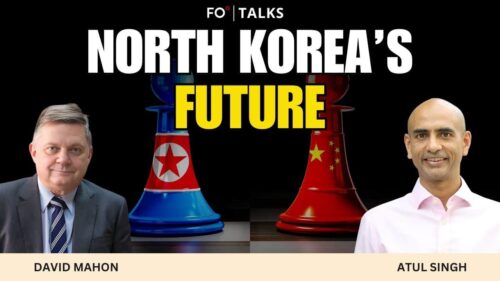
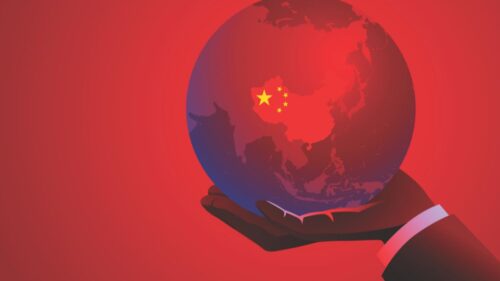
Editor-in-Chief Atul Singh and Beijing-based Kiwi investor David Mahon examine Northeast Asia’s changing balance of power. They discuss declining US military influence, deepening cooperation among China, Russia and North Korea and the growing strategic uncertainty confronting Japan, South Korea and the Philippines. Mahon argues that Northeast Asia will become increasingly important to the global economy, but China’s overriding priority will remain its domestic stability.
China anchors Northeast Asia
Mahon defines Northeast Asia as a region centered on China and extending toward the Korean Peninsula, Japan, the Philippines and the Western Pacific. Since the Korean War, Beijing has perceived the US presence in Japan, South Korea, Taiwan and the Philippines as a potential barrier to Chinese trade and naval access.
Russia also plays an important role. Its vast eastern territories border China and reach the Pacific, while its disputed islands have prevented Moscow and Tokyo from concluding a formal peace treaty since World War II. Russia’s eastern regions have become more economically significant as China buys Russian oil, gas and other natural resources.
Meanwhile, North Korea has gained leverage by supplying Russia with ammunition, missiles and personnel for its war against Ukraine. Beijing once kept Pyongyang on economic life support while advocating a nuclear-free Korean Peninsula. Now, Mahon says, China appears more willing to accept North Korea’s nuclear program as an established reality.
Pyongyang has exploited competition between its neighbors, obtaining support from Russia before securing additional food, fuel and grain from China. Mahon believes greater Chinese and Russian engagement could also restrain North Korea because Pyongyang now has valuable external relationships to preserve.
US retrenchment creates uncertainty
Mahon identifies declining US military capacity as the most consequential regional change. Washington has transferred missile defenses and military assets from East Asia to the Persian Gulf, weakening the protection available to Japan and South Korea. Replacing depleted munitions could take years.
Japan has responded by increasing defense spending and reconsidering the constitutional restrictions on its military. The Philippines has also strengthened security cooperation with the United States. Yet Mahon questions whether Washington can sustain its commitments while fighting costly wars elsewhere.
He argues that China does not intend to invade its neighbors. Beijing principally wants the US military to withdraw from the waters around China and seeks stable economic relations across the region. Mahon also downplays territorial disputes between China and Japan, although Singh notes that historical grievances, nationalism and human miscalculation could still turn limited disputes into larger confrontations.
As confidence in American guarantees declines, Mahon expects regional governments to pursue pragmatic agreements with Beijing. China’s neighbors cannot individually contain it, but they can negotiate economic relationships and limits on military competition.
Asia’s industrial power grows
Northeast Asia has become an industrial and technological center. China leads in solar energy, batteries and electric vehicles (EVs). South Korea has developed world-class shipbuilding, Taiwan dominates advanced semiconductor production and Japan retains formidable technological capabilities.
Mahon sees this transformation as part of a broader decline in Western dominance and a shift of economic agency toward Asia. He rejects the idea that the region’s demographic decline necessarily signals civilizational decay. Smaller populations will create difficult economic transitions, but rising prosperity and changing social conditions could eventually stabilize birthrates.
Singh agrees that economic power has moved eastward but emphasizes the dangers accompanying this transition. Japan, South Korea and Taiwan feel increasingly insecure as the American presence weakens. China also retains its own insecurities, rooted in the century of humiliation and fears that adversaries could block vital maritime trade routes.
China turns inward
Mahon maintains that China’s greatest challenge is domestic rather than geopolitical. Despite its economic strength, roughly 600 million Chinese people earn less than $1,000 per month. Prosperous coastal regions coexist with areas experiencing recession, leaving Beijing preoccupied with employment, consumption and social stability.
“Everything it does is for its domestic economy,” Mahon says. Chinese companies export EVs and other manufactured goods partly because intense competition limits their earnings at home. Beijing therefore wants prosperous neighbors that can buy Chinese products, supply resources and maintain stable trading relationships.
This domestic focus also explains China’s retreat from the most ambitious phase of the Belt and Road Initiative. Projects have encountered political resistance and economic difficulties in several countries. Mahon believes Beijing is relieved to reduce overseas spending and retain more capital at home.
China may continue asserting territorial claims, but Mahon does not believe it is preparing for a major war. Recent purges and corruption investigations have also disrupted the People’s Liberation Army. Singh remains more cautious, pointing to China’s incremental pressure in the South China Sea and along its disputed border with India.
A turbulent but Asian future
Mahon expects China to deepen cooperation with Russia while managing the risks created by Moscow’s unpredictability. China may also assume greater responsibility in Central Asia as Russian influence weakens. This will impose new diplomatic and security burdens on Beijing.
The wider international environment remains dangerous. Wars in Ukraine and the Middle East, political polarization in the US and European decline will affect Northeast Asia. Nevertheless, Mahon remains optimistic about the region. Its economic dynamism, technological capacity and growing confidence should encourage governments to avoid a ruinous conflict.
Singh accepts the strength of Northeast Asia’s rise but warns that rational interests do not guarantee rational decisions. The regional order is becoming less American, more multipolar and potentially more unstable. Its future will depend on whether China and its neighbors can translate their economic interdependence into lasting strategic restraint.
[Lee Thompson-Kolar edited this piece.]
The views expressed in this article/video are the author’s own and do not necessarily reflect Fair Observer’s editorial policy.




































Comment