


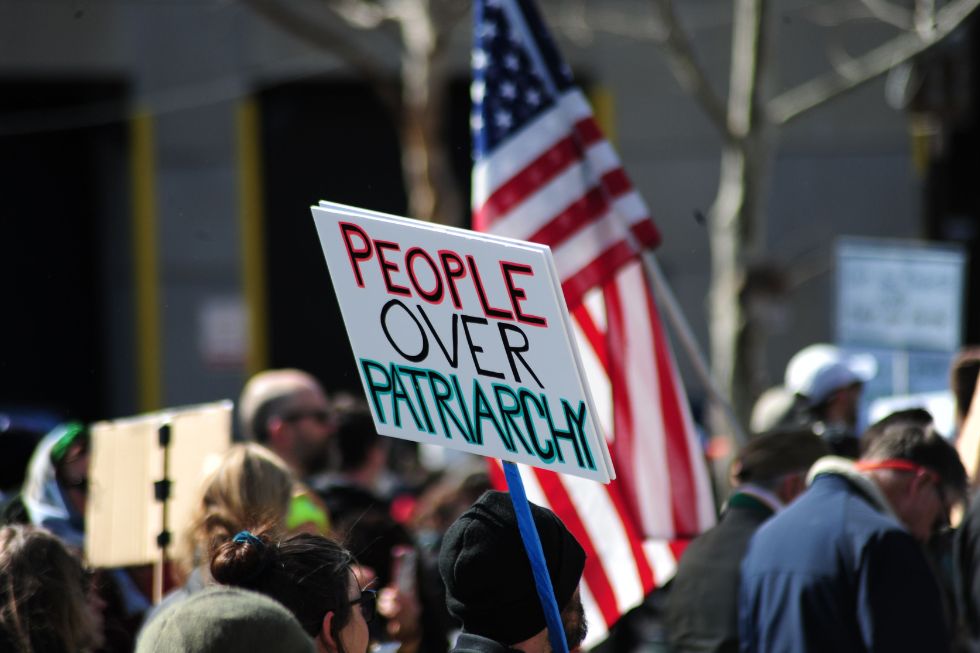



Young men and women are drifting further apart, and they are having less sex than ever before, with the US birthrate hitting a historic low of 1.6 children per woman. Authors like Debra Soh probe the “decline of sex and the future of intimacy” and warn us of “sextinction.”
Surely, responsible social policy ought to address this. Investigating two uniquely comparable worlds created by women for women — feminism and romance novels — offers a possible solution to this issue. Even though these two worlds have substantial differences and contesting values, their relevance to this question is significant.
If the real world is still a man’s world, as feminists remind us when they constantly refer to “patriarchy,” then romance novels are truly a woman’s world that is the ideal place to search for a robust, data-based answer to the eternal question of what women really want. This exploration can also explain how and why romance novels produce content that undermines feminist values.
Romance novels have always been popular with women despite disdain from feminists
Feminist thinkers and philosophers are almost all female, and the same is true for romance writers. Both feminism and romance novels are concerned with creating an ideal relationship between men and women. While feminism is a powerful cultural phenomenon that enjoys intellectual prestige and has significantly altered the landscape of modern society, romance novels have failed to achieve this status and instead face disdain. For example, Hilary Clinton thought that “the whole romance novel industry is about women being grabbed and thrown on a horse and ridden off into the distance.”
From an impartial perspective, this hardly makes sense. Romance fiction is booming, and print sales in the US have doubled in the last five years. In 2026, according to the Romance Writers of America, 82% of romance novel readers were female, and only 18% were male, with an average age of 35–39 years. The top 15 romance writers in the US are all women as well.
These novels account for 23% of all fiction book sales in the US and generate over $1.4 billion in revenue annually. In 2023, romance novel reviews on Amazon exceeded ten million, and #BookTok romance videos amassed 50 billion views on the social media platform TikTok. The number of romance titles published annually rose to 45,000 books.
Romance novels have long been a favorite among female readers, contributing significantly to the wealth of writers and publishers. Despite earning such favor from women, many romance novels directly contradict feminist ideology. As a result, feminists often stigmatize romance novels due to their content, regardless of their popularity.
So, one can further ask: who gets women more right? Romance novels or feminism? Evaluating their distinctions may answer this and prove that romance novels undermine feminist thought in seven significant ways.
Masculinity sells, especially with an emotional “happily ever after”
First, radical feminism addresses the root of women’s problems and argues that society can fix it through structural transformation. They believe that patriarchy — seen as a system created and perpetuated by men — is the root cause of women’s suffering. Some feminists even imagine dystopian worlds without men, but until women finally dispose of men, feminists inform us that “a woman needs a man like a fish needs a bicycle.”
In romance novels, however, the Main Male Character (MMC) is essential to the lasting happiness of the Main Female Character (MFC). The predictable and mandatory conclusion has to be “happily ever after,” or at least “happy for now.” In either case, he is the one central to bringing her contentment.
Second, feminism has a fraught relationship with emotions. Some feminists protest that labeling women as emotional undermines them. Others promote the idea that women should embrace their emotions. The field of feminist affect study explores this, with theorists arguing that women’s bodies continuously respond to their environment and that structures of feeling are significant.
Female readers of romance novels have no such ambivalence. What she wants to read about is his “gaze that smolders and lingers on her skin” and “makes her heart whisper impossible things.” Female romance readers are interested in the “passion of glorious union born in the blistering heat of hatred and war,” unresolved sexual tension, betrayal and deceit, and honor and revenge. She may also want to emerge triumphant against the “Other Woman drama” — where authors often portray women as “stereotypical bitches” acting out of spite, envy, or anger. These examples prove that a romance novel without emotional content is like a fish with a cycle: non-existent.
Gender norms as written by romance writers and feminists
Third, through most of the 20th century, feminist scholars have held that “gender is socially constructed” (as opposed to being inherent because of nature), protested that this social template oppresses women and carpet-bombed contemporary culture with generalized allegations of “toxic masculinity.” Feminists define toxic masculinity as the socially constructed norms associated with traditional masculinity, like aggression and dominance.
In romance novels, such socially constructed differences are in great demand. An analysis of masculinity across the romance novels of best-selling authors, prolific across distinct time periods over the last 60 years, shows this embrace. Two of the authors depicted “toxic and alpha characters.”
A romance author admitted, “The alpha male has been a staple in romance books for decades for a reason.” There is something inherently appealing about a main character who exudes confidence and control. The true appeal of alpha heroes lies in their ability to offer a sense of “safety and stability.” To the woman, that is.
Romance readers prefer male domination and objectification of women
True to market demand, Anna Huang, a popular contemporary romance writer, fills her work with “deliciously alpha heroes,” giving her books titles such as The King of Wrath, The King of Pride and The King of Greed. The frequent use of “king” in her novels reveals much, since people often associate kings with authority, leadership and governance, embodying the values and traditions of their societies. Many cultures also link kings to divine or sacred aspects, viewing them as representatives of the gods or as having a special relationship with the divine. There can be scarcely anything more patriarchal than a “king.” But that’s what romance readers want, and that’s what the market supplies.
It does not end with kings. A blogger asked: “Have a thing for military men? We do too. And there’s none sexier than a SEAL,” and suggested, “25 Navy SEAL romance novels you must read today.” Society constructs Navy SEALs more than any other men, but romance readers fixate on them nonetheless. The Smithsonian Mag confirms this sentiment as Eli Finkel, a professor of social psychology at Northwestern University, admitted, “the science says that the alpha male is, well, kinda [sic] hot.” He meant, of course, that women find dominant males attractive.
Fourth, while feminism rails against the objectification of women, in 2025, The Atlantic, a left-wing publication, admitted feminism has “morphed into clickable objectification.” Sophie Gilbert, in the book Girl on Girl: How Pop Culture Turned a Generation of Women Against Themselves, writes young women “came to believe that sex was our currency,” and that “objectification was empowering.”
Indeed, romance novels have been complicit in this objectification for years. Kathleen Woodiwiss first published The Wolf and the Dove in 1974, and it depicts a romantic interest treating the FMC as property. The novel is a popular romance set in medieval England where the female lead, Aislinn, “burns with malice for the handsome Norman savage who would enslave her… even as she aches to know the rapture of the conqueror’s kiss.”
In 2019, a blogger wrote an approving review of the novel, informing her readers, “It’s also a bodice ripper, so be prepared.” In it, a knight named Wulfgar, who “hates women” and “treats them all as casual property… rapes her and makes her his whore (Aislinn’s word).” The blogger then asks, “Who could not desire the handsome Wulfgar?” Another reviewer revealed that they loved the book’s “forced seduction.”
A dissenting Goodreads reviewer commented, “Appalling. By page 200, I’ve lost count of how many times her bodice has been ripped, and she’s been groped.” Despite the opposing views, the novel still earns high ratings and continues to sell.
Writers at The Smithsonian Mag noted ruefully that in 1972, readers made Woodiwiss’s other bodice-ripper, The Flame and the Flower, “a ravishing success.” In the novel, the female lead must take “refuge in the arms of a virile and dangerous stranger.” This sentence omits a vital descriptor: women. By erasing “women” and placing the blame on “readers,” feminists and critics of romance novels ignore the huge number of women who want such content and made the book a success.
The contradiction between feminist approach to male violence and its treatment in romance novels
Fifth, the most scandalous inconsistency lies in feminism’s rightful opposition to male violence and the concurrent success of romance novels like Fifty Shades of Grey, which sold more than 150 million copies worldwide. The novel depicted various forms of violence, including emotional abuse, sexual violence and control tactics that Christian Grey used against the heroine Anastasia Steele.
Appalled, the National Center on Sexual Exploitation (NCOSE) stated the book “glamorizes and legitimizes” violence against women through sexual violence, abuse of power, gender inequality and coercion. The Journal of Women’s Health noted, “Emotional abuse is present in nearly every interaction” between Christian and Anastasia. According to a Michigan State University study, the novel “perpetuates unhealthy behavior.”
An anguished blogger wrote a heartfelt letter to “My Precious Children,” reacting to the movie and wondered, “I sat in the theatre and looked around me at hundreds of women, buying into this so-called ‘sexy love story,’ and I felt sick. If an entire theatre of women three times your age couldn’t see how damaging this plot line is, how on earth are teenage girls and boys supposed to? They [the characters] are not equals. Tonight, I walked out of the cinema feeling terrified and a little sad for your generation.” Her letter warns girls not to let the romanticizing of sexual domestic abuse fool them and pleads with boys not to believe it’s ever okay to intimidate, manipulate or disrespect a woman like the “hero” Christian Grey.
Feminism promotes promiscuity and discourages marriage, but romance novels differ profoundly
Sixth, there is also a striking divergence in attitudes towards promiscuity and marriage. The New York Times acknowledged that feminism has, in recent decades, embraced the no-strings-attached hookup culture. The Archives of Sexual Behavior found that feminism increases hookup culture endorsement among women. Feminist rhetoric has commonly expressed that sleeping around is empowering. They also view marriage as “inherently misogynistic,” oppressive and undesirable, and believe that they must reject it.
Conversely, romance novels emphasize chastity or sexual pickiness. As a blogger observed, “There’s one thing that was common in the romance novels of the seventies that you still find a lot of today, and that’s virgins.” A study from the University of Colorado asked, “Is the heroine a virgin when she meets the hero?” They found 55% of heroines are virgins and “that many of the women who had lost their virginity” limit their sexual activity “to a conservative one or, at most, two partners.” If the cad and the gentlemen prefer virgins, so too, it seems, do the ladies.
Similarly, romance novels do not scorn or reject marriage. Contemporary romance novels may not end in marriage, but the heroine always desires a long-term relationship. These marriages and relationships endure in new and creative ways. Bloggers talk about “15 Marvelous Marriage of Convenience Romance Books,” in which authors carry the trope of “fake” romance further by bringing marriage into the mix. At the very least, authors often portray heroines as seeking to find “the one” man who fulfills their emotional and romantic desires.
A starkly different approach to “equality” in feminism and romance novels
Finally, there is an unresolvable contradiction between feminism and romance novels on the issue of equality. A fundamental assertion of feminism is that women are equal to men — equal in every respect, not just as counterparts to men. However, in the world of romance novels, which women created for women readers, inequality is mandatory and demanded by readers.
Whatever the female lead’s qualities and traits, he has more. She may be smart, rich and ambitious, but she admires him “translating a five-hundred-page novel into Latin by hand,” while relaxing. According to the University of Colorado study, the MMC “challenged her mind in a thousand absorbing ways.” Romance novels encourage such distinctions between the intellectual and qualitative traits of men and women.
Additionally, feminists protest so-called wage gaps and moan at the sprinkling of women CEOs leading Fortune 500 companies. In romance novels, readers welcome these economic gaps between women and their romantic interests. A blogger demonstrated this, specifying they wanted not just a millionaire, “that would be way too pedestrian… A really, really rich guy is needed” to fulfill the readers’ escapist dreams. “We are talking planes, private islands, probably for half the world to be in the hands of our hero. He might be a tycoon or royalty, a businessman or an underworld kingpin. It does not really matter where the money is coming from.” The readers demand that he fly her for shopping in his private jet to — where else? — Paris. The billionaire MMCs are so prevalent, it has become a trope in which the MFC relies on or gets to enjoy his wealth.
The different approaches to equality also show up in how feminists frame everyday behavior. For example, there is a contradiction on the issue of protection, with some feminists considering men who open doors for them as practicing “benevolent sexism” and wanting chivalry “dead.” But in fantasy romance novels, the stakes are high, as “monsters, curses, assassins, ancient powers” all threaten the damsels in distress. And what do readers expect of him? Should he refuse to open the door for fear that the FMC will haul him over the coals for “benevolent sexism?”
Not quite. For in this bad, bad world, he acts decisively, rescuing her from kidnapping or assault, monitoring her safety with military precision and eliminating dangers by burning worlds down or dismantling empires to keep her safe. He is “not soft. Not safe. But absolutely, ferociously devoted to keeping her alive, whole and untouched by the darkness he moves through.”
What female readers want — and what authors give them — is a male character who provides her with “different shades of protection.” The alpha protector, the gentle guardian, the reformed bad boy, or the stoic warrior all feature as admired MMC archetypes. Sure enough, studies show women “approve of men’s benevolent sexism.” Advice to aspiring romance writers tells them to “use your imagination to decide what distress you’re putting your heroine through.”
Feminism contradicts what romance novels suggest women really want
Feminism has indeed made enormous contributions in highlighting critical issues affecting women, such as legal injustice and sexual violence, which are far from over, and the fight must continue. However, in 1997, Vivian Gornick argued, “Cynicism, sadness and cultural fatigue have eroded our faith in the transformative abilities of romance.” It is difficult not to implicate feminism in this societal downer, given feminism’s negative views on men and masculinity, which have harmed men’s health, according to researcher James Nuzzo.
No society that uncritically accepts a philosophy that normatively devalues men as much as feminism is going to escape massive social pain. A reader of Nuzzo’s Substack post commented, “Ask any feminist to say anything positive about masculinity, men, or boys will be met with silence or deflection.” In the opinion of Nuzzo and his readers, feminists have habitually told women far less than the whole truth. As Dr Alice Evans, a senior lecturer at King’s College London, has pointed out, feminist activists and writers have “rarely balanced” negative stories about sexism with evidence of the progress made over the last half century. She also “believes young women could also be more prone to polarized thinking.”
In this arid world, feminism tells every woman that she is on her own, that men and patriarchy can never be a part of the solution, and they deserve no credit for any redeeming qualities. Is it surprising that women are turning in ever greater numbers to romance novels, the one place where they are certain to find the kind of men they really want?
It would be inadvisable to dismiss the messages that romance novels are providing. Women who read romance novels are from every socioeconomic background. Millions of American women do not renounce “their femininity or deny differences between men and women.” Romance novels reveal the complexity, contradictions and ambiguities of female desire (including its darker aspects) and their longing to be at the center of the man’s world and build something together that endures. These novels are also the strongest cultural evidence of what evolutionary biology has established over and over again: that “protectiveness is a sign of masculinity,” and both are very attractive qualities in a man.
The consensus: Romance novels understand women better than feminists do
To return to our initial question of how to address the growing divide between young men and women, the big data that millions of female romance novel readers of all political persuasions have generated suggests a rather shockingly obvious way forward, unpalatable as it may be to feminists. Quite simply, romance novels understand women much better than feminism does. Feminism’s intellectual halo ought to transfer to romance novels, as this analysis reveals the latter are more rooted in reality. Conversely, researchers have pointed out that contemporary feminism “produces some of the most incoherent writings in academia.” Reality is often a sound platform on which to base social policy.
Romance novels confirm women’s timeless expectations of men as providers and protectors with economic prosperity. Women will always demand male strength, confidence, dependability and intelligence, according to the popularity of women-made fictional worlds. That is what we need to encourage men to strive for, as millions of female romance readers have decisively rejected the diluted version of men that feminists wish to impose upon society. These readers would consider such men a disservice to their deepest desires.
Admittedly, male misbehavior, including horrific crimes, against women will not stop. They need to face the full wrath of the law and society. However, it does not require elaborate mental gymnastics to conclude that making all men bear the consequences of a few’s infractions amounts to indiscriminate collective punishment. Is that too much nuance to ask for?
Feminism is losing its sheen for good reason. A genderless romance novel is an oxymoron. Feminists have increasingly fixated upon “equality” for women, and to achieve this goal, they mistook equality for sameness and wanted to refashion women as clones of men. The deification of equality that feminists strive so hard for barely makes a ripple in romance novels. In them, she is his equal in humanity and worth, but she wants him to be “more equal than her.” Feminists may wish to reflect that equality is not the elimination of difference, and difference does not preclude equality.
The views expressed in this article are the author’s own and do not necessarily reflect Fair Observer’s editorial policy.
FO° Talks: Gen Z’s Anti-Left Shift — Women Turn to Conservative and Religious Lifestyle
In this episode of FO° Talks, Rohan Khattar Singh and Anna Mays examine why Gen Z women are leaving progressive...
Is the Manosphere Myth, Media or Reality?
Media and academics are paying close attention to online groups like the Manosphere that promote a return to traditional masculinity....

The Sexual Revolution Promised Happiness but Failed to Deliver
Western governments, universities and media embraced the sexual revolution to give people more freedom and happiness. Marriage rates fell, family...

On Women’s New “Right” to Have “Sex Like Men”
The sexual revolution had the goal of giving women the right to “have sex like men.” In the years since,...

The Truth About Gender and World Politics
The growth of the feminist movement and increasing demands for gender equality have men across the globe feeling existentially threatened....

Support Fair Observer
We rely on your support for our independence, diversity and quality.
For more than 10 years, Fair Observer has been free, fair and independent. No billionaire owns us, no advertisers control us. We are a reader-supported nonprofit. Unlike many other publications, we keep our content free for readers regardless of where they live or whether they can afford to pay. We have no paywalls and no ads.
In the post-truth era of fake news, echo chambers and filter bubbles, we publish a plurality of perspectives from around the world. Anyone can publish with us, but everyone goes through a rigorous editorial process. So, you get fact-checked, well-reasoned content instead of noise.
We publish 3,000+ voices from 90+ countries. We also conduct education and training programs
on subjects ranging from digital media and journalism to writing and critical thinking. This
doesn’t come cheap. Servers, editors, trainers and web developers cost
money.
Please consider supporting us on a regular basis as a recurring donor or a
sustaining member.
Will you support FO’s journalism?
We rely on your support for our independence, diversity and quality.





Comment