





National movements are rarely defeated by external pressure alone. More often, their greatest challenges emerge from within, when political rivalry, competing narratives and institutional weaknesses begin to overshadow the common purpose that first united them. History demonstrates that movements with broad public support can lose momentum not because their aspirations lack legitimacy, but because internal divisions gradually weaken strategic focus, public confidence and political cohesion.
The Southern movement in Yemen now faces such a defining moment. After decades of political upheaval, conflict and sustained demands for self-determination, the central question is no longer simply whether external actors support or oppose Southern aspirations. Increasingly, the movement’s future will depend on its ability to preserve unity, strengthen institutions and maintain a clear strategic direction while navigating a complex regional and international environment.
External actors understand the vulnerability of divided political movements. A united Southern movement represents a significant political force; a fragmented movement becomes easier to influence, contain and weaken. In contested environments such as Yemen, regional competition extends beyond diplomacy and security into the realm of political narratives, media influence and public perception.
The necessity of healthy discourse
Some regional actors have sought to shape political outcomes in Yemen by promoting competing narratives, supporting rival centers of influence or amplifying existing disagreements within Southern politics. Such efforts do not necessarily create divisions from nothing; rather, they exploit existing tensions and political differences. The greatest protection against external manipulation is therefore not the absence of debate, but the existence of mature institutions capable of managing disagreement while preserving unity around fundamental objectives.
This challenge has become even more significant in the modern information environment. The rapid expansion of digital platforms, artificial intelligence, algorithm-driven content distribution and coordinated influence operations has transformed how political conflicts are contested.
The transformation of global information
The World Economic Forum Global Risks Report 2025 identifies misinformation and disinformation among the most significant short-term global risks, warning that they can erode trust, deepen divisions and weaken governance. Similarly, the UN Educational, Scientific and Cultural Organization (UNESCO) Media and Information Literacy has emphasized the importance of developing citizens’ ability to critically assess information, navigate digital spaces and respond to the spread of misinformation and disinformation.
For the Southern movement, this information environment creates a new strategic challenge. Political disagreements can quickly be transformed into public crises when amplified through social media. Legitimate criticism can become personal confrontation, and internal debates can be exploited by those seeking to weaken political cohesion.
The response cannot be an emotional reaction. It must be disciplined, strategic and based on evidence. A political movement that allows every disagreement to become a major internal conflict risks weakening itself more effectively than any external opponent could.
Public mobilization and the strength of Southern aspirations
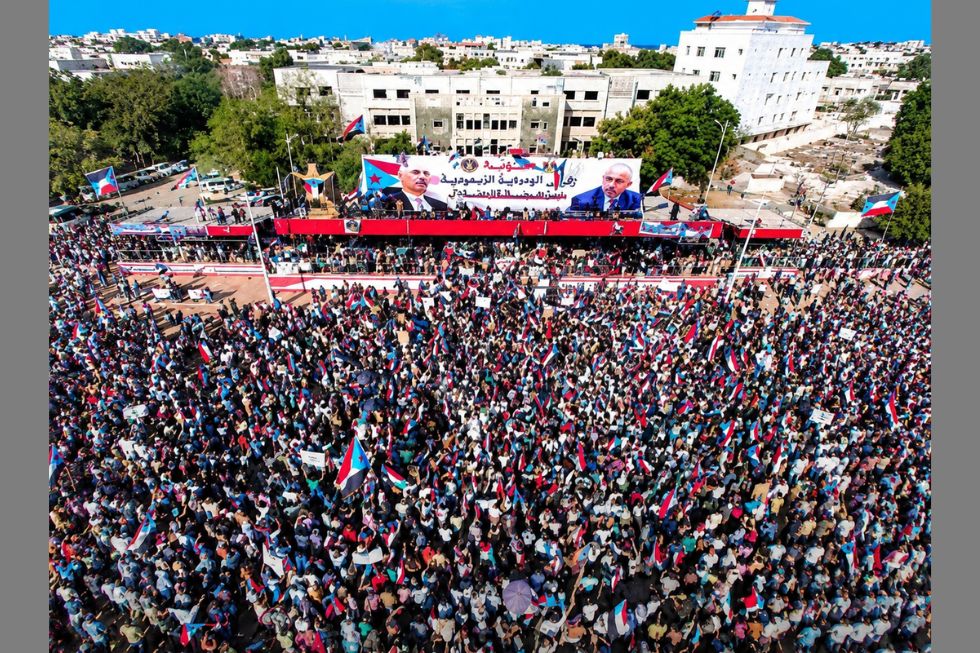
Despite these challenges, recent public mobilization demonstrates that Southern aspirations remain a powerful political force among significant sections of society. Large demonstrations in Aden and other southern areas have reflected continued support among many citizens for Southern political objectives and for the Southern Transitional Council (STC). Independent reporting by the Associated Press documented large pro-STC demonstrations in Aden, including calls to restore South Yemen as an independent state.
Reporting by South24 Center has also highlighted mobilization and political developments across southern governorates, including Aden, Shabwa, Al Dhalea and Hadramawt. As a Southern-focused media and research platform, South24 provides insight into the perspectives and priorities of many Southern movement supporters, and its reporting should be considered alongside international and independent sources.
These demonstrations represent an important indicator of political resilience. They suggest that years of conflict, economic hardship and political uncertainty have not eliminated support for Southern aspirations. The ability to mobilize large numbers of citizens across multiple governorates makes it considerably more difficult for competing political forces to assume that Southern demands can simply be marginalized or ignored.
However, public mobilization alone cannot guarantee political success. History shows that national movements achieve their objectives not only through popular support but through effective leadership, institutional strength and the ability to convert public aspirations into sustainable political structures.
The negative impact of conflict
The endurance of Southern aspirations has also come at an enormous human cost. Yemen’s conflict has produced widespread humanitarian suffering, displacement and serious human rights concerns. The UN Office of the High Commissioner for Human Rights — Yemen has documented the broader human rights challenges resulting from the conflict.
The sacrifices made by Southern communities create a responsibility for today’s leaders. Political achievements cannot be separated from the human cost that produced them. The legitimacy gained through years of struggle must be protected through responsible leadership, effective institutions and a political culture that places long-term national interests above temporary political rivalries.
The greatest challenge facing the Southern movement is therefore not a lack of commitment among its supporters. It is ensuring that internal disagreements do not become a source of strategic weakness. A movement can survive external opposition when it possesses unity, discipline and a clear vision. It becomes vulnerable when internal competition overwhelms its shared objectives.
[Zania Morgan edited this piece.]
The views expressed in this article are the author’s own and do not necessarily reflect Fair Observer’s editorial policy.
Aden’s Mass Rally: A Test of Popular Legitimacy and Political Reality
The recent rally in Aden in support of the Southern Transitional Council, amid a fragmented political landscape, highlights demands for...
South Yemen’s Near Moment of Independence: Hadramaut, Regional Anxiety and the Saudi Reset
South Yemen is edging closer to independence amid rapid advances by the Southern Transitional Council and a constitutional declaration, challenging...
Southern and Northern Allies Now Vie for Influence in Volatile Yemen
In Yemen, a fragile alliance between northern and southern anti-Houthi factions has lasted since 2019. In response to the consolidation...


Support Fair Observer
We rely on your support for our independence, diversity and quality.
For more than 10 years, Fair Observer has been free, fair and independent. No billionaire owns us, no advertisers control us. We are a reader-supported nonprofit. Unlike many other publications, we keep our content free for readers regardless of where they live or whether they can afford to pay. We have no paywalls and no ads.
In the post-truth era of fake news, echo chambers and filter bubbles, we publish a plurality of perspectives from around the world. Anyone can publish with us, but everyone goes through a rigorous editorial process. So, you get fact-checked, well-reasoned content instead of noise.
We publish 3,000+ voices from 90+ countries. We also conduct education and training programs
on subjects ranging from digital media and journalism to writing and critical thinking. This
doesn’t come cheap. Servers, editors, trainers and web developers cost
money.
Please consider supporting us on a regular basis as a recurring donor or a
sustaining member.
Will you support FO’s journalism?
We rely on your support for our independence, diversity and quality.





Comment