


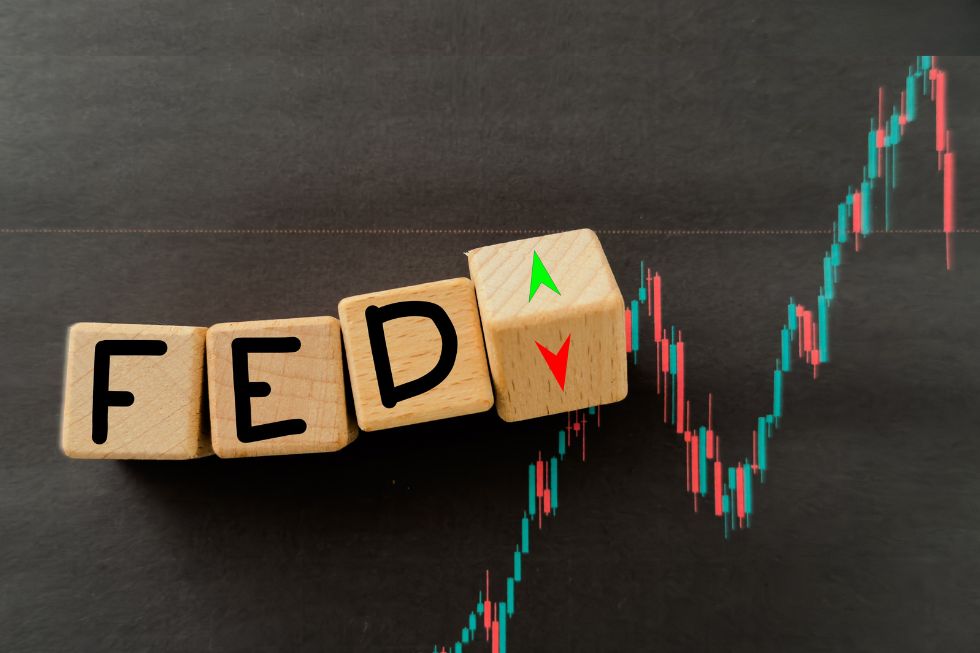



“Lies, damned lies, and statistics” is a phrase that survives not because people distrust numbers, but because they distrust the stories wrapped around them. Statistics rarely speak on their own; they gain persuasive power through narrative. During the pandemic inflation episode, the Federal Reserve did not ignore data. Instead, the Fed interpreted data through a framework that had worked for a decade — and that framework, once publicly articulated, became difficult to abandon. The deeper issue was not whether inflation was real, but whether the Fed’s institutional story shaped the timing of its response more than the incoming statistics themselves.
Political leaders often approach economic storytelling differently. US President Donald Trump frequently emphasized intuition and flexibility, signaling a willingness to rapidly reshape narratives. Such an approach contrasts sharply with the Fed’s emphasis on consistency and credibility. Pure intuition risks impulsive policy shifts that are detached from empirical grounding, while rigid adherence to a single narrative can delay necessary action when circumstances change. The tension between instinct and institutional storytelling sits at the heart of modern monetary policy.
The narrative trap of “transitory”
Throughout early and mid-2021, policymakers framed inflation as a temporary consequence of supply disruptions and reopening dynamics. This framing was not irrational. Shipping bottlenecks, semiconductor shortages and pandemic distortions in consumption patterns all supported the idea that price pressures would ease over time. Many economists — including influential voices in policy circles — argued that labor markets still contained slack and that premature tightening could derail recovery.
However, forward guidance transformed a plausible baseline into something closer to a commitment. By signaling that policy rates would remain low until certain conditions were met, the Fed anchored market expectations. That anchoring stabilized financial conditions, but it also constrained flexibility. When inflation broadened beyond a few volatile sectors, policymakers faced a dilemma: pivot quickly and risk undermining credibility, or maintain the narrative longer and risk appearing behind the curve.
This tension suggests that the timing of the federal funds rate hikes was shaped not only by new inflation prints but by a delayed shift in the Fed’s internal story. By late 2021, Chair Jerome Powell’s language began to evolve, moving away from “transitory.” Yet the pivot came after months of elevated inflation readings, reinforcing the perception that policy was navigating communication constraints rather than reacting mechanically to data. The June 2021 Federal Open Market Committee (FOMC) statement, for example, described inflation as “elevated” and attributed it largely to “transitory factors.”
Data versus story
Many economists try to forecast interest-rate decisions by focusing on incoming indicators — Consumer Price Index (CPI) releases, wage growth or financial conditions. This approach assumes that central banks operate like rule-based algorithms. In reality, monetary policy emerges from institutional narratives that help coordinate expectations across markets and governments.
The divergence between analyst forecasts and official communication in 2021 illustrates this point. Some observers predicted earlier tightening based on inflation momentum, while policymakers emphasized patience. The disagreement reflected not only different data interpretations but different assumptions about how quickly the Fed could revise its public narrative. Forecasting policy, therefore, requires more than statistical modeling; it requires reading speeches, tracking shifts in language and understanding the institutional psychology of decision-making.
Here, the famous phrase about statistics takes on a deeper meaning. Numbers can be used to justify multiple interpretations depending on the story that frames them. The Fed’s statistics were not misleading — but the narrative surrounding them influenced how policymakers interpreted risk.
Bernanke, communication and institutional inertia
The intellectual backdrop of the Fed’s approach can be traced to the evolution of modern central banking communication. Former Chair Ben Bernanke played a central role in expanding transparency tools such as forward guidance and detailed projections. The Federal Reserve’s modern forward-guidance era began in December 2008, when policymakers first signaled that rates would remain exceptionally low for an extended period, later evolving into calendar-based guidance in 2011 and state-contingent thresholds in 2012. These innovations were designed to anchor expectations during periods of deflationary risk and financial instability. They worked remarkably well in the aftermath of the global financial crisis.
Yet frameworks built for one regime may become constraints in another. The post-pandemic economy differed sharply from the slow-growth, low-inflation world of the 2010s — a shift later acknowledged by Powell, who noted that strong fiscal support and severe supply disruptions made the recovery fundamentally different from the post-global-financial-crisis period. Early policy narratives emphasized the temporary nature of inflation, and subsequent research suggests that expectations of fading supply-driven pressures contributed to delayed tightening during the post-COVID surge. Some International Monetary Fund (IMF) analyses argue that policymakers often hesitated because they believed cost-push shocks would reverse quickly, highlighting how narrative expectations influenced the timing of monetary policy responses. This episode was not a failure of competence but a reminder that intellectual paradigms — and the stories built around them — often adjust more slowly than economic reality itself.
In American director Joseph Kosinski’s Top Gun: Maverick (2022), Captain Pete “Maverick” Mitchell embodies instinctive action — “Don’t think, just do.” Monetary policy, of course, cannot operate on cinematic reflexes. Central banks must deliberate, analyze and communicate. Yet the opposite extreme — thinking within an outdated narrative for too long — can be equally dangerous.
The Top Gun metaphor highlights the tension between intuition and structure. Monetary policy requires discipline, but it also demands adaptability. A central bank that reacts purely to instinct risks destabilizing markets. A central bank that clings too tightly to a single story risks falling behind economic reality. The art lies in knowing when to revise the script before markets force a correction.
The contrast between political storytelling and central bank communication became especially visible during the pandemic era. President Trump often relied on rapid narrative shifts, signaling confidence and flexibility. The Federal Reserve, by contrast, prioritized consistency and predictability. Political intuition can overlook empirical nuance, while institutional caution can produce delayed responses.
Policy outcomes emerge from the interaction between these styles. Economists must therefore move beyond simple debates about whether central banks should be more hawkish or dovish. The more relevant question is how institutions balance narrative stability with adaptability in a world where expectations shape economic outcomes.
When stories expire
The Fed’s tightening cycle offers a broader lesson about policymaking in an expectations-driven environment. Institutions rely on narratives to guide markets, but those narratives inevitably age. By late 2021, inflation persistence was becoming undeniable. The challenge for Powell and his colleagues was not only technical — adjusting interest rates — but psychological and institutional. Abandoning a story can be harder than changing policy itself.
Several lessons emerge from this episode. First, economists should treat policy narratives as provisional rather than permanent. Instead of asking whether a story is correct, they should ask under what conditions it ceases to be useful. Second, forecasting must incorporate institutional behavior. Predicting rate decisions requires analyzing communication strategies and shifts in rhetoric alongside macroeconomic data. Third, intellectual humility matters. Even highly respected economists can misjudge turning points when structural changes occur, and acknowledging uncertainty may strengthen rather than weaken credibility.
Finally, policymakers and analysts should embrace a flexible mindset that combines analytical rigor with openness to revision. The goal is not to choose between intuition and narrative but to prevent either from becoming a constraint.
Beyond statistics
The real lesson of “lies, damned lies, and statistics” is not that numbers deceive. It is that institutions can become attached to the stories they build around numbers. The Fed’s experience in 2021 shows how powerful narratives can shape policy timing even when the data are evolving rapidly. Statistics did not mislead the Fed; the institutional framework through which those statistics were interpreted created inertia.
Monetary policy will always involve storytelling. Expectations, credibility and communication are inseparable from economic analysis. The challenge is to ensure that narratives remain tools rather than cages. As the inflation episode fades into history, the enduring question is not whether policymakers should think more or act faster. It is whether they can recognize when a narrative has outlived its usefulness — and rewrite it before reality forces their hand.
[Kaitlyn Diana edited this piece.]
The views expressed in this article are the author’s own and do not necessarily reflect Fair Observer’s editorial policy.
Trump vs. Powell: The War for the Federal Reserve Escalates
The escalating clash between US President Donald Trump and Fed Chair Jerome Powell threatens the Federal Reserve’s independence amid conflicting...
Trump’s Pressure on the Federal Reserve Risks a US Debt Crisis
The Federal Reserve faces pressure from US President Donald Trump to accelerate interest rate cuts ahead of the 2026 midterm...

Bridging the Divide: Inflation Expectations, Consumer Sentiment and the Fed’s Challenge
Despite slowing inflation rates, consumers remain concerned about high prices due to cumulative cost increases since the Covid-19 pandemic. This...

Support Fair Observer
We rely on your support for our independence, diversity and quality.
For more than 10 years, Fair Observer has been free, fair and independent. No billionaire owns us, no advertisers control us. We are a reader-supported nonprofit. Unlike many other publications, we keep our content free for readers regardless of where they live or whether they can afford to pay. We have no paywalls and no ads.
In the post-truth era of fake news, echo chambers and filter bubbles, we publish a plurality of perspectives from around the world. Anyone can publish with us, but everyone goes through a rigorous editorial process. So, you get fact-checked, well-reasoned content instead of noise.
We publish 3,000+ voices from 90+ countries. We also conduct education and training programs
on subjects ranging from digital media and journalism to writing and critical thinking. This
doesn’t come cheap. Servers, editors, trainers and web developers cost
money.
Please consider supporting us on a regular basis as a recurring donor or a
sustaining member.
Will you support FO’s journalism?
We rely on your support for our independence, diversity and quality.





Comment