


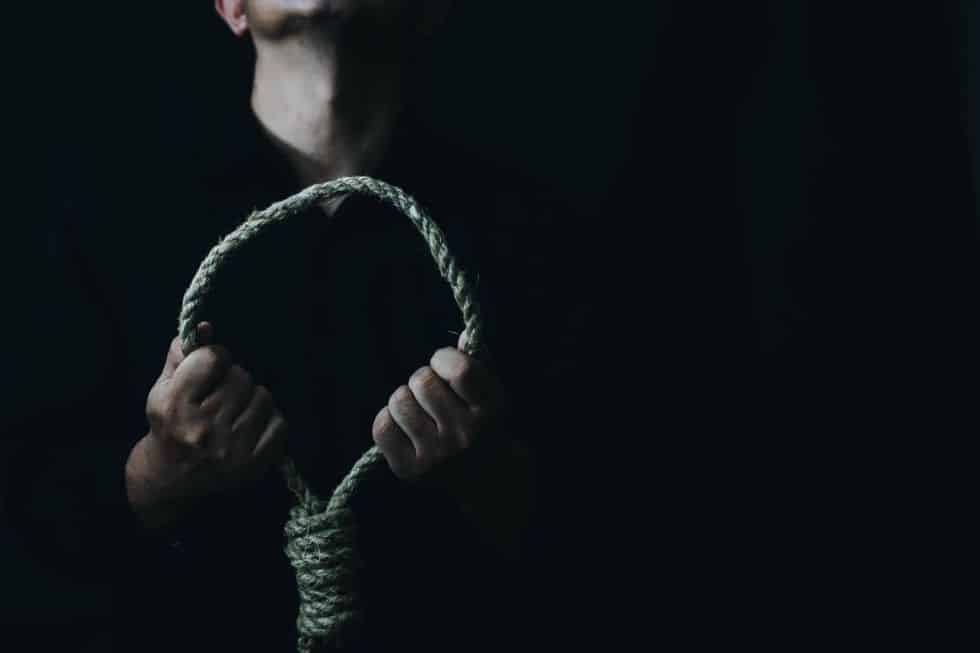


A recent case in Scotland casts doubt on that assumption, at least in a legal sense. Lee Milne was convicted of culpable homicide after his wife, Kimberly Milne, took her own life following what the court accepted was a sustained pattern of coercive and abusive behavior. The jury accepted evidence that Lee had effectively isolated his wife from family, controlled her finances, engaged in repeated physical violence and exerted a psychological domination that intensified when Kimberly tried to escape. (Under some jurisdictions, including Scotland, South Africa and India, an unlawful act that results in a person’s death but is held not to amount to murder is culpable homicide.)
While Lee didn’t directly cause her death, the court concluded that his domineering conduct formed a link in a causal chain leading to her self-destruction. Kimberly was aged 28 when she jumped from an overpass and was hit by several vehicles in Dundee, Scotland, in 2023. Think of the implications, specifically that suicide, in at least some circumstances, can be a culmination of a potentially observable process rather than a private psychological trauma. This reimagines suicide, with key actors contributing to what culminates in self-inflicted fatality.
Coercion and suicide
The suggestion fits awkwardly in conventional understanding. It attributes coercion, mental as well as physical, with causal efficacy and places coercive relationships in the narrative of suicide itself, rather than treating them only as part of the background. It suggests that “choice” exists but in conditions so restrictive that the scope of meaningful alternatives has narrowed to a chokepoint. (I use coercion in its broader contemporary sense. It does not require physical force. Threats, intimidation, isolation and humiliating language can all restrict behavior by progressively narrowing a person’s freedom to act independently.)
Courts, coroners and juries increasingly inquire into suicides preceded by sustained domestic coercion. In some cases, like Milne, the chain of causation is accepted as sufficiently strong to establish criminal liability. In others, similar patterns of abuse are acknowledged but don’t translate into a finding that the partner’s behavior caused the death. And in still others, allegations of coercion see rejection entirely. Within weeks of the Milne decision, Christopher Trybus, a man who’d been accused of abusing his wife prior to her suicide, saw acquittal of controlling and coercive behavior and two counts of rape.
The Milne case insinuates manipulation into the suicide complex and, in doing so, destabilizes commonsense assumptions about the solitariness of suicide. The act still involves only one person — its definition stipulates that one person takes their own life. (Even a suicide pact involves two people who agree to die together by taking their own lives.) If we accept a revision to our conception of suicide, the case pushes us to ask more questions than it answers. Suicide may — almost certainly does — involve others. Yet the final act is still carried out by one person alone: No one else jumps, takes the pills or draws the blade. Under what conditions, then, can another person’s behavior become part of the causal architecture of self-inflicted death?
The verdict of the Milne case makes it exceptional. But there are other recent cases in which partners have taken their own lives following relationships affected by sustained coercion, violence and psychological control. In 2022, Lancet Psychiatry published the results of a study of 7,000 adults. It documented the association between what researchers called “intimate partner violence” and suicidality, deep unhappiness likely to lead to a suicide attempt.
In some instances, courts or coroners have accepted that domestic abuse was a significant contributing factor to suicide, even if no single act was identified as directly causing death. In others, defendants accused of coercive control, assault or sexual violence have been acquitted, despite detailed allegations describing patterns of domination and intimidation. And in still other cases, abuse has been acknowledged in generic terms but detached from the legal question of responsibility for the fatal outcome.
Having reviewed the available data, criminologist Mags Lesiak concludes: “Fatal outcomes linked to domestic abuse may be being categorized as individual acts rather than perpetrator-produced harm.” In other words, some suicides that occur in the context of domestic abuse are being classified as purely individual acts, when they might more accurately be understood as the result of harm inflicted by an abuser.
Recognizing that suicide may have social dimensions does nothing to diminish its gravity. It draws attention to the role others may play in shaping the conditions under which the act becomes conceivable and feasible.
Insecurity is part of the social dimension, not just the human condition. In many cases of suicide, there is evidence of anxiety, depression or longer-term psychological vulnerabilities. Understandably, these conditions are assumed to be independent factors. But it’s a superficial inference, and one that avoids the more elliptical problem of whether mental illness is a corollary or direct consequence of an abusive relationship rather than an independent cause.
Suicide, media and regulation
In 2019, a 63-year-old man was found dead a week after being accused of lying on an English daytime talk show. At the inquest, the coroner recorded a verdict of suicide, noting the combined effect of an overdose and a pre-existing heart condition. Footage of the presenter’s combative interview was shown and the man’s distress was evident. Yet after considering the broadcast, the coroner concluded there was no “clear and reliable causal connection” between the program and the death, formally exonerating presenter Jeremy Kyle and The Jeremy Kyle Show. By that time, the channel ITV had already cancelled a program that had run for 14 years and had once been described by a judge as “human bear-baiting … under the guise of entertainment.”
The same broadcaster faced further scrutiny after two former contestants from the television series, Love Island, died by suicide in 2018 and 2019. In neither case was the program found to have directly caused the deaths, though both individuals had experienced the intense and often disorienting effects of sudden public exposure. ITV subsequently introduced aftercare measures to support participants adjusting to life beyond the show. In each case, media exposure was implicated, but not established as decisive.
Last year, parents of a Californian teenager who took his own life sued OpenAI, claiming its ChatGPT validated his “most harmful and self-destructive thoughts,” and so encouraged his suicide. The “I” in AI stands for intelligence, not influence, of course: Whether the provision of knowledge, information or some form of data is tantamount to encouragement depends on context and perspective. But it shouldn’t surprise us to learn that non-human third parties have been identified as contributors to suicide. A report in Britain’s The Guardian last year opened with the stunning claim: “More than a million ChatGPT users each week send messages that include ‘explicit indicators of potential suicidal planning or intent.’”
AI chatbots tend to affirm users’ decisions and opinions. The term sycophancy, conventionally meaning fawning behavior to gain an advantage, is used to define this characteristic. In an AI context, “sycophancy” means a model’s tendency to agree with, validate or flatter the user’s views, even if those views are incorrect, poorly reasoned or potentially harmful. The model is implicitly optimized to be liked, accepted or rated as helpful. Validation can drift toward if not actually be endorsement, so that, for example, if a user frames suicide as a solution to a problem, the chatbot’s response is likely to stay inside the frame rather than challenge it.
This is at once subtler and more penetrating than influence: It doesn’t help form an opinion or conclusion but provides agreeable language that’s capable of being read as affirmation. Empathy can be experienced as permission. It isn’t coercion. It isn’t even human. But it is social. That’s no longer a contradiction.
It’s misleading to treat social media analogously to AI. But it’s understandable. Social media has been quietly installed as a prime mover in suicide, an explanation repeated so often that it now passes for fact. It offers a convenient narrative — visible, contemporary and easy to grasp — but one that risks displacing more difficult questions about coercion, vulnerability and the conditions under which despair takes hold.
My own research with large samples of screen users indicates counterintuitively that those cast as malign online actors are frequently treated as objects of ridicule rather than sources of serious harm. “Trolls,” as online users who deliberately try to upset, offend or hurt others just to elicit a response are known, are popularly depicted as fearful characters. More often, however, they’re regarded as figures of fun, mocked for their pathetic and usually ineffectual attempts to provoke a reaction.
Online safety rules have had some success in limiting the visibility of suicide and self-harm content on social media platforms. In Australia, policymakers have gone further, banning people below the age of 16 from using social media altogether — as if restricting access could insulate them from harm. Yet the assumed causal link between exposure to online content and self-destructive behavior remains far from settled. It has been inferred, asserted and widely accepted, in part because it carries a certain commonsense appeal and offers a convenient locus of blame. But that very simplicity may be the problem: It risks mistaking a visible and contemporary factor for a cause, while more complex and less tractable influences remain in the background.
A cultural universal
Suicide is one of the most inscrutable human practices. While taking one’s own life is usually regarded as pathological, it is present in every known human society in history and is, as such, a cultural universal, occurring across time and space. Suicide resists stable causal classification. It’s neither purely individual nor straightforwardly attributable to a single external agent, human or otherwise; like everything else, it depends on social context.
French sociologist Émile Durkheim formalized this in the 19th century when he marshalled historical and statistical evidence to link suicides with changing societies. He shifted attention away from the individual and toward the patterns of social life that make certain kinds of self-destruction more or less likely. Suicide, he maintained, exists in every society, but its incidence varies with the norms, constraints and forms of association that shape how people live with and apart from one another. What appears to be a singular, private act is, on analysis, the outcome of multiple and often invisible social forces.
That insight feels closer to acceptance today. Yet the difficulty hasn’t disappeared; it has merely changed form. We’re still inclined to search for single causes: an abusive partner, a hostile online environment, a chatbot. The reality is more diffuse and less amenable to neat attribution or changeless theories. Suicide may occur in solitude, but it’s rarely produced there.
[Ellis Cashmore is the author of The Destruction and Creation of Michael Jackson.]
[Lee Thompson-Kolar edited this piece.]
The views expressed in this article are the author’s own and do not necessarily reflect Fair Observer’s editorial policy.
Why Do Mothers Kill Their Own Children?
A mother’s bond with her child is said to be one of the strongest human relationships. So how and why...

Australia’s Idiotic Social Media Ban
Australia’s social media ban for children under 16 is set to take effect on December 10 — becoming the world’s...
Anatomy of the Mushroom Murders
Australia’s “mushroom murders” have gripped the world. Erin Patterson is found guilty of poisoning her in-laws and a relative of...

What Happens When We Ignore Genuine Mental Illness?
A recent abuse case saw an English mother hide her malnourished baby in a drawer for three years. Her astounding...
Support Fair Observer
We rely on your support for our independence, diversity and quality.
For more than 10 years, Fair Observer has been free, fair and independent. No billionaire owns us, no advertisers control us. We are a reader-supported nonprofit. Unlike many other publications, we keep our content free for readers regardless of where they live or whether they can afford to pay. We have no paywalls and no ads.
In the post-truth era of fake news, echo chambers and filter bubbles, we publish a plurality of perspectives from around the world. Anyone can publish with us, but everyone goes through a rigorous editorial process. So, you get fact-checked, well-reasoned content instead of noise.
We publish 3,000+ voices from 90+ countries. We also conduct education and training programs
on subjects ranging from digital media and journalism to writing and critical thinking. This
doesn’t come cheap. Servers, editors, trainers and web developers cost
money.
Please consider supporting us on a regular basis as a recurring donor or a
sustaining member.
Will you support FO’s journalism?
We rely on your support for our independence, diversity and quality.





Comment