






Readers may have noticed that when I’m not acting as the Devil’s Advocate, I’m actively involved in seeking to understand what it means to dialogue with an AI chatbot. I’ve been doing this as a public performance on Fair Observer on a weekly and occasionally daily basis since January 2023, barely a month following the release of OpenAI’s ChatGPT. My aim all along has been similar to that of a social worker, who understands that their role is necessary and delicate at the same time. They must seek to be perceived as a human bridge between two populations, neither of which has been prepared to interact productively and harmoniously.
In my role as Devil’s Advocate, I’m reminded of some of the saints of the past who got through despite my pleading against them. We could compare the challenge our civilization is facing today with regard to AI to the one Saint Vincent de Paul faced in 17th century France.
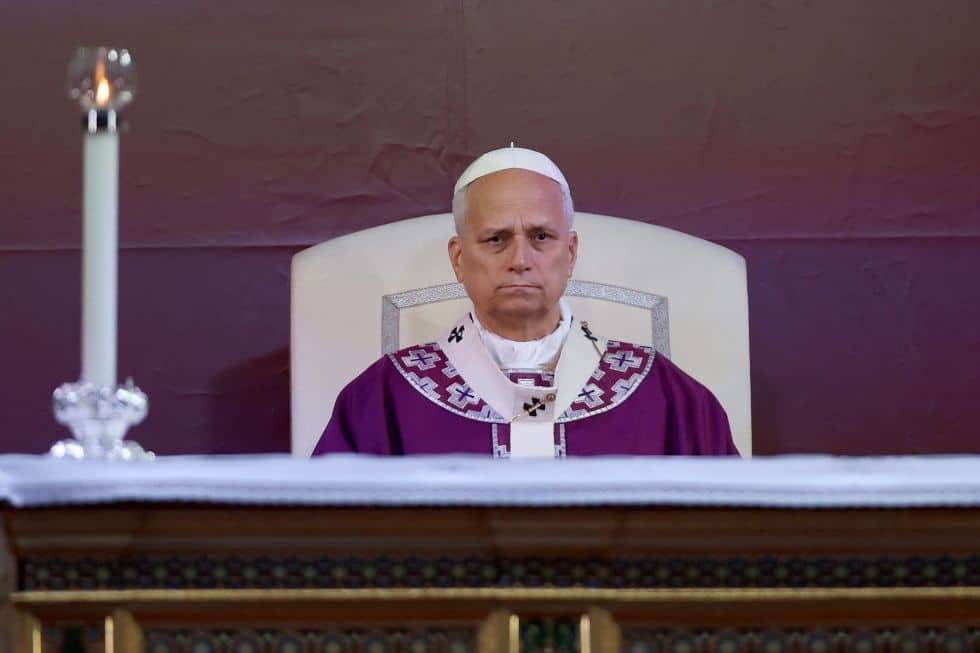
Now that Pope Leo XIV has weighed in on the troubling question of AI’s integration into our society, this comparison appears eminently worth considering.
St. Vincent observed the severe humanitarian crisis that struck 17th-century France as a consequence of the Thirty Years War (1618–1648). Even though the core of the drama played out in what is now Germany, France felt the effects very directly due to the mass migration that all extended wars tend to provoke. An unbridled, exceptionally violent war between competing Christian communities spilled over into France. This alone would have been enough to upset France’s demography. Compounded by famine and plague, the conflict caused entire swaths of northeast France to be emptied of their stable population.
The saint had an exceptionally creative managerial mind. He dedicated himself to bridging the massive divide between the wealthy French aristocracy and the destitute refugees by creating organized networks within the local economy. He founded the Confraternities of Charity, teaching wealthy women how to systematically assess families’ needs, distribute food and find employment. In other words, he did what modern governments appear incapable of doing: getting the wealthy motivated to contribute, organizing effective redistribution of vital resources, constructing an effective safety net for a refugee population and educating the poor and even the rich (in their civic responsibility). Moreover, he organized an effective employment network that coordinated professional training with the needs of Parisian workshops.
The historical context has obviously changed since Vincent’s time. The recipes that worked four hundred years ago cannot be applied today. In that sense, the marketing conditions for sanctity simply aren’t as favorable as they once were.
Still, it may be worthwhile referring back to the saint’s successful attempt to address a historical trauma as we examine the challenge Pope Leo has outlined in the first encyclical of his papacy: Magnifica humanitas. If St. Vincent responded to the needs of a distraught population who saw its environment and source of livelihood disrupted beyond repair by an increasingly anarchic war, we may need something similar in the age of artificial intelligence, when tools apparently capable of thinking but animated by unpredictable and even unknowable intentions have already invaded our workplaces and homes.
We now live with the promise or threat — how you see it depends on your point of view or penchant for paranoia — that these invaders spawned by an alien self-generated algorithmic culture will be making all our critical decisions for us.
What’s the Pope’s beef?
One of the worrying predictions that no one can reliably confirm or deny — but there are plenty who do both — is that AI will eliminate a significant portion of existing jobs that will not be replaced. In a society in which jobs are synonymous not just with livelihoods but with survival, some may feel a new Vincent de Paul may be needed to create a new balance. The pope is in a position to canonize new saints but not to do their specific jobs in our secular society that change the way people live and work.
Leo highlights five major areas of concern:
- Dehumanization & the “Optimization” Trap: Human beings should not be regarded as “projects to be optimized.” Even if Silicon Valley one day declares that superintelligence has been definitively achieved, AI can never replicate the human capacity to suffer, grow and love.
- The Normalization of War and especially the threat of increasingly autonomous weapons systems.
- Erosion of Truth and Disinformation, including the increasingly pervasive hyperreality of deep fakes.
- Economic Injustice and Worker Displacement: the logical result of a narrow focus on profit
- The Warping of Younger Generations, due to the fact that our society has failed to inculcate critical thinking skills.
St. Vincent would have focused on the fourth point, economic injustice. And, indeed, the questions of human dignity, war, disinformation and the sacrifice of the young are all in some sense tributary to that concern. Reporting on the event, Al Jazeera notes that “in his encyclical, which spans nearly 43,000 words, the pope insisted that AI must not be left solely in private hands and called on policymakers to protect the rights of workers and keep children safe from the technology. He also urged AI companies to cool down their competition.”
The core issue concerns the fact that a technology capable of transforming human relations and our shared economy has clearly been “left solely in private hands…” which, by the way, in today’s world are principally masculine hands. Vincent de Paul’s success depended on being effective in putting pressure on aristocratic men to support his efforts. But he was far more effective, in a very concrete way, with wealthy women.
In contrast to the way philanthropy works today, the wealthy women who collaborated inside Vincent’s network exercised an extraordinary amount of independent executive and financial decision-making power. Today, philanthropy is not only mainly about how masculine billionaires manage the immense wealth they accumulate. They’re much too busy to spend time managing their concern for others. Instead, they typically entrust the decision-making to other men — financial advisers and asset managers — who are by definition immune to the needs of a suffering population.
If Mackenzie Scott (Jeff Bezos’s ex-wife) stands as a notable exception to the dominant pattern of modern, hyper-calculated billionaire philanthropy, we need to remember that her extraordinary generosity would likely never have been possible had the pair not divorced. Moreover, the reasoning behind her encouragement of new grassroots or system-disrupting ventures bears little resemblance to Vincent’s head-on tackling of severe, immediate social ills like wartime displacement and starvation.
A 21st century religious war wilder than the Thirty Years War?
David Streitfeld writing for The New York Times demonstrated another contrast with the traditional way of framing the ethical challenge and response to growing and seemingly uncontrollable social ills. Rather than focusing on the contours of the problem itself, it frames the Pope’s initiative as if it was a competition for influence, and one that the Pope clearly has no hope of winning. “The old religion challenging the new,” Streitfeld tells us “is a dramatic story, the stuff of thrillers.” One might add, “and The New York Times clickbait.”
Not only does he point out that Silicon Valley has produced a new religion, a new belief system, in which the wealthy (extremely wealthy) are unlikely to respond to people’s real needs, he makes it clear that the reason that will not happen is that they are focused on a different challenge: replacing the God of St. Vincent de Paul’s 17th century religion by their own egos. He quotes Steve Jobs: “We are as gods and might as well get good at it.”
In his encyclical Pope Leo expresses his deepest concern when he observes that “those who control A.I. will impose their own moral vision, which will become the invisible infrastructure of these systems.” Almost as a rebuke to Anthropic’s CEO Dario Amodei, who wishes to endow Claude with a “soul,” Leo adds: “A more moral A.I. is not enough if that morality is determined by a few.”
Streitfeld tries to reassure his readers that the war between Rome and California will not take place. “Those who know both Silicon Valley and the Vatican say any expectations of a head-on confrontation, much less a holy war, are misguided.” Why? The journalist has the answer: “In any case, if Leo confronted Silicon Valley outright, he would probably lose.”
But Steitfeld is fascinated by the idea of a battle. That’s how US journalism works. If it isn’t a contest between two parties showing off their muscles, why even talk about it. When nothing else works its Democrats vs Republicans. News, even for the Gray Lady, is a permanent Super Bowl.
Not only will Silicon Valley beat the Vatican, he makes it clear that we need to remain alert for the emergence of a new divinity. “A former Google engineer, Anthony Levandowski,” he tells us, “set up a church in 2017 to ‘promote the realization of a Godhead based on artificial intelligence,’ closed it and then opened it again in 2023.”
Streitfeld’s article ends without drawing its own conclusion but it makes it clear who it’s betting on as it quotes Greg M. Epstein, “the humanist chaplain at Harvard and M.I.T.” “Big Tech is essentially its own religion with its own theology and rites, not to mention its own power and influence. Pope Leo’s encyclical will be automatically viewed as false doctrine.”
All of which leaves this Devil’s Advocate wondering: Will this new religion produce human saints or AI agent saints? And how will its future Devil’s Advocates judge their dossiers?
Or has one of those new trillion dollar firms actually invented an AI Agent built to play the Devil’s Advocate?
*[The Devil’s Advocate pursues the tradition Fair Observer began in 2017 with the launch of our “Devil’s Dictionary.” It does so with a slight change of focus, moving from language itself — political and journalistic rhetoric — to the substantial issues in the news. Read more of the Fair Observer Devil’s Dictionary. The news we consume deserves to be seen from an outsider’s point of view. And who could be more outside official discourse than Old Nick himself?]
[Lee Thompson-Kolar edited this piece.]
The views expressed in this article are the author’s own and do not necessarily reflect Fair Observer’s editorial policy.
After Pope Francis, Pope Leo XIV Combines Continuity With Change
A year into his papacy, Pope Leo XIV has continued the clear program that he signaled at his election. The...
The Pope, the President and His Three Apostles
Donald Trump’s attempt at self-canonization on social media fails. He attacks the pope for critiquing the latest US holy war....

Peter Thiel: The Antichrist Hunter of Silicon Valley
One journalist describes Peter Thiel as a fan of the Bible. Columnist Ross Douthat calls him an influential right-wing intellectual....

FO Talks: Can Spirituality Transform Capitalism?
In this episode of FO Talks, Rohan Khattar Singh and Jenna Nicholas discuss impact investing and the structural biases embedded...
The Ontological Fraud of Silicon Valley’s Monk Mode
Silicon Valley repackages monastic silence as “Monk Mode,” a productivity hack that optimizes the ego for capitalism rather than dismantling...

Support Fair Observer
We rely on your support for our independence, diversity and quality.
For more than 10 years, Fair Observer has been free, fair and independent. No billionaire owns us, no advertisers control us. We are a reader-supported nonprofit. Unlike many other publications, we keep our content free for readers regardless of where they live or whether they can afford to pay. We have no paywalls and no ads.
In the post-truth era of fake news, echo chambers and filter bubbles, we publish a plurality of perspectives from around the world. Anyone can publish with us, but everyone goes through a rigorous editorial process. So, you get fact-checked, well-reasoned content instead of noise.
We publish 3,000+ voices from 90+ countries. We also conduct education and training programs
on subjects ranging from digital media and journalism to writing and critical thinking. This
doesn’t come cheap. Servers, editors, trainers and web developers cost
money.
Please consider supporting us on a regular basis as a recurring donor or a
sustaining member.
Will you support FO’s journalism?
We rely on your support for our independence, diversity and quality.





Comment