





“He who has not faith in others shall find no faith in them. “ — Lao Zi, fifth century BCE
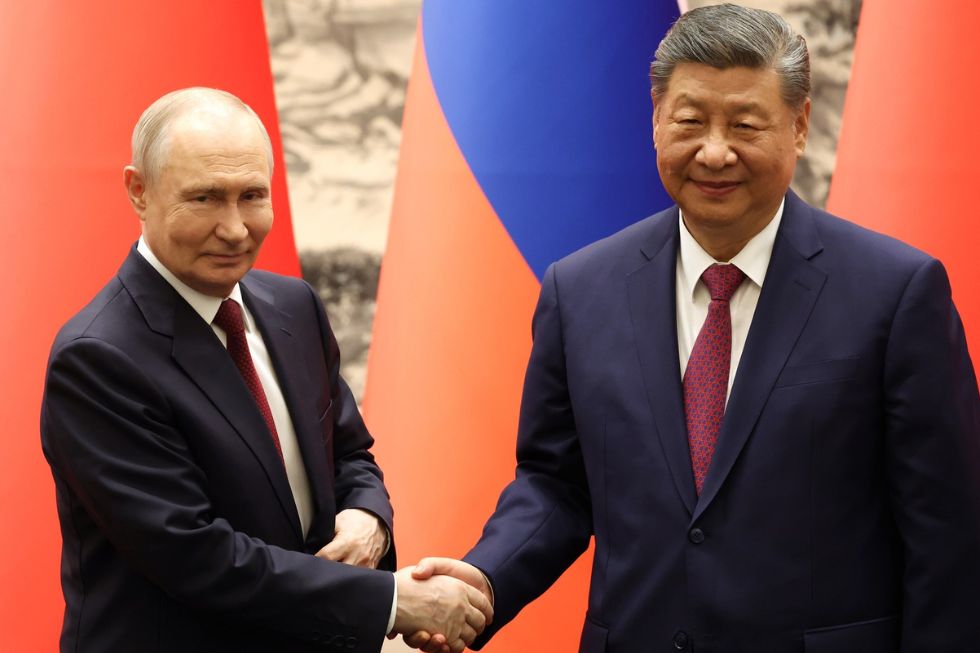
Russian President Vladimir Putin visited Beijing last week as a friend and supporter of China. Over the past decade, as the West has imposed embargoes and tariffs on Russia, China has been crucial to its economic endurance, just as Russia has been a useful supplier of resources to China, particularly of oil and gas. The meetings between US President Donald Trump and Chinese President Xi Jinping the week before were, by necessity, two-dimensional, while those between Putin and Xi last week were exercises in three-dimensional diplomacy.
A partnership forged by circumstance
Russia and China are not formally allied and differ markedly culturally and politically. They are collaborators by necessity, united more by shared external enemies than by deep historical affinity. America, which formed its critical economic partnership with China in the 1970s out of a mutual fear of the Soviet Union, has since driven Beijing and Moscow closer together than at any time since the 1950s — unwittingly creating a partnership capable of resisting and eroding US military and trade primacy on its own.
President Putin brought his most senior politicians and officials to Beijing. There were eight government ministers, three senior Russian bankers, and leaders of the energy and resource sectors, which dominate Russian exports to China. With trade exceeding $200 billion over each of the last five years, Russian and Chinese bankers discussed further streamlining renminbi-ruble settlements, which account for 99% of the countries’ trade transactions. The renminbi accounts for over 40% of daily foreign exchange trading in Moscow. By weaponizing its currency and striving to direct global currency flows, Washington has weakened the dollar’s primacy, not just in China’s trade with Russia, but throughout the BRICS trading system.
Yet despite this growing financial integration, the broader economic relationship remains uneven in both scale and structure. The US is China’s second-largest trading partner, behind the EU, while China is the US’ third-largest after Mexico and Canada, primarily owing to the latter two’s shared borders and close integration with the US economy. Russia, while important, is only China’s eighth-largest trading partner, behind Vietnam.
Although Russia’s economy possesses a narrow resilience due to its industrial war footing and high global oil prices, inflation — and, by necessity, interest rates — are also high, and consumption, together with domestic investment in other sectors, is weak. Russian-Chinese bilateral trade appears to have reached its zenith.
Oil and gas make up 70% of Russia’s exports to China, while over 85% of its Chinese imports are manufactured or processed goods. China has replaced the West as the supplier of most imported consumer and industrial goods, and Russia is saturated with Chinese products ranging from electric vehicles to skateboards. China can buy oil from many countries, and, contrary to the received Western opinion, sources no more than 8% of its pipeline gas from Russia. The completion of a second gas pipeline through Mongolia would change that and disrupt global liquefied natural gas (LNG) markets. However, although the sides purportedly discussed the second pipeline in Beijing, no agreement was reached.
Diplomacy in contrast
The contrast between the Putin-Xi summit and the preceding Trump-Xi meeting was especially visible in the conduct and presentation of diplomacy itself. Following President Trump’s visit, no joint statements on either commercial or diplomatic matters were issued, leaving each side to cite points discussed independently of the other. Some of Washington’s publicly stated positions, such as those related to Iran and Taiwan, conflicted markedly with Beijing’s.
Putin’s team signed more than 40 governmental and corporate agreements in China covering energy, transport, industrial cooperation, nuclear technology, education, science, artificial intelligence and media. These agreements were a conspicuous reflection of diplomatic professionalism and maturity, in contrast to the ad hoc and transactional American display the previous week.
Public perception and historical shadows
Beneath the formal displays of unity, however, public opinion and historical memory continue to complicate Sino-Russian relations. The Chinese public is conflicted when considering Russia, and Putin in particular. Opinion on social media is split. Some see Putin as an unusually capable strongman — like Xi — waging defensive rather than hegemonic wars, and therefore worthy of respect in a world of otherwise ineffectual leaders. Others see him as a dangerous expansionist, waging a pointless war on Ukraine, while the Ukrainian and Russian peoples suffer unnecessarily. Three years ago, social media was almost unanimously supportive of Putin.
Russian–Chinese relations have a checkered, bloody history. During China’s “century of humiliation,” Russia annexed 1.5 million square kilometers of Chinese land, equivalent to all of Western Europe. In the closing months of World War II, Soviet divisions occupied northeastern China from August 1945 to March 1946, and may have absorbed it into the Soviet Union had the US and its allies not deterred Soviet Leader Joseph Stalin, including through the implied threat of the then-recent nuclear bombings of Hiroshima and Nagasaki. Stalin’s armies withdrew but stripped the region of over $2 billion in industrial machinery and equipment. The Sino–Russian war of 1969 over Zhenbao Island on the Ussuri River and clashes along the Xinjiang border cost hundreds of lives on both sides, prompting Moscow to float the idea with Washington that the Soviet Union conduct a pre-emptive nuclear strike on China’s nuclear facilities.
Even so, contemporary geopolitical realities have encouraged both governments to manage these historical tensions pragmatically. Putin and Xi have a good personal relationship, but there is a deep underlying distrust between the two nations. China is glad to be the dominant partner in this phase of Sino–Russian relations and can afford to be magnanimous. Given the economic trends in both countries, China’s dominance will likely prevail for many years to come.
The previous week, President Xi met President Trump as an economic equal. Putin met Xi as a reliable collaborator, confidante and compadre, but in economic and geopolitical terms, a junior, dependent partner. Behind the at-times histrionic public displays of undying fraternity, China and Russia enjoy a steady geopolitical resonance. Neither interferes with the other. Xi did not express the thinly disguised admonitions he directed at Trump in his welcome speech to Putin, and both Putin and Xi indirectly admonished the US for disrupting global peace and security in their respective addresses last week.
Chaos as a catalyst for China’s rise
Taken together, these diplomatic encounters point to a broader shift in the international balance of power — one from which China appears to be benefiting. Recent events, while chaotic, have strengthened China. Xi has just hosted the commander-in-chief of the world’s most powerful military, Trump, who is losing a war with Iran, followed by the commander of the world’s second most powerful military, Putin, who is stalled in a conflict in Ukraine that his forces are too strong to lose but too weak to win. While it is in China’s interests for the US to be distracted by both conflicts, it has more to gain from a cessation of hostilities so that global trade can flow unimpeded again and global consumer confidence can recover.
In the last six months, China has received the leaders of the other four permanent members of the UN Security Council: France, the UK, the US and Russia. China blundered in its role as a great power five, and even three years ago, appeared unprepared, dispatching wolf warriors instead of diplomats to the world’s capitals and issuing peevish statements in the face of regional slights from Washington and Tokyo. Few nations are ready for the power circumstances thrust into their hands at first, but, in time, they adjust. Over the last fortnight, China has resembled and behaved as a great power.
China can demonstrate its greatness further by resisting the provocations of other powers — particularly regarding Taiwan, Japan and the Philippines — and by working to make its own economy and society models of the just, stable and prosperous world it says it desires, and of which it seeks to be an indispensable pillar.
[Kaitlyn Diana edited this piece.]
The views expressed in this article are the author’s own and do not necessarily reflect Fair Observer’s editorial policy.
Trump-Xi China Summit and the Unavoidable Reality of Deference
The US and China now face the reality of functional coexistence, as China’s dominance in critical supply chains and manufacturing...
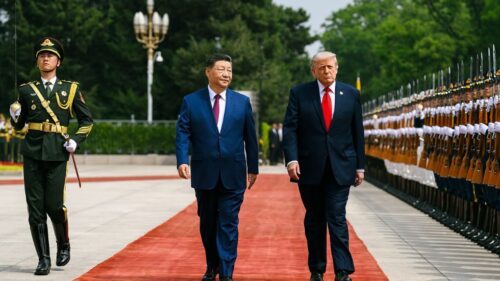
Xi-Trump Summit in Beijing Was Great Theater, Little Substance
The recent US–China summit in Beijing, though symbolically significant as the first meeting between the two leaders on Chinese soil...
FO° Talks: Great Power Competition Is Back: How the US Plans to Deter China and Russia
In this episode of FO° Talks, Atul Singh and Evan Munsing discuss why US national security is tightening around two...
Support Fair Observer
We rely on your support for our independence, diversity and quality.
For more than 10 years, Fair Observer has been free, fair and independent. No billionaire owns us, no advertisers control us. We are a reader-supported nonprofit. Unlike many other publications, we keep our content free for readers regardless of where they live or whether they can afford to pay. We have no paywalls and no ads.
In the post-truth era of fake news, echo chambers and filter bubbles, we publish a plurality of perspectives from around the world. Anyone can publish with us, but everyone goes through a rigorous editorial process. So, you get fact-checked, well-reasoned content instead of noise.
We publish 3,000+ voices from 90+ countries. We also conduct education and training programs
on subjects ranging from digital media and journalism to writing and critical thinking. This
doesn’t come cheap. Servers, editors, trainers and web developers cost
money.
Please consider supporting us on a regular basis as a recurring donor or a
sustaining member.
Will you support FO’s journalism?
We rely on your support for our independence, diversity and quality.





Comment