





 | ||
| ||
| ||
Dear FO° Reader, Greetings from North-Central Pennsylvania and Northern California. This week, we are looking at the growing concentration of media ownership in France following billionaire Vincent Bolloré’s acquisition of the historic French publishing house Grasset. The move has sparked backlash from writers, editors and cultural figures who fear increasing political influence over France’s media ecosystem. Similar concerns within the US are raising broader questions about the future of independent journalism and who ultimately shapes public discourse. For years, Vincent Bolloré has steadily expanded his influence across the French media landscape. Bolloré runs his family’s conglomerate, founded in 1822 as a paper manufacturer producing cigarette wrappers and Bible paper. Over time, he transformed the Bolloré Group into a business empire with interests spanning logistics, transportation, advertising and media. In recent years, Bolloré has shifted increasingly toward media and publishing, using Vivendi (a French conglomerate, world leader in content and entertainment media) to acquire stakes in major French television networks, radio stations, and publishing houses.
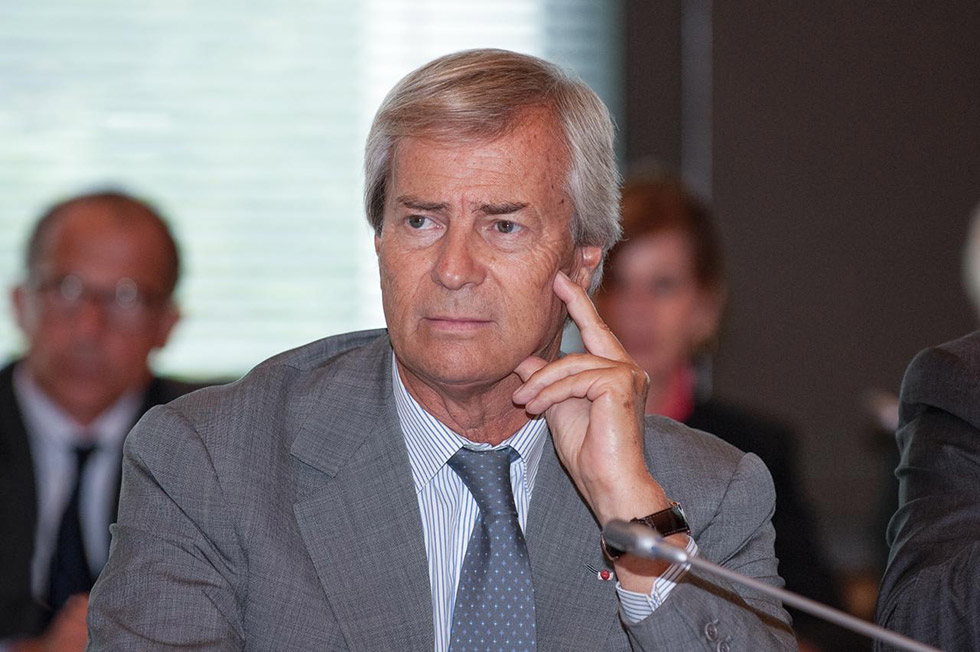
Vinvent Bolloré, France – via Shutterstock Critics claim that his growing media empire has helped push parts of French political discourse further to the right, especially through outlets such as CNews and Europe 1. Now, his expanding influence in publishing and journalism education has sparked renewed alarm among writers, editors and cultural figures who fear increasing political interference in French media. The latest controversy centers around the prestigious French publishing house Grasset. Following Bolloré’s acquisition, more than 100 writers resigned from the publisher in protest, arguing that his ownership threatens editorial independence and risks turning historically independent cultural institutions into ideological platforms. Several writers accused Bolloré of using media ownership not simply as a business strategy, but as a means of shaping political and cultural narratives in France. The backlash extends beyond publishing. Bolloré’s influence in French cinema and television has faced criticism, especially after reports surfaced alleging that actors and public figures critical of him were informally sidelined from media appearances associated with his networks. Critics increasingly compare Bolloré’s growing influence in France to the rise of politically aligned media empires elsewhere, particularly in the United States. Commentators in Le Monde argued that Bolloré represents a broader trend in which wealthy media owners use cultural institutions to advance ideological agendas aligned with the political right and far right. Our Chief Strategy Officer, Peter Isackson, suggests that there may be a hint of hypocrisy in Le Monde’s complaint. The newspaper created by Henri Beuve-Méry which for many decades had a well-earned reputation for independence and exemplary objectivity was itself recently taken over by billionaires… obviously ones that don’t share the same political orientations as Bolloré. Aware of the PR blowback after the “bailout” by Czech energy billionaire Daniel Křetínský, the various stakeholders reconfigured the ownership structure to ensure “editorial independence.” But influence is never easily erased even by formal shareholding tricks. Bolloré’s allies are less inclined to look for a convenient fix or paper over the question of ideological control. They outright reject accusations that he is undermining French democracy or media pluralism. Supporters argue that liberal and center-left viewpoints have long dominated French media institutions and that Bolloré’s outlets simply provide ideological balance within the national conversation. Bolloré himself has largely dismissed criticism surrounding the departures from Grasset, framing the backlash as resistance from entrenched cultural elites unwilling to accept changing political realities inside France. Sources: French media mogul Bolloré defiant as authors quit his publisher en masse | RFI Turmoil at publisher owned by French billionaire Bolloré sparks exodus of top authors | France 24 Vincent Bolloré & family | Forbes French billionaire shrugs off mass exodus at hallowed French publisher | Inside NOVA A pattern abroad This also reflects changes in the media landscape in the US. For the past few decades, media moguls, most prominently Rupert Murdoch, have been consolidating news media companies or expanding their own brands. Usually, this brings up an explicit right-wing edge, Fox News being the prime example. There are other, more recent instances of this. The Sinclair Broadcasting Group has bought many local TV stations and forced their anchors to repeat scripts parroting Republican President Donald Trump’s talking points. ABC canceled Jimmy Kimmel Live! after the host’s comments about the assassination of conservative pundit Charlie Kirk. CBS canceled The Late Show with Stephen Colbert after Colbert accused them of “taking a bribe,” though CBS’s president denies that it was retaliation, citing budget concerns. Sources: Sinclair Broadcast Group | Britannica Sinclair’s Soldiers in Trump’s War on Media | Deadspin Suspension of Jimmy Kimmel Live! | Wikipedia CBS Boss George Cheeks On The Decision To Cancel ‘The Late Show With Stephen Colbert’ | Deadline The pattern extends beyond traditional media moguls. Larry Ellison, Oracle co-founder and one of the world’s wealthiest individuals, has emerged as a major Republican donor and Trump ally, contributing over $30 million to conservative super PACs in recent years. In 2024, his son David Ellison completed a merger between Skydance Media and Paramount Global, gaining control of CBS. Just days after the Paramount deal closed, and only three days after host Stephen Colbert publicly criticized Paramount’s $16 million settlement with Trump over a 60 Minutes interview — calling it a ‘big fat bribe’ — CBS announced the cancellation of The Late Show. While network executives cited ‘purely financial’ reasons, two U.S. senators publicly questioned whether the timing was coincidental. The Ellisons’ media ambitions didn’t stop there: in December 2025, Larry pledged $40 billion to help finance his son’s hostile bid for Warner Bros. Discovery, owner of CNN and HBO. The attempted acquisition is still pending, but critics warn it represents a troubling concentration of media power in the hands of billionaires closely aligned with the current administration. There have also been significant purchases in American print journalism. Many newspapers around the world have been struggling since the internet came into wide use, which allowed users to customize their information intake, and, more importantly, completely undercut classified advertising, a major source of revenue for most newspapers. Because of this, a new model has been adapted: finding a rich owner to help undercut costs. For example, Jeff Bezos, owner of Amazon, purchased The Washington Post in 2013. The Post, a prestigious paper centered in the US’s capital city, continued on its mission, and for many years afterwards seemed to be able to get the best of both worlds. The move was largely seen as financially stable and a pillar of the fourth estate during Trump’s first tumultuous term. However, this has changed drastically in recent years. In the 2024 election, Bezos personally intervened in the newspaper’s editorial board and refused to allow them to endorse the Democratic nominee, Kamala Harris. The effect was immediate. People saw one of the richest men on earth putting his thumb on the scale of American democracy, resulting in many resignations within the paper. Since then, there have been other changes to the paper. As Bezos has grown closer to the Trump administration, the Washington Post has reflected that change. In early 2025, it was reported that the paper’s slogan, “Democracy Dies In Darkness,” was being paired with a new one: “Riveting Storytelling for All of America.” Furthermore, certain editorials seem to reflect Bezos’s new political stance, arguing that the Trump administration should be given its astronomical request of $1.5 trillion in defense spending. Sources: Decline of newspapers | Wikipedia Democracy Dies in Darkness | Wikipedia ‘Washington Post’ flooded by cancellations after Bezos’ non-endorsement decision | NPR Washington Post still thinks “Democracy Dies In Darkness,” but announces new mission | A.V. Club Opinion | Trump’s welcome push for $1.5 trillion defense spending | The Washington Post Stephen Colbert’s ‘Late Show’ is canceled by CBS and will end in May 2026 | PBS Prognosticating the future of the French media ecosystem The immediate impact of Bolloré’s media expansion is already visible. France’s media environment has become increasingly polarized, with debates over immigration, national identity and secularism receiving far greater prominence across Bolloré-owned outlets. This shift mirrors developments seen in other Western democracies, where concentrated media ownership has amplified ideological divisions and weakened trust in traditional journalism. The longer-term implications may prove more significant. Bolloré’s growing control over publishing, television, radio and now journalism education through the acquisition of ESJ Paris raises concerns that its influence extends beyond daily news coverage to the training of future journalists. Critics fear that younger journalists entering the profession may face increasing pressure to align with editorial cultures shaped by ownership interests rather than traditional newsroom independence. Critics often debate whether this trend constitutes a legal “monopoly,” but standard metrics like the Herfindahl-Hirschman Index (HHI) fail to capture the reality. These thresholds, designed for industrial markets, ignore the fact that in smaller nations like France, a lower concentration score can wield disproportionate narrative power compared to larger markets. Such indexes treat influence as a linear sum of market share rather than the multiplicative effect of controlling the very channels that shape public discourse. At the same time, resistance within France’s cultural sector remains substantial. Independent bookstores, publishers, journalists and authors have increasingly positioned themselves as counterweights to what they view as a broader radicalization of parts of the French media sphere. Some booksellers have even described their stores as “sentinels of resistance” against the country’s rightward cultural shift. The public backlash surrounding Grasset also suggests that large segments of France’s intellectual and literary community remain uncomfortable with concentrated control over cultural institutions. Still, Bolloré’s rise reflects broader political changes taking place across France. As frustration with establishment parties and legacy media has grown, Bolloré’s outlets have positioned themselves as an alternative to France’s traditional press. Critics argue this has pushed French discourse further to the right, while supporters see it as a long-overdue challenge to an overwhelmingly liberal media establishment. The future of the French media ecosystem will likely depend on whether independent journalism and cultural institutions can maintain both financial sustainability and public trust in an increasingly consolidated media environment. The debate unfolding in France is no longer simply about one billionaire. It is about who shapes public discourse, who controls cultural institutions and how democratic societies respond when media power becomes increasingly concentrated in the hands of a few individuals. Sources: Billionaire media moguls join forces to invest in France’s oldest journalism school | Politico These two brief examples, centered in countries commonly thought of as leaders in democracy, go to show that journalism itself is growing increasingly threatened in a hostile world. When billionaires and other parties have the power to shape your perception of reality and the issues at hand, it is more important than ever to support independent journalism. Liam Roman and Casey Herrmann Assistant Editors | ||
We are an independent nonprofit organization. We do not have a paywall or ads. We believe news
must
be free for everyone from Detroit to Dakar. Yet servers, images, newsletters, web developers and
editors cost money.
So, please become a recurring donor to keep Fair Observer free, fair and independent. 
| ||
| ||
| About Publish with FO° FAQ Privacy Policy Terms of Use Contact |





Explore More FO° Spotlight

Support Fair Observer
We rely on your support for our independence, diversity and quality.
For more than 10 years, Fair Observer has been free, fair and independent. No billionaire owns us, no advertisers control us. We are a reader-supported nonprofit. Unlike many other publications, we keep our content free for readers regardless of where they live or whether they can afford to pay. We have no paywalls and no ads.
In the post-truth era of fake news, echo chambers and filter bubbles, we publish a plurality of perspectives from around the world. Anyone can publish with us, but everyone goes through a rigorous editorial process. So, you get fact-checked, well-reasoned content instead of noise.
We publish 3,000+ voices from 90+ countries. We also conduct education and training programs
on subjects ranging from digital media and journalism to writing and critical thinking. This
doesn’t come cheap. Servers, editors, trainers and web developers cost
money.
Please consider supporting us on a regular basis as a recurring donor or a
sustaining member.
Will you support FO’s journalism?
We rely on your support for our independence, diversity and quality.





Comment