


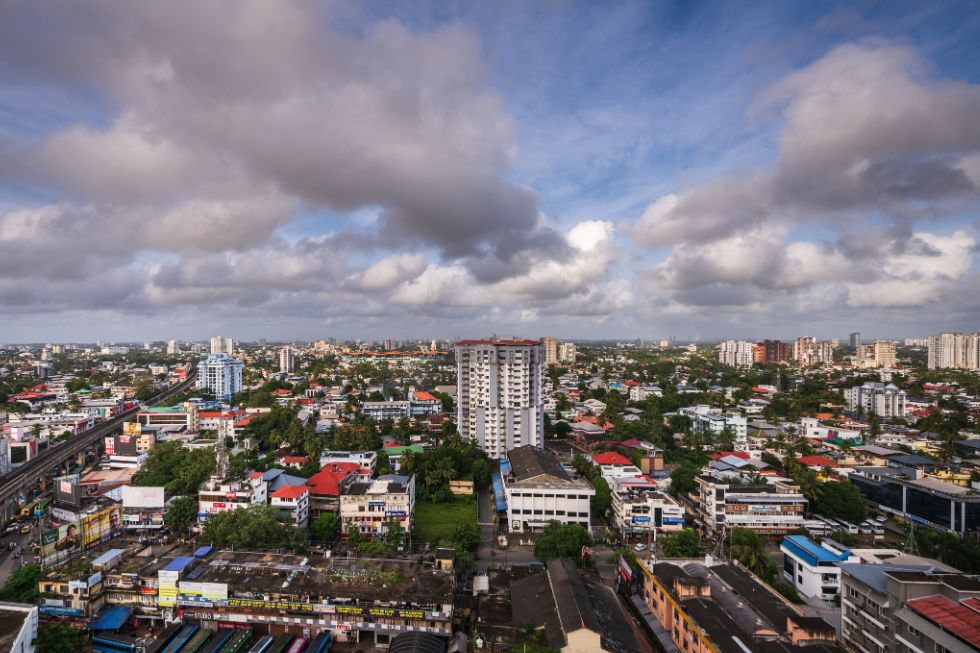



After living in Kerala for the past two years, what has struck me most is not prosperity in the conventional sense, but dignity. The state does not display wealth in the loud grammar of conspicuous consumption as visibly as many other urban regions do. Instead, it carries a quieter confidence: well-built homes even in semi-urban pockets, a visible sense of order, deep social awareness and a public culture in which access to healthcare and education is treated less as privilege and more as entitlement.
Kerala’s recent policy trajectory also supports this lived impression. In November 2025, the state formally declared itself free from extreme poverty, becoming the first Indian state to claim that milestone under a targeted, micro-plan-based welfare program.
Tailored interventions across housing, health, food security and livelihoods covered more than 64,000 families identified as extremely poor. Whether one debates the precise thresholds or not, the significance lies in what this signals: Kerala has largely moved beyond first-generation anxieties of destitution and survival.
This is perhaps the most distinctive feature of the Kerala experience. People here do not seem merely job-thirsty; they seem dignity-thirsty. Work is not viewed solely as an economic necessity but as an extension of self-respect. This social psychology, difficult to capture through data alone, may explain much of what makes Kerala different from the rest of India.
For decades, scholars have described the Kerala model as one of the most intriguing development experiments in the Global South. The state’s trajectory, shaped in part by the political legacy of the world’s first democratically elected communist government, produced a rare paradox: exceptionally high human development outcomes without corresponding industrial wealth.
Literacy, life expectancy, primary healthcare, political consciousness and social redistribution reached levels that often rivaled those of middle-income countries, even when Kerala’s per capita income and industrial base did not.
Yet to read Kerala only through welfare indicators is to miss the deeper economic story.
The visible social stability of the state, from household assets to intergenerational mobility, rests significantly on migration. Much of the physical landscape of Kerala, particularly its robust housing stock and relatively secure household finances, bears the imprint of decades of outward migration, especially to the Gulf. In many ways, the remittance economy did for Kerala what industrialization did for many other regions: It created capital, widened aspiration and financed dignity.
The hidden architecture of the Kerala story
Migration is not merely a demographic fact here; it is an economic institution. Across several districts, the quality of family housing, educational expenditure and healthcare access cannot be fully understood without accounting for the long arc of migration-led remittances. What appears as local prosperity is often the cumulative result of decades of earnings from abroad, transmitted back into the state through family networks and household investments.
But something important is now changing.
Kerala is no longer only a story of outward blue-collar migration to the Gulf. A second transition is underway: the movement of skilled workers, students, healthcare professionals and young graduates to other parts of India and increasingly to Europe, the UK and Australia. This is not simply brain drain in the conventional sense. It is more accurately a high-skilled workforce drain, driven less by immediate income distress and more by the search for institutional opportunity.
This anxiety no longer confines itself to academic discourse. As former Union Minister for Defence A. K. Antony recently warned, sustained youth migration to “greener pastures” could fundamentally alter Kerala’s demographic future.
His caution that the state risks turning into an “old-age home” if this trend persists is more than rhetorical politics; it reflects a structural concern that Kerala’s most mobile and skilled demographic cohorts are increasingly seeking opportunities elsewhere, even as the local economy grows more dependent on inbound migrant labor for construction, services and care work.
A demographic shift
The demographic numbers make this concern impossible to dismiss as mere political rhetoric.
Kerala is already India’s most rapidly aging state. The share of citizens above 60 years is projected to rise sharply over the coming decades. Within a generation, nearly one in every three persons in the state may be elderly. More tellingly, the old-age dependency ratio will climb significantly, implying that every 100 working-age individuals may need to support more than 34 senior citizens. This places growing pressure on pensions, public healthcare systems, family care structures and the wider social economy.
This is where youth migration acquires a deeper economic significance. Every young professional leaving the state is not merely an individual success story; it is also a reduction in Kerala’s future dependency-support base. And yet, paradoxically, Kerala today exports skilled minds even as it imports manual labor at scale.
Three pillars for the future
This dual movement may well define the state’s next developmental question. The first Kerala model was built on social welfare and remittance-led household prosperity. The second must be built on institutions capable of retaining talent, supporting an aging society and transforming its strategic geography into economic strength.
The first pillar of this transition must be institutions of excellence. Kerala has succeeded in creating a broad educational base, but the next decade must focus on building apex institutions that can compete nationally and globally in research, technology, public policy, healthcare and management. The migration of its most capable youth is not merely a labor market issue; it is a signal that the state must create ecosystems where ambition can find local expression.
The second pillar lies in leveraging geography. With Cochin Port and Vizhinjam International Seaport, Kerala is uniquely positioned to emerge as India’s most sophisticated maritime and logistics gateway. As trade routes increasingly reorient toward Africa, the Middle East and the wider Indo-Pacific, the state’s coastline can become the backbone of a new service-led economy anchored in logistics, warehousing, financial services and international trade support systems.
The third, and perhaps most underappreciated, opportunity lies in building an integrated silver economy that links healthcare, assisted living, wellness services and senior-focused urban design, while generating skilled employment. In this respect, Kerala could emerge as India’s leading silver economy, echoing the future-facing vision recently articulated by Shashi Tharoor in his recent essay on aging and social resilience.
Tourism, too, requires a strategic reset. Kerala already possesses globally marketable assets: coastline, backwaters, hill landscapes, culture and high public safety. Yet these strengths have not always translated into a frictionless visitor experience. The next phase must move beyond natural beauty to professionalized tourism architecture: integrated urban mobility, heritage circuits, standardized hospitality and globally benchmarked transport systems beginning from the airport itself. Kochi, in particular, can serve as the test bed for this transformation.
Kerala’s first growth engine was migration. The second must be institutions.
If it gets its next transition right, Kerala may once again offer a development model that the rest of India, and perhaps parts of the world, will look to with curiosity and respect.
[Casey Herrmann edited this piece]
The views expressed in this article are the author’s own and do not necessarily reflect Fair Observer’s editorial policy.
Why the Indian Diaspora Must Find Its Civic Voice
Indian Americans continue to shape American life, yet their public voice remains unusually muted. Rooted in both cultural caution and...
India’s South Has Wealth, but the North Has the Numbers
The Bharatiya Janata Party’s (BJP) political success in the Hindi heartland of North India and its stagnation in the southern...
Kerala’s Powerhouse Communist Leader: My Life as a Comrade
This is an excerpt from a book by a well known woman communist leader of the Indian state of Kerala....

Support Fair Observer
We rely on your support for our independence, diversity and quality.
For more than 10 years, Fair Observer has been free, fair and independent. No billionaire owns us, no advertisers control us. We are a reader-supported nonprofit. Unlike many other publications, we keep our content free for readers regardless of where they live or whether they can afford to pay. We have no paywalls and no ads.
In the post-truth era of fake news, echo chambers and filter bubbles, we publish a plurality of perspectives from around the world. Anyone can publish with us, but everyone goes through a rigorous editorial process. So, you get fact-checked, well-reasoned content instead of noise.
We publish 3,000+ voices from 90+ countries. We also conduct education and training programs
on subjects ranging from digital media and journalism to writing and critical thinking. This
doesn’t come cheap. Servers, editors, trainers and web developers cost
money.
Please consider supporting us on a regular basis as a recurring donor or a
sustaining member.
Will you support FO’s journalism?
We rely on your support for our independence, diversity and quality.





Comment