


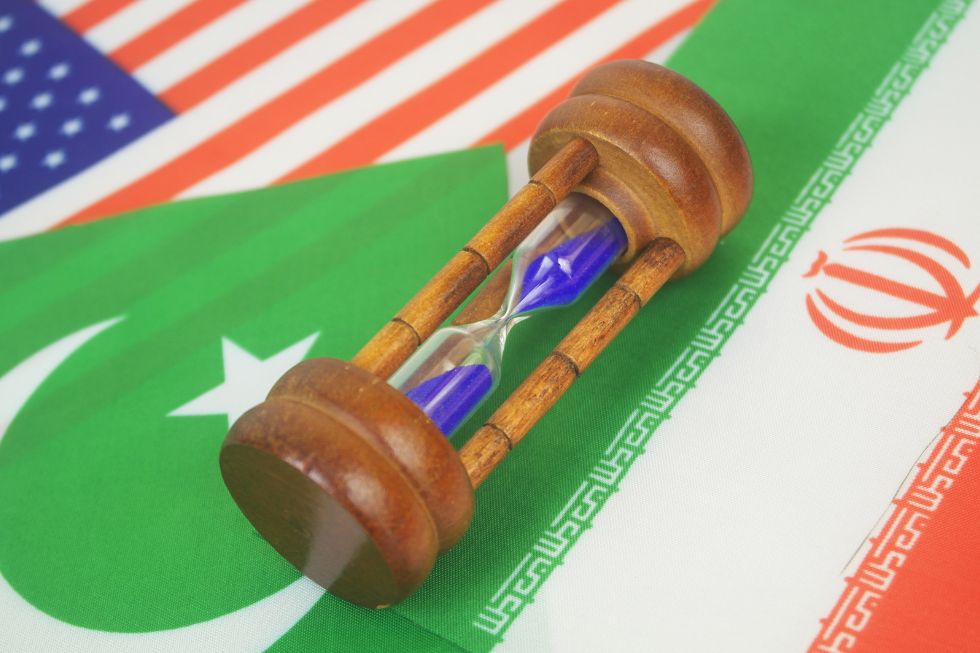



A fragile diplomatic opening has emerged between Washington and Tehran, placing Pakistan once again in the difficult position of keeping a channel alive between two adversaries that do not merely disagree on outcomes but often negotiate from different political systems, strategic cultures and assumptions about time itself. This makes mediation difficult from the start. The challenge is not simply to bring the parties to the table. It is to keep them there as pressure, military signaling and crisis management unfold around the talks.
Having worked bilaterally and multilaterally with diplomats from the US, Iran and Pakistan between 2004 and 2021, I learned that negotiations often fail not only because parties disagree on substance, but because each side brings its own fears, incentives, habits and political clocks into the room. My diplomatic service reinforced a simple lesson: When urgency meets strategic patience, when democracy encounters the logic of theocracy and when both sides are surrounded by actors willing to undermine peace processes, even skilled mediation becomes extraordinarily difficult.
Negotiating on different timetables
Pakistan today sits between two profoundly different negotiating cultures. Iran tends to negotiate patiently, deliberately and with a long strategic horizon. Its system blends republican and clerical institutions in ways that privilege ideological continuity and layered authority. That structure allows decision-makers to absorb pressure, wait out deadlines and stretch negotiations.
The US, by contrast, usually negotiates in a more managerial style. It seeks timelines, structure, deliverables and visible progress. That instinct is sharpened by democratic accountability, media scrutiny, bureaucratic fragmentation and political turnover. In Washington, time is rarely neutral. It is shaped by elections, congressional pressure, public opinion and the need to show that diplomacy is producing results. In this sense, time and domestic legitimacy are central to diplomatic bargaining.
These differences shape how each side defines seriousness, compromise and success. What Washington may view as an unnecessary delay, Tehran may regard as disciplined statecraft. What Iran may read as American impatience, Washington may see as practical problem-solving. These are not merely stylistic differences. They reflect deeper assumptions about legitimacy, leverage and political survival. When such approaches collide, the negotiation itself becomes part of the dispute rather than merely the means to resolve it, a recurring challenge in effective mediation practice.
Recent events make this tension visible. The current moment has been framed as one in which pressure created diplomatic space, while recent reporting indicates that Iran remains open to discussions in Pakistan only if Washington abandons threats and negotiations “aimed at surrender.” Pakistan, meanwhile, has described its role as supporting ceasefire diplomacy and renewed talks in Islamabad. Yet the coexistence of coercive signaling and diplomatic outreach continues to blur the line between negotiation and pressure, especially when maritime disruption and regional escalation place global economic and security stakes inside the diplomatic room.
Under US President Donald Trump, this mismatch has become sharper. His public style remains transactional, commercial and fast-moving: get to yes, close the deal and demonstrate results. This approach privileges immediacy, visibility and leverage. But Iran does not negotiate from that mindset. Iranian official and semi-official messaging continues to stress dignity, resistance to coercion and refusal to yield under force, while warning that a hasty deal under pressure could be strategically damaging over the long term. The result is not simply disagreement over terms. It is a deeper misalignment over how each side understands time, pressure and compromise.
Pakistan in the middle
Pakistan is not an irrelevant bystander to this dynamic. Its own domestic and regional experience has made it familiar with prolonged bargaining, tactical flexibility and incremental positioning. At the same time, its diplomatic practice has required engagement with structured, outcome-oriented processes. This gives Pakistan a comparative advantage as a mediator: It can understand urgency without dismissing patience, and patience without abandoning progress.
That is Pakistan’s real opening. It can, at least in theory, translate between negotiating cultures that often talk past one another. This role becomes more important when mediation must manage both regional de-escalation and nuclear diplomacy, and when each side fears that compromise could be misread as weakness.
But Pakistan’s usefulness should not be confused with decisive leverage. It can facilitate, interpret and sequence, but it cannot impose trust or guarantee compliance by parties whose core incentives remain misaligned. That distinction matters because mediation can open a channel, but only the parties themselves can decide whether the channel becomes a serious process.
Yet style alone never determines success. As I have found in my ongoing doctoral research at the University of Colombo, the deeper problem is the incompatibility of interests and incentives. Where each side believes compromise will weaken its security, legitimacy, leverage or ideological standing, negotiations become structurally fragile. This is why the problem is not merely communicative. It is structural. In such contexts, even well-designed processes struggle to hold because the underlying logic of participation remains unstable, a challenge also recognized in guidance on effective mediation.
This is where spoiler dynamics become decisive. The literature on spoiler problems in peace processes shows that actors who see a peace process as threatening their power, worldview or interests often work to undermine it. They may do so openly or quietly, from inside the process or outside it. In the present case, spoilers are not confined to the margins. They are embedded within the negotiating environment itself.
The parties themselves may act as total or limited spoilers, rejecting compromise outright or selectively undermining provisions that constrain them. Their allies may do the same, supporting talks only so long as outcomes protect their interests or preserve their influence. Even actions outside the negotiating room — military signaling, economic pressure, maritime confrontation or public messaging — can become spoiler behavior when they alter incentives or erode trust. Recent reporting on seizures, pressure tactics and uncertainty surrounding follow-up talks illustrates how easily a process can be destabilized before implementation even begins.
That is precisely where Pakistan’s challenge lies. It must mediate not only between American urgency and Iranian patience, but also between democratic and theocratic political logics, incompatible incentives and active spoiler behavior. This is not conventional mediation. It is a mediation under structural constraint. Progress in one dimension can trigger resistance in another. No mediator, however experienced, can succeed if the structure of negotiation rewards delay, defection or coercive signaling more than compromise, a limitation recognized in process-design principles for mediation.
Designing a more durable peace
My diplomatic experience from 2004 to 2021, viewed alongside my ongoing doctoral research, points to several practical lessons for this unusually delicate US–Iran track.
First, incentives must be realigned. For Washington, Iranian compliance must produce concrete, verifiable changes that can be explained domestically as progress rather than concession. For Tehran, compliance must bring credible gains — whether sanctions relief, security assurances, access to frozen assets or recognition of Iran’s dignity — that do not appear as surrender under pressure. At the same time, non-compliance must carry enforceable costs. If Iran believes it can delay without consequence, or if the US believes it can escalate pressure without undermining talks, the process will reward the very behavior it seeks to prevent, contradicting the logic of effective mediation.
Second, sequencing matters. Front-loaded concessions, especially when offered under threat or without reciprocal obligations, often embolden spoilers and deepen mistrust. A more durable approach would rely on phased reciprocity: limited steps matched by limited concessions, each tied to verification before the next phase begins. In a context where Iran prizes strategic patience, and the US demands visible progress, sequencing becomes the bridge between endurance and urgency. It allows Tehran to move without appearing humiliated, while giving Washington measurable outcomes that can sustain political support at home. Earlier nuclear diplomacy followed this logic through step-by-step reciprocal commitments and phased sanctions relief upon verification.
Third, verification and enforcement must be built in from the outset, not improvised after a political announcement. In US–Iran diplomacy, ambiguity may help parties enter talks, but unmanaged ambiguity can destroy implementation. The process, therefore, needs clear benchmarks, credible monitoring, and agreed consequences for violations or delays. This is especially important when questions of nuclear material, inspections and access remain central to trust, as reflected in ongoing concerns over monitoring and verification.
Fourth, spoiler management must be explicit. In this case, spoilers are not only armed groups, hardline factions or regional rivals. They may also include domestic political actors, allied states, bureaucratic constituencies, media narratives and policy networks that benefit from escalation or distrust. Durable processes do not assume goodwill. They anticipate resistance and structure around it, consistent with spoiler-management theory and mediation best practice.
For Pakistan, this means mediation cannot simply be about convening meetings or transmitting messages. Its most useful role is to help design a process in which both sides see greater value in staying engaged than in delaying, escalating or blaming the other. Pakistan cannot manufacture trust, erase decades of hostility, or reconcile democracy and theocracy through diplomatic skill alone. Nor should its usefulness be confused with decisive leverage. It can facilitate, interpret and sequence, but it cannot impose compliance where core incentives remain misaligned. Its task is to help synchronize tempo with substance: giving Iran enough political space to move without humiliation, while giving the US enough measurable progress to remain engaged.
The larger test, therefore, is not whether talks resume, but whether they are structured to survive the pressures that will inevitably follow. A process that rewards tactical delay, unilateral pressure or symbolic victories will likely collapse under its own contradictions. A process that links dignity to reciprocity, urgency to verification and mediation to spoiler management is more likely to endure.
In the end, Pakistan’s mediation may still prove useful, but diplomacy cannot succeed where incompatible incentives remain untouched, and spoiler behavior goes unmanaged. The real test is whether Washington and Tehran can move from performative negotiation toward disciplined, enforceable diplomacy. Pakistan’s task is to help make that shift possible, while recognizing that no mediator can substitute for political will.
[Kaitlyn Diana edited this piece.]
The views expressed in this article are the author’s own and do not necessarily reflect Fair Observer’s editorial policy.
FO Talks: Why Pakistan Is Mediating Between the US and Iran — and Why Is Israel Not Invited?
In this episode of FO Talks, Atul Singh and Ishtiaq Ahmed examine how Pakistan, despite political and economic fragility, has...
FO Talks: Is the Gulf Splitting? Saudi Arabia–UAE Power Struggle Intensifies
In this episode of FO Talks, Rohan Khattar Singh and Fernando Carvajal discuss the emerging rivalry between Saudi Arabia and...
The Gulf Confronts an Ugly Truth About Aligning With America
Iran’s attacks on bases across the Gulf, including the United Arab Emirates, Qatar, Bahrain, Saudi Arabia and Oman, have shattered...
Support Fair Observer
We rely on your support for our independence, diversity and quality.
For more than 10 years, Fair Observer has been free, fair and independent. No billionaire owns us, no advertisers control us. We are a reader-supported nonprofit. Unlike many other publications, we keep our content free for readers regardless of where they live or whether they can afford to pay. We have no paywalls and no ads.
In the post-truth era of fake news, echo chambers and filter bubbles, we publish a plurality of perspectives from around the world. Anyone can publish with us, but everyone goes through a rigorous editorial process. So, you get fact-checked, well-reasoned content instead of noise.
We publish 3,000+ voices from 90+ countries. We also conduct education and training programs
on subjects ranging from digital media and journalism to writing and critical thinking. This
doesn’t come cheap. Servers, editors, trainers and web developers cost
money.
Please consider supporting us on a regular basis as a recurring donor or a
sustaining member.
Will you support FO’s journalism?
We rely on your support for our independence, diversity and quality.





Comment