

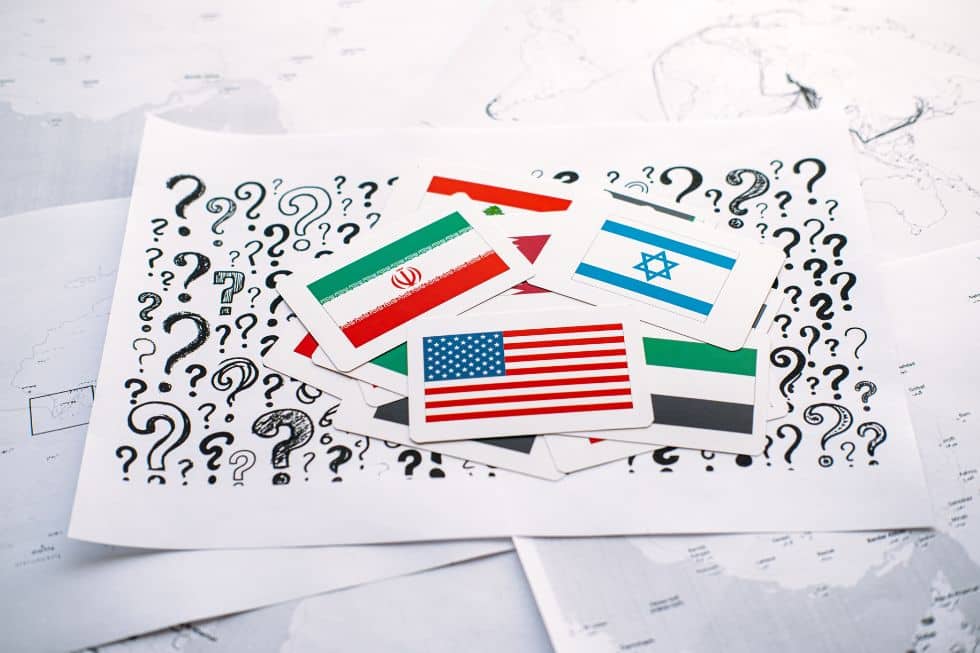



In a little over one year, the US’ foreign policy has moved from “No New Wars” to “Operation Epic Fury” — a series of joint American-Israeli strikes on Tehran accompanied by a chilling message from President Donald Trump for Iranian civilians to “take over” their government.
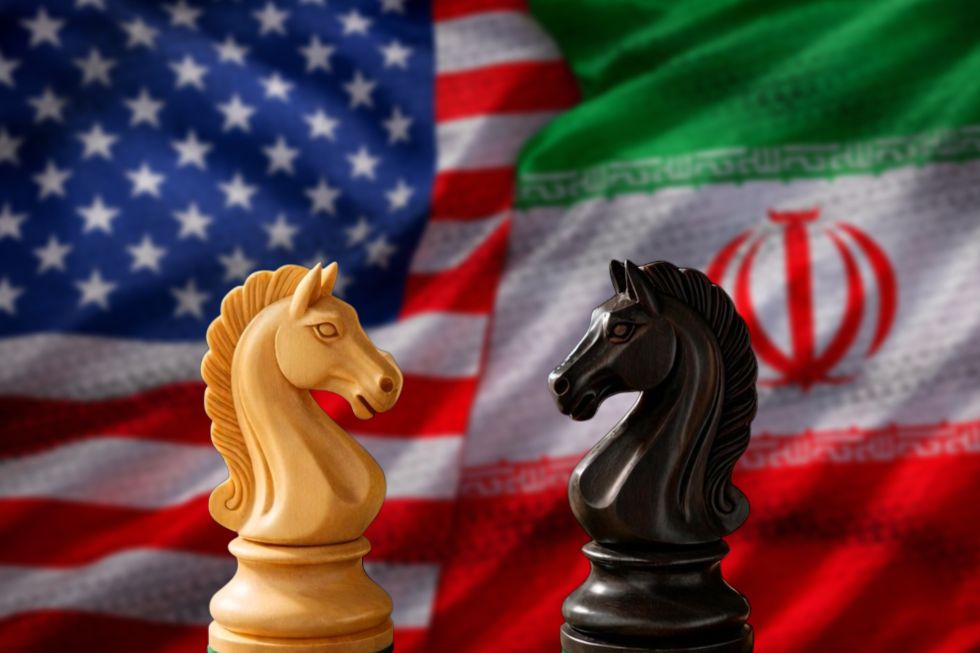
The attacks came after Iranian and American diplomats failed to make a nuclear deal and have since expanded into a full-blown conflict with several Gulf countries, including Saudi Arabia, Jordan and the United Arab Emirates (UAE). With world war rhetoric saturating headlines amidst mutual attacks between Israel and Iran, Iran’s control over the Strait of Hormuz, and an extended ceasefire between the US and Iran, surrounding countries are boosting their weapons stockpile while calling for peace.
Despite the above aggressions, the Trump Administration continues to use the language of restraint. Shortly before the outbreak, Vice President JD Vance announced a “New World Order” on The Megyn Kelly Show, reiterating the vision laid out in the US National Security Strategy (NSS) — released in December of last year — which asserts newfound restraint in European affairs, an alleged “America First” realignment and prioritization of domestic interests.
The message was clear: The US would scale back and loosen its grip on previous transatlantic systems. The administration’s actions have yet to reflect this stated policy.
Great power competition
While speaking to EU leaders at the Munich Security Conference in February, Vance downplayed perceived threats from Russia and China and pushed countries to increase their own defense spending — implying a downgrade of great-power confrontation from the American side. But in practice, Washington has hardly disengaged from countering Russian and Chinese influence abroad.
In early January 2026, off the tail end of “Operation Absolute Resolve,” Trump kidnapped Venezuelan President Nicolás Maduro on his own soil and secured Venezuelan oil that would’ve otherwise gone to China — then invited China to buy it. These actions directly threatened the hemispheric stability cited in the NSS.
The pattern continues in the Middle East. Though the decision to withdraw American troops from Syria was complementary to the Security Strategy, the US quietly fortified its military proxies and base in Al Hasakah, countering any remaining Russian influence in the country amidst its reconstruction.
Without official involvement in the downfall of former Syrian President Bashar al-Assad, the US still openly pushes to keep Syria’s interim government intact, and even welcomed the “former” Al Qaeda leader Ahmad al-Sharaa to the White House late last year. Backlash from the controversial meeting with a man who contributed to killing American troops shed a light on everything but this Administration’s focus on domestic affairs.
President Trump’s Board of Peace has also attracted major controversy — specifically its gathering of government leaders from all over the world to decide on Gaza’s fate and reconstruction after the Israel-Hamas war destroyed 80% of all structures in the territory, securing $17 billion in pledges from member countries thus far (while the funds have yet to materialize).
Forming a handpicked international club to decide on what to do with land in another hemisphere hardly demonstrates domestic focus and adds tension with other global organizations, like the United Nations, which has since spoken against its formation.
President Trump’s message to Iranians during the strikes endangered civilians and our troops, regardless of intention. Promising certain death to any Islamic Revolutionary Guard Corps (IRGC) militants who do not cooperate also contrasts with the NSS’s claim to avoid “forever wars,” despite the Administration’s efforts to justify it.
Retaliation targeted several US military bases across the Middle East, including ones in Qatar, Kuwait, Bahrain and the UAE. Though the goal is to eliminate the 47-year-old Islamist regime and pave the way for liberated civilians to regain control of their country, the US Government is overlooking Iran’s multiple proxy groups across the region, who may retaliate, endangering local civilians and American troops.
If restraint is America’s guiding doctrine, its actions complicate the narrative and are hardly acts of retreating from global entanglements. As Europe scrambles to craft its own independent security strategy, US intervention abroad is shaping a global geopolitical shift.
Whether the above is a newly emerging form of diplomacy or imperialism, one must notice the stark contrast between American actions and rhetoric yet again. This is not a uniquely Trump phenomenon, however, as several American presidents have promised retreat while delivering attacks.
Presidential Patterns
President Barack Obama ran on ending “endless wars,” but instead expanded drone campaigns and expanded US involvement in Libya and Syria. President Joe Biden’s “foreign policy for the middle class” committed billions of dollars in aid for Ukraine while reinforcing NATO’s defense. During Trump’s first term, vows to disentangle from the Middle East coexisted with escalatory moves such as killing top Iranian General Qassem Soleimani.
This issue transcends red versus blue, or any simplistic framing of good president versus bad president. It is a blatant fault in American foreign policy — the underlying policy — that seems to repeat itself every four years. Campaign rhetoric gestures towards restraint, recalibration, or domestic focus, but the governing reality reasserts intervention, coalition-building and power projection.
Restraint in rhetoric is not restraint in practice. If America’s current foreign policy is truly one of restraint, as Vance emphasized, it is a version that still intervenes and redraws geopolitical lines — calling the premise itself into question. Until American leaders reconcile their words with their actions, “America First” will continue to look less like retrenchment and more like rebranded global management.
[Casey Herrmann edited this piece]
The views expressed in this article are the author’s own and do not necessarily reflect Fair Observer’s editorial policy.







Join the conversation
Share your perspective
Log in to share your thoughts and take part in the discussion.