


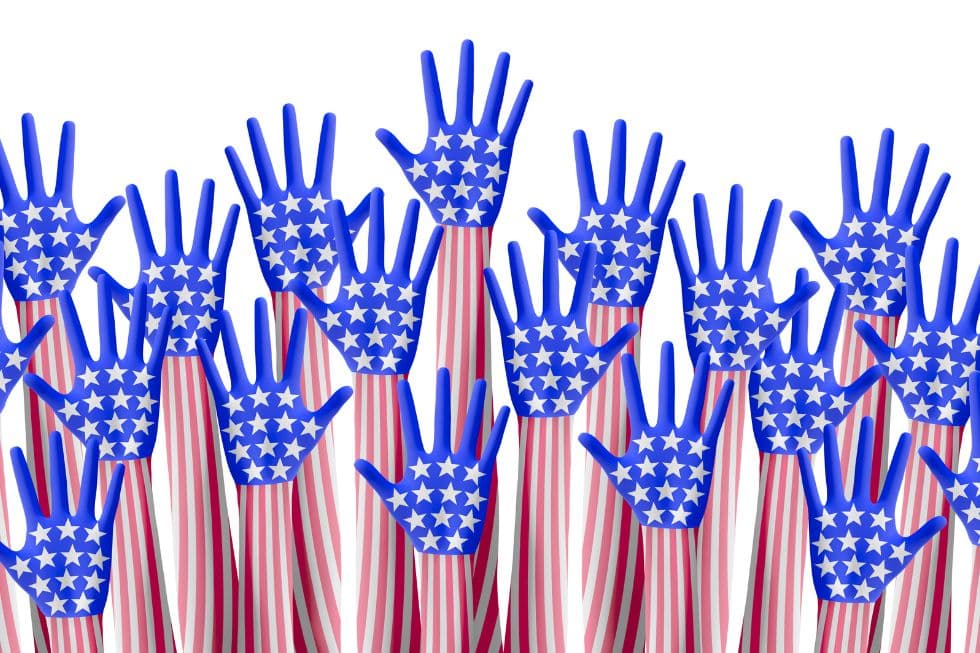



Modern democracies appear increasingly divided, yet the causes of that division are often misunderstood. Public debate focuses on culture wars, misinformation and voter behavior, while overlooking a more fundamental factor: the structure of the political system itself. Permanent party structures now do more to weaken democracy than to sustain it, and that representative government can function without them in ways that make it more responsive and accountable to voters.
Party-based democracy does not simply reflect polarization. It helps generate, organize and sustain it. As Lilliana Mason, an associate professor at Johns Hopkins University, shows in Uncivil Agreement, partisan identities have become deeply embedded social identities, mobilizing voters through powerful emotional and cultural attachments.
Parties do more than inflame division. They also shape who can realistically compete for office. In party-based democracies, access to elected power is rarely neutral. Before general elections even begin, party organizations often influence which candidates are able to emerge as viable contenders.
In the US, that influence can be seen in the nomination process itself. During the 2016 Democratic primary, leaked emails suggested that party officials had favored Hillary Clinton over Bernie Sanders, and former Democratic National Committee chair Donna Brazile later described the process as rigged in Clinton’s favor. Whatever view one takes of that contest, it illustrated a broader structural reality: Party organizations can shape which candidacies are treated as credible long before the general electorate makes its decision.
Party gatekeeping is even more explicit in many parliamentary democracies. In the UK, prospective parliamentary candidates must typically secure central party approval before standing under a major party banner. Party structures do not simply organize elections after the public has chosen. They help determine who is allowed to compete in the first place.
As a result, accountability begins to shift before a single vote is cast. Voters may formally choose among candidates, but the field has already been filtered through internal party procedures, donor networks and organizational preferences.
Party control and the limits of legislative independence
The consequences of this structure extend beyond candidate selection and into the functioning of government itself. In many democracies, rival parties disagree sharply on cultural or symbolic issues while converging on key economic and institutional fundamentals, including campaign finance structures, the influence of large donors, prevailing foreign policy assumptions and the practical limits of regulatory reform.
As Jane Mayer, an investigative staffer at the New Yorker, documents in Dark Money, major donors, corporate interests and organized lobbying networks maintain sustained financial and institutional influence, granting them privileged access to party leadership across the political spectrum. Research by political scientists Martin Gilens and Benjamin Page has likewise found that policy outcomes often align more closely with the preferences of economic elites and organized interests than with those of average citizens.
Party control extends into the legislative process. Leadership influences which proposals are introduced, prioritized, amended or brought to a vote. Committee assignments and procedural rules determine which initiatives advance and which stall. Even where individual legislators dissent, centralized control over legislative sequencing can prevent alternative proposals from gaining traction.
Gatekeeping, therefore, does not end at nomination. It extends into voting behavior. In party-based systems, legislative decisions are shaped not only by the judgment of individual representatives but also by formal and informal mechanisms of party discipline.
In parliamentary democracies, that discipline is often explicit. In the UK, the whip system establishes varying degrees of voting instruction, with three-line whips signaling matters on which members are expected to support the party’s position. Defiance can carry serious consequences.
In 2019, then UK Prime Minister Boris Johnson withdrew the Conservative whip from 21 members of parliament (MPs) after they voted against the government’s Brexit strategy. The episode revealed what is often obscured: Representatives may be elected by their constituents, but their political survival can still depend heavily on obedience to party command.
The US operates under different constitutional arrangements, but similar pressures exist. Party leadership influences committee assignments, legislative scheduling and access to fundraising networks. Dissent can carry visible consequences. In 2021, Liz Cheney was removed from House Republican leadership after repeatedly rejecting President Donald Trump’s false claims about the 2020 election. In 2022, the Republican National Committee formally censured Cheney and Adam Kinzinger for serving on the January 6 committee.
More recently, Representative Thomas Massie faced a Trump-backed primary threat after insisting that Congress, not the president alone, should decide on war powers. These examples show that, even without a formal whip system, party pressure can still be exerted through loss of position, public sanction and the threat of replacement.
In both systems, representatives formally retain the right to vote independently. In practice, institutional incentives discourage sustained deviation from party positions. Legislative outcomes, therefore, tend to reflect party alignment more than the independent judgment of individual representatives.
When candidates are filtered before the election, constrained in agenda-setting and disciplined after they deviate, voter choice is shaped at every stage. The question, then, is whether voters retain meaningful influence over how they are governed.
Diffusion of accountability
Democratic accountability depends on citizens being able to identify who is responsible for decisions and to reward or punish them accordingly. In party-based systems, however, responsibility is often mediated through collective structures rather than attached to individual representatives.
The effect is a shift in responsibility from the individual to the organization. When controversial measures are enacted, representatives can attribute their votes to party unity, strategic necessity or adherence to a broader platform. Responsibility is diffused across the party rather than clearly tied to individual judgment. Party-based systems, therefore, blur accountability, allowing representatives to shelter behind collective party positions and making it harder for voters to know whom to reward or punish.
Voters dissatisfied with particular policies rarely confront a single accountable decision-maker. Instead, they face party blocs. Removing a governing party typically entails empowering an opposing party that many voters regard as ideologically incompatible or politically undesirable.
As a result, dissatisfaction with specific legislative outcomes does not easily translate into corrective action. Individual representatives are seldom removed from office on the basis of particular votes, as electoral behavior is largely structured around party affiliation and partisan loyalty.
Pre-election filtering, agenda control and post-election discipline, therefore, converge to shape both who governs and how responsibility is assigned. The cumulative effect is not the absence of democracy, but the dilution of its central mechanism: the ability of citizens to identify, and hold accountable, those who exercise power on their behalf.
A historical pivot
As the US approaches its 250th anniversary, the milestone invites reflection not only on democratic ideals but on democratic design. The architects of early representative government were acutely aware of the dangers posed by factions and concentrated power. Political parties were not conceived as constitutional necessities. They emerged gradually as organizational responses to earlier social and communication constraints.
In Federalist Paper Number 10, founding father James Madison warned of the risks posed by factions, particularly the danger of organized groups capturing political power for narrow interests. President George Washington, in his Farewell Address, cautioned that parties would one day allow “cunning and unprincipled men” to seize power by dividing the public.
In low-information environments, parties performed important coordinating functions. They aggregated interests, disseminated political ideas and provided recognizable cues to voters who lacked direct access to candidates or legislative debate. Under those conditions, a centralized organization reduced uncertainty and facilitated large-scale participation.
The contemporary context differs fundamentally. Information is abundant, communication is instant and citizens have unprecedented access to political information. Yet party structures remain largely intact.
The question now is whether inherited party structures continue to serve their original purpose. Representation is not merely the selection of competing party slates, but the extent to which citizens can meaningfully influence those who legislate in their name.
Toward a no-party democracy
It is important to distinguish between natural political association and institutionalized party control. Individuals will always organize around shared interests, values and policy preferences. Civic organization is not the problem. The problem begins when such associations become permanent, state-recognized entities that monopolize ballot access, public funding and legislative discipline.
In a no-party democracy, political associations would continue, but without these institutional privileges. Candidates would stand as individuals rather than party nominees, and access to the ballot would depend on demonstrated public backing rather than centralized endorsement. Once elected, representatives would not be bound by party whips or organizational discipline.
Such a structure would clarify responsibility. Legislative votes would attach directly to individual representatives rather than party blocs, allowing voters to evaluate each representative’s record. Cooperation would arise transparently within the legislature rather than being predetermined by fixed party alignment.
The remaining question is practical rather than philosophical: how would representative government function without permanent party structures?
Institutional design and stability
The process begins with elections to the legislature. Candidates for the House of Representatives would stand as individuals, presenting their own platforms and demonstrating genuine backing from their constituencies. The Senate would continue in its constitutional role, with elections likewise conducted without party affiliation. All legislators would serve as independent representatives.
Presidential nomination would be open to any constitutionally eligible citizen who could demonstrate a defined level of support from elected representatives. Following the nomination, candidates would participate in public debates and policy forums. The legislature would then conduct successive voting rounds to reduce the field to the two candidates with the broadest support among elected representatives.
Each finalist would then select a vice-presidential running mate, and the two tickets would be presented to voters in a nationwide general election. The winning ticket would form the executive branch with a direct democratic mandate.
To ensure structured scrutiny, the runner-up would assume a formal constitutional role as Shadow President. This would be an institutional mechanism rather than a partisan one. The Shadow President would monitor executive performance, communicate directly with the public on national issues and appoint a Shadow Cabinet.
The Shadow Cabinet would mirror the official Cabinet and provide structured analysis of executive proposals, alternative policy frameworks and public briefings. Its purpose would be to ensure that scrutiny is continuous and informed, assisting independent legislators in evaluating executive initiatives.
Legislative business would proceed through independent representatives. Without party discipline, support for proposals would be built through negotiation and persuasion on their merits. Responsibility would attach directly to individual representatives, enabling voters to assess legislative records with greater clarity.
Stability would derive from clear procedures and public mandates rather than from centralized party control. The central advantage lies in incentives. When representatives depend on party structures, loyalty tends to flow upward. When they depend directly on voters, accountability flows outward.
Political association is natural. A fair argument would be that parties, or something very like them, might simply reappear. Representatives will always find common cause with others who share similar values, interests or policy goals. But that is very different from granting legal status to permanent organizations and the privileged control that follows over ballot access, candidate selection, public funding, legislative discipline and the machinery of government itself.
In the absence of parties, independent representatives would hold far greater political autonomy and influence. That in itself changes the incentive structure. Once representatives are no longer subordinate to party machines, there is less reason to surrender that independence and place themselves back under party control. Human nature not only creates incentives to group together; it also responds to incentives to retain power and autonomy.
The ultimate safeguard, however, is the voter. Once voters exercise that democratic power and are able to reward or punish representatives directly at the ballot box, attempts to recreate party structures are likely to struggle for legitimacy and support.
History tells us that no institution voluntarily surrenders power. Transition would begin when voters stop electing party candidates and instead return independent representatives. The party system would then gradually lose both its dominance and its legitimacy. In tightly balanced legislatures, even a small number of independents can become decisive and hold the balance on major legislation.
The path to a no-party system, therefore, begins when voters withdraw their support from party structures and give it to independent candidates instead. The reform is therefore not an abandonment of representative democracy, but a redesign of how access to power is organized within it.
In a true democracy, power rests with the people, and those who exercise it must remain directly accountable to them. Democratic structures must therefore enable citizens to see who holds power, on what basis that power is exercised and to reward or punish the representatives in whom they have vested that authority.
The next stage in the democratic journey is to remove the permanent party structures that stand between voters and those who govern in their name, and to restore direct accountability between citizens and the representatives they elect. That would be a far more democratic system.
[Casey Herrmann edited this piece]
The views expressed in this article are the author’s own and do not necessarily reflect Fair Observer’s editorial policy.
Why Is Congress So Polarized? It’s the Institutions
Political polarization has reached the point that dissident Republicans have fired their own Speaker. How did the political scene get...

The Colossal Corruption of the Two-Party System
The US has declared itself to be the global leader in democracy through its mass media, powerful economy and extensive...

America Is a Poor Example of Democracy
Congressional paralysis, voter suppression and widespread political polarization all suggest that US democracy is far from exemplary.
Support Fair Observer
We rely on your support for our independence, diversity and quality.
For more than 10 years, Fair Observer has been free, fair and independent. No billionaire owns us, no advertisers control us. We are a reader-supported nonprofit. Unlike many other publications, we keep our content free for readers regardless of where they live or whether they can afford to pay. We have no paywalls and no ads.
In the post-truth era of fake news, echo chambers and filter bubbles, we publish a plurality of perspectives from around the world. Anyone can publish with us, but everyone goes through a rigorous editorial process. So, you get fact-checked, well-reasoned content instead of noise.
We publish 3,000+ voices from 90+ countries. We also conduct education and training programs
on subjects ranging from digital media and journalism to writing and critical thinking. This
doesn’t come cheap. Servers, editors, trainers and web developers cost
money.
Please consider supporting us on a regular basis as a recurring donor or a
sustaining member.
Will you support FO’s journalism?
We rely on your support for our independence, diversity and quality.





Comment