

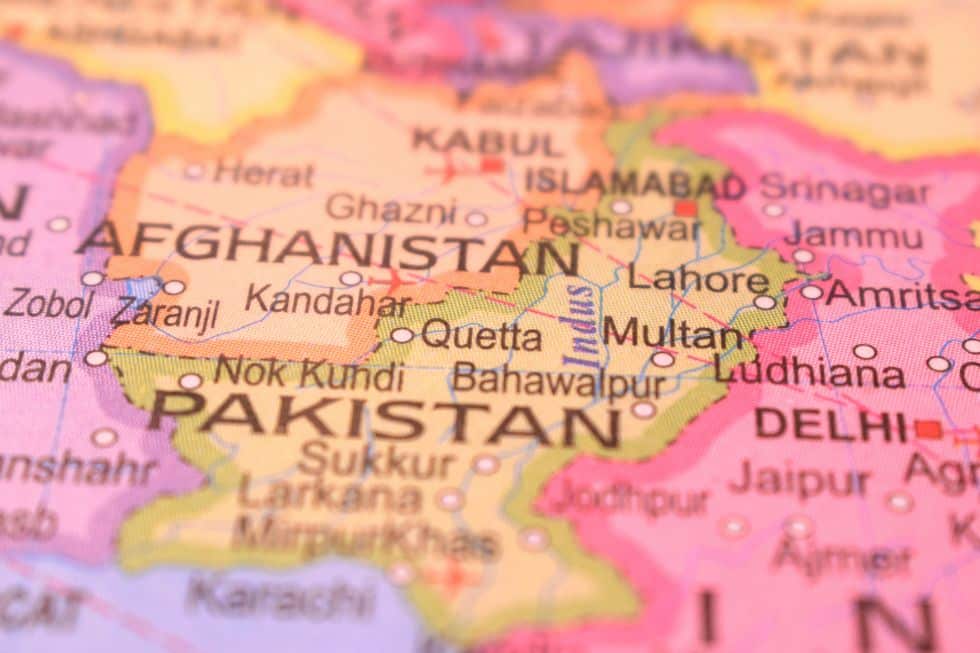



In February, Pakistan launched a military operation against terrorist hideouts in Afghanistan, named Operation Ghazab lil Haq (Wrath of Justice). This operation was the final step in multiple failed diplomatic efforts between the two countries, some of which were even mediated by friendly states such as Qatar and Türkiye. Pakistan has faced severe criticism internally and externally for this military action against the sovereign state of Afghanistan; however, it stands firm on its stance of eliminating terrorism and terrorist organizations that threaten not only Pakistan’s national security but that of the whole region.
For decades, the world has fought the Global War on Terror (GWOT). Yet, as the US withdrew from Afghanistan in 2021, Pakistan was left alone to fight the menace of terrorism. Terrorism emanating from Afghanistan has become a transnational threat, affecting regional countries as well as those further afield in Europe and the US, as recent incidents indicate. However, a question still remains: What prompted Pakistan to launch a military action inside its neighboring country with whom it has historically maintained brotherly ties?
Post-2021 Taliban takeover and militant regrouping
As Kabul fell to the Taliban in 2021, the first order of business was to release the terrorists held captive by the US and its allied forces. The Afghan Taliban released almost 1,500 individuals belonging to different terror groups, including Al-Qaeda, the Islamic State of Iraq and Syria (ISIS), Tehrik-i-Taliban Pakistan (TTP), East Turkestan Islamic Movement (ETIM), Islamic Movement of Uzbekistan (IMU) and others who had been apprehended during 20 years of the GWOT.
Over the years, these individuals have regrouped and reorganized under the patronage of the ruling Afghan Taliban. These regrouped terrorists have benefited from leftover weapons of the US and allied forces, while also logistically and financially exploiting humanitarian aid meant for Afghan locals.
Multiple reports by international bodies have raised alarms over the years that rampant corruption within the Taliban regime has strengthened terrorism in Afghanistan, affecting Central Asia and South Asia, specifically Pakistan. The 35th and 36th reports of the UN Monitoring Team assessed that Al-Qaeda and TTP had regrouped in Afghanistan with documented facilitation by the Taliban regime. The Special Inspector General for Afghanistan Reconstruction (SIGAR) reports confirmed the presence of 6,000–8,000 TTP fighters in Afghanistan, while also noting the country hosts senior leadership of Al-Qaeda, the Islamic State Khorasan Province (ISIS-K) and TTP.
Recently, Russia’s Ministry of Foreign Affairs released an independent report indicating the presence of 20,000–23,000 terrorists in Afghanistan, just months after normalizing diplomatic ties.
Diplomatic engagement and exhaustion of channels
Pakistan has always engaged with Afghanistan diplomatically, from playing a significant role in the Doha Agreement 2020 to bring all parties to the dialogue table, to demanding the curtailment of terrorism.
Since 2021, Pakistan has been raising concerns over terrorism emanating from Afghan soil with the Taliban, which has yet to take cognizance. In its efforts, Pakistan exhausted all diplomatic channels of bilateral engagement with Afghanistan. These included four Foreign Ministers’ visits, two Defense Ministers’ visits (one of which also included former Chief of Inter-Services Intelligence [ISI], Lieutenant General Ahmed Nadeem Anjum), five Special Representatives’ visits, five Secretary-level meetings, one visit by the National Security Advisor, eight Joint Coordination Committee sessions, 225 border flag meetings, 836 protest notes and 13 formal demarches to the Afghan representative in Pakistan. All these channels were used to highlight a single-point agenda: that Afghanistan must ensure its soil is not used for terrorism against Pakistan.
However, in response, Afghanistan has not only hosted and harbored terrorist organizations, but also provided them logistical and financial support, along with human resources, arms and ammunition. This assistance is not limited to religious groups, but extends to Baloch terrorist groups as well.
Escalation of cross-border attacks (2025–2026)
In February 2025, a significant development rattled security analysts watching Pakistan’s southwestern province of Balochistan. A senior commander of the Balochistan Liberation Army (BLA) — a designated terrorist group — Mushtaq Kohi, was assassinated in Kabul’s Khushal Khan area.
This development once again reaffirmed Pakistan’s claim that terrorist attacks on its soil were being orchestrated from Afghanistan. In 2025 alone, major attacks in Pakistan have been linked to terrorists present in Afghanistan. In March 2025, the BLA carried out a hostage attack on a Quetta-bound train, the Jaffar Express, in the Bolan area. The attackers on the ground were found to be receiving commands from their handlers in Afghanistan.
Similarly, an attack in May 2025 on a school bus of Army Public School in Khuzdar, which killed seven young girls and a boy, was also traced back to Afghanistan. It is important to note that the suicide attack on the Judicial Complex in Islamabad in October 2025 was carried out by an Afghan national, Qari Usman alias Zubair. From Bannu to Dera Ismail Khan, Peshawar, Besham and Waziristan, Afghan nationals have targeted civilians across Pakistan in multiple terrorist attacks, including the attack on Wana Cadet College.
In 2025 alone, 70 Afghan nationals were reportedly killed in two separate military operations against terrorism conducted by the Pakistan Army. However, terrorist infiltration across the Pakistan-Afghanistan border did not cease, and attacks continued into 2026 as well.
Operation Ghazab Lil Haq and military response
In February 2026, a horrific terrorist attack on a congregation at an Imambargah in Islamabad became a decisive moment for Pakistan to act against terrorist camps and hideouts across the border in Afghanistan. The Pakistan Army and Air Force launched Operation Ghazab-lil-Haq against TTP hideouts, initially hitting seven targets in the Khost, Paktika and Nangarhar provinces adjoining the border.
To date, Pakistan has targeted 70 locations across Afghanistan, with the largest being Bagram Airbase. In recent airstrikes, Pakistan destroyed a weapons depot at Bagram Airbase containing leftover US weaponry that had been illegally transferred to terrorist organizations.
Strategic justification and security narrative
Pakistan acted against Afghanistan as a last resort after exhausting all diplomatic options and multiple failed dialogues. Afghanistan’s stubborn refusal to expel terrorist organizations poses a threat to Pakistan’s national security, regional stability and world peace. In the war against terrorism, Pakistan has paid heavily, sacrificing nearly 90,000 of its nationals, including civilians, military personnel and children.
Pakistan has made its position clear at international forums and at the UN Security Council that terrorism emanating from Afghanistan is unacceptable. For regional peace to prevail, Afghanistan must stop its soil from being used for terrorist attacks against Pakistan.
[Luna Rovira edited this piece.]
The views expressed in this article are the author’s own and do not necessarily reflect Fair Observer’s editorial policy.






Join the conversation
Share your perspective
Log in to share your thoughts and take part in the discussion.