





“A whole civilization will die tonight,” declared US President Donald Trump, casting a dark shadow over Iran, one of the most ancient cultures in human history, “never to be brought back again.” With a chilling warning, he threatened the nation with nuclear weaponry, igniting fears of unprecedented destruction. This stark moment compels Americans to reflect on how a figure, like Trump, characterized by malignant narcissism, was able to ascend to such a pivotal position of authority in their nation.
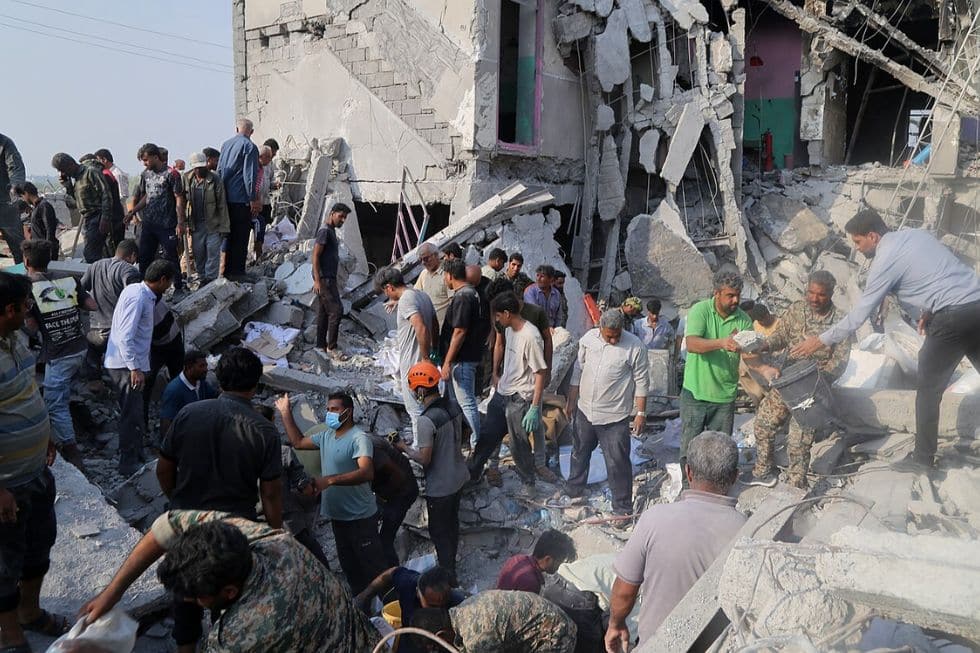
The unprovoked military actions undertaken by the US and Israel against Iran triggered an unprecedented global energy crisis, the likes of which the world has never seen. On the fateful day of February 28, the coordinated assaults began with a bombing raid that resulted in the assassination of Iran’s Supreme Leader. Simultaneously, a barrage of Tomahawk missiles rained down on a girls’ school in Minab, an event that would haunt the collective conscience of humanity. The strike obliterated the building, incinerating its 175 occupants, a tragic 168 of whom were innocent young girls.
The tragic and harrowing episode that unfolded at the girls’ school in Minab has starkly highlighted the US’ actions as emblematic of a rogue state, directly engaging in acts that can only be characterized as terrorism. This incident serves as a poignant reminder of the urgent need for justice. According to both federal and international legal frameworks, the events that transpired on that day represent severe violations of humanitarian law, qualifying these actions as war crimes under established statutes.
The principles set forth by international law clearly mandate accountability for such grave offenses. In light of this, it is imperative that those at the highest levels of the US government, including Trump, Vice President JD Vance, Secretary of State Marco Rubio, Secretary of Defense Pete Hegseth, General Dan Caine and Central Intelligence Agency (CIA) Director John Lee Ratcliffe, as well as the military commanders who carried out these orders, bear responsibility for their roles in these reprehensible acts. The international community must insist on a thorough investigation and subsequent prosecution of these key figures to ensure that justice is served and that similar atrocities are prevented in the future. Only through such accountability can we hope to uphold the principles of human rights and the rule of law.
While the US and Israel have been striking schools, hospitals, bridges and other infrastructure, Iran has retaliated against their military and support in the region. The evidence clearly shows that Iran currently holds the moral high ground: The unprovoked attacks by the US and Israel have resulted in over 3,400 Iranian deaths, while Iran’s powerful and widespread retaliations have led to the deaths of 13 Americans and 28 Israelis.
The Trump presidency
The landscape of US presidential elections has undergone a profound transformation in recent decades, increasingly resembling a celebrity contest rather than an arena for substantive political discourse. In this evolving paradigm, the focus tends to shift towards personal charisma, social media acumen, and the ability to engage and entertain the public, often at the expense of critical analysis and thoughtful discussion surrounding policies and ideological principles.
This shift not only alters the way candidates present themselves but also influences the qualities and backgrounds of those who pursue high office. As a result, individuals with narcissistic tendencies appear to be drawn to the political stage. Many of these candidates exhibit a pronounced preoccupation with their image, often prioritizing self-promotion and personal brand over the foundational elements of genuine leadership, such as integrity, empathy and a commitment to the greater good.
The implications of this trend are significant; they challenge the electorate to evaluate not just the substance of candidates’ proposals but also the underlying motivations and values driving their ambitions. Consequently, voters may find themselves navigating a complex landscape where charisma often trumps competence, raising concerns about the future direction of political leadership in the country.
Trump serves as a notable example of an individual exhibiting traits commonly associated with malignant narcissism. His behavior reflects a profound skill in manipulation, frequently employing various tactics designed to captivate and draw admiration towards himself. This skillful maneuvering often manifests in his public speeches and social media presence, where he seeks to maintain a dominant narrative and garner unwavering loyalty from his supporters. His lack of remorse is notable; he rarely acknowledges the negative consequences of his behavior on individuals or groups, instead shifting blame or minimizing the severity of his actions.
As a sadist, there appears to be a disturbing propensity for him to derive pleasure from the emotional and physical distress inflicted upon others. This alarming characteristic is often evident in his interactions with critics, political opponents and even members of his own administration, where he seems untroubled by the impact of his words and actions. Besides, he appears to be suffering from dementia, saying something and contradicting himself hours later.
Additionally, Trump’s conduct illustrates a blatant disregard for both federal statutes and international law. Throughout his tenure, he frequently operates outside established norms, challenging institutional protocols and undermining the checks and balances essential to democratic governance. This disregard not only raises serious ethical concerns but also poses significant implications for the rule of law and the integrity of political processes.
President Trump is currently facing intense scrutiny due to a series of troubling reports, particularly those related to the contentious documents associated with prolific pedophile Jeffrey Epstein. In the released files, Trump’s name appears more than a million times, raising significant concerns about his ties to Epstein and the nature of those connections. These documents contain serious allegations, suggesting that Trump is not only accused of being a rapist but may also be implicated in more heinous acts, including the possibility of pedophilia and even cannibalism.
The gravity of these accusations casts a dark shadow over his presidency and raises alarming questions about political integrity and accountability in the US. As the leader of the world’s most powerful nation, he faces the implications of such grave allegations, which are profoundly troubling and ignite public debate about the standards of moral and ethical conduct expected of those in positions of power. The ongoing investigations and revelations risk eroding trust in the political system and highlight the urgent need for transparency and responsibility in governance.
To numerous onlookers, Trump has seemingly transformed the US into a subordinate ally of Israel. Iranians refer to America as the “United States of Israel.” This perception is vividly illustrated in a striking image from the Situation Room at the White House. In this setting, Israel’s prime minister takes a commanding position at the head of the table, exuding authority and confidence, while Trump occupies a seat beside him, suggesting a partnership that many interpret as one of deference. The scene encapsulates a dynamic that has sparked considerable debate about the balance of power and influence in US–Israel relations.
Additionally, one must question the moral premise under which the US has taken two wars of aggression against Iran. As articulated by the Secretary of State, such actions were framed as a means of supporting Israel, a nation that owes its very existence to implementing ethnic cleansing and genocide against the indigenous Palestinians. This scenario invites a deeper exploration of the complexities surrounding US foreign policy and its implications for global peace and security.
Former President Richard Nixon was also a narcissist. He exhibited certain troubling symptoms that mirror those currently experienced by Mr. Trump. Nixon’s political journey came to a turbulent halt amid the infamous Watergate scandal, which not only tarnished his legacy but ultimately led to his resignation. His life concluded in public disgrace, overshadowed by the controversies surrounding him.
Test the presidential candidates
The presidential elections that have paved the way for leaders such as Nixon and Trump to ascend to the highest office in the land are alarming and unacceptable. It is imperative that we establish a robust mechanism to ensure that circumstances allowing for such candidates to reach the presidency are never replicated. We must take proactive steps to safeguard our electoral process and preserve the integrity of our democracy for future generations.
The president is the commander-in-chief of the military. Yet, while military special operations, or high-risk, personnel are required to undergo in-depth psychological tests, the presidential or congressional candidates are not held to the same standards. Any idiot who cannot get a job at a service station or grocery store can become the US president if he is cunning, charismatic and chosen by the oligarchy.
The electoral process is fundamentally flawed, lacking robust mechanisms to effectively filter out candidates who may not genuinely represent the public’s interests or adhere to ethical standards. This deficiency creates an environment ripe for corruption, in which political figures — particularly those aspiring to the presidency — often feel compelled to prioritize the agendas of affluent donors. Consequently, the welfare of their constituents and the broader needs of the country take a backseat, leading to a governance landscape that favors wealth over the common good.
President Trump is a good example. As a businessman, he has failed nearly all the businesses he started. As president, he comes across as a malignant narcissist who changes his mind repeatedly. He stays up late into the early morning, demonizing his critics on X. He threatens political adversaries and cheers at news of deaths and destruction. Although he is cunning and charismatic, he would not have passed an in-depth psychological test. This is also true of Congress, where members, such as Senator Lindsey Graham, exhibit malignant narcissism, yet they are elected to Congress.
Mr. Trump exhibits signs of emotional instability. Upon receiving the distressing news that two planes had been shot down in Iran, he allegedly descended into a state of deep panic. This reaction was so intense that his staff felt compelled to intervene, physically separating him from the situation to help him regain his composure. The stakes were high — if Iran, in retaliation for the assassination of its Supreme Leader by the US, decided to launch a missile strike against the White House or the Pentagon, one has to wonder: Would he have been able to manage such a crisis with the necessary poise and leadership?
In the future, it is essential that presidential and congressional candidates undergo comprehensive psychological evaluations. This proactive measure aims to mitigate potential crises and challenges in today’s political landscape by ensuring our leaders possess the necessary mental resilience and stability.
Regarding Iran, a nation that has endured significant hardships and suffering as a result of the aggressive actions taken by the US and Israel, there is a compelling argument for the establishment of a tribunal similar to the Nuremberg Court. Such a court would seek to hold accountable those individuals responsible for severe transgressions, including war crimes and crimes against humanity, thereby offering a pathway to justice and healing for the affected population.
[Kaitlyn Diana edited this piece.]
The views expressed in this article are the author’s own and do not necessarily reflect Fair Observer’s editorial policy.
No, Trump Is Not the End of US Democracy. It Never Existed.
Pundits have abused the figure of the tyrant from Plato’s Republic by turning it into a prophecy of Donald Trump....
Scholars, Fascists Agree: Trump’s Not a Fascist, but an Opportunity
Both experts on fascism and fascists themselves recognize that Donald Trump does not endorse the revolutionary, far-right authoritarianism that characterizes...
The Truth About US Democracy
The United States has declared itself to be the global leader in democracy through its mass media, powerful economy, and...
Support Fair Observer
We rely on your support for our independence, diversity and quality.
For more than 10 years, Fair Observer has been free, fair and independent. No billionaire owns us, no advertisers control us. We are a reader-supported nonprofit. Unlike many other publications, we keep our content free for readers regardless of where they live or whether they can afford to pay. We have no paywalls and no ads.
In the post-truth era of fake news, echo chambers and filter bubbles, we publish a plurality of perspectives from around the world. Anyone can publish with us, but everyone goes through a rigorous editorial process. So, you get fact-checked, well-reasoned content instead of noise.
We publish 3,000+ voices from 90+ countries. We also conduct education and training programs
on subjects ranging from digital media and journalism to writing and critical thinking. This
doesn’t come cheap. Servers, editors, trainers and web developers cost
money.
Please consider supporting us on a regular basis as a recurring donor or a
sustaining member.
Will you support FO’s journalism?
We rely on your support for our independence, diversity and quality.





Comment