







 | ||||||||
| ||||||||
Dear FO° Reader, Greetings from Geneva, where spring fills the air with chirping birds and blooming flowers. Everything is beautiful in a way that makes the chest and the soul expand. Yet, this little country, with its well-combed mountain sides, organized rivers and public transportation, has a founding myth that isn’t as agreeable as the countryside. The myth tells the story of Wilhelm Tell, the archer who didn’t want to bow to Gessler’s hat and submit to the Habsburgs. In the Swiss founding myth, Wilhelm Tell is not punished for defying the Habsburg governor Gessler. He is punished for refusing to bow to Gessler’s hat — planted on a pole in the village square as a symbol of imperial authority. The hat was a symbol of submission, not Gessler. Tell refused to bow. The rest is history, and legend, and something many Swiss have carried quietly ever since.
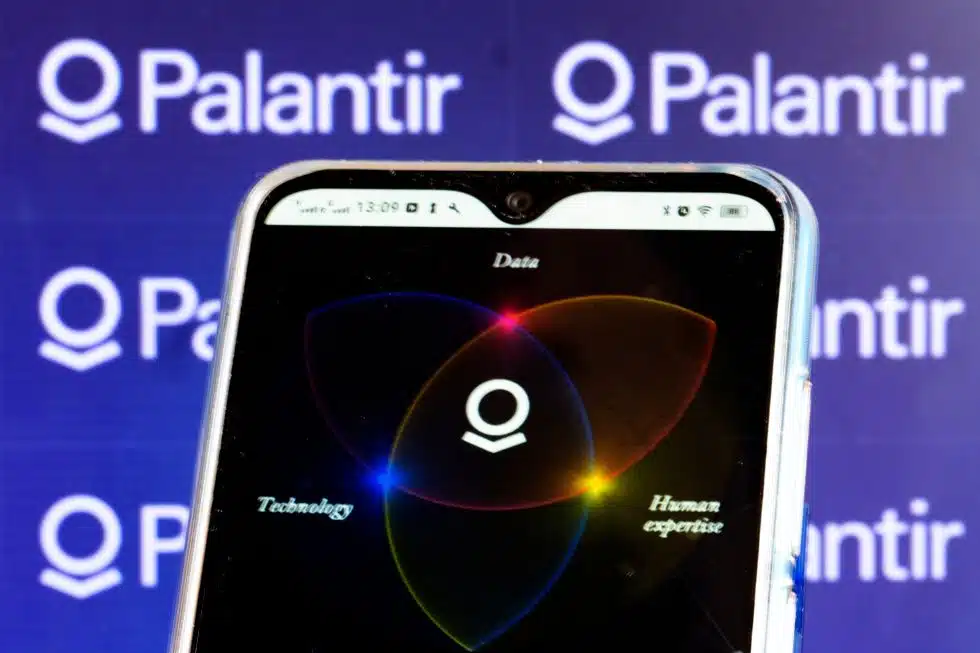
Landesmuseum Zürich Lucas Heinrich Wüthrich, mosaic, Wiki Common Keep this image in mind. Because right now, in 2026, we are witnessing a modern drama unfold in that same square. We are watching who bows to the hat, and who stands their ground. And the curtain has barely risen on the second act. Act I: the refusal and the retaliation Palantir Technologies has become a bit of a celebrity. It is a US data analytics company cofounded by Peter Thiel, currently valued at around $400 billion. Approximately eight years ago, Palantir opened an office in Zurich and began a methodical effort to establish itself in Switzerland. The playbook was familiar: build local presence, hire skilled professionals, pursue contracts with major private partners and, ultimately, with the government. On the private side, it worked. Since 2018, Palantir has maintained a partnership with Ringier, Switzerland’s largest media group, providing Ringier with its Artificial Intelligence platform across Ringier’s media, marketplace and sports divisions. A May 2024 press release announced a renewed five-year strategic extension. What the partnership announcements did not foreground is that Palantir’s Executive Vice President held a seat on Ringier’s board between 2020 and 2022 — years during which Palantir was simultaneously courting Swiss government institutions. December 2025: the investigation The first scene began when Republik, an independent Swiss magazine, published a two-part investigation based on 59 freedom-of-information requests. The story was stark: The Swiss Army and other government bodies had conducted formal audits concluding that Palantir’s systems were fundamentally incompatible with Swiss sovereignty. The government said “no.” The conclusion was structural, not circumstantial. Even with servers located on Swiss soil, US law — specifically provisions that can compel American companies to grant government access — insinuates that sensitive national data could not be guaranteed to remain under Swiss control. This was not assessed as a manageable risk. It was assessed as an inherent feature of the product. January 2026: the countermove Palantir did not sue Republik for defamation. Instead, they invoked a Swiss “right-of-reply” statute, demanding Republik publish a counter-narrative. When the magazine refused, Palantir filed a lawsuit in the Zurich Commercial Court. The European Federation of Journalists has called it what it is: a Strategic Lawsuit Against Public Participation (SLAPP). A company valued at $400 billion is suing a small independent magazine for informing Swiss citizens about a public institution’s assessment of a vendor? There must be something else at stake. Palantir is using a procedural mechanism — not to prove the reporting was false, but to force a small publisher to print its version of events. The court is not asked to judge the truth; it is asked to enforce the speech. Palantir has not disclosed which specific inaccuracies it wants corrected. The reporting was based on 59 freedom-of-information requests. The documents are public record. There is nothing to correct. The shadow of complicity Parallel to this, a December 2025 opinion piece by Republik’s Daniel Binswanger exposed the backdrop of this conflict. He revealed that Ringier had published a 20,000-character “interview” with Palantir CEO Alex Karp that Binswanger called “an extended exercise in sycophancy.” With a Palantir executive sitting on Ringier’s board, the line between journalism and corporate advocacy had blurred. The big media house bowed; the small independent magazine stood firm. The interview itself, published in a Ringier magazine and conducted by the director of Ringier’s own journalism school, is instructive. At one point, the interviewer told Karp he is often the smartest person in the room. Not once was the Ringier-Palantir commercial partnership mentioned. Karp was given 20,000 characters to present himself as a neutral well-wisher of Switzerland, in a publication owned by his company’s strategic partner. Act II: the pattern revealed April 2026: the second scene Just weeks ago, on April 14, 2026, the curtain rose on a second, strikingly similar scene. Republik published an investigation titled “Netzsperren: Die Grossen kuschen, der Rebell kämpft” (“Internet Blocks: The Big Ones Bow, the Rebel Fights”). Prosecutors in Vaud and Valais ordered internet providers to block websites linked to climate activists, despite a lack of a clear legal basis in Swiss law.
Init7 is now fighting four cases, including one before the Federal Tribunal, and has already been fined 6,000 CHF. Like Tell, Künzler is simply refusing to bow to a symbol of power that has no legitimate claim on him. The script of the drama The international stage This would be a local story if Switzerland had been alone, but France, the UK, Germany, and Ukraine are all entangled in Palantir’s infrastructure for public services, defense logistics, and, in Ukraine’s case, active battlefield targeting. British Members of Parliament (MPs) have raised alarms; German authorities question data control. The Swiss Army’s “no” was a rare moment of clarity in a continent increasingly dependent on foreign tech. Ukraine is perhaps the most sobering example. In 2022, partnering with Palantir was a rational wartime decision. Today, with Trump’s return to power and Peter Thiel — Palantir’s cofounder — among his key backers, Ukrainian defense data sits inside a platform tied to a company whose founder supports a president who has publicly questioned whether Ukraine deserves support at all. What Switzerland identified as unacceptable in peacetime is now a live strategic risk for a country at war. France offers a different kind of warning. In January 2026, France banned US videoconferencing tools from government use and built a legal framework requiring sovereign hosting for sensitive data. In December 2025, it quietly renewed its intelligence agency’s Palantir contract anyway. The dependency had become too deep to exit. That is what the Swiss refusal was protecting against. Now, the Zurich court is being asked to rewrite the script. If Palantir succeeds in compelling Republik to publish their narrative, the message to every European journalist is clear: Report on our government contracts at your peril. The curtain rises on the next scene To return to our founding myth: Tell’s act of resistance was quiet, with no need for a speech. He simply would not bow to a hat. The Swiss government bodies and army reports, Republik’s decision to publish them and Fredy Künzler’s refusal to block websites are recognizably in that tradition: quiet, procedural and entirely serious. They are the modern equivalents of the archer who refuses to bow to the hat. We are currently in the middle of Act II, and the plot is thickening. The questions this play raises — about data sovereignty, about press freedom, about the cost of dependency — are larger than any one lawsuit or any one internet block. The Atlantic Council’s February 2026 report on European digital sovereignty identifies the core danger: not that Europe and the US will clash, but that Europe will find itself unable to act independently at all — because by the time the debate is settled, the infrastructure will already be in place. Switzerland’s procurement decision bought time. Whether Europe uses it is the subject of a longer conversation — and a second dispatch. The first act has concluded. The second is underway. And the audience is waiting to see who will finally take a stand. Further reading & deep dives Targeted readings we suggest you explore to deepen your knowledge of this issue: Directly on the Palantir/Republik case
On the broader sovereignty question — analytical pieces worth reading
On the wider European digital sovereignty movement
A special report from the Atlantic Council, “Digital Sovereignty: Europe’s Declaration of Independence?” published February 12, 2026, with a full PDF available. This report places the Palantir debate inside a much larger structural argument. Digital sovereignty has shifted from a niche idea within the digital policy community to a mainstream priority, with major European leaders from Commission President von der Leyen to former ECB head Mario Draghi calling for the EU to achieve it. Tech.eu The report tracks how this is now driving concrete legislation, not just rhetoric.
Happy reading, and stay alert Roberta Campani Communications and Outreach Related Readings
| ||||||||
We are an independent nonprofit organization. We do not have a paywall or ads. We believe news
must
be free for everyone from Detroit to Dakar. Yet servers, images, newsletters, web developers and
editors cost money.
So, please become a recurring donor to keep Fair Observer free, fair and independent. 
| ||||||||
| ||||||||
| About Publish with FO° FAQ Privacy Policy Terms of Use Contact |










Explore More FO° Spotlight




Support Fair Observer
We rely on your support for our independence, diversity and quality.
For more than 10 years, Fair Observer has been free, fair and independent. No billionaire owns us, no advertisers control us. We are a reader-supported nonprofit. Unlike many other publications, we keep our content free for readers regardless of where they live or whether they can afford to pay. We have no paywalls and no ads.
In the post-truth era of fake news, echo chambers and filter bubbles, we publish a plurality of perspectives from around the world. Anyone can publish with us, but everyone goes through a rigorous editorial process. So, you get fact-checked, well-reasoned content instead of noise.
We publish 3,000+ voices from 90+ countries. We also conduct education and training programs
on subjects ranging from digital media and journalism to writing and critical thinking. This
doesn’t come cheap. Servers, editors, trainers and web developers cost
money.
Please consider supporting us on a regular basis as a recurring donor or a
sustaining member.
Will you support FO’s journalism?
We rely on your support for our independence, diversity and quality.





Comment