





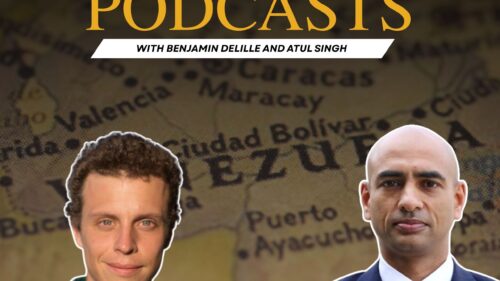
Fair Observer’s Video Producer Rohan Khattar Singh speaks with Joseph Bouchard, a journalist and researcher on Latin American politics, about the US military operation that captured Venezuelan President Nicolás Maduro and his wife, Cilia Flores, and what it reveals about Washington’s evolving strategy in Latin America. Bouchard argues the raid marks a sharper, more overt US intervention model there, one tied to energy, resources and strategic competition with China. They also probe a central mystery: why Venezuela’s armed forces appear not to have resisted.
Operation Absolute Resolve
Bouchard describes Operation Absolute Resolve, a tightly executed raid in the Venezuelan capital of Caracas involving US Delta Force, the CIA and US Southern Command. He says the raid included low-altitude Boeing CH-47 Chinook helicopters, precision strikes on select military and political targets, and a rapid extraction of Maduro and Flores. Khattar Singh notes there are no reported US casualties so far, while reporting suggests dozens of deaths on the Venezuelan side, with many reportedly Cuban security personnel.
Bouchard’s assessment separates tactics from strategy. While he disagrees with the broader objectives, he characterizes the speed and coordination as startlingly effective, noting “how quick it was, how seamless it was.” Khattar Singh emphasizes the “live” aspect of the moment: a head of state being seized in a social media environment where evidence of major clashes would surface quickly if they occurred.
The Venezuelan military’s silence and Cuba’s role
A major thread is what neither man can yet explain with confidence: the apparent absence of Venezuelan military resistance. Khattar Singh points out that Maduro previously showcased air power in public drills, including General Dynamics F-16 Fighting Falcon jets and Russian Sukhoi aircraft, yet “not a single jet” appears to have been scrambled during the raid. Bouchard agrees, saying, “we’ll only know the complete truth in 10, 20 years when they declassify.”
He offers multiple working theories. One possibility is restraint from the top. Maduro may have calculated that direct engagement would trigger a larger US occupation and decided survival of the broader regime mattered more than fighting for his own position. Another possibility is a deeper compromise inside the system, including the idea that key figures were “flipped,” bought off or instructed to stand down.
On the ground, Bouchard links the reported casualties to a longstanding security dynamic. He argues Maduro distrusted portions of his own apparatus and relied heavily on Cuban protection. Purges in the Venezuelan military and inner circle may have created incentives to outsource security to personnel seen as more loyal, disciplined and ideologically reliable. That might explain why the fiercest resistance, to the extent it occurred, appears to have come from Cubans guarding the presidential residence rather than from regular Venezuelan forces.
Proxy governance and Machado’s sidelining
After the capture, Maduro was reportedly transferred first to Guantánamo Bay and then to New York to face charges tied to narco-terrorism. Bouchard explains the administration’s public framing. It is presented as a law-enforcement operation to apprehend a wanted fugitive with a bounty, reinforced by “War on Terror” language meant to widen legal and political cover.
But he argues those charges function as a pretext rather than the true driver. In his telling, narco-terrorism rhetoric echoes earlier US justifications for force and is designed to make a dramatic action feel procedurally legitimate.
The conversation then shifts to who runs Caracas now. Bouchard says Venezuelan Vice President Delcy Rodríguez assumes control with backing from the ruling party, while Washington signals it can pressure her to comply. He also says the CIA may prefer governing “by proxy” rather than mounting a full occupation, keeping the state machinery intact enough to maintain stability and oil production while making leadership responsive to US demands.
That framework sets up the politically awkward question of María Corina Machado. This well-known opposition figure appears absent from the immediate post-raid arrangement. US President Donald Trump has commented that Machado lacks domestic respect and reads it as intentional sidelining. Bouchard floats several explanations: Trump’s personal grudges, the optics problem of installing a figure whose pro-oil messaging has been highly public and an intelligence preference for a less overt “coup signature” that does not inflame chavista supporters or provoke regional backlash.
The “Donroe Doctrine”
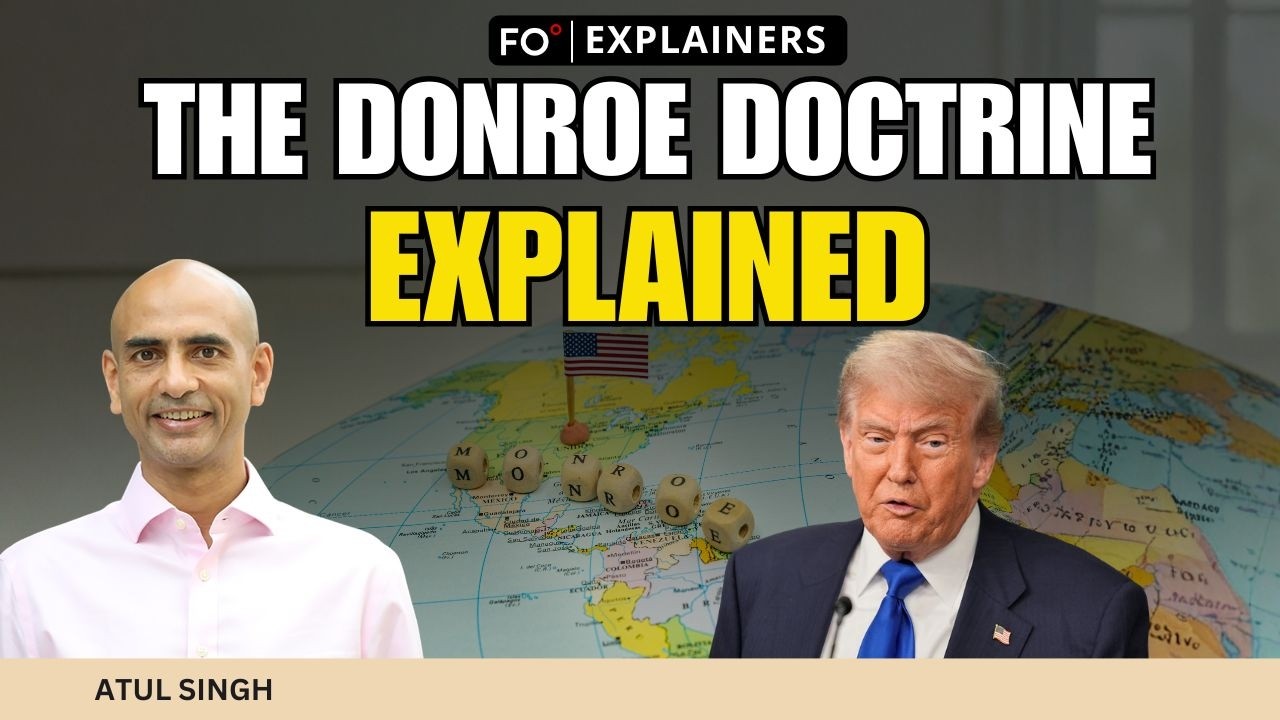
Trump’s “Donroe Doctrine,” as many call it, is a more aggressive Monroe Doctrine posture in a multipolar world. Bouchard says the administration’s rhetoric toward Mexico, Colombia and Brazil has sharpened, with leaders branded as “narcos,” “terrorists” or “communists.” He identifies Mexico and Colombia as the most immediate focus, noting operational feasibility in Mexico and sharper ideological confrontation in Colombia.
Bouchard frames Colombian President Gustavo Petro as uniquely defiant, predicting intense resistance to US pressure. He also points to the diplomatic and financial tools Washington already uses: visa revocations, cuts to security cooperation, and pressure campaigns that can escalate alongside military threats. Cuba enters as a separate but related case, with US Secretary of State Marco Rubio’s long-standing hard line and renewed talk that Cuba’s capital of Havana could be next.
But what is the Trump administration’s motive? Bouchard argues drugs and migration work as political messaging, but he doubts they explain the policy reality. He notes fentanyl supply chains point primarily to Mexico and China, not Venezuela, and he questions the logic of using military force as a standard response to trafficking. From his perspective, the center of gravity has shifted to oil, gold and strategic denial of China’s access to Venezuelan energy. “I think this is about money,” he states.
The final exchange broadens to Beijing’s next move if Venezuela is effectively closed off. Bouchard suggests China may look harder at Mexico, Colombia and Brazil for energy and commodity access. He also notes that Washington has floated sanctions against exporters to China and Russia. For Khattar Singh and Bouchard, the situation reads as a signpost of an emerging order where major powers increasingly enforce spheres of influence, raising the stakes for Latin America as a contested strategic zone rather than a secondary theater.
[Lee Thompson-Kolar edited this piece.]
The views expressed in this article/video are the author’s own and do not necessarily reflect Fair Observer’s editorial policy.






















Comment