








 | ||
| ||
| ||
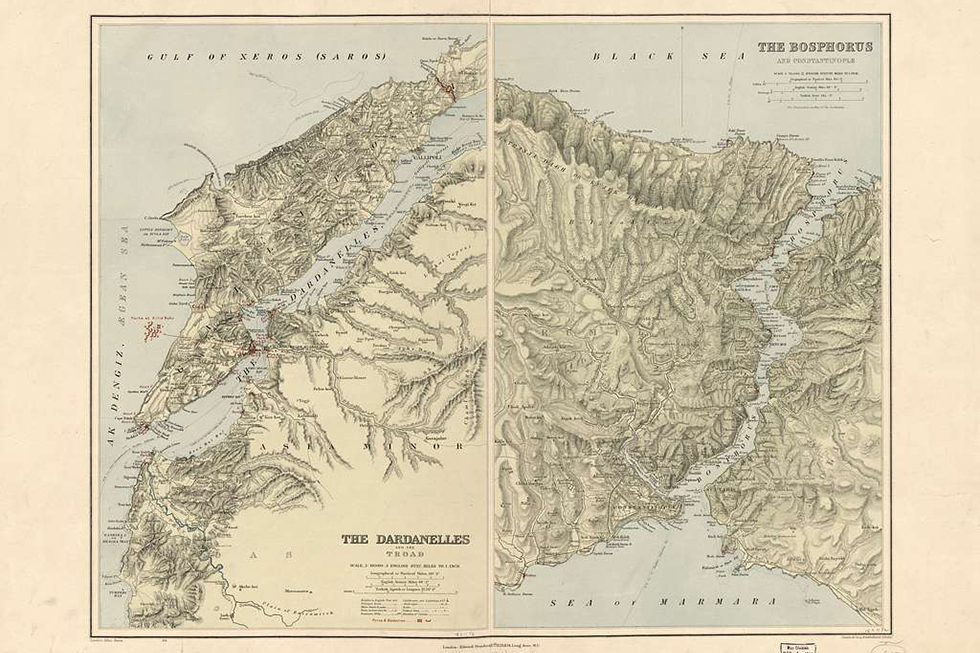
Dear FO° Reader, Hello again from the West and East Coasts of the United States. Today, we will be going over the potentially new “North Coast” — Greenland. US President Donald Trump has been making quite a few waves in international headlines since the beginning of the year, with his attack on Venezuela, constant spats with global leaders and now his threats to invade the territory of Greenland. Greenland, an autonomous territory of Denmark, has rebuffed Trump’s demands, as has its parent nation and Europe as a whole. With the back and forth still ongoing, we thought it best to break down the surprisingly long history of the United States’ interest in the world’s largest island, highlight key strategic points and shed a little bit of light on what the erratic president might be thinking. A long-standing American interest The United States’ interest in acquiring Greenland is not new, and Trump is far from the first American president to consider purchasing the Danish territory. As early as 1868, shortly after the US bought Alaska from Russia, Secretary of State William H. Seward explored the idea of acquiring Greenland and Iceland from Denmark. Although the proposal never advanced, it reflected Washington’s growing strategic focus on the Arctic and the North Atlantic. The idea resurfaced during the Cold War. In 1946, under President Harry Truman, the United States formally offered Denmark $100 million in gold to purchase Greenland. Danish officials swiftly rejected the proposal, reportedly describing it as “absurd,” echoing the response Denmark would later give to Trump’s renewed interest decades later. Despite these failed purchase attempts, the US–Danish relationship has remained close and largely pragmatic. Since Denmark joined NATO in 1949, NATO members have built cooperation on mutual trust, particularly in matters of Arctic security. Greenland has played a central role in this partnership, hosting US military installations such as Thule Air Base, which remains vital to missile defense and early-warning systems. The history of US–Danish territorial negotiations also extends beyond Greenland. In 1917, as Washington sought to expand its strategic presence in the Caribbean, President Woodrow Wilson approved the purchase of the Danish West Indies for $25 million. The US government later renamed the islands the US Virgin Islands, marking it as the only successful territorial sale between the two countries. Together, this history underscores that current debates over Greenland are not an isolated episode. Rather, these tensions are but a part of a long-standing American strategic interest shaped by geography, security concerns and great-power competition in the Arctic. Sources: The US has tried to acquire Greenland before – and failed | CNN The history of US presence in Greenland | Danish Institute for International Studies FACT CHECK: Did Harry Truman Really Try To Buy Greenland Back In The Day? | NPR Purchase of the United States Virgin Islands, 1917 | US Department of State Future fissures: lines drawn in the water The melting of Greenland’s ice brings with it two developments that are relatively new to our era, yet geopolitically transformative. First, Greenland sits atop vast reserves of critical rare earth elements and other strategic resources essential for sustaining the AI revolution, advanced computing and next-generation military technologies. As global competition over these minerals intensifies. Greenland is rapidly shifting from a peripheral territory to a strategic prize. Second, the changing Arctic environment offers Russia a long-awaited opportunity. Despite being the largest country on Earth, endowed with nearly every essential resource a major power requires and possessing a formidable military and advanced technological base, Russia’s geography has historically constrained its ability to project power. Unlike other great powers, Russia lacks reliable, direct access to warm waters and unrestricted international sea lanes. The melting of the ice in the North Pole and its surrounding areas, including Greenland, brings with it two developments that are relatively new to our era, yet geopolitically transformative. Sources: Trump covets mineral-rich Greenland, but what natural resources does it actually have? | BBC Arctic sea ice maximum: Crisis as ice melts and risks rise | WWF Arctic Cold Feet, Warm Waters: Russia’s Strategic Retreat | GEOpolitics This geographic limitation has long constrained Russia’s geopolitical position. To the north, access to international waters depends heavily on routes monitored or influenced by NATO. To the south, Russia must rely on Turkey’s control of the Bosphorus and Dardanelles under the Montreux Convention. These chokepoints severely limit Russia’s naval movement, trade routes and strategic reach.
A 1715 map of the Dardanelles and the Bosphorus. As Arctic ice recedes, however, new maritime corridors — most notably the Northern Sea Route — are becoming increasingly usable. This development has the potential to partly offset Russia’s historical disadvantages by providing alternative access to global markets and strategic waterways, reducing its dependence on NATO-controlled passages. However, this also brings Russia into more direct contact with the United States from the north. We often see memes about Russia and the United States near the Bering Strait appearing friendly there while acting like enemies in Europe. The Strait and other northern territories are getting warmer, and with them, tensions are also heating up. Which leads us back to the man who is jumpstarting this thaw—Trump. The psychology of it all: What is Trump thinking? This is not the first time Trump has attempted to take Greenland from Denmark. During his first term in 2019, Trump offered to purchase the territory from Copenhagen, which was rejected. At the start of Trump’s second term, his congressional allies introduced a bill, dubbed the “Make Greenland Great Again Act,” which would authorize Trump to enter into negotiations with Denmark for the purchase of the territory. Suffice to say, this subject has been on Trump’s mind for a while now. As for the exact reasons why, things are not as clear-cut as they might seem. There are the aforementioned strategic and mineral concerns, which are undoubtedly playing a role, but forward thinking is unlikely to be the only factor at play. Sources: Trump confirms he is considering attempt to buy Greenland | The Guardian H.R.361 – 119th Congress (2025-2026): Make Greenland Great Again Act First, we should consider the timing. At the start of the year, Trump successfully invaded the sovereign nation of Venezuela and captured President Nicolas Maduro to international outrage and condemnation. He has yet to suffer any notable consequences, even while openly planning to seize Venezuela’s oil reserves. It is very likely this has emboldened Trump to escalate. Now he sees Greenland as a viable target — another long-desired prize he can take from a smaller, weaker nation. Sources: Nicolás Maduro – Capture and indictment | Britannica Trump wants Venezuela’s oil. Will his plan work? | BBC Second, there is a pervasive belief in the American left that Trump embarked on both international crusades to shift the narrative away from the Epstein files. These files concern a former associate of Trump who was arrested for trafficking underage girls, with many people believing that Trump himself was involved. In December of 2025, Trump’s own Justice Department released thousands of files to the public, heavily redacting many of them. Several of these files mention Trump by name. The most disturbing is a report from a woman who claimed that when she was 13, “[Trump] participated regularly in paying money to force me to (redacted) with him and he was present when my uncle murdered my newborn child and disposed of the body in Lake Michigan.” The White House and the Justice Department have vigorously denied that anything relating to Trump is true. However, it is also undeniable that only a portion of the Epstein files have been released despite the Justice Department being legally required to release all of them. The heavily redacted nature of the files (the Justice Department reportedly spent nearly $1 million on overtime for agents redacting them) only makes the situation worse. This has led many to believe that Trump’s recent erratic behaviour regarding Greenland is a smokescreen, and that he is attempting to deflect attention away from a truly toxic scandal. Sources: With few Epstein files released, conspiracy theories flourish and questions remain | NPR ‘Redact’ resurfaces with the Epstein files | CNN Woman told FBI she was sex trafficked as 13-year-old in Michigan | Detroit Free Press Trump’s FBI Spent Nearly $1 Million on Redacting Epstein Files | The New Republic Third and finally, there are also the petty reasons. In a 2021 interview, Trump is quoted as saying: “I love maps. And I always said: ‘Look at the size of [Greenland]. It’s massive. That should be part of the United States.” Given Trump’s usual erratic behavior, it is not impossible that this entire episode was built on an impulsive decision that he decided to run with. This theory also gained steam when some of the White House’s communication to the Norwegian Prime Minister was revealed. The message implied that Trump embarked on this crusade when the Nobel Foundation, an independent organization, did not give him its Nobel Peace Prize. Sources: Unpacking Trump’s Obsession: What’s So Great About Greenland Anyway? | Vanity Fair Dire undercurrents and foggy futures As the situation unfolds, it is unclear what the future holds — as always — but doubly so with Trump’s erratic decision-making. While it seems impossible, Trump will push far enough to actually attack a fellow NATO country; he has made a career of doing things no other president has ever considered. Whatever the future holds, Denmark and Greenland are unlikely to go down without a fight. If Trump decides to push the nuclear button, things may not go as quickly as he hopes. European allies have been encircling Greenland in solidarity. And, the US attacking Greenland will undoubtedly lead to the dissolution of NATO, which would delight Russia to no end. This is a great irony, as Russia is supposedly one of the enemies the US wants to combat through the acquisition of Greenland. Yet despite all his bluster, Trump has recently changed his tune. After meeting face-to-face with EU leaders at the World Economic Forum meeting in Davos, Switzerland, Trump backed down on January 22 from his plan to tariff Greenland and other EU countries. Now he seems open to establishing a new deal that would fulfill US strategic desires in the Arctic. Source: Trump backs down on Greenland tariffs, says deal framework reached | Reuters For now, things appear to have calmed down slightly. Only time will tell if Trump’s discussions in Davos will hold, or if it’s more foggy rhetoric. We invite you to discuss your thoughts on the US and Greenland with us. Wishing you a thoughtful week, Casey, Liam, Farhang Assistant Editors | ||
We are an independent nonprofit organization. We do not have a paywall or ads. We believe news
must
be free for everyone from Detroit to Dakar. Yet servers, images, newsletters, web developers and
editors cost money.
So, please become a recurring donor to keep Fair Observer free, fair and independent. 
| ||
| ||
| About Publish with FO° FAQ Privacy Policy Terms of Use Contact |





Explore More FO° Spotlight


Support Fair Observer
We rely on your support for our independence, diversity and quality.
For more than 10 years, Fair Observer has been free, fair and independent. No billionaire owns us, no advertisers control us. We are a reader-supported nonprofit. Unlike many other publications, we keep our content free for readers regardless of where they live or whether they can afford to pay. We have no paywalls and no ads.
In the post-truth era of fake news, echo chambers and filter bubbles, we publish a plurality of perspectives from around the world. Anyone can publish with us, but everyone goes through a rigorous editorial process. So, you get fact-checked, well-reasoned content instead of noise.
We publish 3,000+ voices from 90+ countries. We also conduct education and training programs
on subjects ranging from digital media and journalism to writing and critical thinking. This
doesn’t come cheap. Servers, editors, trainers and web developers cost
money.
Please consider supporting us on a regular basis as a recurring donor or a
sustaining member.
Will you support FO’s journalism?
We rely on your support for our independence, diversity and quality.





Comment