



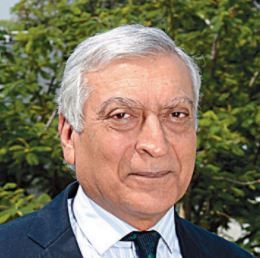
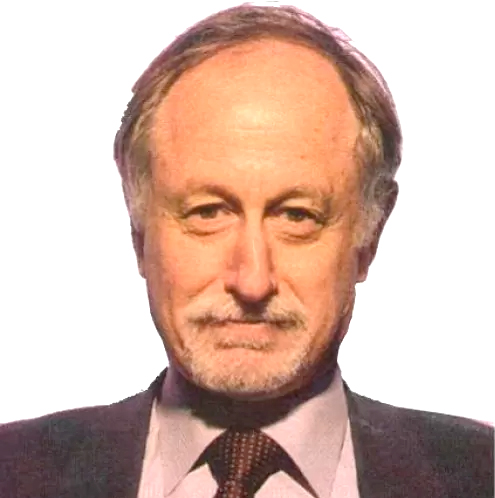
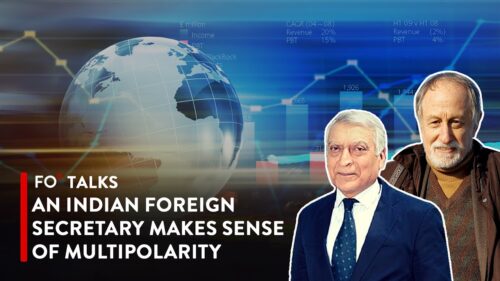
Fair Observer’s Chief Strategy Officer Peter Isackson and former Foreign Secretary of India Kanwal Sibal discuss the strategic meaning of the recent summit between Indian Prime Minister Narendra Modi and Russian President Vladimir Putin. Their conversation situates the meeting within a moment of heightened global uncertainty, marked by the Ukraine war, Western sanctions and growing pressure on India from both the United States and Europe. For Sibal, the summit is not merely a bilateral engagement but a deliberate signal about India’s insistence on strategic autonomy and its refusal to let external coercion dictate foreign policy choices.
The return of the annual summit
Sibal begins by emphasizing the symbolic and practical importance of reviving the annual India–Russia summit format, which was launched in 2000 and was interrupted during the COVID-19 pandemic. These meetings are not routine diplomatic theater. They create a mechanism that mobilizes bureaucracies on both sides, forces attention to stalled initiatives and allows leaders to engage intensively over several days rather than in compressed multilateral sidelines.
The timing matters. Sibal notes that the global environment is unusually unsettled, with energy markets, supply chains and security alignments under strain. The summit provided space to discuss not only bilateral issues but also broader geopolitical developments, including the Ukraine war and shifting dynamics between Washington and Moscow. From India’s perspective, such conversations are especially important because the Global South bears the indirect costs of the conflict through disruptions to energy and food security, even though it lacks leverage to force an end to the war.
Sanctions, oil and strategic autonomy
A central theme of the discussion is India’s resistance to Western pressure over its relationship with Russia. Sibal argues that US- and European Union-led sanctions regimes have extended far beyond Russia, affecting countries through financial controls, shipping restrictions and insurance mechanisms. He characterizes the sanctions as coercive and system-wide, with India becoming an indirect casualty.
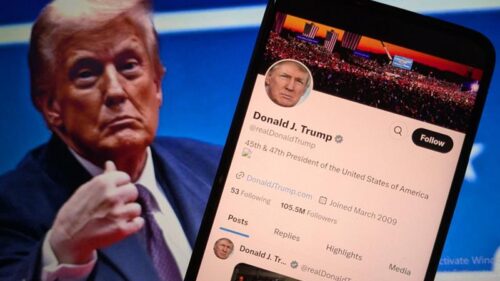
Oil stands as the most visible pressure point. Sibal notes that US President Donald Trump publicly demanded that India stop buying Russian oil, turning a commercial issue into a political test. Yielding, he argues, would have sent a damaging signal that India’s strategic autonomy is conditional. As he puts it, “it's impossible geopolitically and in our national interest to dilute our ties with Russia.”
Simultaneously, Sibal stresses the practical constraints. Indian public-sector and private firms must assess their exposure to global financial systems, insurance markets and compliance risks. Even without formal government directives, sanctions can still reduce oil flows by targeting tankers, insurers and payment channels. The result, he suggests, is a narrowing of options rather than a clean policy choice.
Defense dependence and economic imbalance
Sibal turns to defense ties, describing them as a structural reality rather than an ideological preference. A large share of India’s military equipment originated in Russia, including key air force and armored platforms that require continuous maintenance, spare parts and upgrades. Wartime pressures inside Russia complicate this relationship, but Sibal argues that disengagement is not feasible in the near term.
Still, he emphasizes India’s determination to move toward indigenous defense manufacturing. Joint ventures and technology transfer, rather than off-the-shelf purchases, are now the priority. He points to the BrahMos missile program as a model of successful co-development and notes that India is open to diversification, including French offers that promise deep technology transfer. Competition among suppliers, he suggests, strengthens India’s hand.
Economically, however, Sibal highlights a stark imbalance. India’s exports to Russia remain small even as total trade surged due to discounted Russian oil. That headline number, he warns, is fragile. If oil volumes decline, trade will fall sharply unless new export channels are built. Putin has instructed his government to explore ways to increase imports from India. Discussions are underway to reduce Russian regulatory and non-tariff barriers.
Sibal also outlines concrete outcomes from the summit: a logistics agreement to allow Russian naval and air assets to use Indian ports and airfields; a mobility arrangement discussed to send tens of thousands of Indian workers to Russia for construction and agriculture; and expanded cooperation in the Arctic, to train Indians to operate icebreakers and explore the possibility of building them in India.
Multipolarity and the Russia–China–India balance
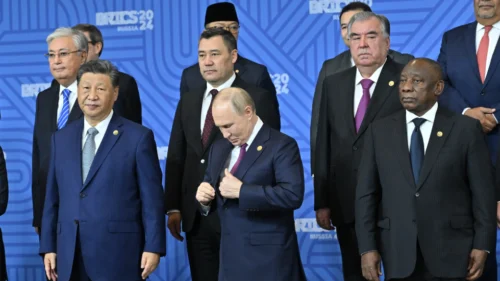
The summit fits squarely within India’s broader commitment to multipolarity. The capital of New Delhi does not seek confrontation with the Group of 7 forum, but it resists a world in which Western dominance hardens into a permanent hierarchy. If Russia were isolated or marginalized, global power would concentrate further, shrinking the space India needs as a rising power.
This logic also shapes India’s approach to the Russia–China–India triangle. Sibal acknowledges that the Russia–China relationship has grown stronger, an unfavorable development for India. Diluting ties with Moscow would only deepen Russia’s dependence on Beijing. Maintaining engagement, by contrast, gives Russia alternatives and preserves India’s leverage.
As an Asian power, India cannot disengage from regional forums or “vacate Asia.” Continued participation in platforms such as the Shanghai Cooperation Organization reflects both geographic reality and strategic necessity.
Europe, Ukraine and an uncertain endgame
Isackson presses Sibal on Europe’s role, and Sibal describes a complicated mix of engagement and friction. European leaders visited India early in the Ukraine war, urging condemnation of Russia, and the EU has since sanctioned some Indian firms for alleged violations of Western measures. Simultaneously, India continues serious engagement with Europe, including negotiations over a free trade agreement.
Sibal is sharply critical of Europe’s posture on Ukraine, arguing that the EU has shifted from being seen as a peace project to a more militarized stance. In his view, European leaders have trapped themselves in maximalist rhetoric that makes compromise politically costly. “Europe is being seen as warmongering,” he says, a perception that has eroded Europe’s standing in parts of the Global South.
On France and Germany, Sibal suggests that domestic politics, historical memory and dependence on the US constrain European autonomy. He doubts that current rearmament rhetoric can be sustained economically or strategically over time.
Asked whether the war is nearing an end, Sibal remains skeptical. Divisions between the US and Europe make a settlement difficult, and European leaders may resist any Trump-led initiative that appears to concede territory or limit NATO’s future expansion.
Ultimately, Sibal frames the Modi–Putin summit as both reassuring and a warning: alongside reassurance that long-standing relationships still operate with continuity stands a warning that India will pursue alternative strategies if pressured.
[Lee Thompson-Kolar edited this piece.]
The views expressed in this article/video are the author’s own and do not necessarily reflect Fair Observer’s editorial policy.

















Comment