



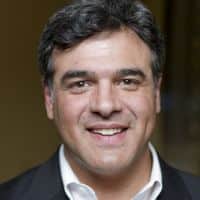
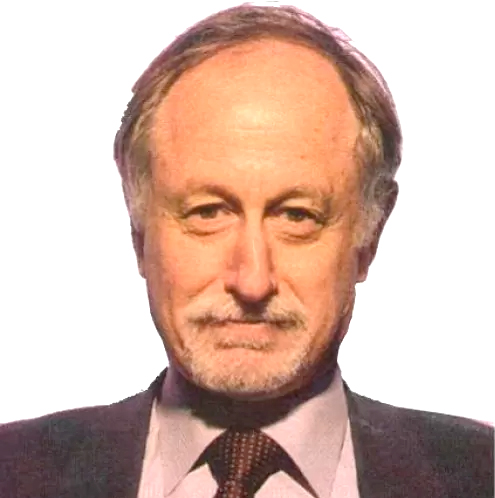
Fair Observer’s Chief Strategy Officer Peter Isackson and former CIA analyst and whistleblower John Kiriakou discuss the relationship between intelligence services, the presidency and the media. The conversation revolves around a blunt question: Are intelligence agencies, as they function today, compatible with democratic governance? Drawing on personal experience and historical cases, Kiriakou argues that secrecy, bureaucratic inertia and political incentives have pushed US intelligence far from democratic accountability.
Media access, pressure and propaganda
Kiriakou begins with what he considers the clearest evidence of democratic erosion: the relationship between intelligence agencies and the press. He cites a Freedom of Information Act request filed by American journalist Jason Leopold that uncovered extensive correspondence between the CIA’s Office of Public Affairs and American journalists. Among the most striking examples was NBC national security correspondent Ken Dilanian sending draft articles to the CIA for clearance before publication, allowing the agency to remove or add material.
Kiriakou also recounts an episode involving a younger investigative journalist who abandoned a story after the CIA warned that publishing it would end access to off-the-record briefings and informal social events. This dynamic illustrates how access journalism replaces independent scrutiny. As Kiriakou puts it, “CIA propaganda in the public domain is not compatible with democracy.”
Isackson pushes back slightly, suggesting that the media bears responsibility for accepting such constraints. Kiriakou partly agrees but insists that the problem is structural: Intelligence agencies seek influence by design, and the press has largely failed to resist. He extends the critique beyond the United States, arguing that media environments in France and the United Kingdom are even more constrained by legal and political pressure.
Presidents and the limits of control
The discussion then turns to the relationship between the CIA and the presidency. Isackson asks whether presidents truly command intelligence agencies or whether the balance of power often runs in the opposite direction. Kiriakou resists presenting a single answer, as the relationship varies by administration. Some presidents, such as George H.W. Bush, enjoyed close ties to the agency, while others were managed or ignored by it.
Kiriakou highlights US President Harry Truman as a cautionary example. Truman signed the National Security Act of 1947, which created the CIA, but later complained publicly that the agency had escaped presidential control. Kiriakou recounts how Truman’s critical op-ed in The Washington Post shortly after the assassination of President John F Kennedy in 1963 disappeared from later editions under CIA pressure, reinforcing the perception of institutional autonomy.
He also relays a story told to him by US Secretary of Health and Human Services Robert F. Kennedy Jr., in which his father, Attorney General Robert Kennedy Sr., confronted CIA Director John McCone after JFK’s assassination, asking whether his team had a hand in it. McCone responded with uncertainty, reinforcing long-standing suspicions about intelligence involvement at an individual level. While the assassination was likely not a formal CIA operation, the episode illustrates why the agency inspired fear among political leaders for decades.
The deep state and bureaucratic gravity
From presidential control, the conversation broadens to what Kiriakou calls the “deep state,” which he defines as the permanent national security bureaucracy. He argues that this apparatus limits any president’s ability to enact meaningful reform, regardless of intent. Reflecting on the appointment of veteran US diplomat Bill Burns as CIA director, Kiriakou admits he initially hoped Burns would restrain the agency’s excesses.
Instead, Kiriakou states that Burns got absorbed into the CIA’s post-September 11 operational culture. Burns became the administration’s de facto crisis diplomat while simultaneously presiding over an agency engaged in drone warfare, renditions and domestic surveillance. “There really is such a thing as a deep state,” Kiriakou says, adding that labels matter less than institutional behavior.
Kiriakou is especially critical of leadership choices under US President Donald Trump, pointing to former US Secretary of State Mike Pompeo and former CIA Director Gina Haspel as evidence that structural continuity outweighs electoral disruption. In his view, reform requires both an activist president and a compliant Congress, a combination he sees as increasingly unlikely.
Assassination, secrecy and whistleblowers
Finally, Kiriakou and Isackson address how extraordinary practices have become normalized. Kiriakou explains that Executive Order 12333, signed by US President Ronald Reagan in 1981, once barred assassinations but was amended after September 11 to allow targeted killings of individuals deemed threats. He describes how these practices became routine under US President Barack Obama through weekly “kill list” meetings involving CIA and National Security Council lawyers.
Kiriakou also discusses “Zero Units” in Afghanistan, joint CIA and special forces teams tasked with assassinations and kidnappings. These positions underscore how intelligence agencies have adopted paramilitary roles. Analytically, the CIA has repeatedly failed to anticipate major global events, even as its operational capacity for lethal action has expanded.
The conversation closes with whistleblowing and information control. Kiriakou recounts his own prosecution under the Espionage Act of 1917 and notes that more people were charged for media contact under Obama than under all previous administrations combined. This shift reflects a deeper cultural change in which information itself is treated as a threat.
Taken together, the discussion paints a sobering picture of intelligence agencies that operate with limited oversight, shape media narratives and exercise lethal authority in secret. Whether democracy can coexist with permanent secrecy remains an open and urgent question.
[Lee Thompson-Kolar edited this piece.]
The views expressed in this article/video are the author’s own and do not necessarily reflect Fair Observer’s editorial policy.

















Comment