






The Pashtun Tahafuz Movement (PTM) is one of the most prominent yet contentious sociopolitical phenomena in recent Pakistani history. Emerging from the conflict, displacement and counterterrorism of post 9/11, from the northwestern borderlands of Pakistan, the PTM has helped to give voice to grievances that have long festered in the Pashtun population over issues of marginalization, militarization and human rights abuses.
However, in the broader context of national cohesion, its rise also highlights the intricate interaction between Pakistan’s official institutions and its peripheries. While it is true that the PTM expresses valid sociopolitical and humanitarian concerns, a sustainable response to its growth would require a nuanced, reform-oriented and inclusive state strategy. A strategy that would strengthen the integrity of Pakistan’s federation and address the structural inequities that started the movement.
Colonial legacies to contemporary marginalization of PTM
The Pashtuns’ discontent dates back to the colonial administrative system of the British Raj, which ruled the tribal belt under the Frontier Crimes Regulation (FCR), an extremely repressive legal system that denied the Pashtuns due process and political rights. Pakistan inherited this system after British rule ended. Following this, the tribal areas remained semi-autonomous, which were ruled by proxy. The political and economic marginalization of the region that makes up the current Newly Merged Districts (NMDs) of Khyber Pakhtunkhwa (KP) was solidified by this legacy.
During the Soviet-Afghan War (1979-1989), the western borders of Pakistan became strategic rear bases for the anti-Soviet jihad funded by the USA and Saudi Arabia. The resulting militarization and refugee flow were inflicted particularly on the Pashtun population. After the 9/11 attacks, Pakistan’s role in the US’s war on terror turned the NMDs into war zones once again.
Military campaigns like Al-Mizan, Rah-e-Nijat, Zarb-e-Azb and Radd-ul-Fasaad were undertaken to combat the terrorists. Though the operations were successful on a larger scale, they also resulted in Internally Displaced Persons (IDPs), collateral damage to civilians and destruction of the socioeconomic infrastructure. As localities sought accountability and rehabilitation, this collective trauma ultimately resulted in the birth of PTM.
Pakistan’s response to PTM’s security imperatives and democratic accommodation
Pakistan’s engagement with the PTM has oscillated between safeguarding national security along the northwestern borders and maintaining space for democratic expression and dissent, as many of the PTM’s demands undermine Pakistan’s national security apparatus. Bearing in mind Pakistan’s history of political turmoil and regional turbulence, it is challenging to discern the state’s cautious stance towards the PTM from substantive national security apprehensions.
Initially, the military high command accepted the complaints of the movement’s members, taking them as “our own children,” and described their plight as a consequence of decades of militancy and counterterrorism efforts in the old tribal regions. This accommodating stance underscored Pakistan’s readiness to address the populace’s problems by carrying out a procedure of progressive sociopolitical consolidation.
After the 25th Constitutional Amendment, Pakistan embarked on a far-reaching process of integrating Federally Administered Tribal Areas (FATA) in KP and granted complete constitutional, political and legal rights to the tribal citizens. The repeal of the FCR, judicial review and inclusion into the KP Assembly were historical achievements of empowerment.
As part of the 10-year Development Plan, the infrastructure, education and healthcare sectors were made a priority, alongside opportunities for young people through Ehsaas, Ba-Ikhtiyar Naujawan and Kamyab Jawan, which opened up employment opportunities in the merging districts. Together, these activities are evidence of a wider vision of Pakistan, to substitute decades of marginalization of the tribal population with inclusion, justice and sustainable development.
Security, sovereignty and the shifting narrative of PTM
As the movement grew from the peripheries of KP, a northwestern province of Pakistan, and spread to urban centers like Karachi, Lahore and Quetta. Its rhetoric developed into not just confrontational but also into a propagation of an anti-state stance, as heard by their infamous slogan: “Lar ao bar yao Afghan” (“Here and there Afghan are one”). Certain PTM leaders started making sweeping indictments of state institutions, especially the armed forces, and in so doing, destroyed the space for dialogue and fueled perceptions of foreign manipulation.
The incident of 2019, which led to clashes between the supporters of the PTM and security personnel, known as Khar Qamar, was a tragic expression of mistrust and polarization. The subsequent imprisonment of PTM members of parliament Ali Wazir and Mohsin Dawar in 2024, on anti-terrorism grounds, exacerbated the rift between the state and the movement.
After recurrent intelligence warning signs that hostile actors were attempting to penetrate and utilize the expanding network of PTM, the federal government prohibited the movement pursuant to Section 11B of the Anti-Terrorism Act in 1997. Although human rights organizations, such as Amnesty International and the Human Rights Commission of Pakistan (HRCP), had condemned the move as heavy-handed, the reasoning behind the decision by the state was based on a larger security risk assessment.
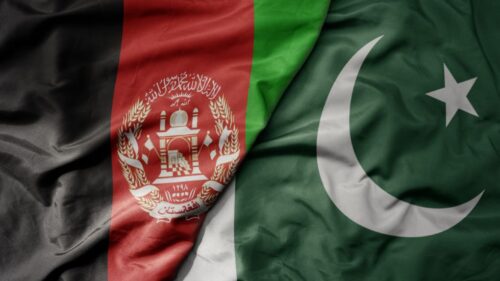
The evolving situation of Balochistan, a southwestern province in Pakistan, shows that legitimate socioeconomic unrest had been exploited by separatist and foreign sponsor networks, which became an important pre-set for the Pakistani state. Similarly, the rhetoric of PTM and its exaggeration by foreign media and antagonistic rhetoric — by undermining the importance of the Durand line and waving Afghan flags in their events — have caused concern that it might be employed as a soft front to damage the functioning of the national institutions, delegitimize anti-terrorism efforts and generate ethnic polarization. This poses a challenge to Islamabad in distinguishing between an acceptable civil disobedience and organized subversion, which is especially crucial in a region with external influence and asymmetric warfare.
Reconciling national cohesion and regional inclusion
The PTM phenomenon has been a timely wake-up call about the importance of inclusive governance and equitable development in Pakistan’s peripheries. The 25th Constitutional Amendment, which consolidated the former FATA with KP, was one of the milestones in the constitutional development of Pakistan. This union officially terminated the century-long rule of colonial-era law and granted millions of Pashtuns full constitutional rights.
The key challenge after the merger is the effective implementation of the 25th Amendment, ensuring that the constitutional promises are translated into visible improvements in the tribal areas. However, this process has been made tricky due to multiple acts of terrorism, which cut across Afghanistan’s borders into the tribal region of Pakistan and the ethnic politics of PTM. This has been taken advantage of with developmental delays to propagate ethnic division, such as with chants and doubts about the goodwill of the state to work towards inclusive governance and stability in the country.
Rebuilding trust through reform and reconciliation
The state’s strategic mandate is to unify these reforms by making specific investments in government capacity, education, medical services and livelihood recovery within the NMDs. Through long-term structural imbalances, the federation and Pakistan’s border regions can reinforce the social contract. This developmental solution aligns with the overall goals of national security, as inclusive governance is an inherent countermeasure to radicalization and alienation.
At the same time, reform of the security sector is also a necessity to promote public trust. The normalization of state-citizen relations can be achieved through the gradual demilitarization of the civilian areas and empowerment of the local police and courts. Moreover, the establishment of a “Truth and Reconciliation Commission,” as sometimes suggested by the PTM and backed by certain quarters of civil society, would be a plausible model for settling grievances without necessarily compromising the institution’s integrity.
This type of commission, based on transparency and inclusiveness, would not only promote reconciliation but also demonstrate Pakistan’s commitment to democratic resilience in post-conflict environments.
Pakistan’s response to the PTM will help shape the future course of its federal democracy, counter-extremism policy and civil-military balance. The way forward, as seen by Pakistan, is an open dialogue and not a confrontation. The PTM has, by all means, brought to the fore some problems that must be addressed, including displacement and post-conflict rehabilitation. The long-term credibility and moral capital of the movement, however, rely on the observance of nonviolence, constitutionalism and national unity.
To become a positive force, the PTM needs to direct its activism through democratic institutions of Pakistan and mobilize parliamentarians, as well as cooperate with provincial governments in policy formulation. The continued rhetoric augmentation of the military and other state institutions, creating division and hatred against other ethnicities or a repetition of messages that appeal to the enemies of Pakistan, is perilous in diminishing the legitimacy of the very people it supposedly represents.
[Aysha Sadak Meeran edited this piece.]
The views expressed in this article are the author’s own and do not necessarily reflect Fair Observer’s editorial policy.
Afghanistan, Proxy Warfare and the Regional Crisis the World Overlooks
Pakistan’s long-held fear and concern that militant groups are using its neighboring Afghan territory is now echoed by international organizations...
Faith in Chains: The Hijacking of Islam by Tehreek-e-Taliban Pakistan
Extremist groups like Tehreek-e-Taliban Pakistan cloak violence in religion, yet betray Islam’s core message of peace. Radicalization stems from social...

The Pashtun-led Taliban Could Break Apart Both Afghanistan and Pakistan
Victory against the US, ethnic conflict within Afghanistan and disappointment with Islamabad could lead the Taliban to create a new...

Support Fair Observer
We rely on your support for our independence, diversity and quality.
For more than 10 years, Fair Observer has been free, fair and independent. No billionaire owns us, no advertisers control us. We are a reader-supported nonprofit. Unlike many other publications, we keep our content free for readers regardless of where they live or whether they can afford to pay. We have no paywalls and no ads.
In the post-truth era of fake news, echo chambers and filter bubbles, we publish a plurality of perspectives from around the world. Anyone can publish with us, but everyone goes through a rigorous editorial process. So, you get fact-checked, well-reasoned content instead of noise.
We publish 3,000+ voices from 90+ countries. We also conduct education and training programs
on subjects ranging from digital media and journalism to writing and critical thinking. This
doesn’t come cheap. Servers, editors, trainers and web developers cost
money.
Please consider supporting us on a regular basis as a recurring donor or a
sustaining member.
Will you support FO’s journalism?
We rely on your support for our independence, diversity and quality.





Comment