





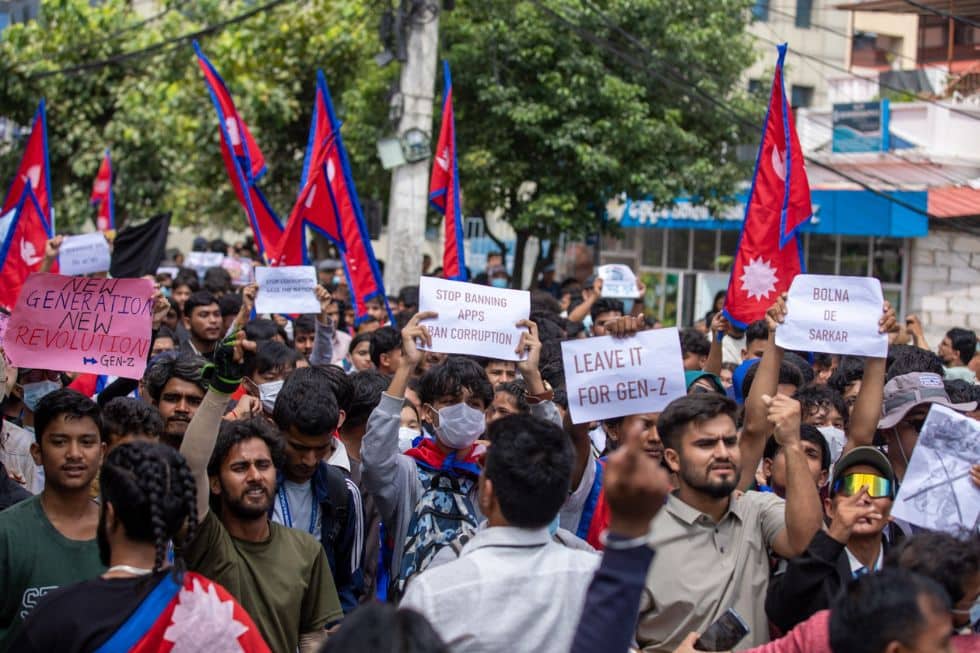
Since September, Madagascar has been in the throes of a fast-moving political crisis that toppled President Andry Rajoelina and brought a military-led transitional regime to power. What began as small demonstrations by Generation Z activists in the capital Antananarivo — protesting severe water and electricity shortages — quickly grew into a nationwide movement amplified by influencers and opposition voices.
Protests spread to other cities such as Toamasina, Antsiranana and Toliara, and violent clashes with security forces left several injured and at least 22 people dead, according to the UN High Commissioner for Human Rights — figures the government denies.
Within days, frustration with daily hardships and a lack of freedom of expression escalated into an open demand that Rajoelina resign.
A decisive military defection
The turning point came on October 11, when the Corps d’administration des personnels et des services administratifs et techniques (CAPSAT) unit of the armed forces unexpectedly joined protesters at Antananarivo’s symbolic Place du 13 Mai — a square historically tied to several protests that ultimately led to the downfall of multiple governments since 1972. The move evoked memories of the 2009 crisis, when the military also sided with opposition-led protests.
One day later, President Rajoelina abruptly left the country. While the presidency insisted he was on an overseas mission, foreign media reported he had been evacuated from Sainte Marie island aboard a French military aircraft. Speaking via social media from an undisclosed “secure location,” Rajoelina claimed he had received death threats.
Constitutional showdown
October 14 marked a chaotic escalation. The National Assembly announced it would convene to remove Rajoelina from office. In response, the presidency issued a decree dissolving the Assembly. Lawmakers — across opposition, independents and even the ruling party — ignored the decree and voted to remove him anyway.
Hours later, CAPSAT forces led by Colonel Michaël Randrianirina declared they were “taking responsibility” for the country. Rajoelina’s allies called it a coup; the military insisted it was a necessary intervention. The High Constitutional Court quickly validated the takeover, declaring the presidency vacant due to Rajoelina’s “passive abandonment of power.”
With the Senate presidency itself in disarray, the court chose an unprecedented path: endorsing a military-led transition and effectively “inviting” Randrianirina to power, thereby giving his takeover a semblance of legality.
The “refoundation” begins
On October 17, Colonel Randrianirina was sworn in as President of the “Refoundation of the Republic of Madagascar,” launching a two-year transitional period. Among other reform measures outlined in a six-step plan, the new leadership pledged to conduct a national consultation, organize a constitutional referendum and hold presidential elections.
The concept of “refoundation” has become a rallying cry for breaking with decades of corruption, patronage and institutional fragility. Gen Z activists have demanded entirely new leaders across all institutions. But controversy erupted quickly. The appointment of Prime Minister Herintsalama Rajaonarivelo — criticized for alleged ties to figures close to the former regime — raised doubts about how deep the renewal will truly go. By October 28, a new cabinet of 29 nonmilitary members had been installed.
Justice or political score-settling?
A wave of arrests and searches targeting figures close to the former ruling circle has fueled growing unease. While the new authorities portray the moves as a fight against impunity, critics see echoes of past governments that weaponized the justice system against opponents. Once again, the line between accountability and political revenge is blurred.
This latest turmoil marks Madagascar’s sixth major political crisis since independence — following those of 1972, 1991, 2002, 2009 and 2018. Unlike its predecessors, however, the 2025 revolt was driven not by political elites but by young citizens demanding dignity, opportunity and responsive governance — a development that has been driven by anger over the steady erosion of public services and civil rights.
The stakes are enormous in a country already struggling with severe social and economic fragility. As evidenced by the Bertelsmann Transformation Index (BTI), Madagascar has witnessed a stark decline in the political and social realm over the past 20 years, with indicators such as freedom of expression (from 8 to 3) and commitment to democratic institutions (from 9 to 3) dropping drastically. Similarly, economic indicators such as market organization and liberalization of trade have stagnated at relatively low levels.
An uncertain international embrace
With regard to the current political situation, the international community appears divided. Although foreign diplomats attended Randrianirina’s swearing-in, the African Union suspended Madagascar while simultaneously dispatching envoys to mediate. This ambiguity threatens the new regime’s access to international financing, making international recognition a top priority.
Diplomatically, the transition government has signaled openness to all partners but has notably leaned toward Russia: The Russian ambassador was the first foreign official to meet Randrianirina after his inauguration, and the new National Assembly president, Siteny Randrianasoloniaiko, traveled to Moscow soon after.
A crossroads: renewal or repetition?
All eyes now turn to the national consultation, expected to be convened by Madagascar’s influential Ecumenical Council of Christian Churches. The process is meant to chart the transition’s long-term political future, including the drafting of a new constitution. Yet skepticism is warranted.
Recent events — echoing findings from a recent Afrobarometer survey show that while most Malagasy citizens support democracy and reject military rule, many are willing to tolerate military involvement when civilian leaders abuse their power. It’s a stance that, paradoxically, weakens democracy itself.
Still, forward-looking debates are already emerging: Should Madagascar remain a unitary state or move toward federalism? Should decentralization finally be strengthened? And when will a constitutional referendum be held before the return to elected leadership?
The answers will determine whether Madagascar can finally escape its cycle of instability — or whether this moment, like so many before, will slip into the familiar pattern of hope, upheaval and disappointment.
[African Arguments first published this piece.]
[Kaitlyn Diana edited this piece.]
The views expressed in this article are the author’s own and do not necessarily reflect Fair Observer’s editorial policy.







Join the conversation
Share your perspective
Log in to share your thoughts and take part in the discussion.