



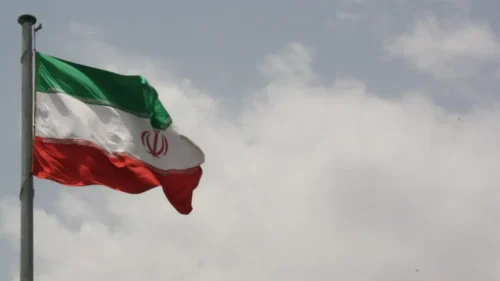
On May 19, 2024, Iranian President Ebrahim Raisi and Foreign Minister Hossein Amirabdollahian perished in a helicopter disaster. They crashed in Iran’s mountainous Dismar Forest, near the Azerbaijan border.
There is no indication of foul play at work here. It seems the crash was caused by a combination of bad decision-making by the pilot, dismal weather conditions and a poorly maintained helicopter. The craft was a Bell 212 model from the 1960s, so it needed to be well maintained to operate for all these years, which US sanctions have made difficult.
Raisi’s sudden death raises pertinent questions about Iran’s future. He was set to succeed Supreme Leader Ayatollah Ali Khamenei, the top dog in Iran’s theocratic state. Raisi’s premature demise raises the question of succession. Who will be Khamenei’s successor now, and who will succeed Raisi as president? There is another follow-up question: How will these new leaders shape Iran, the Middle East and the rest of the world?
More repression in store ahead
Raisi was a murderous leader. In 1988, at the end of Iran’s war with Iraq, he sentenced over 5,000 people — political prisoners, militants and more — to death. In 2022, massive protests broke out over Kurdish Iranian Mahsa Amini’s death in custody. This young woman was arrested and fatally beaten for failing to observe Islamic headscarf laws. The former president authorized security to use lethal force to quash the outcry, killing over 500 protesters. Raisi’s propensity for bloodshed made many Iranians loathe him.
Though he was colorless and uncreative, Raisi was ruthless. Furthermore, he was a doctrinaire upholder of Islamic theology and a faithful servant of the regime. Thus, he was a good fit to be the next Supreme Leader. Khamenei is now 85 years old, and the question of succession is in the air. A few plausible successors have emerged. They are theologians or political figures. Importantly, Khamenei’s son, Mojtaba, is also in the fray.
Despite his violent past, Raisi was a bulwark against the total dominance of the increasingly aggressive Islamic Revolutionary Guard Corps (IRGC). The IRGC is the praetorian guard of the revolutionary regime and is now the most powerful institution in Iran. Dangerously, the IRGC is demanding a more assertive policy in the Middle East. Without Raisi to hold the organization back, the IRGC is likely to claim more power — probably all of it — in the state and the economy.
The next generation of potential leaders holds more conservative and anti-Western views than Raisi’s generation, which rose to power in Iran’s 1979 Revolution. Raisi, the ruling ayatollahs and the IRGC recognized that most of Iranian society repudiates the regime’s conservative theological tenets and repressive restrictions. To keep the regime’s hold on power, the next Iranian president will probably tighten these restrictions, crushing any form of dissent and engaging in foreign aggression to appeal to Iranian patriotism.
An Iran more hostile to the West
In his international political career, Raisi pursued “resistance diplomacy.” While Iran was hostile to the West, particularly the US, it sought the Joint Comprehensive Plan of Action (JCPOA) nuclear deal and rapprochement. US President Donald Trump undid this by withdrawing from the JCPOA in 2018 and imposing further sanctions.
This development led Raisi to conclude that rapprochement would not be beneficial for Iran. He restarted the Iranian nuclear weapons program in 2021, bringing the country’s first nuclear weapon closer to reality. Yet his government still signaled to the US and Israel that Iran did not want regional war.
Tensions flared up from time to time with sporadic attacks and assassinations. These further increased on October 7, 2023 when Hamas, the militant Islamist Palestinian group, launched a devastating attack on Israelis. On April 1, 2024, an Israeli airstrike on the Iranian consulate in Damascus, the capital of Syria, killed top IRGC officers. In retaliation, Iran officially attacked Israeli territory for the first time in history, deploying 300 missiles and drones. Though Israeli forces intercepted and destroyed most of these weapons, Iran proved it could strike Israel. Intercepting the Iranian weapons also cost Israel and the US billions of dollars, while it only cost Iran millions to launch them.
Before his death, Raisi initiated closer relations with Russia and China, two of the US’s greatest adversaries. His coming successor is likely to continue this outreach. This is a strategic disaster for the West and creates a more dangerous Middle East.
What governmental changes lie in Iran’s future?
The Iranian president is a figurehead and the Supreme Leader holds all real power. So, it barely matters who is elected the next president. Further, the IRGC will increase its already determinative power. In the near future, it may ascend the throne openly and rule Iran directly as a thugocracy. This control will bring forth a leader who will likely be worse for the world than Raisi and Khamenei. The only countries that will not be negatively impacted by such a development are Russia, China and North Korea.
As stated earlier, the new Iranian government will probably become more oppressive. It is likely to enforce an even stricter interpretation of Islamic law on Iranian society. This will make the country more miserable and the Middle East more menacing. The government is also likely to continue the policies of “death to Israel” and “death to America.” This would involve more aggressive actions to expand Iranian influence in the Middle East via Iran’s regional surrogates: Hamas in Gaza, Hezbollah in Lebanon and the Houthis in Yemen as well as various Shia groups in Iraq and Syria. Finally, the new Iranian government will move closer to developing a nuclear weapon.
Raisi was cruel, but the next generation of leaders are more merciless. Raisi’s generation is slowly dying out, ushering in a younger, even more radical set of leaders. No matter how bad things are, they can always get worse. It looks like they will soon.
[Lee Thompson-Kolar wrote the first draft of this piece.]
The views expressed in this article/video are the author’s own and do not necessarily reflect Fair Observer’s editorial policy.






























Comment