


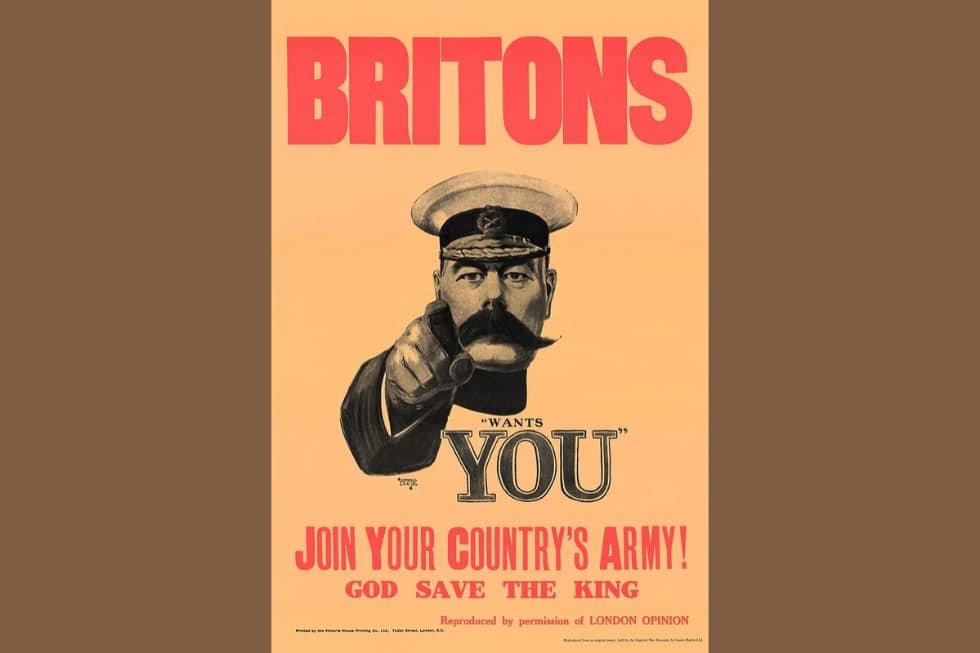



On October 7, US Secretary of State Marco Rubio delivered a civilizational speech about the West. The Athens Acropolis was in the background, emphasizing his words’ meaning. Although Rubio’s address represented a counterbalance to US Vice President JD Vance’s Munich speech, which accused Europeans of betraying their own values, the difference lay more in tone than in substance. While extending an olive branch to Europe, Rubio nonetheless made a call for the continent to “emerge from its long slumber” and take part in a Western renewal built on power, industry and defense.
Liberal internationalism and the pursuit of national power
Rubio’s message presented a vision centered on Western civilization’s shared historical heritage, strength and the pursuit of power. His words challenged liberal internationalism on several fundamental grounds.
Firstly, by praising national sovereignty over the idea that states can advance their interests and manage common problems by accepting international rules, institutions and, in some cases, constraints on their unilateral freedom of action. Secondly, by attacking the notion that a country’s international conduct should transcend national interest by also pursuing international law and international responsibilities. Thirdly, by emphasizing Western particularism over universal principles, which by extension includes universal liberal values. Fourthly, by calling for the “unapologetic pursuit of national power” as an instrument of renewed Western greatness, thus superseding a rules-based international order.
In order to contextualize Rubio’s speech and his implisive dismissiveness of the international liberal order, an overview of Western civilization is needed. Such civilization resulted from the interweaving of the Classical tradition, meaning Greek and Roman civilizations, and the Judeo-Christian world. Several instances could have aborted the emergence of such a civilization or, once it existed, caused it to simply disappear.
Contrafactual history
The first such instance came with the Persian invasion of Greece in 480–479 BC. In British historian and writer Tom Holland’s words:
As subjects of a foreign king, the Athenians would never have had the opportunity to develop their unique democratic culture. Much that made Greek civilization distinctive would have been aborted. The legacy Rome inherited and passed on to modern Europe would have been immeasurably impoverished. Not only would the West have lost its first struggle for independence and survival, but it is unlikely, had the Greeks succumbed to Xerxes’ invasion, that there would ever have been such an entity as “the West” at all.
But the Roman part of the story could have been aborted as well if, instead of a “Carthago delenda est,” there had been a “Roma delenda est.” That is, if instead of Rome prevailing over Carthage in the Punic Wars of 264–164 BC, the opposite had happened, as it closely did. Meaning, a similar destruction but in the opposite direction, in which case there would have never been a Classical tradition.
Meanwhile, the Jews might have never returned from their imprisonment in Babylon in 538 BC and would not have established a temple-centric and national religion in Judea. Similarly, Christianity might never have become what it did if Saint Paul the Apostle had not converted to this new religion, transforming a localized Jewish sect into a universal religion. Nor would Christianity and the Roman Empire have merged if Emperor Constantine had not prevailed in the civil war that took place within the so-called Roman Tetrarchy and converted to Christianity upon winning the Battle of the Milvian Bridge in the Fourth Century AD.
Tons of so-called “contrafactual history” could be written in relation to this subject, where other “plausible worlds” could have emerged. In the end, though, a very particular mixture of traditions and knowledge survived against all odds and became the essence of Western Civilization.
The traumatic amalgamation of the West’s building blocks
However, the amalgamation of these building blocks was traumatic, setting in motion, for the first time, what would become its main trait through history: fracture and conflict. Not only did its Judeo-Christian constituent elements enter into contention, but so did Christianity and Classical legacy (meaning, the Greco-Roman inheritance).
The fracture between Christianity and Judaism is one of the most consequential developments of Western civilization. Although Christianity emerged from Judaism, it evolved into a universal religion. After Saint Paul’s decisive theological transformation, claims to truth and salvation no longer depended on belonging to the Jewish people or observing Jewish law. Moreover, in the second century AD explicit Christian claims that Jews collectively bore responsibility for Christ’s death began to take shape, as so did the notion of deicide — the killing of God.
Emperor Constantine’s support for Christianity, followed by Emperor Theodosius’s establishment of Christianity as the Roman Empire’s official religion in the fourth century, radically changed the balance of power between both religions. The universalizing impulse that enabled Christianity to transcend ethnic boundaries began coexisting with an increasingly exclusive claim to religious truth supported by the power of the State. Christian supremacy, indeed, could now be enforced through institutions and law, thus marginalizing and discriminating against Jews.
But this bitter contention between Christianity and Judaism was replicated by the one held between Christianity and the Classical World. Christian emperors and bishops tried their best to erase the pagan inheritance embedded in the Classical legacy. In British journalist and author Catherine Nixey’s words:
This was a war. The struggle to convert the empire [into Christianity] was nothing less than a battle between good and evil, between the forces of darkness and those of light. It was a battle between God and Satan himself … This is a story of forced conversion and government persecution. It is a story in which great works of art are destroyed, buildings are defaced and liberties are removed. It is a story in which those who refused to convert where outlawed and, as the persecution deepened, were hounded and even executed by zealous authorities.
What little survived
Ironically enough, Christian monasteries in Western Europe became instrumental in preserving what remained of the Classical knowledge. In a world of illiterate warlords and populations, monks were expected to know how to read. Moreover, according to the Benedictine rule, they were compelled to read to combat idleness, the enemy of the soul. This brought with it an extraordinary chain of consequences.
Reading required books and, as vestiges of book markets fell apart, monks had to copy those that they already possessed. Moreover, as papyrus makers had long vanished, the monks were forced to convert animal skins into writing surfaces. As a result, the contents of perishable papyri were copied into more durable parchments. So it was that, even abhorring pagan classical knowledge and seeing the process of copying as a low-class activity formerly carried out by slaves, the monks became the main preservers of the knowledge of antiquity within Western Europe. At least until between the sixth century and the middle of the eighth, when Greek and Latin classics ceased to be copied at all.
In the 15th century, the Renaissance came into being. As the word implies, it was a re-naissance of classical antiquity. However, what was left of the Classical legacy since the West came into being was not much. According to Nixey: “Only one percent of Latin literature survived the centuries. Ninety-nine percent was lost.” American scholar Stephen Greenblatt, on his part, says:
Everything that has reached to us is a copy. And these copies represent only a small portion of the works of the most celebrated writers of antiquity. Of Aeschylus’ eighty or ninety plays and the roughly hundred twenty by Sophocles, only seven each survived…At the end of the fifth century BC an ambitious literary editor known as Stobaeus compiled an anthology of prose and poetry by the ancient world’s best authors: out of 1,430 quotations, 1,115 are from works that are now lost.
From chaos to Charlemagne’s new Roman empire
However, fracture and conflict within the Western World not only encompassed its building blocks but also its subsequent history. The dissolution of Roman authority in the West, in the fifth century, translated into an age of chaos, political fragmentation and dynastic warfare. Although the Roman imperial ideal survived and the Christian Church provided a common religious framework, order became impossible to attain. This was because no single political authority was widely recognized, and military success was the only way to secure territory.
But then, something unexpected materialized. By the 790s, Charlemagne had been able to acquire and rule an empire that stretched from Barcelona to the Danube, and from Lombardy to the Baltic Sea. Only the British Isles and Muslim-controlled Spain remained beyond his control. In 800, when the Pope placed the imperial crown on Charlemagne’s head, the Roman imperial ideal and the Christian Church’s conferred legitimacy converged, restoring order, stability and common rules within Western Europe. Not surprisingly, his reign was baptized a “Roman” empire.
Had this Carolingian empire survived, Western history could have evolved differently. That is, much like China’s unification under a centralized Empire during the Qin and Han dynasties in the second century BC. Again, another plausible world could have taken shape. However, under established Frankish inheritance practice, the realm had to be divided among the sons. And although Charlemagne had only one surviving son who received the realm intact, the latter was in turn succeeded by various sons. Hence, subsequent divisions upon divisions tore the West to pieces, dismembering what could have been a mighty and unified empire. Even though some time later German monarchs replicated this “Roman” imperial precedent, theirs would pale in comparison to Charlemagne’s attainment.
Fracture and conflict
From then on, and for more than a millennium, fracture and conflict would remain unrestrained. Wars between Western powers became the norm. In broad strokes, this countless list ran from the Guelph-Ghibelline conflicts and the Anglo-French War of the high medieval age to the Hundred Years’ War in the late Middle Ages. From the Italian Wars, the Wars of Reformation and the Eighty Years’ War during the Renaissance, to the Thirty Years’ War, the Franco-Dutch War and the Spanish Succession War in the 17th century. From the Austrian Succession War, the Seven Years’ War and the French Revolutionary Wars in the 18th century, to the Napoleonic Wars and the European wars of national independence and unification in the 19th century. The 20th century brought national conflicts to a paroxysm with the First and Second World Wars. On top of that, European powers fought multiple colonial wars in the 17th and 18th centuries, including those between the Dutch and the Portuguese, the Dutch and the British, and the British and the French. However, the complete list, as said before, is immensely larger.
In the pursuit of power maximization in its different forms, including dynastic and territorial expansion and, later, mercantilist and colonial gains, Western powers confronted one another repeatedly. As nationalism and the modern nation-state developed in the 19th century, the term “national interest” became an established political expression. This expression displaced older formulations with similar meanings, such as “the will of the Prince,” “dynastic interest” or “raison d’état,” all of which aimed to justify political and military actions on security and power grounds. As such, they often became catchwords for justifying war.
The longest sustained peace period
Suddenly, however, something extraordinary happened. In the aftermath of the Second World War, the United States and Western Europe were able to build an unprecedented system of political, economic and military cooperation. Bretton Woods, the Marshall Plan, NATO, and the network of American alliances, European integration and the multilateral system helped create a cohesive Western community built around shared values and a rules-based international order.
Despite multiple serious challenges, this Liberal International Order survived for eight decades. During those 80 years, it preserved peace among its members. A kind of peace not simply resulting from a temporary balance of power, but from a substantive transformation in the political relationships among Western states, where former enemies were transformed into partners in the search for a common purpose. Actually, this became the longest sustained peace period among major Western powers in modern and recorded history.
Moreover, within that system the United States was able to attain a stage in which its supremacy over the Western community was overwhelmingly accepted as both benign (due to self-restraint in relation to other members of the community) and legitimate. In fact, it represents the most successful hegemonic project in history if we accept the following definition of hegemony: “The emphasis is on how a particular conception of world order is created and sustained through a myriad of agencies and organizations, and the incorporation of many different interests into an overreaching political project.”
The relics of a past that never was
The long pre-1945 Western historical period is precisely the one that Rubio admires so much and praises when referring to shared historical heritage, strength and the pursuit of power. In contrast, there is the derided Liberal International Order that Europe should get rid of by awakening “from its long slumber.” His call for an “unapologetic pursuit of national power” as an instrument of renewed Western greatness is precisely the recipe that led to countless Western wars, including the two world wars of the 20th century.
Rubio’s speech could have had a completely different meaning if it had included references to the 1215 Magna Carta, the 1628 Petition of Right, the 1689 Bill of Rights, the United States’ Declaration of Independence, Constitution and Bill of Rights, or the French Declaration of the Rights of Man and of the Citizen, among other similar fundamental Western documents where human dignity and the control of absolute power were highlighted. However, his words essentially extolled might and untamed power.
For countries outside the Western sphere, the Liberal International Order had much to criticize, but for those inside it, particularly the US, it represented a golden era. Through their emphasis on the “unapologetic pursuit of national power” or through actions such as legitimizing and seeking to empower Germany’s ultra-right Alternative fur Deutschland (AfD), considered a neo-Nazi extremist organization, US President Donald Trump, Rubio and the rest are shortsightedly courting disaster. By seeking the relics of a past that never was, they may be turning back the clock of Western history to times of political fragmentation and warfare.
[Kaitlyn Diana edited this piece.]
The views expressed in this article are the author’s own and do not necessarily reflect Fair Observer’s editorial policy.
Are Europe’s Cast of Fallen Angels Preparing the Apocalypse?
The Devil’s Advocate conducts a canonization inquiry in reverse, applying it to today’s political leaders. Marco Rubio’s Athens speech, read...
Western Supremacy, Chinese Supremacy: Tracing 500 Years of Global Power
As the West’s global dominance declines and China’s increases, the balance of power is shifting. The debate over Western dominance...

A Disquieting Read: Reflections on Western Certainty in a Multipolar World
Authoritarian cooperation is reshaping the global order as liberal democracy declines worldwide, with the US playing a leading role in...

Support Fair Observer
We rely on your support for our independence, diversity and quality.
For more than 10 years, Fair Observer has been free, fair and independent. No billionaire owns us, no advertisers control us. We are a reader-supported nonprofit. Unlike many other publications, we keep our content free for readers regardless of where they live or whether they can afford to pay. We have no paywalls and no ads.
In the post-truth era of fake news, echo chambers and filter bubbles, we publish a plurality of perspectives from around the world. Anyone can publish with us, but everyone goes through a rigorous editorial process. So, you get fact-checked, well-reasoned content instead of noise.
We publish 3,000+ voices from 90+ countries. We also conduct education and training programs
on subjects ranging from digital media and journalism to writing and critical thinking. This
doesn’t come cheap. Servers, editors, trainers and web developers cost
money.
Please consider supporting us on a regular basis as a recurring donor or a
sustaining member.
Will you support FO’s journalism?
We rely on your support for our independence, diversity and quality.





Comment