





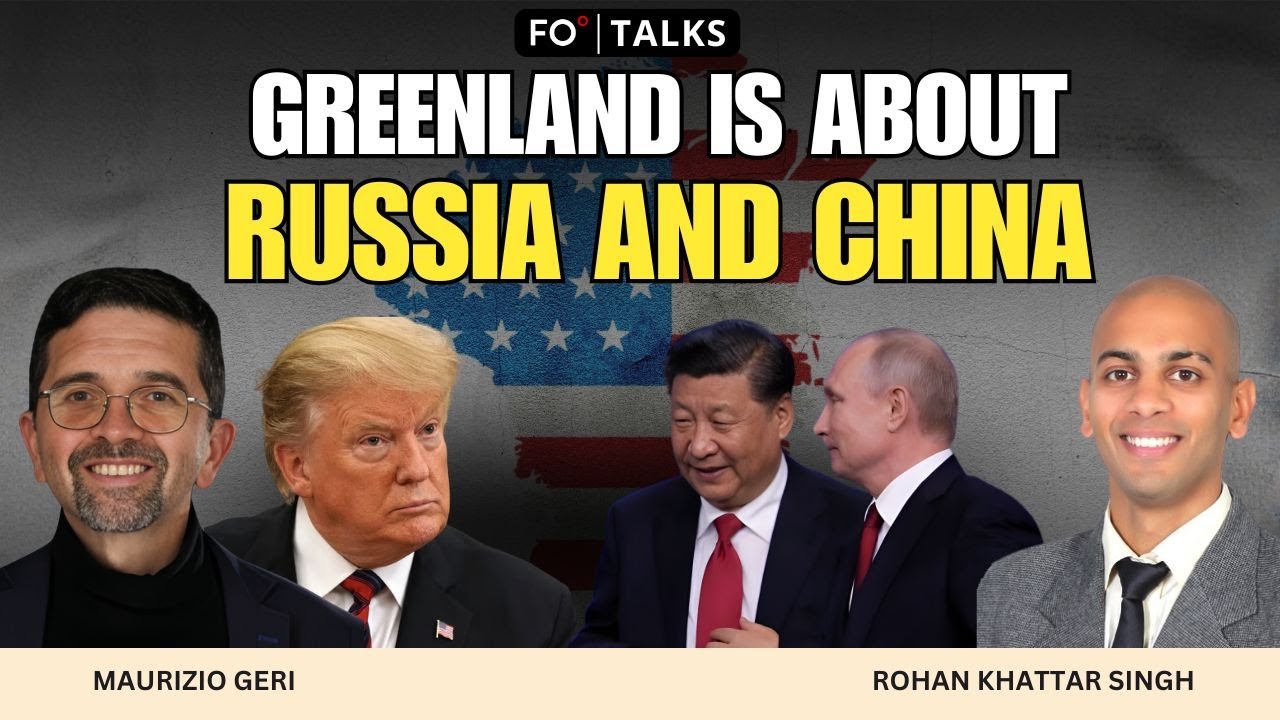
Fair Observer’s Video Producer Rohan Khattar Singh speaks with Maurizio Geri, an EU Marie Curie Global Fellow and Italian Navy Reservist POLAD (Political Advisor), about why the Arctic is moving from peripheral geography to strategic center stage. As the Earth warms, sea routes, resources and military operating space expand in the far north. Geri believes that physical and systemic shifts help explain US President Donald Trump’s repeated fixation on Greenland, and why the Arctic is becoming a new arena of “great power competition.”
Climate change turns the map into strategy
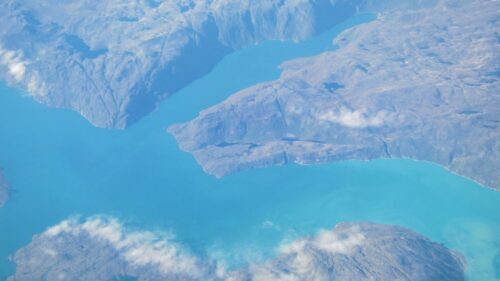
Geri frames climate change not as a distant environmental story but as a near-term driver of geopolitics. As ice coverage recedes, the Arctic becomes more navigable and contestable. That, he argues, changes how the United States thinks about defense. Washington’s traditional Grand Strategy focused on preventing any rival from dominating Eurasia either in the East or West. Now the Northern approach matters in ways it once did not, because threats can arrive by sea routes also from the North, and by missile trajectories that run across the polar region.
Khattar Singh presses him to translate this into policy, and Geri points to Trump’s interest in large-scale missile defense. He portrays the “Golden Dome” idea as an attempt to harden the Western Hemisphere against new vectors of attack, with spillover benefits for NATO allies. If the Arctic becomes a corridor rather than a barrier, Greenland’s location starts to look like infrastructure, not just territory.
Why Trump makes it louder than past presidents
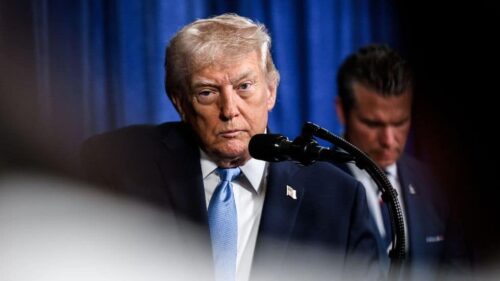
Khattar Singh asks why Trump is uniquely public and seemingly insistent about Greenland compared with previous US presidents. Geri answers that the underlying strategic logic has been building for years, but Trump amplifies it through a negotiating style that is explicitly “transactional” and deliberately unpredictable. In Geri’s telling, Trump escalates rhetorically to shift the bargaining range, then seeks concessions that look disproportionate to the initial ask.
Game theory helps explain the pattern, especially the Prisoner’s Dilemma. Geri highlights that Trump behaves like a player who prefers defection over cooperation to secure the best individual outcome, even if the posture looks abrasive. Still, there is a distinction between democracies and dictatorships. Democratic leaders face electoral accountability. Dictators answer primarily to a narrower elite. If voters come to believe their interests are being ignored, they can remove leaders, and democratic constraint ultimately shapes how far escalation can go.
Russia, China and the rules of the Arctic
The conversation then widens from Trump’s tactics to the structure of Arctic competition. Khattar Singh and Geri emphasize that the legal framework matters. Under the UN Convention on the Law of the Sea, the Arctic’s coastal states have special rights in their exclusive economic zones, and the Arctic Council (comprising Canada, Denmark, Finland, Iceland, Norway, Russia, Sweden and the US) has operated since the 1990s as a forum to manage disputes. China is not an Arctic littoral power, but it holds observer status and has pursued a long-term presence, including a “Polar Silk Road” announced in 2016. It also describes itself as a “near-Arctic state.”
Khattar Singh adds that after Russia’s 2022 invasion of Ukraine, Moscow expanded its northern military footprint, creating roughly 19 to 21 new stations near the Arctic. Geri treats that buildup, plus China’s economic entry strategy, as the practical challenge for Western planners. Europe’s problem is not a lack of rhetoric about law and norms, but the speed of decision-making. He argues that the European Union’s bureaucratic constraints slow strategic adaptation, and that in a world where rivals violate rules, strict rule-following can become a disadvantage.
Greenland’s future and Europe’s defense test
The most contentious question is why Greenland cannot simply remain Danish territory inside NATO, with the US increasing basing and coordination. The issue is burden-sharing and credibility. Geri argues that the US has protected Europe for decades, and that Washington now wants Europeans to assume real leadership for the continent’s defense, not only through higher spending but through faster political coordination and stronger capabilities.
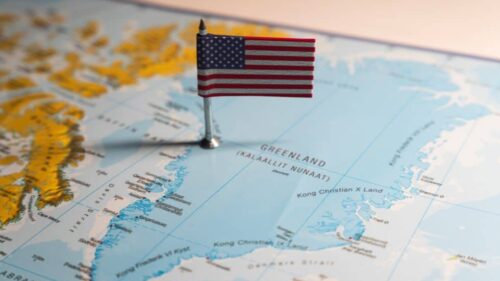
From there, Greenland becomes both a symbol and instrument. Denmark’s capacity cannot match the US in a high-stakes contest over resources, surveillance and military access. He also emphasizes Greenland’s scale, roughly two million square kilometers, and its small population of around 50,000 indigenous residents, easy to be controlled by a rival if not protected with the right means. In Geri’s view, Greenland “makes sense geographically” as part of the North American strategic space, and its people might weigh protection and investment differently as competition intensifies.
What might an actual deal look like? Geri suggests a spectrum, from a lease arrangement to a broader economic and military exchange, but he stresses that any sustainable outcome must involve Greenlanders themselves, not only Copenhagen and Washington. He then looks beyond the Arctic, predicting that similar rivalries will extend into the Antarctic and even into space as states compete for new resource frontiers. He closes on a European challenge: whether the EU can develop the long-term strategic vision and defense integration needed to compete with authoritarian powers, while still working with the US.
On the preceding question, Khattar Singh asks if other NATO members might someday trade territory for protection. Geri acknowledges that “everything is possible” in an interconnected era, but argues Greenland is a different beast because of its autonomy, location and resource potential. His bottom line is that the Arctic is no longer a frozen buffer. It is becoming a frontline, and Greenland sits where geography, law, security and bargaining power collide.
[Lee Thompson-Kolar edited this piece.]
The views expressed in this article/video are the author’s own and do not necessarily reflect Fair Observer’s editorial policy.






























Comment