


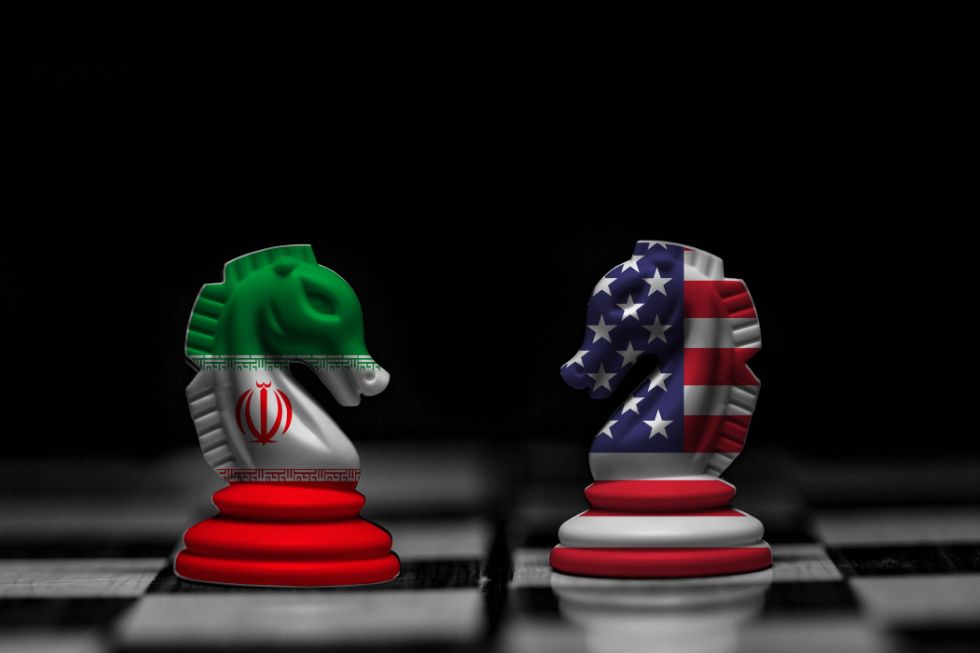



A resolute and effective retaliation by Iran to the hegemonic military aggression of the US and Israel will have far-reaching implications for the post-war geopolitical order, which is already in a state of fragmentation and will unravel faster after this war. This retaliation will play a crucial role in shaping global alignments that states had already begun to revise and rework in a tumultuous world prior to this conflict.
Everyone is anticipating this reshaping and discussing potential changes. However, one aspect that is often missing from these discussions might, perhaps, trigger the most radical shift in global strategic perception since the establishment of the post-war order and the post-USSR singular hegemony of the US in the world.
The US post-war dominance and security umbrella
After defeating Germany and Japan comprehensively — jointly with the USSR, UK and resistance forces — and deliberately demonstrating the previously unknown and unimaginable destructive power of its nuclear arsenal, the US managed to establish its dominance and made itself indispensable to a number of countries in Europe and Asia. The US did this through effective ideological propaganda and paternalistic dollar diplomacy. The countries’ total dependence on the US created a global security net of US military bases on the soil of both wartime allies and enemies.
This formidable protective umbrella of the US gave the people and rulers of these countries a tremendous sense of security, so much so that most of them chose (or were coerced) to remain militarily weak. The strangest aspect was the collective psyche of Germany and Japan. These two nations overnight swallowed their utterly mutilated and trampled national honor and pride, permanently surrendered much of their strategic independence along with a large part of foreign policy and happily agreed to become loyal vassals of the US empire.
After the collapse of the rival USSR empire, the US security umbrella added more spokes to its canopy by establishing additional military bases in Eastern Europe and the Middle East. Now, there was no one left to challenge its military might in the world, and there seemed to be no one on the horizon. This reality thus became the “end of history.”
Donald Trump as the architect
While it is always a collective effort of many officials that sets the scene and the meeting of many powerful minds that culminates in a major foreign policy decision, such as a war, the final decision always rests with the chief executive of a country. Irrespective of what transpired behind closed doors, therefore, Donald Trump, as the President and the Chief Commander of the US, will be remembered for causing this profound shift in geopolitics and military strategy.
Trump’s first presidency, and indeed his second, have been marked by a distinctive approach to foreign policy — often characterized by unpredictability, transactional diplomacy and an “America First” stance that challenged longstanding alliances and global norms. His administration’s posture toward Iran has been uncompromising, escalating tensions through a combination of economic sanctions, covert operations and overt military threats. The decision to engage in or permit military aggression against Iran was a culmination of this hardline stance.
Iran’s shattering of the US security myth
Within just eight days of the US and Israel launching this unprovoked and unjustifiable military aggression on February 28, 2026 — following years of relentless covert warfare and a short 12-day war in 2025 against Iran — Iran has permanently shattered the 80-year-old post-war myth of the US as a protective shield. When pushed to the wall, Iran has blown a wide, gaping hole in the sense of security of host nations by targeting all US military bases in the region, without intending to harm the nonwarring host countries themselves. It is a forced choice in wartime whose legitimacy, in my view, cannot be questioned.
The future question is even more unsettling. At best, Iran is just a middle power. What if tomorrow, China or Russia engages in a military confrontation with the US? Both are major military powers with far superior arsenals and war machines compared to Iran. What will happen to South Korea, Japan and other Asian countries, as well as the US’s European allies, if they choose to stay out of direct involvement in such a war? The answer is now clear: They will become legitimate military targets, regardless of their desire to avoid that outcome.
NATO countries will likely unite, but non-NATO countries also have little choice now. They all must sail together or sink together. Call it a catch-22 or a Faustian bargain — embrace its risks willingly or regret it as a necessary evil — you can’t have your cake and eat it too.
US military bases can no longer be seen as valuable security assets; they’ve become dangerous liabilities for those who host or plan to host them. Iran’s decisive and categorical targeting of US Middle East military bases has radically shifted the geopolitical landscape — so much so that I will call February 28, 2026, a turning point in world history.
The new reality of global involvement and consequences
Nothing is certain yet regarding the final outcome, aftershocks and side effects of this war. However, what is clear is that you can no longer deceive yourself with passivity or get voyeuristic pleasure from the chaos. The days of schadenfreude (pleasure from someone else’s pain) are over. The writing is on the wall, and the message is loud and clear. If you’re involved in the game, then you’re truly part of it. It doesn’t matter whether you choose to play or not; the same rules apply. If you lend your shoulder to fire, you will be fired at. And in the game of giants, you could suffer a deadly blow even before a single shot is fired from your side.
Many may have planned this, but Iran has demonstrated it in practice and shown the world the way. For striking a deal with the devil, you must make sacrifices. Your death, destruction, pain and suffering are certain. Fabled US security cover will not save you but bring disaster to your home. So, you’d better be ready and brace yourself for fatal blows!
[Kaitlyn Diana edited this piece.]
The views expressed in this article are the author’s own and do not necessarily reflect Fair Observer’s editorial policy.
The Iran War: How Does It End?
The US and Israel started the war in Iran without coordinated objectives. How does such a war end? Between chaos...

The Gulf Confronts an Ugly Truth About Aligning With America
Iran’s attacks on bases across the Gulf, including the United Arab Emirates, Qatar, Bahrain, Saudi Arabia and Oman, have shattered...
Why Legality Matters: The Crucial Role of Law in Global Order
The Trump administration’s disregard for international and domestic law threatens the very foundations of the rules-based order that has underpinned...

Support Fair Observer
We rely on your support for our independence, diversity and quality.
For more than 10 years, Fair Observer has been free, fair and independent. No billionaire owns us, no advertisers control us. We are a reader-supported nonprofit. Unlike many other publications, we keep our content free for readers regardless of where they live or whether they can afford to pay. We have no paywalls and no ads.
In the post-truth era of fake news, echo chambers and filter bubbles, we publish a plurality of perspectives from around the world. Anyone can publish with us, but everyone goes through a rigorous editorial process. So, you get fact-checked, well-reasoned content instead of noise.
We publish 3,000+ voices from 90+ countries. We also conduct education and training programs
on subjects ranging from digital media and journalism to writing and critical thinking. This
doesn’t come cheap. Servers, editors, trainers and web developers cost
money.
Please consider supporting us on a regular basis as a recurring donor or a
sustaining member.
Will you support FO’s journalism?
We rely on your support for our independence, diversity and quality.





Comment