





In the first chapter of his 1874 novel, The Gilded Age, Mark Twain offered a telling observation about the connection between past and present: “History never repeats itself, but the… present often seems to be constructed out of the broken fragments of antique legends.”
Among the “antique legends” most helpful in understanding the likely outcome of the current US intervention in Iran is the Suez Crisis of 1956, which I describe in my new book, Cold War on Five Continents. After Egyptian leader Gamal Abdel Nasser nationalized the Suez Canal in July 1956, a joint British–French armada of six aircraft carriers destroyed Egypt’s air force, while Israeli troops smashed Egyptian tanks in the sands of the Sinai Peninsula. Within less than a week of war, Nasser had lost his strategic forces and Egypt seemed helpless before the overwhelming might of that massive imperial juggernaut.
But by the time Anglo-French forces came storming ashore at the north end of the Suez Canal, Nasser had executed a geopolitical masterstroke by sinking dozens of rusting ships filled with rocks at the canal’s northern entrance. In doing so, he automatically cut off Europe’s lifeline to its oil fields in the Persian Gulf. By the time British forces retreated in defeat from Suez, Britain had been sanctioned at the United Nations, its currency was at the brink of collapse, its aura of imperial power had evaporated and its global empire was heading for extinction.
Historians now refer to the phenomenon of a dying empire launching a desperate military intervention to recover its fading imperial glory as “micro-militarism.” And coming in the wake of imperial Washington’s receding influence over the broad Eurasian land mass, the recent US military assault on Iran is starting to look like an American version of just such micro-militarism.
Even if history never truly repeats itself, right now it seems all too appropriate to wonder whether the current US intervention in Iran might indeed be America’s version of the Suez Crisis. And should Washington’s attempt at regime change in Tehran somehow “succeed,” don’t for a second think that the result will be a successfully stable new government that will be able to serve its people well.
Seventy years of regime change
Let’s return to the historical record to uncover the likely consequences of regime change in Iran. Over the past 70 years, Washington has made repeated attempts at regime change across the span of five continents — initially via CIA covert action during the 44 years of the Cold War and, in the decades since the end of that global conflict, through conventional military operations. Although the methods have changed, the results — plunging the affected societies into decades of searing social conflict and incessant political instability — have been sadly similar. This pattern can be seen in a few of the CIA’s most famous covert interventions during the Cold War.
In 1953, Iran’s new parliament decided to nationalize the British imperial oil concession there to fund social services for its emerging democracy. In response, a joint CIA-MI6 coup known as Operation Ajax ousted Mohammad Mosaddeq, the reformist prime minister, and installed the young Shah, then just 34 years old, in power as the country’s ruler. Unfortunately for the Iranian people, the Shah proved to be a strikingly inept leader who transformed his country’s oil wealth into mass poverty, thereby precipitating Iran’s 1979 Islamic Revolution.
By 1954, Guatemala was implementing a historic land reform program that was investing its mostly Mayan indigenous population with the requisites for full citizenship. Unfortunately, a CIA-sponsored invasion known as Operation PBSuccess installed a brutal military dictatorship under the leadership of Colonel Carlos Castillo Armas, plunging the country into 30 years of civil war that left 200,000 people dead in a population of only five million.
Similarly, in 1960, the Congo had emerged from a century of brutal Belgian colonial rule by electing a charismatic leader, Patrice Lumumba. But the CIA soon ousted him from power under Project Wizard, replacing him with Joseph Mobutu, a military dictator whose 30 years of kleptocracy precipitated violence that led to the deaths of more than five million people in the Second Congo War (1998–2003) and continues to take a toll to this day.
In more recent decades, there have been similarly dismal outcomes from Washington’s attempts at regime change via conventional military operations. After the September 11 terrorist attacks in 2001, US forces toppled the Taliban regime in Afghanistan. Over the next 20 years, Washington spent $2.3 trillion — and no, that “trillion” is not a misprint! — in a failed nation-building effort that evaporated when the resurgent Taliban captured the capital, Kabul, in August 2021, plunging the country into a mix of harsh patriarchy and mass privation.
In 2003, under Operation Iraqi Freedom, Washington invaded Iraq in search of nonexistent nuclear weapons. It sank into the quagmire of a 15-year war that led to the slaughter of a million people and left behind an autocratic government that became little more than an Iranian client state. And in 2011, the US led a NATO air campaign called Operation Unified Protector that toppled Colonel Muammar Gaddafi’s radical regime in Libya, precipitating seven years of civil war and ultimately leaving that country divided between two antagonistic failed states.
When Washington’s attempts at regime change fail, as they did in the Bay of Pigs invasion of Cuba in 1961 and the proposed invasion of Venezuela last year, that failure often leaves autocratic regimes even more entrenched, with their control over the country’s secret police strengthened and an ever-tighter death grip on the country’s economy.
Why, you might wonder, do such US interventions invariably seem to produce such dismal results? For societies struggling to achieve a fragile social stability amid volatile political change, external intervention, whether covert or open, seems to invariably be the equivalent of hitting an antique pocket watch with a hammer and then trying to squeeze all its gears and springs back into place.
The Iran war’s geopolitical consequences
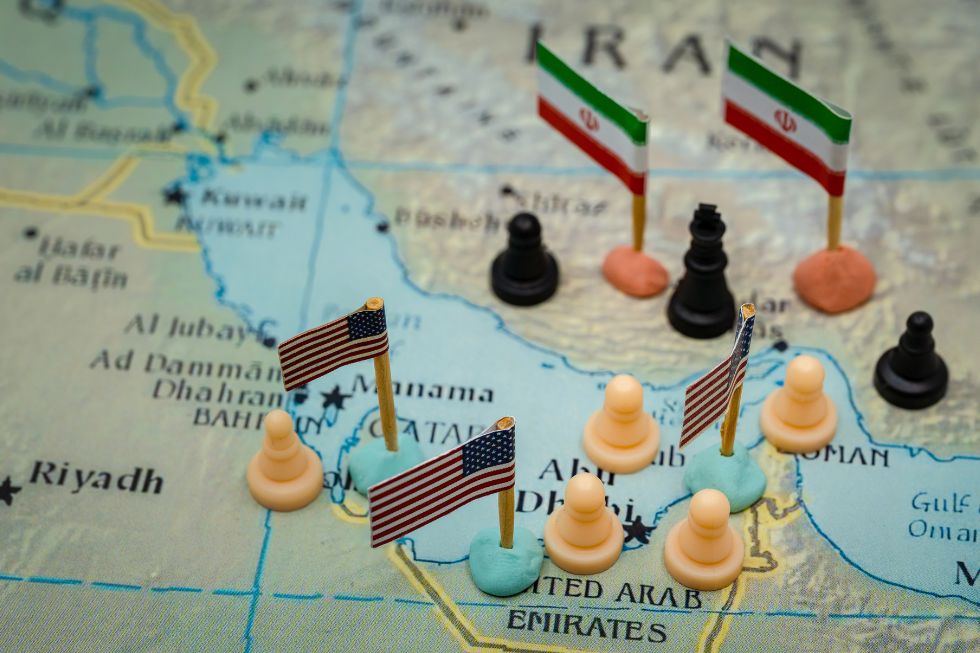
By exploring the geopolitical implications of Washington’s latest intervention in Iran, it’s possible to imagine how US President Donald Trump’s war of choice might well become Washington’s very own version of the Suez Crisis.
Just as Egypt snatched a diplomatic victory from the jaws of military defeat in 1956 by shutting the Suez Canal, so Iran has now closed off the Middle East’s other critical chokepoint. In the first week of war, Iran fired its Shahed drones at five freighters in the Strait of Hormuz (through which 20% of global crude oil and natural gas regularly passes) and at petroleum refineries on the southern shore of the Persian Gulf. Iran’s ongoing drone strikes have blocked more than 90% of tanker departures from the Persian Gulf and shut down the massive Qatari refineries that produce 20% of the world supply of liquified natural gas, sending natural gas prices soaring by 50% in much of the world and by 91% in Asia. The price of gasoline in the US is heading for $4 a gallon and the cost of oil is likely to reach a staggering $150 per barrel in the near future.
Moreover, through the conversion of natural gas to fertilizer, the Persian Gulf is the source for nearly half the world’s agricultural nutrients. The prices are soaring by 37% for urea fertilizer in markets like Egypt and threatening both spring planting in the Northern Hemisphere and food security in the Global South.
The extraordinary concentration of petroleum production, international shipping and capital investment in the Persian Gulf makes the Straits of Hormuz not only a chokepoint for the flow of oil and natural gas but also for the movement of capital for the entire global economy. To begin with the basics, the Persian Gulf holds about 50% of the world’s proven oil reserves, estimated at 859 billion barrels or, at current prices, about $86 trillion.
To give you an idea of the scale of capital concentration in the region’s infrastructure, the national oil companies of the Gulf Cooperation Council invested $125 billion in their production facilities in 2025 alone, with plans to continue at that rate for the foreseeable future. To keep the global oil tanker fleet of 7,500 vessels that largely serves the Persian Gulf afloat, it costs nearly $100 million for a single large “Suezmax” tanker. There are about 900 of these normally on the high seas, worth a combined $90 billion (with frequent replacements required by the corrosion of steel in harsh maritime conditions). Moreover, Dubai has the world’s busiest international airport at the center of a global network — with 450,000 flights annually — now largely shut down by Iranian drone strikes.
Despite all the White House media hype about the terrible swift sword of America’s recent airstrikes, the 3,000 US–Israeli bombing runs against Iran (which is two-thirds the size of Western Europe) in the war’s first week pale before the 1,400,000 bombing sorties over Europe during World War II. The striking contrast between those numbers makes the current US air attacks on Iran seem, from a strategic perspective, like shooting at an elephant with a BB gun.
Moreover, the US has limited stocks of about 4,000 interceptor missiles, which cost up to $12 million each and can’t be rapidly mass-produced. By contrast, Iran has an almost limitless supply of some 80,000 Shahed drones, 10,000 of which it can produce each month for only $20,000 each. In effect, time is not on Washington’s side if this war drags on for more than a few weeks.
Indeed, in a recent interview, pressed about the possibility that Iran’s vast flotilla of slow, low-flying Shahed drones might soon exhaust the U.S. supply of sophisticated interceptor missiles, Pentagon leader General Dan Caine was surprisingly evasive, saying only, “I don’t want to be talking about quantities.”
Whose boots on the ground?
While economic and military pressures build for a shorter war, Washington is trying to avoid sending troops ashore by mobilizing Iran’s ethnic minorities, who make up about 40% of that country’s population. As the Pentagon is silently but painfully aware, US ground forces would face formidable resistance from a million-strong Basij militia; 150,000 Revolutionary Guards trained for asymmetric guerrilla warfare; and Iran’s 350,000 regular army troops.
With other ethnic groups, like the Azeris in the north, unwilling or — like the Baloch tribes in the southeast, far from the capital — unable to attack Tehran, Washington is desperate to play its Kurdish card, just as it has done for the past 50 years. With a population of 10 million astride the highland borders of Syria, Turkey, Iraq and Iran, the Kurds are the largest ethnic group in the Middle East without their own state. As such, they have long been forced to play the imperial Great Game, making them a surprisingly sensitive bellwether for larger changes in imperial influence.
Although Trump made personal calls to the top leaders in Iraq’s Kurdistan region during the first week of the latest war, offering them “extensive US aircover” for an attack on Iran, and the US even has a military airbase at Erbil, Kurdistan’s capital, the Kurds are so far proving uncharacteristically cautious.
Indeed, Washington has a long history of using and abusing Kurdish fighters, dating back to the days of Secretary of State Henry Kissinger, who turned their betrayal into a diplomatic art form. After he ordered the CIA to stop aiding the Iraqi Kurdish resistance to Saddam Hussein in 1975, Kissinger told an aide: “Promise them anything, give them what they get, and f… them if they can’t take a joke.”
As Iraqi forces fought their way into Kurdistan, killing helpless Kurds by the hundreds, their legendary leader Mustafa Barzani, grandfather of the current head of Iraqi Kurdistan, pleaded with Kissinger, saying, “Your Excellency, the United States has a moral and political responsibility to our people.” Kissinger did not even dignify that desperate plea with a reply and instead told Congress: “Covert action should not be confused with missionary work.”
Last January, in an amazingly ill-timed decision, the Trump White House betrayed the Kurds one time too many, breaking Washington’s decade-long alliance with the Syrian Kurds by forcing them to give up 80% of their occupied territory. In southeastern Turkey, the radical Kurdish PKK Party has made a deal with Turkish Prime Minister Recep Erdoğan and is actually disarming, while Iraq’s Kurdistan region is staying out of the war by respecting a 2023 diplomatic entente with Tehran for a peaceful Iran–Iraq border. Trump has called at least one leader of the Iranian Kurds, who constitute about 10% of Iran’s population, to encourage an armed uprising. But most Iranian Kurds seem more interested in regional autonomy than regime change.
As Trump’s calls upon the Kurds to attack and the Iranian people to rise up are met with an eloquent silence, Washington is likely to end this war with Iran’s Islamic regime only further entrenched, showing the world that America is not just a disruptive power but a fading one that other nations can do without. Over the past 100+ years, the Iranian people have mobilized six times in attempts to establish a real democracy. At this point, though, it seems as if any seventh attempt will come long after the current US naval armada has left the Arabian Sea.
From the granular to the geopolitical
If we move beyond this granular view of Iran’s ethnic politics to a broader geostrategic perspective on the Iran war, Washington’s waning influence in the hills of Kurdistan seems to reflect its fading geopolitical influence across the vast Eurasian land mass. Eurasia remains today the epicenter of geopolitical power, as it has been for the past 500 years.
For nearly 80 years, the United States has maintained its global hegemony by controlling the axial ends of Eurasia through its NATO alliance in Western Europe and four bilateral defense pacts along the Pacific littoral from Japan to Australia. But now, as Washington focuses more of its foreign policy on the Western Hemisphere, US influence is fading fast along the vast arc of Eurasia stretching from Poland through the Middle East to Korea that geopolitical scholars like Sir Halford Mackinder and Nicholas Spykman once dubbed the “rimland” or “the zone of conflict.” As Spykman put it succinctly once upon a time: “Who controls the Rimland rules Eurasia; who rules Eurasia controls the destinies of the world.”
Since the rise of Trump’s America First foreign policy in 2017, major and medium powers along that entire Eurasian rimland have been actively disengaging from US influence. These include Europe, which rearmed; Russia, which challenged the West in Ukraine; Turkey, which has remained neutral in the present war; Pakistan, which allied with China; India, which broke with Washington’s Quad alliance; and Japan, which is rearming to create an autonomous defense policy. That ongoing disengagement is manifest in the lack of support for the Iran intervention, even from once-close European and Asian allies — a striking contrast with the broad coalitions that joined US forces in the 1991 Gulf War and the occupation of Afghanistan in 2002.
With Trump’s micro-militarism in Iran inadvertently but clearly exposing the limits of American power, Washington’s fading influence across Eurasia will undoubtedly prove catalytic for the emergence of a new world order, which is likely to move far beyond the old order of US global hegemony.
Just as Sir Anthony Eden is remembered ruefully today in the United Kingdom as the inept prime minister who destroyed the British Empire at Suez, so future historians may see Trump as the president who degraded US international influence with, among other things, his micro-military misadventure in the Middle East. As empires rise and fall, such geopolitics clearly remains a constant factor in shaping their fate –- a lesson I try to teach in Cold War on Five Continents.
In difficult times like these, when events seem both confused and confusing, Twain’s “broken fragments of antique legends” can remind us of historical analogies like the collapse of the power and influence of Great Britain or the Soviet Union that can help us understand how the past often whispers to the present — as it indeed seems to be doing these days in the Straits of Hormuz.
[TomDispatch first published this piece.]
[Lee Thompson-Kolar edited this piece.]
The views expressed in this article are the author’s own and do not necessarily reflect Fair Observer’s editorial policy.
FO Live: Iran War Analysis — Will the Trump Administration Put Boots on the Ground?
In this episode of FO Live, Atul Singh, Gary Grappo and Glenn Carle examine the escalating US–Israel–Iran war and argue...

Why a Fragmented Iran is Israel’s Greatest Security Threat
The dissolution of the Iranian state into smaller ethnic or sectarian entities is a catastrophic miscalculation in 2026. Rather than...
Guarding the Gates of the Global Fortress: Great Power Rivalry at Global Strategic Chokepoints
Contemporary great power competition is shifting toward strategic “gateways” of the international system — regions where geopolitical influence, economic infrastructure...
For Historians, Was This a Pearl Harbor or a Suez Moment? Part 1
A conversation with Claude about the US–Israeli attack on Iran explores its potential psychological impact on Americans, the growing fracture...

FO° Talks: Will Iran Deploy Thousands of Sea Mines in the Strait of Hormuz?
In this episode of FO° Talks, Rohan Khattar Singh and Abdullah O Hayek discuss the possibility of sea mines in...
Support Fair Observer
We rely on your support for our independence, diversity and quality.
For more than 10 years, Fair Observer has been free, fair and independent. No billionaire owns us, no advertisers control us. We are a reader-supported nonprofit. Unlike many other publications, we keep our content free for readers regardless of where they live or whether they can afford to pay. We have no paywalls and no ads.
In the post-truth era of fake news, echo chambers and filter bubbles, we publish a plurality of perspectives from around the world. Anyone can publish with us, but everyone goes through a rigorous editorial process. So, you get fact-checked, well-reasoned content instead of noise.
We publish 3,000+ voices from 90+ countries. We also conduct education and training programs
on subjects ranging from digital media and journalism to writing and critical thinking. This
doesn’t come cheap. Servers, editors, trainers and web developers cost
money.
Please consider supporting us on a regular basis as a recurring donor or a
sustaining member.
Will you support FO’s journalism?
We rely on your support for our independence, diversity and quality.





Comment