


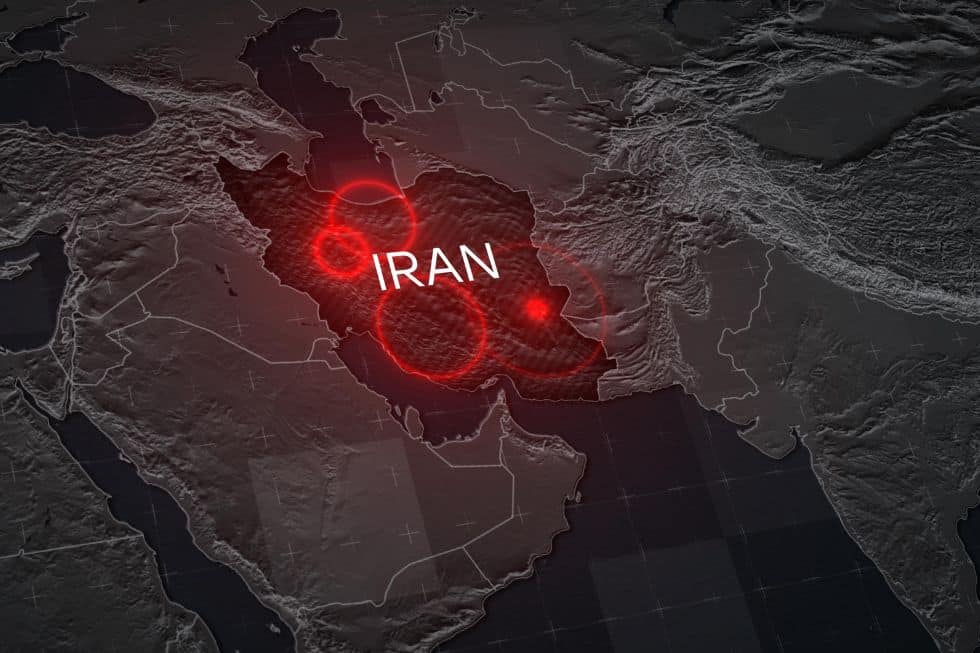


The stated aims of “Operation Epic Fury” — the ongoing strike campaign launched by the US and Israel against Iran — are to topple the Islamic Republic, eliminate Iran’s missile and (non-existent) nuclear programs, and open the door to the people of Iran to install a new leadership in Tehran. The country “will be yours [the Iranian people] to take,” stated US President Donald Trump on February 28, just hours after the operation started. “This will be probably your only chance for generations”, he emphasized.
While these objectives may appeal to those who have long sought an end to the theocratic regime (most Iranians included), the strategic objectives and normative premises underpinning this campaign are undoubtedly flawed. The expectation that a strike campaign can produce meaningful, durable change reflects a profound misunderstanding of international relations by President Trump and his inner circle, and ignorance (or deliberate overlook) of the historical record of foreign-imposed regime changes in the 20th and 21st centuries.
The two-level game in an authoritarian context
Looking at the first issue, it might be worth noting that a foundational concept in International Relations scholarship is Robert Putnam’s “two-level games”. Putnam argued that domestic politics and international relations are inextricably entangled, given that national leaders must win ratification — either formal or informal — from their constituents for the international negotiations in which they take part and the foreign policy objectives they aim to achieve. This concept, which was later elaborated upon and referred to as “double-edged diplomacy,” holds that a nation-state’s behavior is a product of the “game” created simultaneously by its domestic political game and the international context in which it operates.
Such a concept, however, presupposes a degree of domestic accountability of a national government vis-à-vis the people it governs, which is categorically absent in the Iranian case. The Islamic Republic’s government is not obliged to seek or even retain popular support for its foreign policy decisions.
The nationwide crackdowns of January 2018, November 2019, and more recently, the January 2026 uprising, reveal a clear pattern of escalation in which the Islamic Revolutionary Guard Corps’ (IRGC) role has evolved from a part of the state security apparatus to executor of lethal repression against any dissidents and — most significantly — the direct command structure of the country. As Iranian expert Karim Sadjadpour observes:
Five Iranian presidents … have come and gone without bringing meaningful or lasting change to Iran’s power structure: Khamenei and the Revolutionary Guard have grown more powerful over the decades and dominate the country’s byzantine political institutions, as well as the judiciary, media, and surveillance state. Social repression [has] remained constant, regardless of who is president.
In brief, the Iranian regime does not need to win its population’s support — least of all, its approval — for any of the foreign policy decisions and actions it takes. It only needs to survive again, just as it has done for decades. And survival, for the foreseeable future, depends primarily on the continued existence of the IRGC as an institution, not that of its leadership.
Will the IRGC survive the strike campaign?
The IRGC’s constitutional mandate is to ensure the integrity of the Islamic Republic — interpreted as thwarting internal coups, crushing “deviant movements” and preventing any foreign interference that might harm the ideological legacy of the Iranian Revolution of 1979. A mandate which has never been merely rhetorical — and, on the contrary, has been fulfilled fanatically.
As Arab Gulf States Institute senior fellow Ali Alfoneh argues:
Even with Iran’s Supreme Leader, Ayatollah Ali Khamenei, having been killed, the regime would likely endure. Iran’s political system is structured to absorb losses among senior leaders through a form of collective governance in which the president, parliamentary speaker, judiciary chief, and senior representatives of both the IRGC and the regular military administer the state, preserving continuity and preventing a power vacuum.
This institutional resilience is precisely why the Trump administration’s assumption that decapitation strikes will suddenly lead to the collapse of the Iranian regime is historically unfounded.
Far from destabilizing the regime, external military attacks may paradoxically strengthen its grip on the Iranian society — at least temporarily. To maintain control of the country, the IRGC will likely resort to greater, not less, repression of society. The ill-calculated strategy that Iranian civilians will rise up and “finish the job”, as Israeli Prime Minister Netanyahu put it in an AI-generated video address in Farsi to the Iranian people, places an extraordinary burden on a population that has already endured decades of repression, sanctions-driven economic suffering (precisely by the actors which now want it to rise against its oppressors) and violent crackdowns by their own government.
In late December 2025, massive anti-government protests took place across more than 100 cities in Iran. The Iranian regime responded with violent repression, including massacres of protesters. The demand placed on the Iranians then, is to keep risking (and losing) their lives for an uncertain outcome. “We will create the conditions for the brave people of Iran to free themselves from the chains of tyranny,” Netanyahu urged the people of Iran, while the US and Israeli strikes hit hospitals, schools and housing. Trump and Netanyahu warn the Iranian people to “not let this opportunity slip away.” As if the continued existence of the Iranian regime had ever been their choice.
What if the campaign succeeds?
Even if the bombing campaign were to produce a temporary collapse of the Islamic Republic’s formal structures, the historical record on regime change offers little comfort. The cases of Afghanistan, Iraq, and Libya clearly (and painfully) demonstrate that military campaigns and even prolonged occupations do not guarantee that those actors that are removed today will not come back tomorrow (or in a few years’ time). The Taliban’s return to power in Afghanistan in 2021, two decades after their initial removal, is only the most recent example.
Moreover, as former Israeli government adviser, Daniel Levy, has stated:
Israel has no real interest in smooth regime change. [Most Israeli leaders] regard that as a kind of fairytale, though that’s not something Netanyahu and allies might be ready to admit publicly. Israel’s more interested in regime and state collapse. They want Iran to implode, and if the spillover from that takes in Iraq, the Gulf and much of the region, so much the better.
Israel’s — and by extension the US’ — actual interest is, therefore, not the occurrence of a democratic transition in Iran. Rather, a total state and societal collapse of Iran.
The international law implications
Beyond strategic considerations, this military campaign represents a serious violation of international law. The strikes are unquestionably a breach of the UN Charter, which prohibits the use of force against the territorial integrity of sovereign states. And (un)fortunately, it does not contain an exception for regime change, regardless of how insidious the regime might be.
Furthermore, bombing a sovereign country to prompt regime change, in the expectation that its civilians will sacrifice their lives to advance a third country’s foreign policy objectives, is not only a flagrant violation of international law. As the historical record consistently demonstrates, it is among the least effective means of producing the genuine and durable political transformation of a country — and it does nothing to protect the human rights of the Iranian people. Calling for further Iranian civilian suffering to advance the strategic objectives of foreign powers is not solidarity with the Iranian people.
What can we do as observers?
At this crucial time, it is entirely possible (and, I argue, necessary) for us observers outside Iran to hold multiple positions simultaneously.
First, we must vocally oppose the Iranian theocratic regime and denounce the criminal actions of the IRGC. Second, we must support the longstanding democratic aspirations of the Iranian people and their urgent calls for assistance in defending their human rights. And third, we must continue to act as committed defenders of international law, opposing the use of “preemptive” force by foreign powers against the peoples of those countries which they claim to be helping.
And, just as importantly, we should remember that these positions are not mutually exclusive. They are mutually reinforcing.
[Kaitlyn Diana edited this piece.]
The views expressed in this article are the author’s own and do not necessarily reflect Fair Observer’s editorial policy.
Why Legality Matters: The Crucial Role of Law in Global Order
The Trump administration’s disregard for international and domestic law threatens the very foundations of the rules-based order that has underpinned...

A War to End All (Middle East) Wars?
The US and Israel’s strike on February 28 eliminated Iran’s Supreme Leader Ali Khamenei and other top leaders, revealing deep...
For Historians, Was This a Pearl Harbor or a Suez Moment? Part 1
A conversation with Claude about the US–Israeli attack on Iran explores its potential psychological impact on Americans, the growing fracture...

Support Fair Observer
We rely on your support for our independence, diversity and quality.
For more than 10 years, Fair Observer has been free, fair and independent. No billionaire owns us, no advertisers control us. We are a reader-supported nonprofit. Unlike many other publications, we keep our content free for readers regardless of where they live or whether they can afford to pay. We have no paywalls and no ads.
In the post-truth era of fake news, echo chambers and filter bubbles, we publish a plurality of perspectives from around the world. Anyone can publish with us, but everyone goes through a rigorous editorial process. So, you get fact-checked, well-reasoned content instead of noise.
We publish 3,000+ voices from 90+ countries. We also conduct education and training programs
on subjects ranging from digital media and journalism to writing and critical thinking. This
doesn’t come cheap. Servers, editors, trainers and web developers cost
money.
Please consider supporting us on a regular basis as a recurring donor or a
sustaining member.
Will you support FO’s journalism?
We rely on your support for our independence, diversity and quality.





Comment