





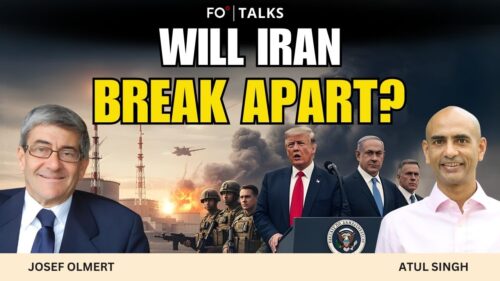
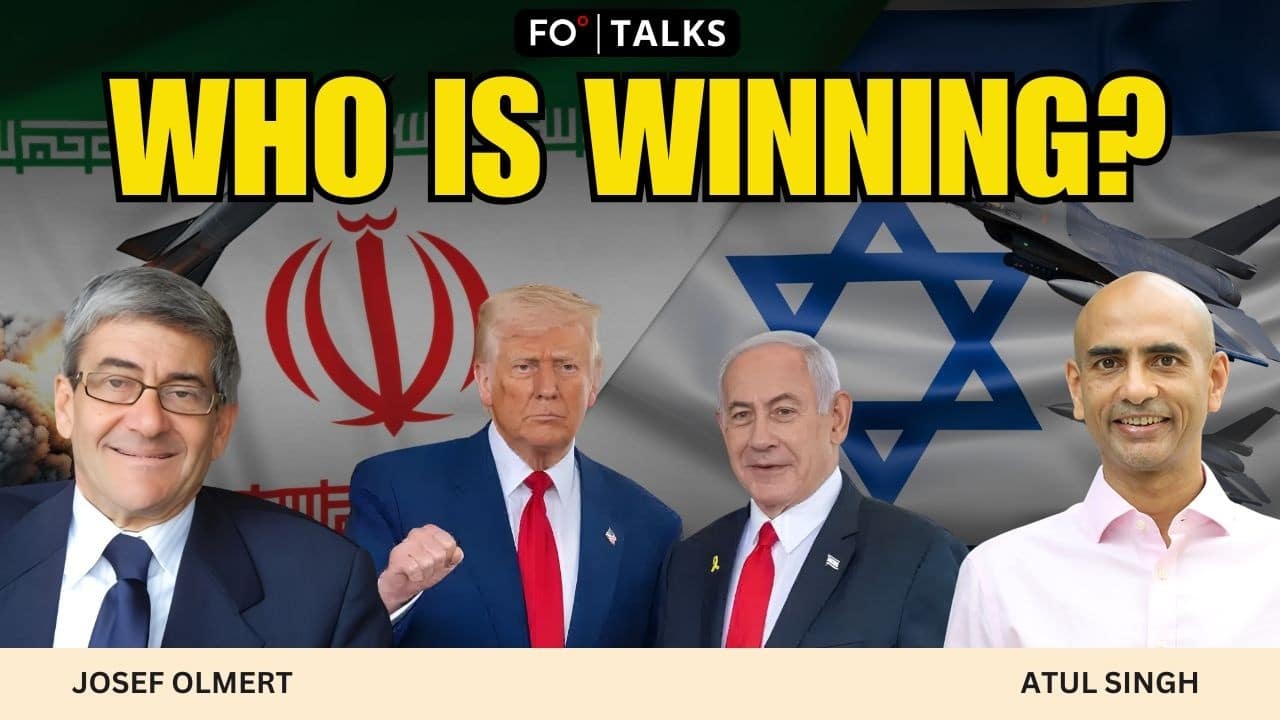
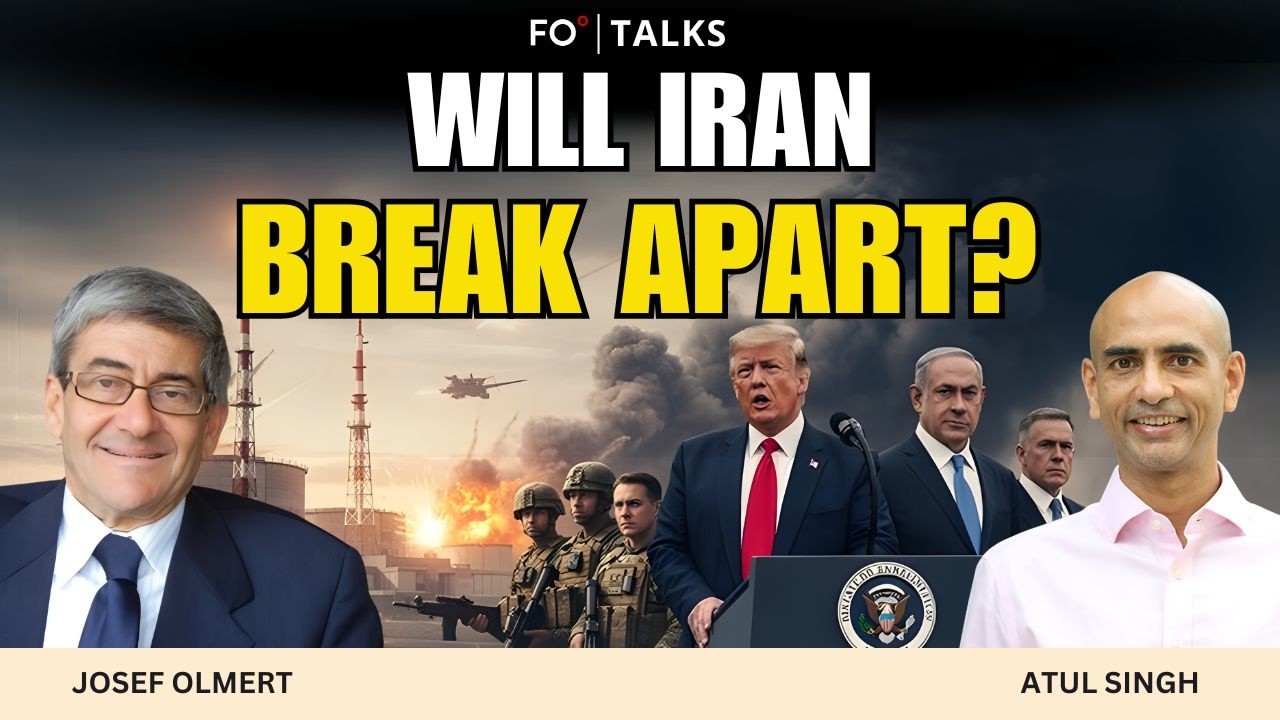
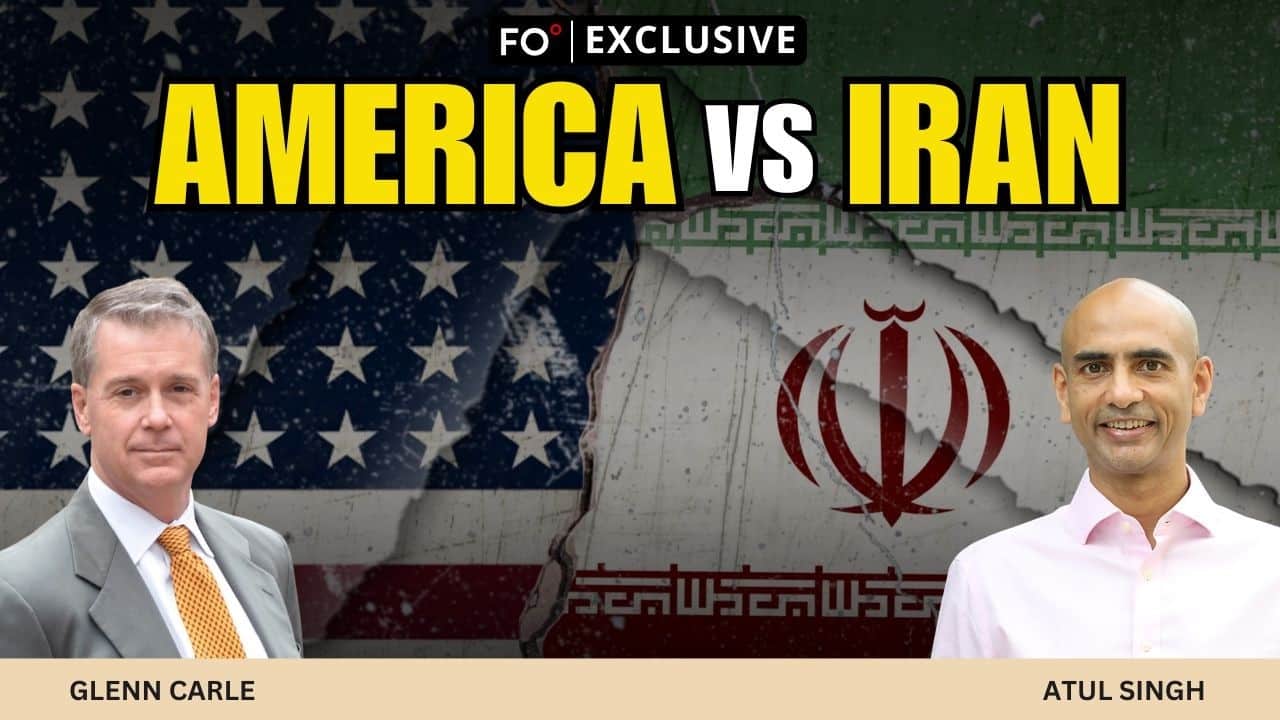
Editor-in-Chief Atul Singh and Josef Olmert, a former Israeli government official and Middle East scholar, discuss the evolving war involving Iran, Israel and the United States. Nearly a month into the conflict at this point, they assess battlefield realities, the politics of perception and the fragile prospects for negotiation. They raise a core question: Even if Iran’s military capabilities are degraded, does that translate into strategic victory? And if so, for whom?
Military dominance and the limits of victory
Olmert begins with a stark assessment of the battlefield balance. Iran’s conventional military capacity has suffered severe damage, particularly in the air and at sea. “It’s a major, major defeat to the Iranians,” he says, pointing to the destruction of naval assets and the absence of effective air cover. Without those capabilities, he contends, Iranian ground forces cannot alter the strategic equation.
Singh presses him on whether military degradation alone determines the outcome. After all, Iran continues to launch missiles and project resilience. Olmert makes a crucial distinction between material losses and political meaning. Olmert emphasizes that victory is interpreted differently across cultures. From a Western strategic perspective, he suggests, the loss of command structures and military infrastructure signals defeat. Yet the Iranian capital of Tehran can claim success simply by surviving and continuing limited strikes.
This difference means the two sides are judging the war by different standards. As long as Iran continues to resist and avoids collapse, it can tell audiences at home and across the region that it is still standing firm. That makes it more difficult for the US or Israel to claim a clear-cut victory, even if they have done more damage militarily.
The Strait of Hormuz and global leverage
The conversation then shifts to the economic and geopolitical stakes surrounding the Strait of Hormuz. Singh underscores the chokepoint’s significance: A substantial share of global energy, fertilizers and critical materials moves through the Gulf. Any disruption reverberates across Asia, Africa and Europe, raising inflation and questioning American credibility as a security guarantor.
Iran’s strategy of threatening shipping is predictable but risky. Olmert argues that Tehran is attempting to extract geopolitical leverage by challenging freedom of navigation, though superior military power will eventually counter this strategy. Regardless, the very existence of the disruption strengthens Iran’s narrative that the war is not settled.
The Strait thus becomes both a military and symbolic battleground. If shipping remains threatened, Iran can claim leverage despite battlefield setbacks. Conversely, reopening the corridor becomes a political necessity for Washington. The economic stakes, therefore, underline the same point: How the war is interpreted does not necessarily match what is happening on the ground.
Political pressures in Washington and Jerusalem
Singh and Olmert also examine domestic constraints on leadership. Olmert says that time may favor Iran politically, even if it does not militarily. “[US President] Trump doesn’t have a limitless amount of time,” he notes, pointing to electoral pressures and public opinion. A prolonged conflict risks eroding American support, especially if the people do not see any concrete results from it.
Israeli Prime Minister Benjamin Netanyahu faces his own difficulties. Singh highlights Israeli public fatigue from continued missile threats and political controversies at home. Olmert agrees that Netanyahu is under pressure, though he believes Israel’s military achievements give him room to maneuver.
As a result, the political window is narrowing. Both leaders must demonstrate success without allowing the conflict to escalate out of control. This dynamic reinforces incentives for negotiation — but also for continued pressure to improve bargaining positions.
Negotiations and uncertainty about authority
Reports of potential talks, including mediation efforts by Pakistan, complicate the situation. Olmert questions whether negotiators on either side possess real authority. Iranian representatives may not fully control decision-making, especially amid leadership uncertainty. On the American side, internal divisions within the administration complicate strategy.
Israel, meanwhile, is not formally at the negotiating table but influences outcomes through continued military operations. Singh characterizes this as a “veto on the ground,” shaping conditions for diplomacy. Olmert agrees that Israeli actions will help determine whether any agreement emerges.
Despite discussion of a potential multi-point framework restricting nuclear activity and missile capabilities, Olmert remains cautious. He estimates the chances of success at less than even odds: “I would give it only 49%.”
Survival, escalation and possible outcomes
Singh and Olmert conclude with competing scenarios. Iran could capitulate, negotiations could succeed or escalation could continue. All parties have incentives to push further: Israel to degrade Iranian capabilities, the US to secure the Strait of Hormuz and Iran to maintain leverage through resilience.
Olmert ultimately argues that the Iranian regime’s primary objective is survival. Even limited concessions might be framed domestically as victory if the system endures. Historical precedent, such as Iran’s decision to end the Iran–Iraq War in 1988, suggests that ideological regimes may compromise when survival is at stake.
Whether that moment arrives depends on time, pressure and political calculations in Washington and Tehran. The coming weeks will be decisive. The battlefield may favor Israel and the US, but the strategic outcome will hinge on perception, leadership constraints and the fragile balance between escalation and negotiation.
[Lee Thompson-Kolar edited this piece.]
The views expressed in this article/video are the author’s own and do not necessarily reflect Fair Observer’s editorial policy.



























Comment