





Fair Observer’s Video Producer Rohan Khattar Singh speaks with Abdullah O Hayek, an independent Middle East analyst and Young Voices contributor based in Washington, DC. They discuss the October 2023 Israel–Hamas ceasefire, exploring how it was built, where it is already showing strain and whether US President Donald Trump’s peacemaking can stabilize one of the world’s most volatile regions.
Achieving a ceasefire
The Israeli government and the Sunni Palestinian nationalist group Hamas signed the ceasefire on October 9, 2023, in Sharm el-Sheikh, Egypt. It took effect the following day. It is not a simple halt in fighting but a multi-phase roadmap designed to test compliance. Under Phase One, Hamas was to release its remaining 20 Israeli hostages and return the bodies of up to 28 others within 72 hours. In exchange, Israel would free 2,000 Palestinian detainees, pull back troops to pre-agreed lines and reopen crossings to allow large-scale humanitarian aid into Gaza.
Hayek emphasizes that this is “not a passive peace agreement but it is a delicate, step-by-step … transactional framework of mutual obligations, enforcement escalators and transition mechanics.” Later phases required Hamas to surrender heavy weapons, including rockets and tunnels, under intrusive verification. Funding for Gaza’s reconstruction was to come from Saudi Arabia, Qatar and the United Arab Emirates, while a joint Arab stabilization force handled security oversight.
The agreement allowed Israel to resume military action if Hamas violated core terms, such as falsifying remains or withholding weapons, making the truce conditional from the start.
Will the peace deal collapse?
When Khattar Singh asks whether the ceasefire can hold, Hayek admits it already shows cracks. Only three days after taking effect, Israel accused Hamas of breaching its obligations by misidentifying a body during the return of remains. The error — one of the deceased was allegedly a Palestinian informant — quickly triggered mutual recriminations and new strikes.
Hayek says the fragility of the ceasefire is enormous and warns that while its success is possible, “failure is the more likely path.” The requirement for body identification, he explains, is a tipping clause that could collapse the framework. If Hamas falters, Israel can retaliate or cut aid, punishing Gaza’s civilians rather than its leadership.
He also points out that 97% of Gaza’s infrastructure lies in ruins, making compliance nearly impossible. His forecast: a 40–50% chance that the deal endures beyond its first year.
Trump’s diplomacy
Trump’s intervention marks the most dramatic shift in months of stalled mediation. By late 2023, both Israel and Hamas were strategically exhausted: Gaza was devastated, Israel faced domestic war fatigue and global outrage was mounting. Into this vacuum stepped Trump, seeking to reestablish US leverage and demonstrate that Washington could still broker peace.
Hayek credits the US president’s “phased incremental model” as key to getting both sides to sign. Rather than demand total trust, Trump built trust by architecture — a design of sequencing, verification and third-party enforcement. He embedded Qatar and Egypt as guarantors and enlisted Turkish President Recep Tayyip Erdoğan, whose late-stage involvement Hayek compares to a substitute player scoring the winning goal.
Trump also secured Gulf funding for reconstruction, creating economic incentives for Hamas to comply, and threatened renewed force if it did not. This resulted in a high-stakes gamble: compliance could lift Gaza from isolation, while defection could invite joint US-Israeli intervention.
Gaza Peace Summit in Egypt
The Gaza Peace Summit in Sharm el-Sheikh served as Trump’s diplomatic showcase rather than a negotiation table. Over 30 leaders attended, including Erdoğan, Egyptian President Abdel Fattah el-Sisi, Qatari Emir Tamim bin Hamad Al Thani and Jordanian King Abdullah II. Notably, Israel and Hamas were absent — a sign that the summit’s goal was legitimacy, not dialogue.
For Hayek, the event “functioned more as a diplomatic stage and legitimacy exercise than a negotiating forum,” signaling collective endorsement of Trump’s 20-point peace plan. The resulting declaration committed Arab states to reconstruction and peace enforcement, locking them into shared accountability. The summit’s absence of direct combatants paradoxically strengthened it — any violation of the ceasefire would now appear as defiance of regional consensus, not just bilateral betrayal.
What is Hamas doing?
The truce has not stopped violence inside Gaza. Hamas’s public pledge to disarm contrasts sharply with its internal purges and executions of alleged dissenters and informants. Gaza is a volatile crucible where forced transition collides with factional resistance. Rival clans — especially the powerful Doghmush clan — have faced raids and extrajudicial killings.
Hayek condemns the acts as war crimes, noting that Hamas is trying to eliminate internal rivals before passing along its weapons. In effect, the group is consolidating control even as it promises demilitarization. The ceasefire envisions eventual rule by a technocratic Palestinian transitional body under Arab and international supervision, but Hayek doubts hybrid arrangements would work. In his view, only a reformed Palestinian Authority can unify governance and restore diplomacy, provided it modernizes, fights corruption and reconnects with the Gazan population.
What next for Netanyahu?
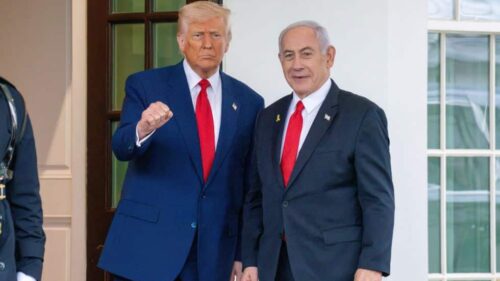
In Israel, the ceasefire has unleashed political chaos. Far-right ministers have denounced the deal as capitulation, accusing Israeli Prime Minister Benjamin Netanyahu of betraying national interests. Netanyahu is “operating on thinning ice,” Hayek says. His fragile coalition faces internal rebellion, corruption trials and public outrage over the war’s handling.
While Netanyahu still projects defiance, insisting Hamas must disarm or face renewed force, his ability to balance hardliners and moderates is evaporating. If coalition partners defect or early elections are called, his long political dominance could end. Hayek believes Netanyahu’s survival depends on his proving that the ceasefire delivers real security dividends rather than just political delay.
[Lee Thompson-Kolar edited this piece.]
The views expressed in this article/video are the author’s own and do not necessarily reflect Fair Observer’s editorial policy.

























Comment