





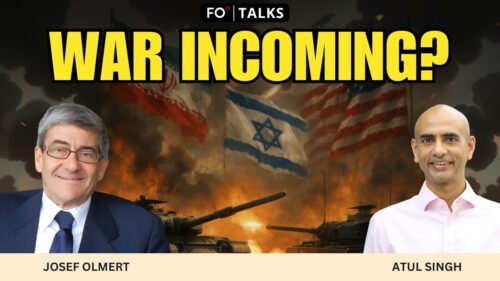
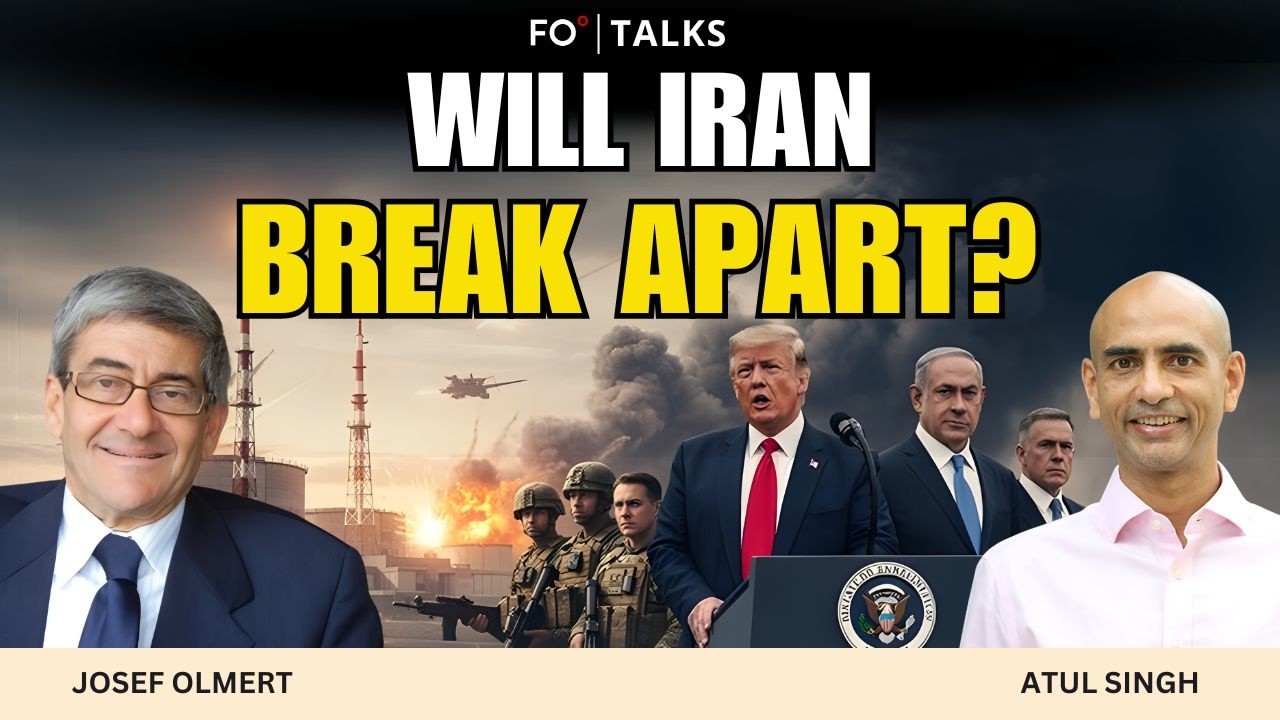
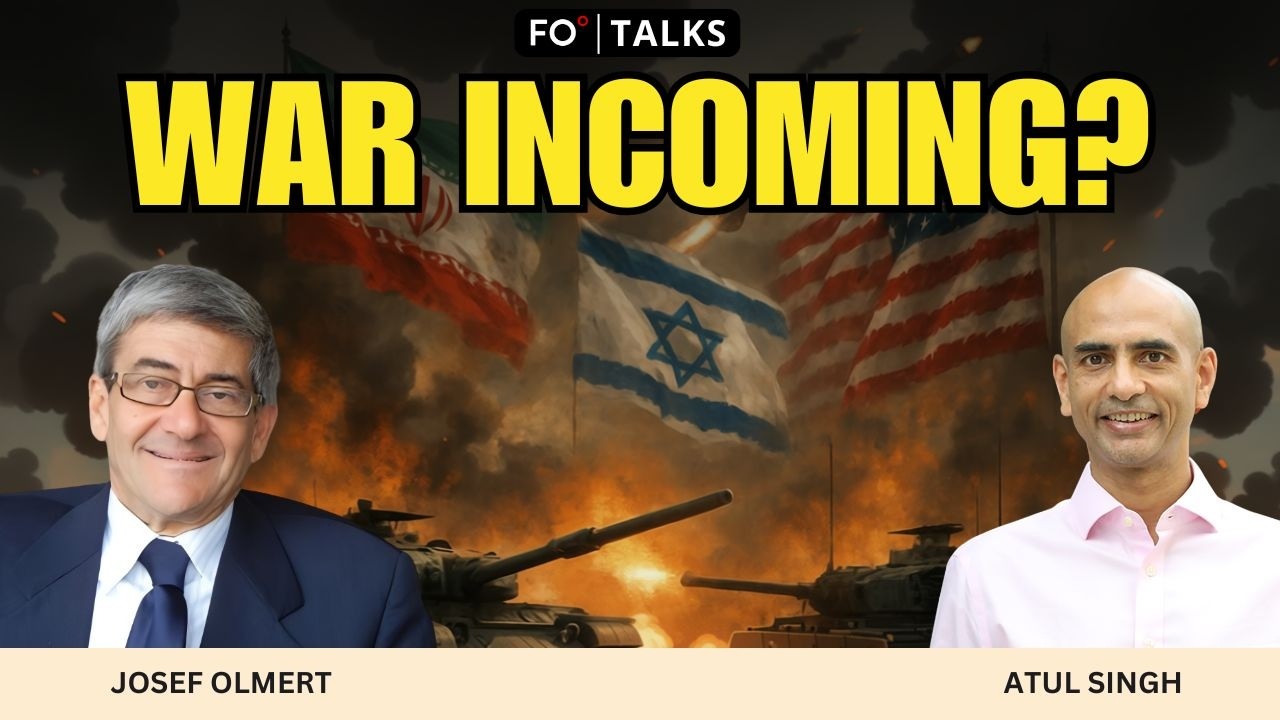
Editor-in-Chief Atul Singh and Josef Olmert, a former Israeli government official and Middle East scholar, speak as Israel and the United States intensify strikes on Iranian military targets. Singh presses Olmert on the central question behind the war: Even if Iran’s military infrastructure is being battered, can that pressure actually bring down the Islamic Republic? Their discussion moves from battlefield assessments to regime durability, regional fragmentation, US domestic politics and the wider contest for power in the Middle East.
The conversation, though clear on the military aspects, remains cautious not to predict the campaign’s overall outcome.
Military dominance, political uncertainty
Olmert argues that Israel has established overwhelming superiority in the opening phase of the Iran war. He says Israeli intelligence penetration is deep, aerial control is firm and Iran’s armed forces have taken severe damage across multiple fronts. In his view, the immediate military picture is not ambiguous. As he puts it, Israel’s battlefield performance is “an amazing but really unbelievable success.”
Singh pushes back, citing skeptical reporting in Israeli media, including Haaretz, and noting that air superiority does not automatically break an adversary’s will. He points out that Iran has continued to fight and that Israeli officials themselves acknowledge that the war is not yet over. Olmert does not deny that Iran remains dangerous, but he insists that the military balance is already clear and that the real issue is no longer whether Iran is losing on the battlefield. The real issue is whether the regime can survive sustained military and psychological pressure.
That distinction runs through the entire conversation. For Olmert, war is judged not only by what happens on the ground, but also by its political outcome. The battlefield may already favor Israel and the US, but the decisive question is whether that military success can trigger internal collapse inside Iran.
Regime change without a clear day-after plan
Singh repeatedly asks what comes next if the strikes continue to weaken Tehran. Olmert says a collapse of the regime is possible and more plausible now than before the war began. He points to reports of weak coordination inside the Iranian leadership and signs of unrest among Kurds, Baluchis and Arabs. He als notes that many Iranians abroad appear openly jubilant, which he interprets as evidence of broader anger inside the country.
Yet he also admits that neither Israel nor the US appears to have a fully determined plan for postwar Iran. That is one of Singh’s sharpest concerns. If the regime falls, what replaces it? A stable transition, a patchwork of autonomous regions or a prolonged civil conflict?
Olmert outlines three elements he sees as necessary for regime change: weakening the regime militarily, encouraging internal opposition and connecting those pressures into a coherent political transition. He says the first has largely happened and the second may be emerging, but the third remains uncertain. He hopes discussions are taking place behind the scenes between Israel, the administration of US President Donald Trump and Iranian opposition figures, but he cannot say that a genuine blueprint exists.
Assassination, succession and the risk of fragmentation
The conversation turns to the killing of Supreme Leader Ayatollah Ali Khamenei. Singh raises a criticism from an unnamed Israeli intellectual who believes the killing may have turned an old and unpopular ruler into a martyr across parts of the Shia world. Olmert rejects that argument completely. He describes Khamenei as “the modern-day Hitler” and says Israel had no reason to spare a man who openly threatened its destruction.
Even so, Singh raises a deeper strategic issue. Removing senior leaders does not necessarily end a regime. It can produce harder, younger and more fanatical successors. Olmert says the regime still has committed supporters, but many more Iranians oppose it. Prolonged military destruction could make the system unsustainable.
From there, the discussion widens into the possibility of fragmentation. Singh asks whether Iran could face a Syria-like future, with weakened central authority and stronger peripheral actors. Olmert says he supports some form of Kurdish self-rule and suggests that different regions may demand greater autonomy in any postwar settlement. He points in particular to the Kurds, Baluchis and Azeris, noting that Azerbaijan is an important Israeli partner and that Turkey and Pakistan would also have major stakes in any new regional order.
Still, he stresses that Israel cannot manage such an outcome on its own. Any serious transition, he says, would require US leadership and coordination with neighboring states.
Trump, China and the wider geopolitical game
Singh then shifts to the US angle. The war is unpopular with much of the American public, including many in Trump’s Make America Great Again base, and rising oil and gas prices could intensify that discontent. Olmert acknowledges the risk, especially for Israel’s long-term standing in the US, but he believes the Trump administration sees the war in broader strategic terms.
For him, the conflict is not only about Iran. It is also about China. He argues that disrupting energy routes weakens Beijing at a time when the Chinese economy is already under strain. In that framework, support for Israel’s campaign also serves a larger American objective. He even suggests that Trump’s earlier posture toward Russia may reflect a “reverse Kissinger” logic aimed at loosening Moscow’s ties to Beijing.
Even so, Olmert remains cautious about Washington’s planning. He believes Trump is willing to take risks and may hope for a dramatic political payoff before the November elections.
A short war or a longer reckoning
Singh concludes by asking the question that hovers over the whole conversation: How long can this last? Olmert says Israeli sources believe Iran’s remaining missile-launch capacity is limited and that the war should end sooner rather than later. He dismisses talk of nuclear escalation as political theater designed to frighten audiences. Israel still has other ways to intensify pressure.
If the current rate of military destruction continues, Olmert does not believe the regime can endure for long. But even he stops short of certainty. The war may be moving quickly on the battlefield, yet the politics of collapse, succession and reconstruction remain unsettled.
However, military victory is one thing, political resolution another. Olmert believes Iran’s rulers may be nearing the end. But it remains to be seen whether this war marks the beginning of regime change or simply the opening of a longer and bloodier phase.
[Lee Thompson-Kolar edited this piece.]
The views expressed in this article/video are the author’s own and do not necessarily reflect Fair Observer’s editorial policy.





























Comment