

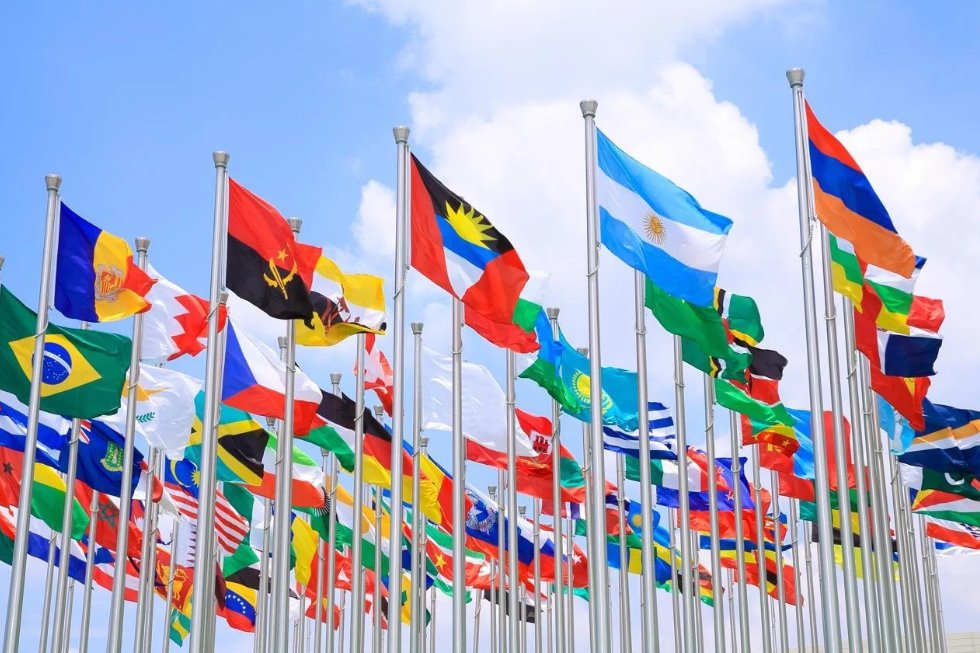



For nearly eight decades, global governance rested on a simple assumption: that universal institutions such as the UN, the World Trade Organization (WTO) and the International Monetary Fund (IMF) could tackle international problems. Designed in the aftermath of the Second World War, this architecture was built for a unipolar moment dominated by Western powers and a global belief in the benefits of open trade. However, shifting geopolitical realities have quietly begun to erode that assumption. Nations around the globe are now building parallel institutions, regional blocs and issue-specific coalitions because they no longer believe those universal institutions alone can tackle the realities of a multipolar world.
This movement goes beyond traditional debates over UN Security Council reform. Post-1945 power structures are constraining existing institutions, leaving them slow and divided. When institutions cannot adapt, countries do not wait indefinitely for reform. Instead, they seek out alternatives in the form of bilateral free trade agreements, regional trade blocs, strategic economic partnerships and supply-chain coalitions among trusted partners.
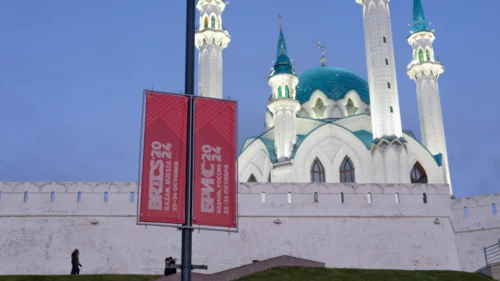
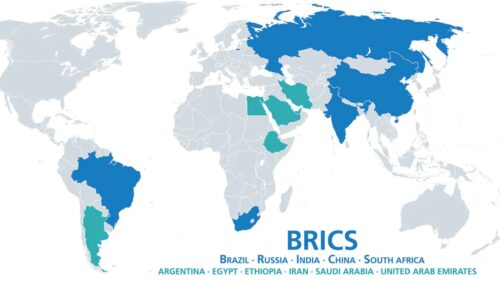
For example, BRICS has expanded rapidly and created institutions such as the New Development Bank (NDB); the Shanghai Cooperation Organization (SCO) addresses security issues without Western leadership; the QUAD coordinates maritime security without being a formal alliance; the Association of Southeast Asian Nations (ASEAN) is a vibrant trading platform; and the G20 has become more influential than the G7 in representing the global economy.
The G20 represents the world economy’s center of gravity, bringing together the world’s 20 largest and most consequential economies. That means the forum includes virtually every economy whose policies can materially affect global trade, energy markets, food security, financial stability, supply chains, etc. The G7 can discuss these issues, but it simply lacks the same breadth. It cannot by itself represent the countries whose economies increasingly drive global growth. The rise of mini-lateral arrangements such as I2U2 (India, Israel, the United Arab Emirates and the US), AUKUS (Australia, the UK and the US) and various Indo-Pacific partnerships reflects the same trend. To ensure the future of global governance, these organizations must be able to work together in an interconnected system that balances competing interests while upholding shared international norms.
International governance has transformed before. The League of Nations — the UN’s predecessor — gave way to the UN after the Second World War, while the Bretton Woods institutions underpinned the era of globalization. Victorious powers designed post-war institutions for a world dominated by the US and its allies. Designers also built them for an era that believed countries broadly accepted globalization, lower tariffs and common trade rules. They also assumed that major powers wanted to resolve disputes through multilateral institutions.
But great-power competition has challenged these assumptions, such as with the US and China, which increasingly view trade as an instrument of national security. Industrial policy, export controls, technology restrictions and tariffs have become strategic tools. However, the emergence of a more multipolar world also stems from four other major problems: institutional paralysis, the redistribution of global power, a growing preference for smaller, more flexible coalitions, and a fundamental crisis of trust in institutions designed for a world that no longer exists.
Institutional paralysis
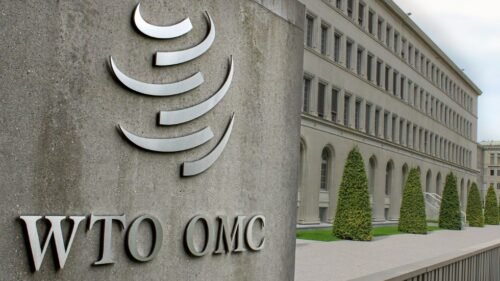
Institutional decision-making paralysis has afflicted global multilateral institutions. Vetoes by the five permanent members frequently deadlock the UN Security Council. The WTO is ineffective as its dispute settlement system has become dysfunctional. The Appellate Body, which is the second and final stage of WTO litigation, has been unable to function since December 2019. The US has objected to its functioning, arguing that it had exceeded its mandate, failed to observe the required deadlines and treated previous rulings as binding precedent. Without the required quorum, the WTO has been unable to hear appeals since 2020.
In short, even though the WTO has rules and dispute panels, it lacks a fully operational mechanism to give those rulings finality. As a result, consensus-based negotiations have become extremely difficult with more than 190 UN members. Nations have to increasingly ignore or work around UN and WTO rules whenever national security or strategic industries are involved. Despite all of this, the UN will likely remain important for humanitarian aid, peacekeeping, international law and diplomacy, but it is unlikely to be the sole center of global decision-making.
Redistribution of power
Since the end of the Cold War, economic power has shifted steadily toward Asia and the Global South. India has become the world’s fourth-largest economy and China the second-largest, while countries such as Brazil, Indonesia, Saudi Arabia and Türkiye have emerged as influential regional powers. Yet the architecture of global governance continues to reflect the geopolitical realities of 1945 rather than those of the 21st century.
The UN Security Council’s permanent membership remains unchanged, voting rights in the Bretton Woods institutions have evolved only gradually and established powers continue to dominate leadership in key international organizations. Faced with slow reform, emerging powers have increasingly chosen not merely to seek greater representation within existing institutions, but to build alternative platforms through which they can exercise greater influence.
Smaller groups, faster results
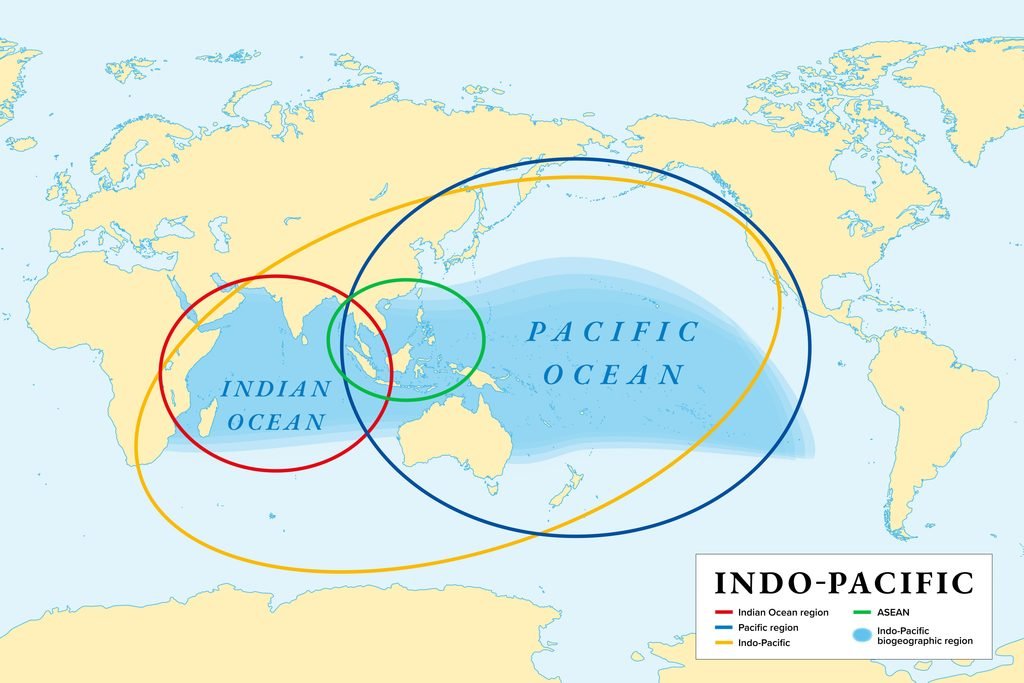
Smaller groups often find it easier to agree than organizations like the UN, which has over 190 member states. That is one reason minilateral arrangements have become popular: They speed up decision-making. Countries can choose the forum that best serves their interests.
Governments address trade issues through FTAs, security issues through the Quad, development finance through BRICS institutions and climate initiatives through another coalition. In other words, global governance is becoming networked rather than centralized. Universal institutions pursue universal consensus. Minilateral groups pursue practical outcomes.
A crisis of trust
Perhaps a deeper reason is that trust in universal institutions has weakened. It’s less about inequality per se among nations, but more about the widening gap in relative power. Historically, rules-based systems function best when the major powers broadly accept that they benefit from them. When great powers become sufficiently strong, they are more willing to bear the diplomatic costs of acting unilaterally. The United States increasingly bypasses institutions it considers ineffective. Its unilateral tariffs and extraterritorial sanctions are a good example of this trend.
China seeks alternatives to Western-dominated financial structures and has also become assertive in the South China Sea despite international legal rulings against it. On its part, Russia views many international institutions through the lens of geopolitical confrontation. Middle powers such as India pursue strategic autonomy rather than dependence on any single bloc. When the most powerful countries selectively comply with the very rules they helped create, countries increasingly place their trust in smaller coalitions where interests are more closely aligned.
The new rules of the game
There is no simple answer. The old model was relatively straightforward: one set of global institutions set one broad set of rules, and just one or two primary forums resolved disputes. The emerging model has multiple institutions laying down multiple rulebooks and creating multiple centers of influence. The consequences are both positive and negative.
On the positive side, parallel institutions can make global governance more representative and responsive. As a result, emerging economies have more financing options, countries depend less on a single source for critical goods and supply chains have become more resilient after the disruptions caused by the COVID-19 pandemic and geopolitical conflicts.
At the same time, competition among institutions can also encourage innovation in infrastructure financing, technology partnerships and regional economic integration. Yet these benefits come with high costs. Businesses increasingly face competing regulatory standards, trade rules and technology regimes across different blocs. Global coordination on issues such as climate change, pandemics, financial crises and nuclear proliferation becomes more difficult when countries operate through overlapping and sometimes competing institutions.
Governing without a leader
The future may consequently depend less on creating new “global” institutions and more on building bridges between existing ones. The UN, WTO, G20, BRICS, regional organizations and minilateral groupings need not compete for primacy. Instead, they could evolve into interconnected layers of governance, each doing what it does best while remaining compatible with broader international norms.
The defining question of the next phase of globalization, therefore, is not who will lead the world, but whether the world can learn to govern without a single center of authority.
[Yasmine Haji edited this piece]
The views expressed in this article are the author’s own and do not necessarily reflect Fair Observer’s editorial policy.
The Time Is Out of Joint: Power, Misalignment and the G1.5 World
The international system today is not collapsing, but its institutions and power realities are increasingly misaligned. States remain economically interconnected,...
Global Institutions Fail to Enforce Order in a Divided World
World powers built institutions after World War II to prevent conflict and promote cooperation. Today, those institutions now fall short...
Has Anyone Noticed What BRICS+ Is Telling Us About a New World Order?
The BRICS summit in Kazan from October 22 to 24 showed that the isolation of Russia sought by the West...
Will the New BRICS+ Be Able to Come Together?
Last week’s BRICS summit marked a historic moment as the five partner nations agreed to integrate six new members in...
Support Fair Observer
We rely on your support for our independence, diversity and quality.
For more than 10 years, Fair Observer has been free, fair and independent. No billionaire owns us, no advertisers control us. We are a reader-supported nonprofit. Unlike many other publications, we keep our content free for readers regardless of where they live or whether they can afford to pay. We have no paywalls and no ads.
In the post-truth era of fake news, echo chambers and filter bubbles, we publish a plurality of perspectives from around the world. Anyone can publish with us, but everyone goes through a rigorous editorial process. So, you get fact-checked, well-reasoned content instead of noise.
We publish 3,000+ voices from 90+ countries. We also conduct education and training programs
on subjects ranging from digital media and journalism to writing and critical thinking. This
doesn’t come cheap. Servers, editors, trainers and web developers cost
money.
Please consider supporting us on a regular basis as a recurring donor or a
sustaining member.
Will you support FO’s journalism?
We rely on your support for our independence, diversity and quality.




Comment