





The India–US bilateral trade agreement, announced in February, was expected to be finalized by April this year. However, the deadline has now passed without an agreement, as the Trump administration’s unpredictable tariff policy has rendered the original terms commercially obsolete. Commerce Secretary Rajesh Agrawal confirmed that India would only sign the deal once Washington had established a predictable tariff architecture. However, rather than providing this certainty, the US has increased pressure on Delhi. The Office of the US Trade Representative (USTR) has launched Section 301 investigations targeting sectors critical not only to Indian exports but also to its broader ambitions to become a leader in AI and renewable energy.
With a deal delayed, the pressure is only growing
Under Section 301 of the 1974 Trade Act, the USTR has the power to impose tariffs, restrict imports and suspend trade agreement concessions. Furthermore, these investigations establish a framework for secondary sanctions. While such investigations undermine the trust of international partners, Indian exporters may also face tighter inspections, more stringent documentation requirements and supply chain audits. These measures would increase compliance costs and disrupt established trade flows.
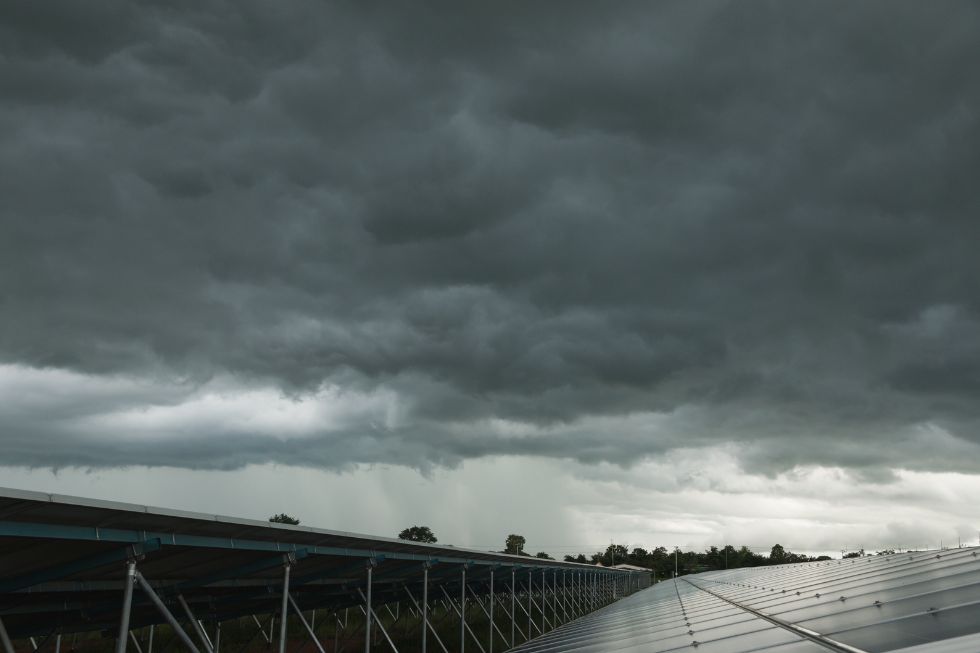
The sectors targeted by the current investigation are among India’s most sensitive export industries. The US notice specifically mentions solar modules, pharmaceuticals, steel and textiles, to name a few. Of these, solar module manufacturing has attracted the most scrutiny. US officials have noted that India’s renewable energy manufacturing capacity is now around three times higher than domestic demand. Washington characterizes this surplus as a potential source of global oversupply requiring remedial action.
Powering the future in the context of trade deals and exports
India’s production of solar energy equipment is significant. The US is a key market, importing around 97% of India’s total solar production, which is estimated to be worth more than $792 million. Indian-made modules are 19-21% cheaper than US-manufactured alternatives, making them highly competitive for utility-scale projects. This has allowed India to increase its share of US solar imports from 3% in 2022 to around 11% in 2024. However, the US effectively closed its market to Indian solar manufacturers at the beginning of this year, when the US Department of Commerce imposed a preliminary countervailing duty of 126% on Indian solar cells on February 24. The current investigation could further weaken India’s position.
But the renewable energy and solar industries are much more than just export sectors. They are also a cornerstone of India’s wider strategy to become a world leader in energy, artificial intelligence and information technology. According to the 27th report of the Standing Committee on Communications and Information Technology, which was presented to Parliament on March 30, India’s data centers currently consume around 1,020 megawatts of power. This figure is expected to double within two years and reach 4,000–5,000 megawatts within four to five years.
At the India AI Impact Summit, Ministry of Electronics and Information Technology (MeitY) Secretary S. Krishnan outlined that the process begins with power, followed by computing, models and finally data. Without a reliable power infrastructure, it is impossible to progress to the next stage. A recent assessment of the renewable energy industry suggests that capacity could increase from 45 to 95 gigawatts by 2027, with an estimated $14 billion of capital expenditure supporting this growth. The major private companies spearheading this expansion are Waaree Energies, Premier Energies, Adani Green Energy Limited (AGEL) and Reliance New Energy (RNE).
Targeting the largest players, against this backdrop
The targeting of renewable energy companies such as AGEL and RNE by the US is no coincidence. Both companies are deeply integrated into India’s manufacturing expansion. AGEL is India’s largest renewable energy company, and it added 5,051 megawatts of capacity in the 2026 fiscal year — one of the fastest greenfield expansions globally outside of China — increasing its total operational portfolio to 19.3 gigawatts.
The company’s flagship project, the Khavda site in Gujarat, is billed as the world’s largest renewable energy park under development. It has already reached 9.4 gigawatts of installed capacity, and is expected to reach 30 gigawatts by 2030. Spanning 538 square kilometers, the site uses advanced bifacial solar modules, solar trackers and waterless robotic cleaning systems, as well as some of the most powerful onshore turbines in the world.
RNE is projected to reach approximately 6.4 gigawatts of cell capacity, positioning it alongside India’s top producers: AGEL (19.3 gigawatts), Waaree Energies (15.4 gigawatts) and Premier Energies (10.6 gigawatts). Reliance Industries’ energy division has also commissioned the production of heterojunction solar cells in Jamnagar, achieving module yields of 94–95%. The company is building an end-to-end solar manufacturing chain, from polysilicon to modules, with an initial annual capacity of 10 gigawatts, which is scalable to 20 gigawatts. Construction of the gigafactory is underway, and the company has identified the potential to host 125–150 gigawatts of solar capacity at its 550,000-acre site in Kutch.
Corporate influence as a diplomatic tool
The targeting of Adani and Reliance appears to be a carefully calculated political maneuver by Washington. Consider the Adani Group, for example. Its founder, Gautam Adani, has been a close associate of Indian Prime Minister Narendra Modi since his time as Chief Minister of Gujarat. Adani Group companies now supply a significant proportion of solar projects in India and the US. Therefore, pressuring Adani’s businesses could be seen as an attempt to put pressure on Modi.
US pressure on the Adani Group predates the current trade investigations and has consistently been linked to the group’s perceived proximity to Modi. In early 2023, US short seller Hindenburg Research published allegations of stock manipulation and accounting fraud against the conglomerate. The group has denied these claims, which remain unproven in court, and they triggered a market rout that erased billions in valuation. Then, in November 2024, the US Department of Justice and the Securities and Exchange Commission indicted Gautam Adani and seven associates in a separate criminal case. They were accused of paying approximately $250 million in bribes to undisclosed Indian government officials to secure solar energy contracts. The Adani Group has also denied these allegations. The case has since remained dormant on the federal docket.
Additionally, in November 2025, the New York Times noted that Adani had “risen to the heights of power alongside Mr. Modi” and that the two had “cooperated closely for decades.” Most recently, the US Treasury’s Office of Foreign Assets Control opened a civil investigation into whether Adani-linked companies imported Iranian liquefied petroleum gas using shipping routes intended to evade sanctions. Together, these actions form a pattern of sustained scrutiny applied at times when US-India trade negotiations or broader diplomatic engagements are ongoing, suggesting that Washington views pressure on the Adani Group as leverage in its relationship with the prime minister.
The US has also been keeping a close eye on Reliance Industries, the company led by billionaire Mukesh Ambani, who has also been a long-standing associate of Modi in Gujarat. The corporation was previously one of the Indian refiners that came under pressure over its imports of Russian crude following US tariff threats and swiftly distanced itself from Russian oil.
According to a Reuters report, Reliance stopped buying Russian oil as soon as US sanctions tightened last November, while Indian officials remained silent. Instead, the conglomerate increased its imports of US crude oil, acquiring several cargoes of American West Texas Intermediate in late 2025 and early 2026 to supply its Jamnagar refineries. US records show that Reliance purchased two million barrels of West Texas Intermediate for future delivery at the end of 2025. In February 2026, the company also won a US license to import Venezuelan crude oil. The only thing that turned the situation back was the US war against Iran. However, these shifts align with Washington’s desire to reduce India’s reliance on adversarial suppliers. Nevertheless, Reliance remains under scrutiny.
Washington is using market pressure as leverage to steer New Delhi
The opposition in India has repeatedly alleged that these ties create a conflict of interest. In August 2025, for example, Rahul Gandhi, the leader of the Indian National Congress, the largest Opposition party, charged that Modi’s reluctance to confront US tariff threats stemmed from a fear of exposing “financial links” with business elites. Although these allegations originate from political opponents and are denied by the government, they reflect an existing political discourse that US authorities can exploit.
Washington may be seeking to exert influence through channels beyond formal diplomatic engagement by initiating investigations, issuing information requests and applying extraterritorial pressure to the leadership of key Indian companies such as Gautam Adani and Mukesh Ambani. The idea is that applying pressure to business leaders with direct access to the prime minister will yield a quicker response than traditional diplomatic demarches.
The US’ approach of imposing tariffs, launching sectoral investigations and applying extraterritorial pressure on Indian corporations constitutes a coherent strategy of coercive diplomacy. However, such tactics fundamentally contradict India’s long-standing foreign policy principles. With public hearings on the Section 301 investigations scheduled for May and final determinations due later this year, New Delhi’s ability to resist coercive trade practices will be put to the test.
[Swapnarka Arnan edited this piece.]
The views expressed in this article are the author’s own and do not necessarily reflect Fair Observer’s editorial policy.
Deal Under Pressure: What India Really Gains from the Trade Agreement with the US
The India-US trade deal only offers modest tariff relief and limited competitive advantages over regional rivals. Furthermore, any benefits arising...
The World Now Needs Green Trade, Not Free Trade
Corporations are using trade and investment treaties to handcuff global and national efforts to save the planet. That must stop.


Support Fair Observer
We rely on your support for our independence, diversity and quality.
For more than 10 years, Fair Observer has been free, fair and independent. No billionaire owns us, no advertisers control us. We are a reader-supported nonprofit. Unlike many other publications, we keep our content free for readers regardless of where they live or whether they can afford to pay. We have no paywalls and no ads.
In the post-truth era of fake news, echo chambers and filter bubbles, we publish a plurality of perspectives from around the world. Anyone can publish with us, but everyone goes through a rigorous editorial process. So, you get fact-checked, well-reasoned content instead of noise.
We publish 3,000+ voices from 90+ countries. We also conduct education and training programs
on subjects ranging from digital media and journalism to writing and critical thinking. This
doesn’t come cheap. Servers, editors, trainers and web developers cost
money.
Please consider supporting us on a regular basis as a recurring donor or a
sustaining member.
Will you support FO’s journalism?
We rely on your support for our independence, diversity and quality.





Comment