




World Refugee Day 2026 passed on June 20, but the responsibility it reminds us of has not. For people who have fled war, persecution, repression or fear, safety can mean life or death. It can mean finding shelter for your children, crossing a border without being pushed back, receiving documents before it is too late or having one chance to begin again.
The United Nations High Commissioner for Refugees (UNHCR)’s theme — “Until Everyone Is Safe” — must now move from reflection to action: defending asylum, stopping unsafe returns, funding urgent humanitarian needs and investing in the peace that allows displaced people to rebuild their lives.
I know displacement not only as a policy issue, but as a lived reality. I know how quickly a home can become unsafe, and how long the search for safety can follow a person. Seventy-five years after the 1951 Refugee Convention, asylum remains one of humanity’s most important legal and moral safeguards.
But it is under strain when millions still need protection from war, persecution, violence, repression, human rights violations and insecurity. The right to seek safety should not depend on politics. It must be upheld wherever authorities force people to flee.
This is why Displaced International (DI) exists. DI was created because displaced people should not have to wait for others to explain our pain, our resilience or our solutions. We are a global initiative led, managed and operated by displaced people and professionals with lived experience. Through Displaced Voices, displaced people speak in their own names, in their own words and with their own solutions. This is not symbolism. It is the difference between being represented and being heard.
The scale of displacement is hard to grasp fully. According to UNHCR’s latest Global Trends report, 117.8 million people were forcibly displaced by the end of 2025. But no number can fully show what displacement does to a person, a family or a country. Behind the figure are families separated at borders, children growing up without certainty, women facing violence and exclusion, communities uprooted and futures interrupted.
These tragedies do not happen by accident. They grow from wars left unresolved, governments that fail or repress their people, poverty, climate stress and international cooperation that arrives too late. The world does not have a refugee problem. It has a failure-of-peace problem.
Protection must come first
The crisis is not hard to understand. What is hard to accept is how predictable it has become. People fleeing danger are increasingly met by closed borders, pushbacks, detention, fewer legal pathways, hostility, family separation and forced returns. UNHCR has called on the world to stand with refugees and keep the promise of safety alive. That promise starts with one basic rule: People must not be sent back to danger. Protecting refugees is not an act of goodwill, and asylum is not a favor. It is a legal and moral duty.
At the same time, needs are growing, but political will is not keeping up. Sudan remains one of the world’s gravest displacement emergencies, with millions uprooted inside the country and across borders, according to UNHCR’s Sudan emergency updates. Ukraine continues to face large-scale displacement, while the Democratic Republic of Congo (DRC), Syria, Myanmar, Gaza and the Rohingya crisis show whether the world means what it says about protection.
The International Rescue Committee’s 2026 Emergency Watchlist, the Norwegian Refugee Council’s neglected displacement crises analysis and the Danish Refugee Council’s Global Displacement Forecast all warn of the same reality: Suffering is deepening while attention, funding and diplomacy remain far too weak.
Unsafe returns are not solutions
Afghanistan shows another danger: The unsafe and involuntary return is becoming normal. Large-scale Afghan returns and deportations have continued amid insecurity, poverty, weak services and repression, as reflected in UNHCR’s Afghanistan operational data and the International Organization for Migration (IOM) Afghanistan displacement tracking. Women and girls face severe restrictions on education, work, movement and public life.
At the same time, former officials, journalists, activists, minorities, civil society actors and returnees remain at risk, as documented by Human Rights Watch and Amnesty International. Return is not a solution if a family returns to fear. Reintegration is not a solution if people return to hunger. Peace is not a solution if it excludes half the population. Forced return is not durable. It is displacement recycled.
Protection comes first. Governments must preserve access to asylum, end pushbacks and forced returns, and protect refugees, asylum seekers, internally displaced people, stateless people and returnees from violence, exploitation, legal limbo and abandonment. If protection fails at the border, it fails when people need it most.
Durable solutions must also work in real life. Return should happen only when it is voluntary, informed, safe, dignified and sustainable. Resettlement must not become a promise with no places to go. Education and work pathways must not exist only on paper. Local integration must include the right to work, learn, contribute and belong. These goals are at the heart of the Global Compact on Refugees, but they require far more political will and practical investment. Displaced people should not only survive. They should have the chance to rebuild.
Displaced people must lead
And displaced people must lead, not simply be consulted. Refugees are not merely recipients of aid. They are teachers, doctors, workers, students, entrepreneurs, caregivers, advocates and peacebuilders. Policies designed without displaced people too often fail displaced people. Those who have lived displacement must help shape decisions on protection, integration, return, resettlement, peacebuilding and recovery — not as an afterthought, but as a principle.
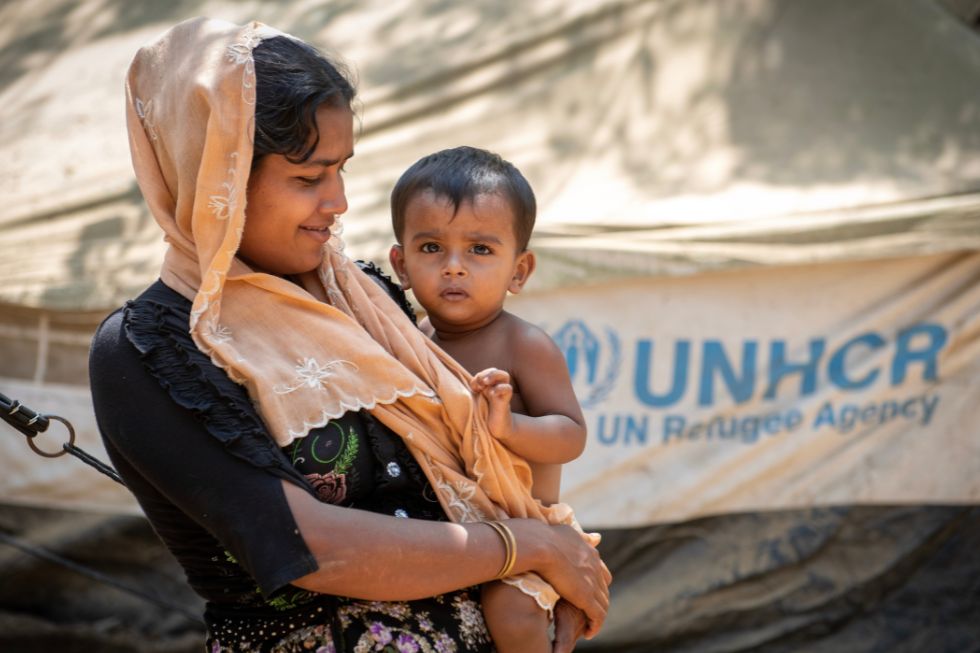
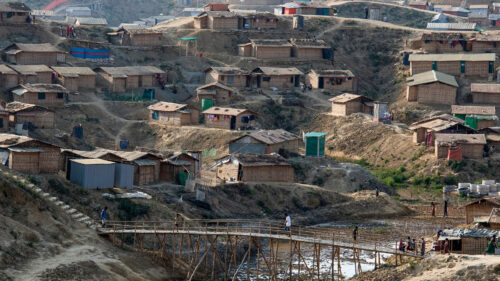
That is why action is needed now. Governments and donors must increase humanitarian funding before hunger, homelessness, disease and despair deepen. In Bangladesh, more than one million Rohingya refugees remain in crowded camps, including hundreds of thousands of children growing up in prolonged uncertainty, as highlighted by the United Nations Children’s Fund’s (UNICEF) Rohingya crisis response.
Save the Children has warned that child displacement linked to conflict has reached record levels, with millions of children facing disrupted education, health risks, family separation and long-term trauma, according to its latest child displacement report. When funding disappears, children leave school, families skip meals, shelters become unsafe and preventable suffering becomes policy failure.
Unsafe returns must also stop. Afghanistan, Sudan, Syria, Myanmar, Ukraine, Gaza and the DRC show that displacement cannot be solved by sending people back into danger. DI has called for an immediate halt to forced deportations from Pakistan and mass forced returns from Iran and other countries. Safety, rights, livelihoods and inclusive peace must come before return is called a solution.
Finally, the international community must invest in peacebuilding and reintegration as seriously as it funds emergency relief. As long as conflicts persist, displacement will continue. Every unresolved war becomes a displacement engine. Every failed peace process creates new refugees. Any peace settlement that excludes women, minorities, victims, civil society and displaced communities will remain fragile.
The UN Peacebuilding Commission and other multilateral mechanisms should be strengthened to support prevention, mediation, accountability, reintegration, climate resilience and recovery. Humanitarian aid can save lives today, but peace remains the most sustainable solution to displacement.
World Refugee Day should not fade into memory as another symbolic observance. It should leave behind a duty: protect those forced to flee, support them while they rebuild and resolve the conflicts that prevent them from returning home safely. Until everyone is safe, protection cannot appear only on commemorative days. Peace cannot remain an afterthought. And displaced people must no longer be left outside the decisions that shape their lives.
[Casey Herrmann edited this piece]
The views expressed in this article are the author’s own and do not necessarily reflect Fair Observer’s editorial policy.
A Regional Compact for Afghanistan: Why Neighbors Must Act Together to Secure Stability
Decades of hedging, proxy politics, and selective engagement have failed to contain Afghanistan’s deepening crisis. As illegitimacy fuels extremism and...
Heartless “Border Security” in a World of Refugees
Ours is a world of refugees — 36.4 million of them, in fact. Wars from Ukraine to Gaza and Sudan...
Bangladesh’s Patience is Waning for Rohingyas in Need
Bangladesh has taken the brunt of Myanmar’s Rohingya exodus. Officials are anxious to send the 1.2 million refugees home, but...
Support Fair Observer
We rely on your support for our independence, diversity and quality.
For more than 10 years, Fair Observer has been free, fair and independent. No billionaire owns us, no advertisers control us. We are a reader-supported nonprofit. Unlike many other publications, we keep our content free for readers regardless of where they live or whether they can afford to pay. We have no paywalls and no ads.
In the post-truth era of fake news, echo chambers and filter bubbles, we publish a plurality of perspectives from around the world. Anyone can publish with us, but everyone goes through a rigorous editorial process. So, you get fact-checked, well-reasoned content instead of noise.
We publish 3,000+ voices from 90+ countries. We also conduct education and training programs
on subjects ranging from digital media and journalism to writing and critical thinking. This
doesn’t come cheap. Servers, editors, trainers and web developers cost
money.
Please consider supporting us on a regular basis as a recurring donor or a
sustaining member.
Will you support FO’s journalism?
We rely on your support for our independence, diversity and quality.





Comment