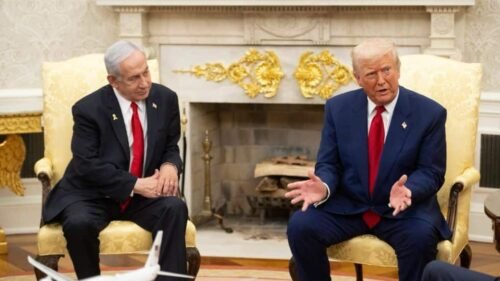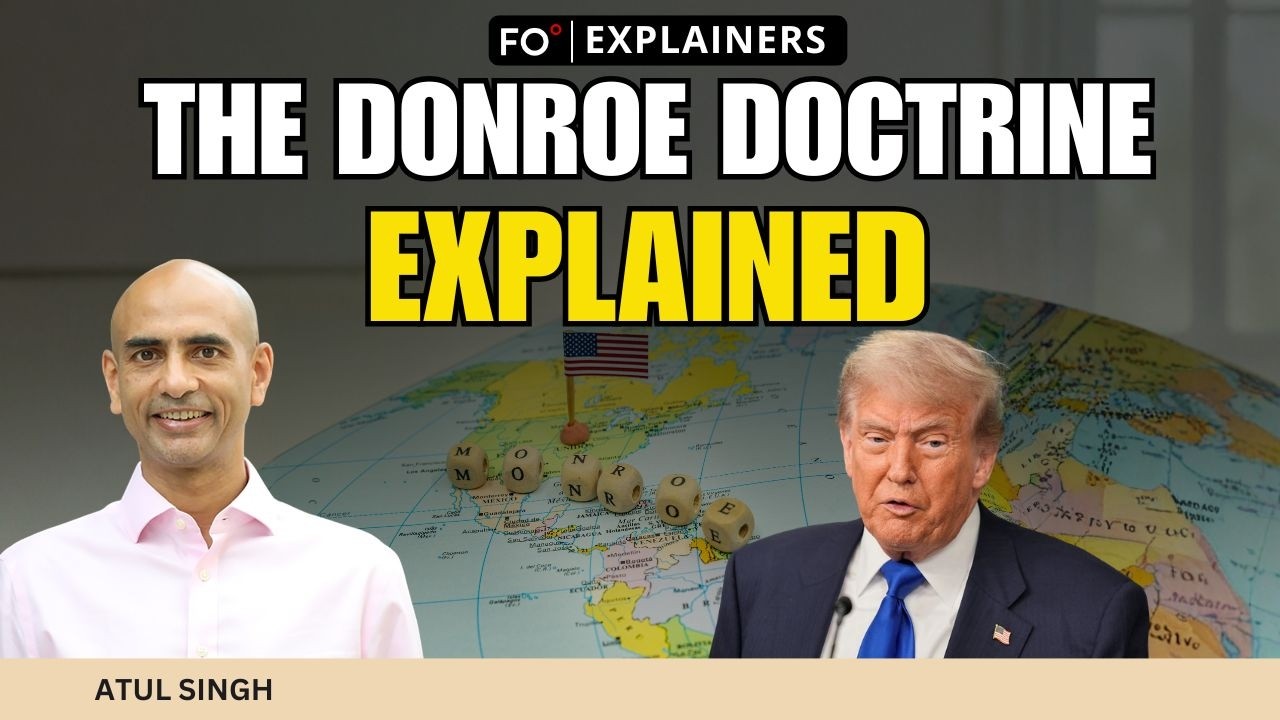
Video Producer & Social Media Manager Rohan Khattar Singh interviews political commentator Kyle Moran about US President Donald Trump’s tariff policies and their far-reaching consequences. Their conversation probes the uncertainty of Trump’s approach, the reactions from BRICS nations and how these economic measures may ripple into global alliances, defense strategy and technological competition.
Economic cold war?
Khattar Singh begins by asking whether Trump’s tariffs mark the start of an economic cold war. Moran doubts this, pointing out that the policy is riddled with uncertainty. Some tariffs face legal challenges, and Trump himself has a history of walking back duties when they risk fueling inflation. While Trump sometimes frames tariffs as inherently good, Moran insists he is pragmatic enough to avoid market chaos or consumer backlash.
Moran highlights three questions to watch: which countries will get exemptions, which will strike free trade agreements and how courts will ultimately rule. For now, no one, including Trump, can say exactly where tariff policy is headed. This unpredictability makes life difficult for businesses, as seen with the failed 500% tariffs on Chinese imports that raised costs but produced no concessions from Beijing.
Does Trump want a deal?
On tariffs as a negotiating tool, Moran stresses the volatility of Trump’s approach. Duties could fall if parties reach agreements or rise if talks collapse. But Trump’s frequent public reversals mean even his advisors lack clarity. Moran recalls that the extreme tariffs on China hurt the US economy and consumers more than they pressured Beijing, underscoring the limits of this strategy.
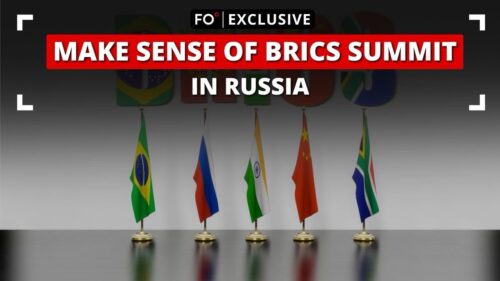
Is Trump uniting BRICS?
Khattar Singh presses Moran on whether tariffs could backfire by pushing BRICS nations closer together. Moran concedes there is some risk: Resentment could bring members “slightly closer.” However, he doubts a 10% tariff would overcome deep divisions. India and China remain at odds, while Iran and the United Arab Emirates also clash. He predicts that as BRICS grows in influence, its geopolitical fractures will become more apparent.
The BRICS plan to set up their own payment system outside the Society for Worldwide Interbank Financial Telecommunication has become especially controversial. Initially framed as a sovereignty tool, it now allows Russia to dodge sanctions. Moran warns that without guardrails, the system could facilitate dangerous activity. Washington, he argues, will grow increasingly alarmed, and Trump may try to use tariffs to block its expansion.
Trump and India
Moran singles out India as a vital partner. He sees potential for a bilateral trade deal with New Delhi and hopes for a deeper US–India alliance, especially given shared concerns about China. Defense is central here. Moran criticizes India’s reliance on Russian systems, citing Iran’s failure to stop Israeli attacks with its S-300 missile systems. He argues this is a “wake-up call” for India and urges the country to purchase US-designed systems instead.
Khattar Singh counters that US MIM-104 Patriot systems have struggled in Ukraine and that India’s Russian-made S-400s performed effectively against Pakistan. Still, he notes India’s growing trust in the United States, pointing to its purchase of Boeing AH-64 Apache helicopters.
A US–India trade deal
Turning to economics, Moran distinguishes between what a Trump–India deal might look like and what it should. Trump’s fixation on the Harley-Davidson motorcycle company complicates negotiations, while issues such as manufacturing and IT services remain sensitive. Yet Moran insists that bilateral engagement with India is far more practical than attempting to juggle hundreds of simultaneous agreements.
He allows that multilateralism with BRICS could serve US interests in some cases, but stresses that internal divisions make bilateral deals the safer path. For India, alignment with Washington on trade and defense could strengthen both nations’ positions in the global order.
The future of AI
Khattar Singh and Moran agree that AI will define the next economic era. Moran points to the UAE’s aggressive push to become an AI hub and warns against leaving the field to China, whose advances he identifies as potentially disastrous. He argues the US should not try to handle AI challenges alone.
Khattar Singh notes India’s vibrant AI ecosystem, from widespread use of ChatGPT to national investment in research. Together with the US and the UAE, India could anchor an AI partnership. By contrast, the European Union’s regulatory environment discourages innovation. As Moran bluntly notes, “None of these AI companies are European. Zero.”
Are Americans paying for tariffs?
In closing, Khattar Singh asks whether tariffs ultimately hurt Americans. Moran’s answer is a resounding yes. Economists are right, he says, that tariffs raise domestic costs. The effect depends on scale — targeted tariffs like those on Chinese aluminum in 2018 were manageable, but sweeping 500% tariffs would devastate consumers and industry.
Trump himself is inconsistent, sometimes framing tariffs as leverage, other times as revenue. That inconsistency suggests tariffs will not disappear quickly. Moran ends by stressing that the US needs competitive partners. While not excluding Europe, he doubts the old transatlantic alliance can deliver innovation. For him, the future lies in closer ties with India — on defense, trade and especially AI.
[Lee Thompson-Kolar edited this piece.]
The views expressed in this article/video are the author’s own and do not necessarily reflect Fair Observer’s editorial policy.