





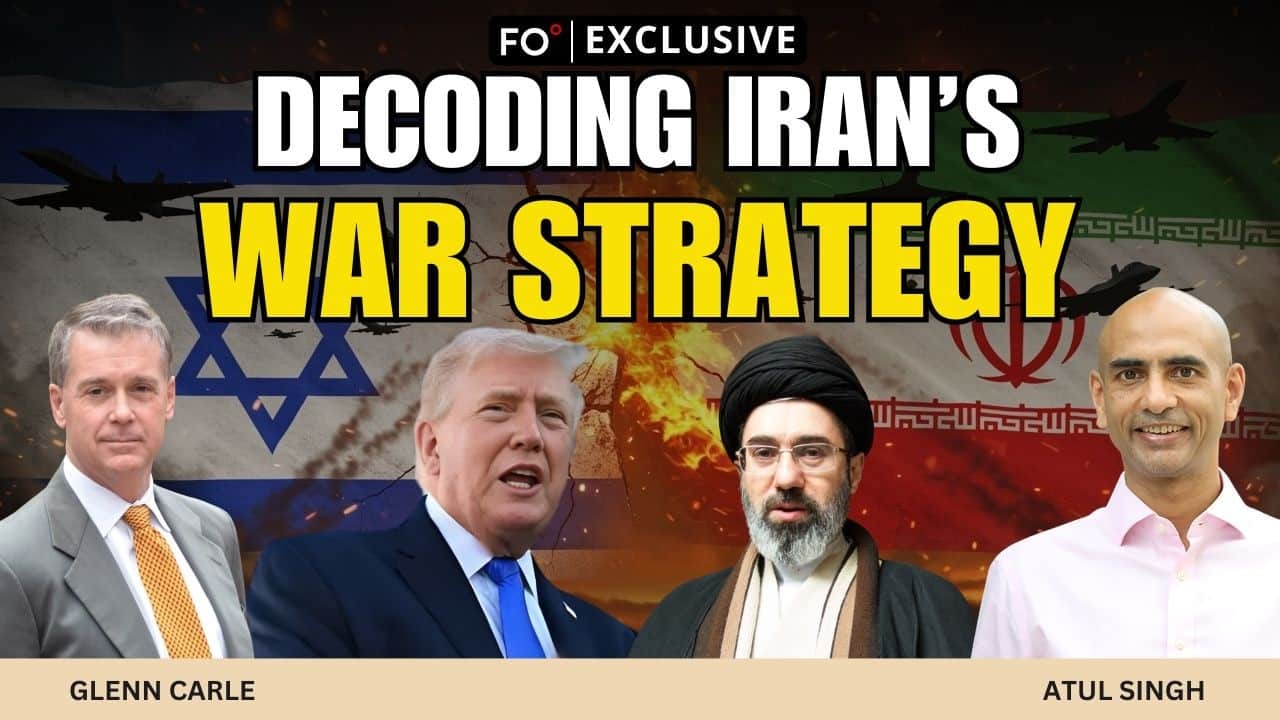
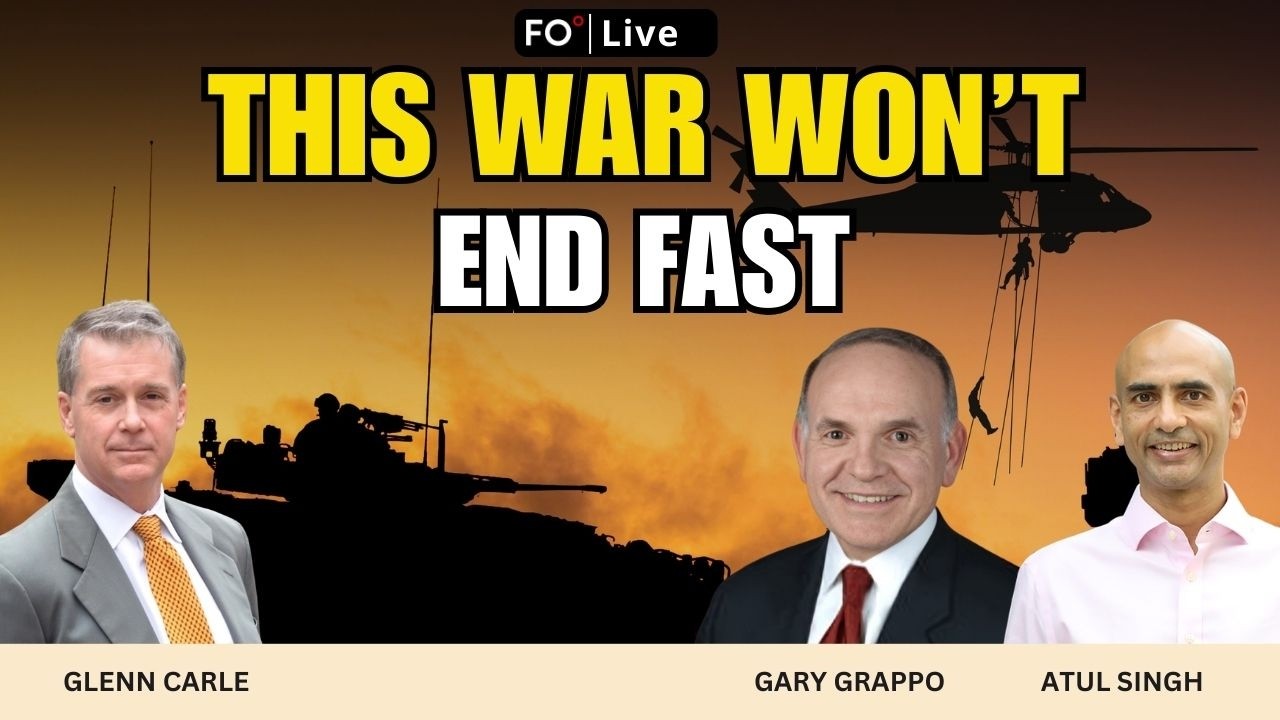
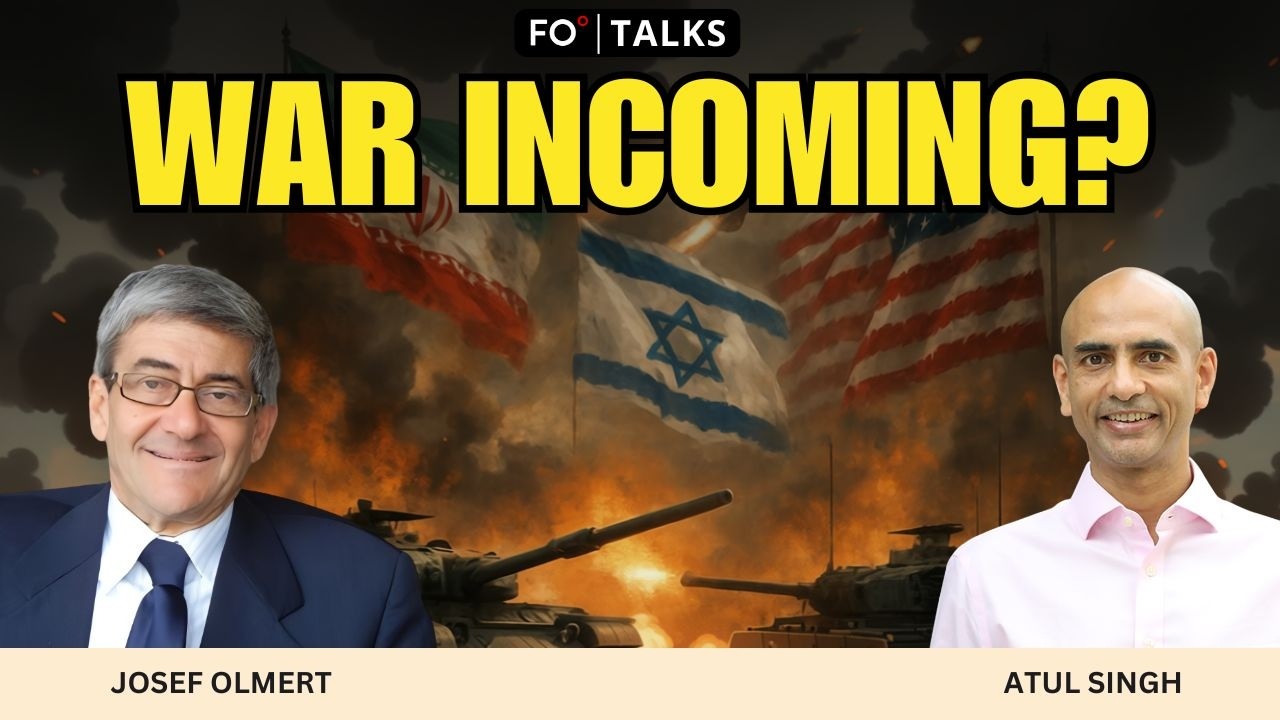
Editor-in-Chief Atul Singh and FOI Senior Partner Glenn Carle, a retired CIA officer who now advises companies, governments and organizations on geopolitical risk, continue the March 2026 edition of FO Exclusive by discussing the most consequential development of the month: the widening US–Israel war with Iran. They frame the conflict not simply as a regional confrontation but as a structural shock with military, economic and geopolitical implications. By examining battlefield dynamics, strategic scenarios and cascading economic effects, Atul and Glenn argue that the war is already reshaping assumptions about power, markets and the global order.
Tactical success, strategic uncertainty
Atul starts with the scale of the military campaign. By March 21, 21 days into the war, US and Israeli forces had struck more than 7,800 targets, destroyed over 120 vessels and flown more than 8,000 combat missions. The opening phase appeared to demonstrate overwhelming operational dominance. Yet the expected political result — rapid Iranian capitulation — has not materialized.
Instead, Iran has absorbed the strikes and continued to resist. Glenn emphasizes that tactical superiority does not automatically translate into strategic victory. The early assumption that Iran would collapse under pressure now appears misplaced. The discussion, therefore, pivots from battlefield metrics to the structural factors underpinning Iranian resilience.
The IRGC and the “mosaic” model
Atul and Glenn argue that Iran’s endurance stems largely from the Islamic Revolutionary Guard Corps (IRGC) and its decentralized “mosaic strategy.” Over decades, the IRGC has built a dispersed command structure with redundant leadership layers, independent provincial decision-making and distributed infrastructure. This design reduces the effectiveness of decapitation strikes and allows continued operations even after heavy losses.
Glenn explains the logic by comparing centralized vulnerability to distributed resilience: “If you have a single point of failure, you cut a telephone wire and… the communication stops, but if you have 50 different telephone wires going 50 different routes, then you have a much harder problem.” The analogy underscores how Iran’s structure mirrors modern networked systems. Deep underground facilities, dispersed drone production and succession planning up to four levels reinforce this resilience. As a result, the conflict has shifted from expectations of quick collapse to the prospect of prolonged attrition.
Four scenarios, one dominant trajectory
Atul and Glenn outline four potential outcomes. The first, Iran folding, now appears unlikely. The second, an early negotiated settlement, is rational but improbable given mutual distrust and divergent objectives. The third scenario, unilateral cessation by Washington and Jerusalem, also seems doubtful because Israel perceives the conflict as existential and seeks continued pressure.
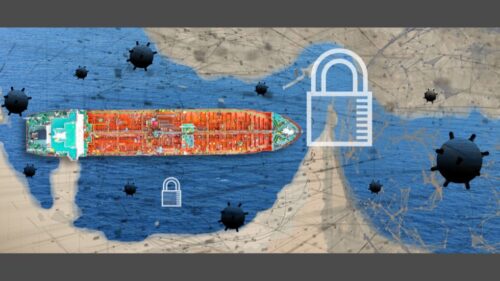
The fourth scenario, escalation, appears the most likely. Iran’s leverage lies in constraining traffic through the Strait of Hormuz, while the United States faces pressure to reopen the chokepoint. Glenn questions Washington’s strategic clarity, invoking a proverb to highlight the problem: “Whatever wind is blowing… serves no purpose if you have no destination.” Without a clear objective, escalation risks becoming self-perpetuating.
| Scenario | Key Factors | Likelihood |
Scenario 1 Iran folds | Iran’s military resilience, deep underground missile infrastructure, decentralised command structure, and resurgent nationalism make a rapid capitulation highly unlikely. The conventional assumptions underpinning this scenario are significantly weaker than markets currently recognize. | LOW |
Scenario 2 Early negotiated peace | Tehran’s distrust of American and Israeli negotiating intentions, combined with the physical danger posed to any Iranian negotiators, makes an early peace deal improbable. Powerful factions within Israel’s ruling coalition and in the security establishment also oppose a negotiated settlement. | LOW |
| Scenario 3 Unilateral US/Israeli cessation | American and Israeli strategic imperatives make a unilateral cessation unlikely. Israel perceives an existential Iranian nuclear threat and views this as its last window to act. The US must reopen the Strait of Hormuz to preserve dollar hegemony and cannot afford the perception of defeat by a middle power. | LOW |
Scenario 4 Conflict escalates | With no party willing or able to stop fighting, escalation is the most probable trajectory. Iran has curtailed traffic through the Strait of Hormuz and is settling in for a war of attrition. The US and Israel, unable to achieve their objectives at the current intensity of operations and unwilling to accept the strategic cost of withdrawal, face mounting pressure to escalate — but all conventional options, from forcing the strait open to deploying ground troops, carry substantial risk. FOI assesses with high likelihood that the conflict will intensify and continue for months, not weeks. | HIGH |
Atul adds that Israeli strategy resembles “mowing the lawn,” repeatedly degrading Iranian capabilities in hopes of weakening the regime. Yet this approach, combined with Iranian resilience, increases the likelihood of sustained conflict rather than decisive resolution.
Short- and medium-term economic shock
Beyond military scenarios, Atul and Glenn stress immediate economic consequences. Disruption in the Strait of Hormuz constricts energy supply, raising prices for crude oil, LNG and refined products such as jet fuel and diesel. Prices of fertilizers and industrial inputs will shoot up as well, causing high inflation globally. All “danger signs are flashing red.”
Within a year, the effects compound. Higher fuel and fertilizer costs threaten agricultural output, raising the risk of food shortages, particularly in import-dependent countries. Gulf monarchies, facing reduced energy revenue, may draw down investments, sell assets and pause purchases of US debt. These shifts could push interest rates higher and depress global asset prices.
The ripple effects extend across Europe, Asia and emerging markets worldwide. Energy-dependent economies face slower growth, while manufacturing centers confront rising input costs. Financial markets may be underestimating the persistence of these pressures.
Long-term consequences for global order
Looking further ahead, Atul and Glenn warn of a profound structural transformation. Sustained high energy prices could produce stagflation reminiscent of the 1970s, or even more severe inflation given today’s monetary conditions. Monetary policy has been far too loose for far too long. Furthermore, the petrodollar system may weaken if Gulf states lose confidence in US security guarantees. Reduced demand for dollars could gradually erode America’s financial dominance.
Glenn concludes with a broader geopolitical warning. He suggests what intelligence planners like him once envisaged as the worst-case scenario: Pax Americana is giving way to a fractured international system. The restraints of international law and the UN-Bretton Woods system on inter-state behavior are declining. Instead, the world is experiencing an increase in Hobbesian conflict, and increasing striation of states into “haves” and “have-nots,” in which the strong become stronger and the weak become de facto satellites. A system with several poles with several great powers is emerging. Weaker states increasingly orbit around these poles. A Hobbesian world where the powerful dominate and the weak suffer is increasingly coming into place.
Atul concludes by saying that this could be America’s Suez and 2026 is the new 1956. If Iran prevails then it will extract geopolitical rent from the Strait of Hormuz. The Persian Gulf will not be an American lake again. Donald Trump would end up as the American Anthony Eden who presided over the British disaster to retake Suez, another key chokepoint, in 1956. There is a further question about American global hegemony: If America cannot open the Strait of Hormuz, can the US Navy enter the Taiwan Strait?
[Lee Thompson-Kolar edited this piece.]
The views expressed in this article/video are the author’s own and do not necessarily reflect Fair Observer’s editorial policy.





















Comment