


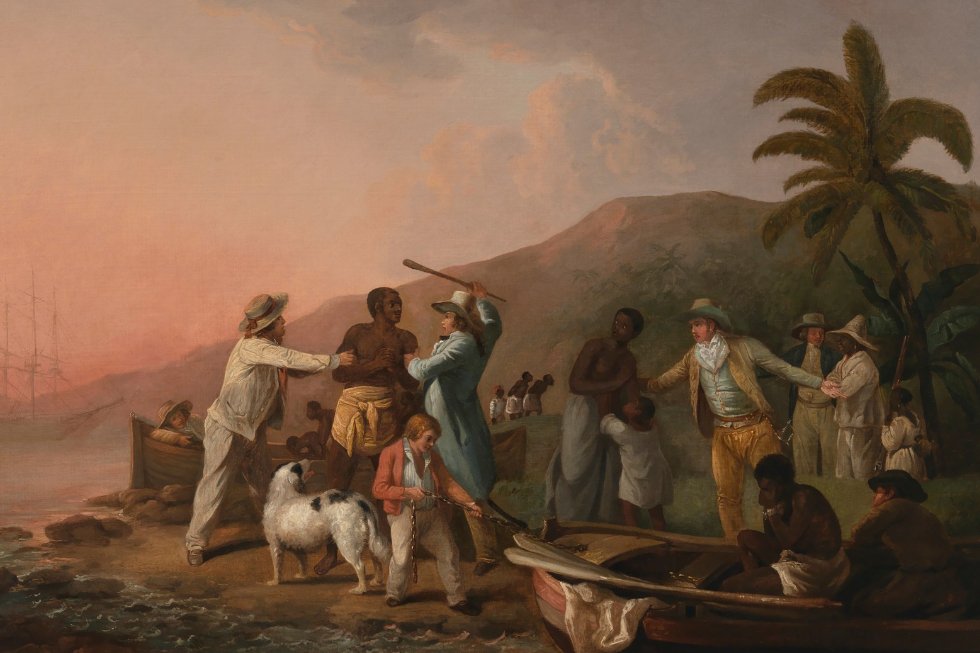


In 1783, Lord Mansfield, England’s Lord Chief Justice, ruled on the Zong case, named after the ship that cast 142 enslaved Africans overboard and then submitted a claim on cargo insurance. Mansfield effectively had to answer the question, “Can human beings be cargo?”
In the event, Mansfield ordered another trial and so avoided confronting a moral issue at the heart of slavery. It sounds grotesque today, of course. But the fact that England’s most senior judge bore the task of addressing it suggests how differently the world seemed, or actually was, to Europeans in the 18th century, the peak period for the transatlantic trade in humanity.
Wrongdoings of the past
During his recent Caribbean tour, King Charles III faced a question redolent of slavery, racism and the absolute primacy of whiteness. He didn’t directly answer nor even engage with it, and seemed adept at evading it when asked in several different ways. All reduced to this: Is Britain prepared to make amends for the wrongs it inflicted through slavery by providing compensation to those who have been wronged?
“Pay us what you owe us” read a placard held by a protester in the Bahamas, a former British colony, when Charles joined a carnival parade in Nassau’s Parliament Square. The police moved on other protestors, though not before the demonstration’s leader had described the King as a symbol of slavery “atrocities.”
Demands for reparations or some kind of apology threatened to overshadow the eight-day tour, though the closest the King came was when he acknowledged “the wrongdoings of the past are a cause of the greatest sorrow and the deepest regret,” adding: “None of us can change the past. But we can commit, with all our hearts, to learning its lessons.”
Is an apology an adequate response? It’s usually a regretful acknowledgment of an error, a mistake or an oversight. Slavery was a purposeful action, pursued over nearly four centuries. Its scale raises a question that goes beyond the conduct of individual slave traders: How could an institution so profoundly inhumane become an integral part of the economic, political and social life of Europe for so long?
Slavery rewarded its beneficiaries handsomely while subjecting entire populations to barbarous treatment and denying them the most basic human rights. To reconcile such brutal exploitation with any claim to moral legitimacy, its defenders reached for religious doctrine and theories of racial difference that purported to establish the inherent inequality of human populations. As such, many participants in the practice would not have considered themselves guilty of wrongdoing.
An apology from their descendants or from institutions they helped establish therefore raises an awkward question: Can you apologize on behalf of people who lived centuries ago, whose values, principles and moral assumptions differed from our own — and who, if given the opportunity, would probably have refused to apologize themselves?
12.5 million Africans, 10.7 million survivors
In 1441, a Portuguese adventurer named Antão Gonçalves landed on the West African coast. Serving Prince Henry of Portugal, later known as Henry the Navigator, he had gone in search of seal skins and oil. He returned with something else: two African captives, a man and a woman, whom he had seized and taken aboard his ship.
The episode was unremarkable enough to become a precedent. Gonçalves had discovered that human beings, like animal skins or other commodities, could be acquired, transported and sold. Further expeditions followed, and what began as sporadic raiding developed into an organized trade in human beings.
Slavery was hardly a Portuguese invention. It had existed in different forms across Africa, Europe and elsewhere for centuries. What emerged from European expansion along the African coast, though, was a system of racialized chattel slavery on a colossal transatlantic scale. Over the following four centuries, traders forcibly shipped an estimated 12.5 million Africans to the Americas; about 10.7 million survived the passage. Millions more suffered and died in captivity, their lives subordinated to the commercial interests of others.
They and their descendants faced generations of brutal forced labor, family separation, physical violence, legal exclusion and dehumanization. The trade enriched merchants, shipowners, insurers and states, supplied the labor that sustained plantation economies and helped finance the expansion of European empires. Its effects didn’t end with abolition. They helped structure the economic and social inequalities that remain part of the world today.
History of reparations
The demand for reparations has a longer history than the present Caribbean campaign. In the United States, formerly enslaved people sought compensation and land after the Civil War. General William T. Sherman’s 1865 order setting aside land for formerly enslaved families — the origin of the phrase, “forty acres and a mule” — subsequently got reversed. The American government never delivered a general program of compensation to those emancipated.
In the Caribbean, organized demands gathered force during the 1970s, amid the growth of Black Power and black nationalist movements. Jamaica’s Rastafari movement, in particular, called for repatriation to Africa and reparations from the British Crown. These demands connected the experience of slavery with the continuing consequences of colonial rule.
Calls for reparations were renewed in 2020, following the murder of George Floyd in Minneapolis, Minnesota, and the worldwide protests that followed. In England, demonstrators toppled the statue of Edward Colston, the 17th-century slave trader and philanthropist, into Bristol Harbor. The statue of Robert Clive, the East India Company soldier and administrator, also became a focus of demands to remove monuments celebrating Britain’s imperial past. These actions were not only about statues: They challenged the dignity and honor accorded to men whose fortunes and reputations were founded on exploitation and imperial conquest. The protests helped bring questions of historical responsibility into the foreground and gave fresh force to demands for acknowledgment and redress.
Moral questions
The morality of reparations and apologies is not transparent. Slavery was a uniquely horrific institution, but comparing it to other historical atrocities helps us consider the principles and limits of historical responsibility. The systematic oppression and murder of six million European Jews by Nazi Germany and its collaborators, an act of genocide known as the Holocaust, is perhaps the most obvious comparison. The Nazi party also persecuted and killed Romanis, the disabled, gay men and other groups. After World War II, West Germany accepted responsibility for compensation and restitution.
Under the 1952 Luxembourg Agreement, it agreed to pay reparations to Israel and to the Claims Conference, which represented Jewish organizations and survivors. Payments and compensation to individual survivors continued over subsequent decades. This wasn’t a cash settlement between two states: It involved an acceptance of responsibility, restitution and long-term provision for those who’d suffered. (Do not confuse this with the reparations imposed on Germany after World War I under the Treaty of Versailles.)
The Holocaust remains in living memory. Many survivors are still alive and the perpetrators belonged to a political regime that existed less than a century ago. But what of the barbarities committed much earlier? Nobody seriously demands that Norway apologize or pay reparations for the Viking raids and settlements across northwestern Europe between the 8th and 11th centuries. Nor is there a contemporary campaign demanding that Mongolia compensate the descendants of populations devastated by Genghis Khan’s conquests in the 13th century.
It would be ridiculous to imagine Italy being asked to apologize for the violence and conquests of the Roman Empire. Is there, then, a statute of limitations on historical responsibility? How far back can a claim for reparations reasonably reach, and what determines whether a historical wrong remains an obligation for those who inherit the institutions, wealth or advantages associated with it?
Longlasting consequences
Those who argue for reparations don’t claim that people alive today are personally guilty of enslaving Africans. Their argument is that the consequences of slavery didn’t end with abolition. Wealth accumulated through the trade and plantation economies helped establish the commercial and financial power of Europe and the US, while formerly enslaved populations and their descendants were and are left with little or no compensation for generations of exploitation.
The economic advantages and disadvantages created by that history weren’t erased: They became integrated into institutions, patterns of ownership and international economic relationships that continued to affect global processes. Tate & Lyle (a publicly listed company with a market capitalization of approximately £2.5 billion ($3.3 billion)), Lloyd’s of London (whose insurance market is backed by more than £129 billion (nearly $174 billion) in capital) and the Bank of England (now wholly owned by the British government) illustrate commercial and institutional continuity.
These and other financial institutions benefited from the compensation paid to slave owners after abolition, rather than to the populations they enslaved. For campaigners, the injustice is not the human exploitation of centuries ago — terrible as that was — but that its longlasting economic consequences have never been addressed.
Culture and conventions
And yet the question that must surely have crossed the King’s mind returns: How can people today be expected to apologize for actions committed by people who lived in a profoundly different moral and social world? Many Europeans who participated in or benefited from slavery didn’t regard themselves as doing evil. Indeed, some were sincere Christians who believed that their conduct was compatible with God’s wishes. The culture and conventions of their time shaped their assumptions about race, human difference, property and natural hierarchies.
There were, of course, contemporaries who opposed slavery, sometimes at considerable personal cost; but the existence of opposition doesn’t mean that the institution was generally understood as an abhorrence, as it is today. British Prime Minister Andy Burnham’s argument that present-day Britons can’t be held personally liable for wrongs in which they played no part gives contemporary political expression to this position.
Nobody alive today can be personally guilty of the transatlantic slave trade. Can a state, a monarchy, a church or a commercial institution inherit obligations from its past, particularly when some of the wealth and advantages it accumulated endure? An apology might acknowledge historical wrongdoing without attributing personal guilt to the living.
But it’s difficult to regard an apology as only a gesture. To apologize is to accept that a wrong was committed. And once someone accepts responsibility for a historical wrong, it follows almost logically that they will be petitioned to recompense descendants of the victims.
This is where apology and reparations become entwined. They are conceptually distinct: One acknowledges wrongdoing; the other seeks material redress. But an apology can strengthen the moral and political case for compensation, even if it doesn’t amount to a legal admission of liability. Conversely, a refusal to apologize may be intended to prevent precisely that. What begins as a demand for acknowledgment can become a demand for payment. The question facing Britain, then, is not just whether it should apologize for slavery, but what such an apology might commit it to doing.
[Ellis Cashmore is the author of Celebrity Culture.]
[Lee Thompson-Kolar edited this piece.]
The views expressed in this article are the author’s own and do not necessarily reflect Fair Observer’s editorial policy.
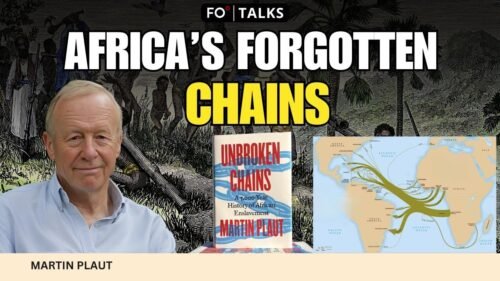
FO° Talks: The 5,000-Year Secret History of African Slavery They Don’t Teach You
In this episode of FO° Talks, Martin Plaut traces five millennia of African enslavement, beginning with the Atlantic trade before...
Britain’s Commitment to Retaining the Spoils of History
Britain’s most powerful Tory and the wealthiest Tory seem to share the same approach not only to contemporary politics, but...

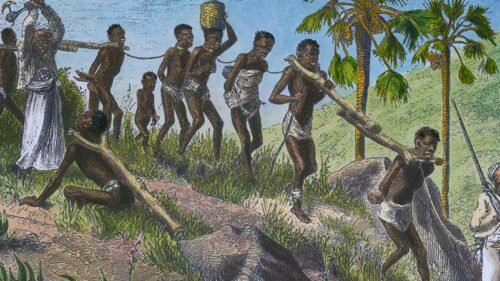
The Transatlantic Slave Trade Led to the Birth of Racism
European expansion to the New World and the birth of the global modern economy was enabled by African slavery and...
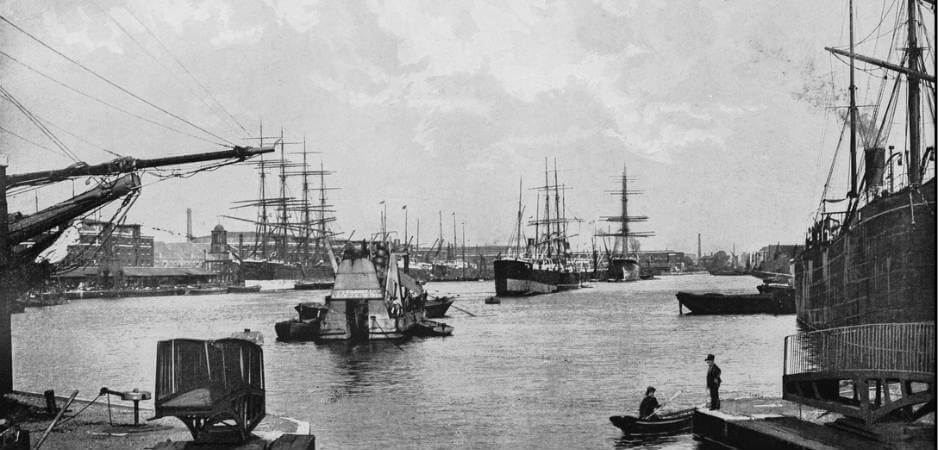
Switzerland Confronts Its Role in the Slave Trade
Until 2003, much of Switzerland’s history relating to the slave trade was largely unknown.

Support Fair Observer
We rely on your support for our independence, diversity and quality.
For more than 10 years, Fair Observer has been free, fair and independent. No billionaire owns us, no advertisers control us. We are a reader-supported nonprofit. Unlike many other publications, we keep our content free for readers regardless of where they live or whether they can afford to pay. We have no paywalls and no ads.
In the post-truth era of fake news, echo chambers and filter bubbles, we publish a plurality of perspectives from around the world. Anyone can publish with us, but everyone goes through a rigorous editorial process. So, you get fact-checked, well-reasoned content instead of noise.
We publish 3,000+ voices from 90+ countries. We also conduct education and training programs
on subjects ranging from digital media and journalism to writing and critical thinking. This
doesn’t come cheap. Servers, editors, trainers and web developers cost
money.
Please consider supporting us on a regular basis as a recurring donor or a
sustaining member.
Will you support FO’s journalism?
We rely on your support for our independence, diversity and quality.





Comment