






Russia’s war against Ukraine has exposed how uneven Europe’s security architecture remains at its eastern flank. For smaller countries outside formal defense alliances, questions that once belonged to the realm of political taboo are now discussed as political contingency scenarios rather than policy goals. Moldova sits at the center of this dilemma, formally committed to EU accession underlined by the last elections, yet continuously facing persistent external pressure and unresolved territorial disputes.
It is against this backdrop that recent remarks by Moldova’s President Maia Sandu on The Rest Is Politics: Leading briefly reignited discussions of reunification with Romania. While this normally would mean political suicide, at least if you are not representing rather fringe parties, the fact that Sandu is not running for reelection may have played a role in her willingness to speak more freely.
Yet external threats shape her perspective, which holds that developments around Moldova and globally must be taken into account, and that it is increasingly difficult for small countries to survive as democracies and remain sovereign, with the Russian Federation as the principal threat.
This is where context becomes crucial. The Kremlin has unsettled every security assumption between the Baltic and Black Seas. Moldova, wedged between Ukraine and Romania, finds itself in an especially precarious position. These geopolitical shifts have elevated debates that were previously confined to expert circles. Former fringe concepts now register as remote safeguards amid the looming danger of a stalled integration.
Shared history
Moldova-Romania ties trace to medieval principalities, later unified to the Kingdom of Romania in 1881, with the exception of Bessarabia, as the region between the Dniester and the Prut was called then, which was annexed by the Russian Empire in 1812. Following the empire’s collapse in 1917, Moldova’s first parliament, the Sfatul Țării, proclaimed independence and, faced with Bolshevik incursions as well as internal instability, requested Romanian military support in January 1918. The subsequent vote in April to join a union with Romania was therefore less an expression of national sentiment than a response to an immediate security vacuum. The arrangement endured until the Soviet reannexation via the Molotov–Ribbentrop Pact.
Many Moldovans possess multiple citizenships, including Romanian passports which are relatively straightforward to obtain due to liberal naturalization policies for those with ancestral ties to pre-1940 Romania. Around 1.5 million Moldovans already have Romanian citizenship, yet this dual status has not translated into majority support for reunification. Opinion polls consistently show that support for unification in Moldova fluctuates and remains below a stable majority, with 61.5% opposing reunification according to August 2025 polling. Romanian discourse juxtaposes cultural affinity against prospective economic, political and security burdens. What has changed is not the basic likelihood of reunification, but the political acceptability of discussing it openly.
EU integration as the primary path
For Moldova, the primary strategic project remains EU integration as a sovereign state. Candidate status and the opening of accession negotiations anchor the country’s political class and civil society in a long-term framework that promises institutional reform, economic modernization and a firmer place in the European legal and security space. Sandu herself acknowledged that most Moldovans do not share her personal support for reunification, stating that EU integration is a “more realistic objective.”
Reunification with Romania is not a substitute for this trajectory. It is framed as a backup option in case that path becomes blocked beyond repair — by Russian pressure, internal destabilization or a breakdown of Western political will.
The security logic behind this contingency thinking is straightforward. If Moldova were to unite with Romania, its territory would, at least in principle, become part of a NATO member state and thus fall under NATO’s collective defense umbrella. At a time when Russia has demonstrated a willingness to use force and coercion against its neighbors, the promise of collective defense has obvious appeal. But this line of reasoning quickly runs into hard legal and political realities.
The Transnistria complication
The first hard reality is Transnistria, the breakaway region on the left bank of the Dniester River, where a small Russian military presence and a frozen conflict have persisted since the early 1990s. NATO has traditionally avoided importing unresolved territorial disputes into the Alliance. Any attempt to extend collective defense automatically to territory that includes a Russian military footprint would force allies to confront the question of whether they are willing to underwrite, with their own security guarantees, a conflict they did not create and do not control. In practice, a reunification scenario would almost certainly require some form of legal or territorial clarification that excludes Transnistria from the area covered by collective defense, at least initially. Otherwise, the very thing that makes unification attractive from a security perspective could end up blocking it.
The second constraint lies not in eastern Moldova, but in Western capitals. Even before Russia’s full-scale invasion of Ukraine, debates on burden-sharing and diverging threat perceptions had revealed tensions within NATO. Recent crises have deepened doubts about the long-term reliability of US security commitments, not only through rhetoric but via concrete standoffs — such as the recent Greenland crisis caused by US President Donald Trump’s annexation threats — that forced Europeans to confront how vulnerable the Alliance can be to domestic political swings in Washington. Collective defense remains the cornerstone of European security, but its credibility is no longer treated as an unshakeable constant.
Why Article 42(7) matters more
This is why, in discussions about Moldova’s long-term security, the EU’s mutual assistance clause — Article 42(7) of the Treaty on European Union — has become more salient. On paper, its language is more categorical than NATO’s Article 5, obliging EU member states to provide “aid and assistance by all means in their power” if one of them is the victim of armed aggression.
Unlike NATO, this obligation extends to EU member states that are militarily neutral or nonaligned, such as Austria, Ireland or Cyprus. A Moldova–Romania union would therefore not only tie Moldova’s fate to NATO; it would insert Moldovan territory directly into the EU’s legal and political framework for mutual defense.
Why this is not German reunification
The inevitable comparison is with German reunification in 1990, but the differences are more instructive than the similarities. German reunification took place at the end of the Cold War in a permissive international environment, underpinned by the comprehensive Two Plus Four Treaty with all major powers and by clearly defined borders once the relevant treaties were signed. There were no unresolved territorial conflicts on German soil, Soviet troops withdrew under negotiated terms and popular support for unification was overwhelming and clearly expressed through the March 1990 elections, which functioned as a de facto referendum on unification.
Moldova faces none of these conditions: Russia is an active spoiler, not a cooperative partner; Transnistria remains unresolved; and public opinion on unification is deeply divided. German reunification succeeded because international law, great power consensus, popular will and territorial clarity aligned. In Moldova’s case, all four are absent or contested. The comparison serves less as a roadmap and more as a reminder of how rare and contingent successful peaceful unification actually is.
Internal obstacles remain
Even so, reunification would not magically erase Moldova’s internal and regional complexities. Transnistria is only one of several pressure points. Gagauzia, an autonomous region in southern Moldova with a predominantly Turkic and Orthodox Christian population, has consistently exhibited stronger pro-Russian political and media orientations than the rest of the country. In a 2014 referendum, which has no constitutional or international legal standing, Gagauz voters overwhelmingly backed closer ties with the Russia-led Eurasian Economic Union and signaled that, in the event of Moldovan unification with Romania, they would prefer a different geopolitical alignment and become independent.
For Moscow, both Transnistria and Gagauzia are less about direct annexation than about political leverage: tools to fragment public debate inside Moldova, complicate decision-making and constantly threaten to turn any major strategic choice into an internal legitimacy crisis.
The identity question
The domestic dimension matters at least as much as the geopolitical one. Unification is not only a foreign policy decision; it is an identity project. Many Moldovans hold overlapping or ambivalent identities — Moldovan, Romanian, European, post-Soviet — shaped by family histories, language, education and media consumption. A rushed or elite-driven unification process that disregards this diversity would risk destabilizing the very democracy it aims to protect. Conversely, an honest, pluralistic debate about unification can serve as a barometer for how Moldovan society understands its past and imagines its future.
From a Romanian perspective, the calculus is equally complex. Reunification would entail extending social, infrastructural and security commitments to a significantly poorer neighbor with unresolved territorial issues and a volatile security environment next door. While parts of Romanian society and sections of the political class are emotionally and historically invested in the idea of a “second union”, governing elites must weigh this against fiscal reality, EU-level politics and the risk of becoming a front-line state in an even more direct way than today.
Europe’s test case
Seen from Brussels, Berlin or Paris, Moldova’s potential reunification with Romania is less a question of historic justice and more a test case for the flexibility and resilience of the European order. If the EU and NATO are unable to provide small, vulnerable democracies with credible paths to security and prosperity, alternative scenarios — however risky or imperfect — gain salience. The unification debate is therefore as much a mirror of European uncertainties as it is a reflection of Moldovan and Romanian aspirations.
For now, Moldova’s most realistic and most democratic path remains the one it is already on: gradual EU accession as a sovereign state, combined with efforts to strengthen resilience, reform institutions and reduce vulnerabilities to Russian coercion. Reunification with Romania is unlikely in the near term, but Sandu’s podcast remark has moved it from the realm of the unthinkable to the realm of the discussable. That shift, in itself, is politically significant. It signals that in an era of war and systemic competition, even long-settled questions of borders and statehood in Europe are being quietly reopened — not by nationalist dreamers, but by those looking for ways to keep fragile democracies alive.
[David Smith first published a similar piece in Moldova Matters.]
[Kaitlyn Diana edited this piece.]
The views expressed in this article are the author’s own and do not necessarily reflect Fair Observer’s editorial policy.
Moldova Needs Security Guarantees as Part of Any Ukraine–Russia Peace Deal
Moldova’s security is crucial to any lasting Ukraine–Russia peace deal, requiring enforceable guarantees similar to those for Ukraine. With Russian...
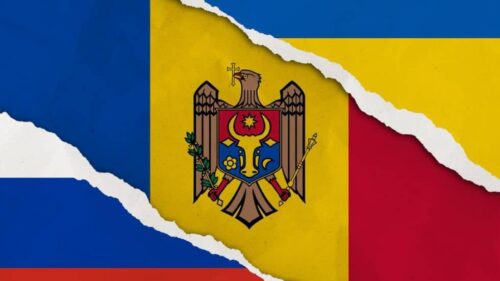
FO° Talks: Moldova’s Pro-EU Party Wins Pivotal Election: A Turning Point or Trouble Ahead?
In this episode of FO° Talks, Atul Singh and Sebastian Schäffer discuss Moldova’s 2025 parliamentary election, exploring the country’s struggle...
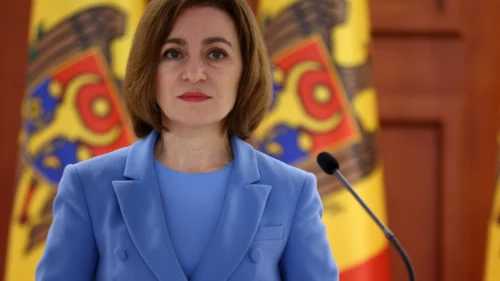
Moldova’s Defense Against Putin: Strong and Reformed State Institutions
Moldova's President Maia Sandu faces the challenge of reforming the country's corrupt justice system amid increasing Russian influence and hybrid...
Support Fair Observer
We rely on your support for our independence, diversity and quality.
For more than 10 years, Fair Observer has been free, fair and independent. No billionaire owns us, no advertisers control us. We are a reader-supported nonprofit. Unlike many other publications, we keep our content free for readers regardless of where they live or whether they can afford to pay. We have no paywalls and no ads.
In the post-truth era of fake news, echo chambers and filter bubbles, we publish a plurality of perspectives from around the world. Anyone can publish with us, but everyone goes through a rigorous editorial process. So, you get fact-checked, well-reasoned content instead of noise.
We publish 3,000+ voices from 90+ countries. We also conduct education and training programs
on subjects ranging from digital media and journalism to writing and critical thinking. This
doesn’t come cheap. Servers, editors, trainers and web developers cost
money.
Please consider supporting us on a regular basis as a recurring donor or a
sustaining member.
Will you support FO’s journalism?
We rely on your support for our independence, diversity and quality.





Comment