



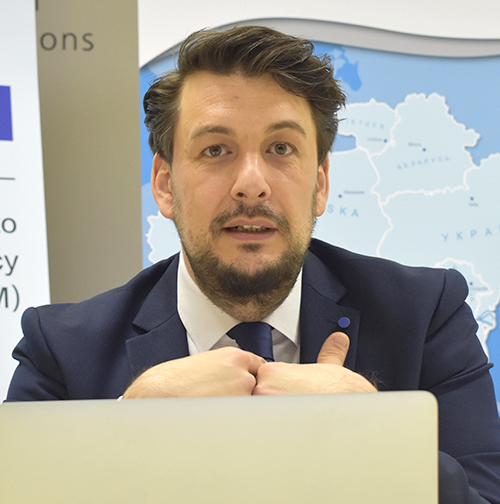
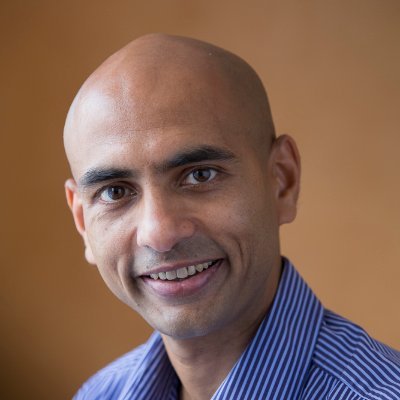
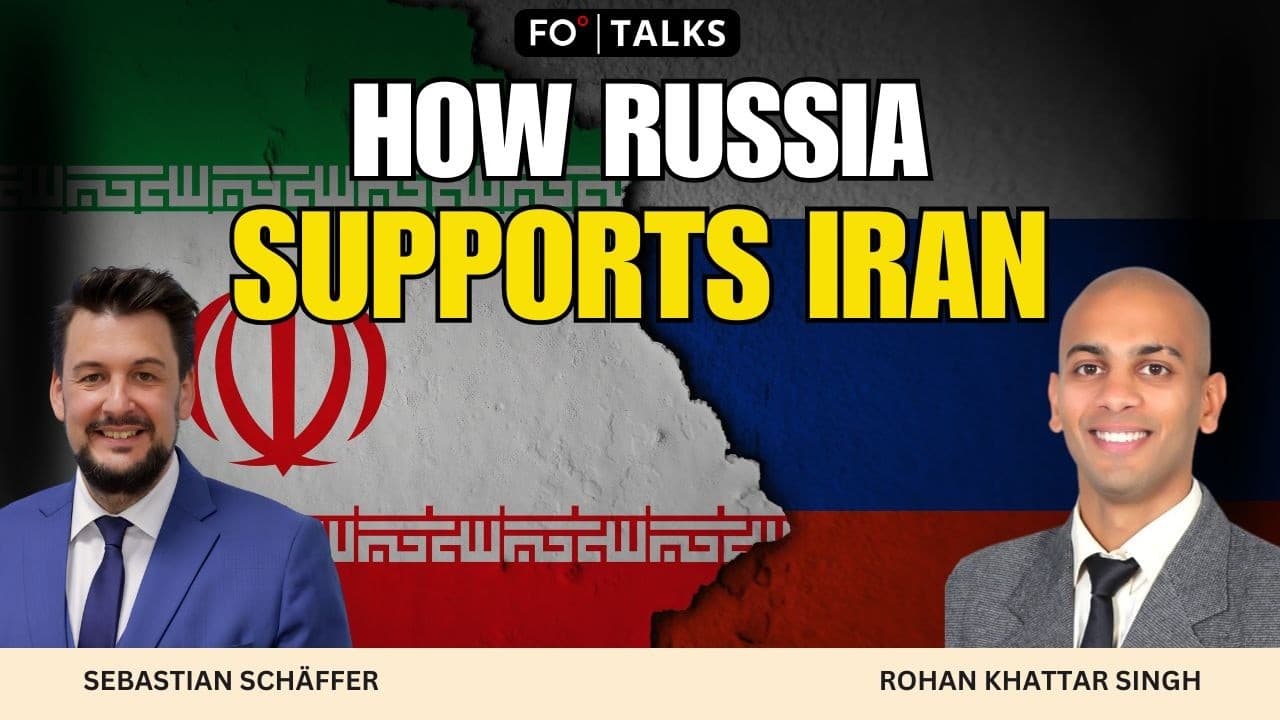
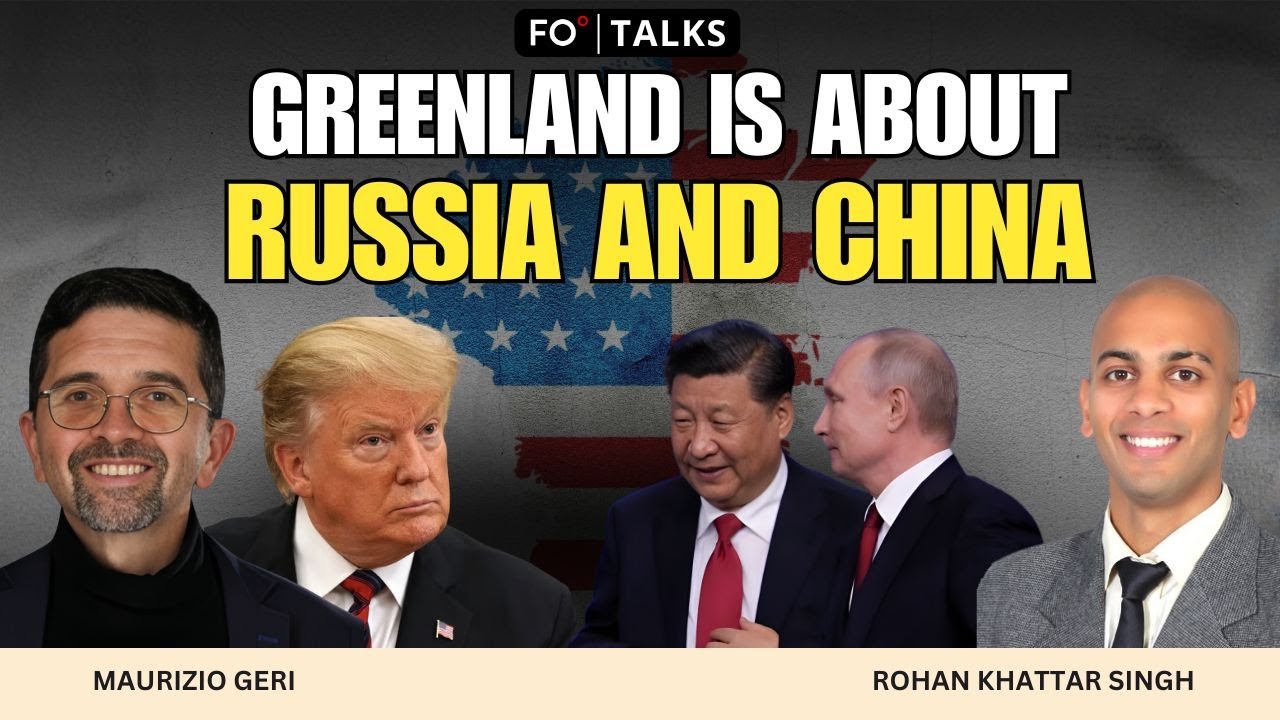
Fair Observer’s Video Producer Rohan Khattar Singh and Sebastian Schäffer, Director of the Institute for the Danube Region and Central Europe, discuss how the war in Ukraine is entering a precarious diplomatic phase, marked by intensifying pressure on the Ukrainian capital of Kyiv to accept an agreement that could trade territory for an uncertain peace. They examine two competing peace proposals now shaping the debate: US President Donald Trump’s leaked 28-point plan and Russian President Vladimir Putin’s expanded list of conditions. Their conversation explores whether either proposal represents a path toward peace or risks deepening Europe’s insecurity and accelerating the collapse of the post-1945 rules-based order.
Two peace plans for Ukraine
Schäffer begins by outlining the surprise emergence of Trump’s 28‑point plan, which Moscow leaked. He characterizes the document as sounding like “a wish list coming out of the Kremlin,” noting that many of its provisions align closely with long‑standing Russian demands rather than Ukrainian interests. The plan calls for Ukrainian territorial concessions, a formal end to NATO enlargement with respect to Ukraine, and a reduction of Ukraine’s armed forces to 600,000 troops. It includes recognition of Russian as an official state language and the return of the Russian Orthodox Church’s institutional role inside Ukraine.
Several provisions strike Schäffer as strategically incoherent. One provision limits NATO deployments by stipulating that only European fighter jets should be stationed in Poland, a restriction that constrains US foreign policy within the alliance itself. In response to the plan, a coalition of the willing, including many European Union member states along with Japan and Canada, sought to revise and soften some of its most controversial elements. These amendments, Schäffer explains, were designed to move the proposal closer to something Ukraine might plausibly consider.
Putin’s conditions
Putin’s counterproposal followed almost immediately. It demands that Ukraine fully withdraw from four oblasts — Donetsk, Lugansk, Zaporizhzhia and Kherson — which Moscow now claims as part of the Russian Federation. Putin paired this demand with a threat that Russia would seize the territories militarily if Ukraine failed to comply. Ironically, Russia has not managed to fully control these regions despite nearly four years of war.
Unlike the Trump plan, Putin’s demands explicitly require international legal recognition of Russia’s territorial gains. Schäffer believes this is an attempt to legitimize aggression after the fact, regardless of battlefield realities.
Europe under threat?
Khattar Singh presses Schäffer on whether these demands indicate a genuine Russian interest in peace. Schäffer frames the question through the lens of Cold War‑era “Kremlinology,” as interpreting Moscow’s intentions requires reading between the lines. He concludes that it is a stalling tactic, with “outrageous” demands that are fundamentally incompatible with Ukraine’s constitution and international law.
Schäffer warns that accepting such terms would dismantle the post‑World War II European security order. It would establish a precedent in which a powerful state can wage aggression, sustain it over time and ultimately receive territory as a reward. That logic existentially threatens border states and neighboring countries.
The consequences for Europe, Schäffer argues, would be immediate. Putin’s offer of written security guarantees carries little credibility given Russia’s record. The 1994 Budapest Memorandum and the post‑2014 Minsk agreements were both violated, leaving European governments skeptical that any new promises would be meaningful. As a result, Schäffer expects continued militarization across the continent, with stark differences between states. Poland, shaped by historical experience, has been preparing for years, while Hungary appears far less alarmed. Austria still places faith in neutrality, a belief that likely would not withstand a direct threat.
What next for Zelenskyy?
Turning to Ukrainian President Volodymyr Zelenskyy, the discussion highlights how limited his choices have become. Domestic pressure is mounting, with anti‑corruption authorities investigating senior figures within his administration. Militarily, Ukraine remains dependent on irreplaceable US intelligence sharing, as well as US weapons systems purchased by European allies and transferred to Kyiv.
Should Washington restrict intelligence or weapons sales, Zelenskyy could be forced toward a poor deal. Schäffer admits he was deeply worried when the peace plan first surfaced, fearing that Trump might simply coerce Ukraine into signing unfavorable terms. While Zelenskyy has shown a willingness to compromise, territorial concessions present a legal and constitutional barrier. He cannot surrender territory outright without mechanisms such as a referendum; doing so could expose him to charges of treason.
Ukraine’s future
Schäffer outlines three plausible scenarios for the coming years. The first is a frozen conflict, in which major hostilities cease but the risk of renewed fighting remains high. The second is a prolonged war, extending the insecurity Europe has already endured. The third — Ukraine regaining its 1991 borders — is, in Schäffer’s assessment, “very unlikely” under current conditions.
Regardless of the outcome, Schäffer cautions that Europe must prepare for sustained instability. The next five to ten years, he argues, will be marked by ongoing threats, uncertainty and strategic tension across the continent.
End of global order?
Schäffer ends the conversation by assessing the stakes. He says the European security order built after 1945 is effectively finished. The principle that borders cannot be changed by force was fatally damaged no later than February 24, 2022, and arguably as early as Russia’s annexation of Crimea in 2014.
Even if Ukraine were to cede territory through legal means, Schäffer doubts this would produce lasting stability. International recognition of such outcomes would signal that states with veto power on the UN Security Council can compel weaker countries to relinquish land. Most importantly, Ukrainian society is unlikely to accept permanent occupation quietly. The war’s diplomatic phase may intensify, but its political and moral consequences are only beginning to unfold.
[Lee Thompson-Kolar edited this piece.]
The views expressed in this article/video are the author’s own and do not necessarily reflect Fair Observer’s editorial policy.



















Comment