


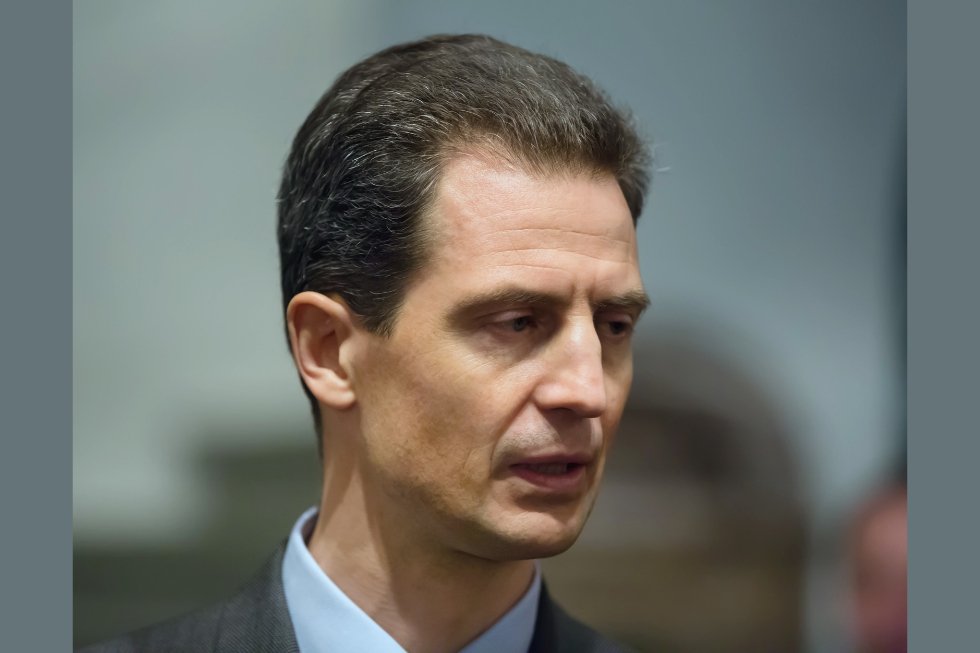


We know the ingredients: a royal family divided, competing versions of the past, disputed loyalties and a clash over who gets to define the family story. It is a scandal packed with accusations, grievances and ancient resentments. Entwined is a struggle over status, authority and influence, and questions about who belongs and who gets to decide. And at its heart are allegations that one side is tightening its grip while the others are fighting for their rights. Yes, it is the Princely House of Liechtenstein.
Princely sum
Sandwiched between Switzerland and Austria, the independent principality of Liechtenstein is, at 62 square miles, almost exactly the size of Washington, DC. Its population is just over 40,000 — that’s smaller than Woonsocket, Rhode Island. Its capital, Vaduz, has only about 5,000. But this is a mouse that roars, so to speak. Unfolding in this tiny nation is a major controversy that may not have the shock potential of the House of Windsor versus Charles Spencer, but thrums with intrigue just the same.
The Liechtenstein family acquired Vaduz and Schellenberg in the early 18th century. The territory became an imperial principality — a state ruled by a prince — in 1719 and eventually a sovereign state (ie, not dependent on other powers). Liechtenstein was not a monarchy created by a modern nation-state and subsequently democratized; the dynasty and the territory have been historically intertwined from the beginning. In a sense, it more closely resembles a 17th-century feudal state than a modern industrial power.
Or, at least, it did until 1921, when the country adopted a constitution and established a constitutional hereditary monarchy. The constitutional settlement preserved an unusual space for the Princely House itself, which exists as a formal institution parallel to the state. As a result, the Prince retains substantial political power.
The Princely House has its own House Law governing matters of membership, titles, succession, inheritance and family affairs. And those rules have now become the subject of a bloodless family rebellion.
Monogamous call girl
In August, Hereditary Prince Alois introduced measures that sound almost aggressively modern. Women now have succession rights and equal participation rights in matters governed by the House Law. Yet the reforms also give Alois greater authority over titles, coats of arms and membership of the Princely House, according to family members who oppose them. They say the changes weaken the checks previously exercised by other relatives, and they are considering legal action.
There is also, inevitably, the issue of money. The dissenting princes state that dynasty membership can have financial consequences because allowances are connected to princely status. The family’s fortune runs into the billions and much of it is tied up in LGT, a private bank the Princely House owns. Prince Max, Alois’s brother, oversees the bank. In 2025, it distributed roughly $878 million to the family.
The dissenting royals insist that money is not the problem. They want equal rights amongst the members of the Princely House. As one put it, presumably with a straight face, “Just because we’re princes, it doesn’t mean we don’t have basic rights.” I’m reminded of actor Patricia Arquette’s line at the end of the 1993 movie, True Romance: She owns up to being a “call girl,” but says, “When it comes to relationships, I’m 100% monogamous.” Self-contradictory to some, but perfectly consistent for others.
The apparent contradiction points us toward a serious question: What exactly does equality mean inside a hereditary institution whose existence actually depends on distinctions between people?
This is where Liechtenstein becomes more interesting than its size suggests. The country is thoroughly modern in almost every conventional sense: prosperous, industrialized, technologically advanced and culturally connected to the rest of Europe. Yet at the core of its political and social order lies a hereditary institution whose members inherit status rather than acquire it through democratic choice. It is, in effect, an antonym of meritocracy.
The contradiction is not necessarily a problem. After all, modern societies are full of them. We can believe in equality while admiring hierarchy, consume celebrity while professing indifference to fame and reject inherited privilege while remaining fascinated by those who possess it. Liechtenstein just makes the contradiction unusually conspicuous.
Cultural capital
The conflict we see in Liechtenstein is about what sociologist Pierre Bourdieu called cultural capital. An abundance of valuable possessions or money — wealth — is only one form of capital. Status, recognition, pedigree and the authority to define what counts as legitimate can be and often are valuable in their own right. This royal dispute is partly about the distribution of these things: who possesses them, who can confer them and, most importantly, who has the authority to decide who is or isn’t entitled to them.
Elsewhere in Europe, the relationship between hereditary status and political power has been transformed, taking a largely symbolic role. In Great Britain, for example, the House of Windsor has little direct political authority compared with the monarchy of earlier centuries. Yet its cultural capital remains prodigious, as it can still make the front page of tabloids worldwide.
That brings us to a self-reflective question: Why do we care?
Divine right of celebrities
For all our democratic and federalist constitutions, our 21st-century skepticism about hereditary privilege and, in some countries, outright republicanism, we still turn our heads when a royal family starts fighting. A bust-up among people who inherited their status rather than earned it should, rationally enough, be of little interest to the rest of us.
The Liechtenstein dispute may have consequences for Liechtensteiners and nobody else beyond. The Windsor disputes are unlikely to alter Britain’s constitutional arrangements. Yet we read about them, watch them, discuss them, speculate about them and, above all, pass judgment on the people involved. I am doing it myself.
This is one of the peculiarities of celebrity culture. Institutions can lose political power without losing cultural power. Royal families become more important as sources of stories, personalities, rivalries, scandals and symbols. The people at the center of these dramas may inhabit archaic institutions, but they have acquired something that modern democracy can’t abolish: our attention.
Perhaps this is why royal scandal has such longevity. The monarchy may be past its expiration date as a form of political organization, but as a form of cultural entertainment it remains fresh.
The divine right of kings is history. But we have absolutely not lost our appetite for something juicy about those kings, their families and the princes, princesses, Harrys, Meghans, Spencers and Aloises who come with them.
[Ellis Cashmore is the author of Celebrity Culture.]
[Lee Thompson-Kolar edited this piece.]
The views expressed in this article are the author’s own and do not necessarily reflect Fair Observer’s editorial policy.
Diana’s Ghost Haunts Britain’s Royals
Diana, Princess of Wales, transformed the British monarchy’s relationship with the media by introducing unprecedented openness and emotional vulnerability. This...
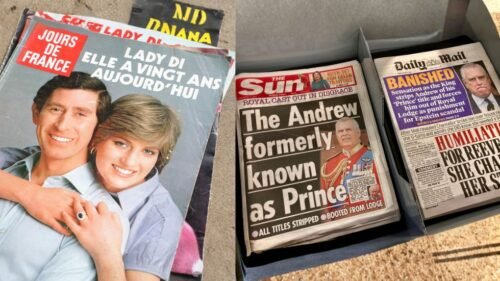
A Century of Royal Scandal: Britain’s Shocking Monarchy
Explore a century of royal scandals that have shaken the House of Windsor, from Prince Andrew’s ties to Jeffrey Epstein...
For Harry, Meghan Is the New Real Spare
Though teeming with contradictions, one coherent theme emerges from Prince Harry’s book—his drive to avenge his mother’s death by fighting...
The Prince, the Financier, the Henchwoman and the Girl
Virginia Roberts Giuffre has filed a civil lawsuit against Prince Andrew in a New York court, accusing him of sexual...
Are the Windsors the New Kardashians?
The queen agrees to a "transition" for Meghan and Harry — but what are they transitioning to?
Support Fair Observer
We rely on your support for our independence, diversity and quality.
For more than 10 years, Fair Observer has been free, fair and independent. No billionaire owns us, no advertisers control us. We are a reader-supported nonprofit. Unlike many other publications, we keep our content free for readers regardless of where they live or whether they can afford to pay. We have no paywalls and no ads.
In the post-truth era of fake news, echo chambers and filter bubbles, we publish a plurality of perspectives from around the world. Anyone can publish with us, but everyone goes through a rigorous editorial process. So, you get fact-checked, well-reasoned content instead of noise.
We publish 3,000+ voices from 90+ countries. We also conduct education and training programs
on subjects ranging from digital media and journalism to writing and critical thinking. This
doesn’t come cheap. Servers, editors, trainers and web developers cost
money.
Please consider supporting us on a regular basis as a recurring donor or a
sustaining member.
Will you support FO’s journalism?
We rely on your support for our independence, diversity and quality.





Comment